



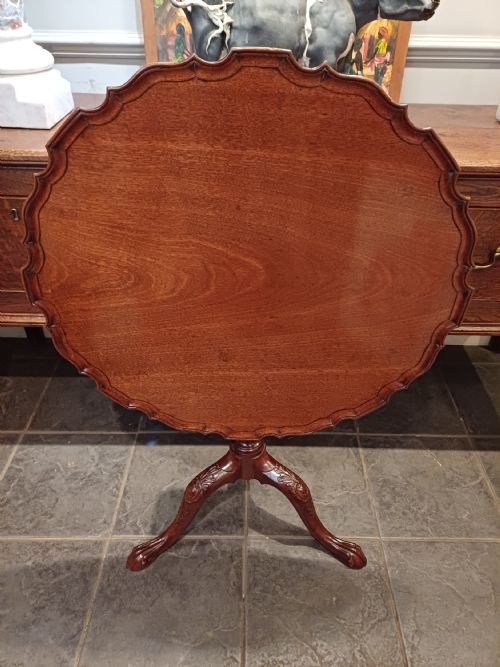

Scalloped Edge Centre Table
A scalloped edge centre table brings striking silhouette and rich timber grain to a room, functioning as a freestanding focal point.
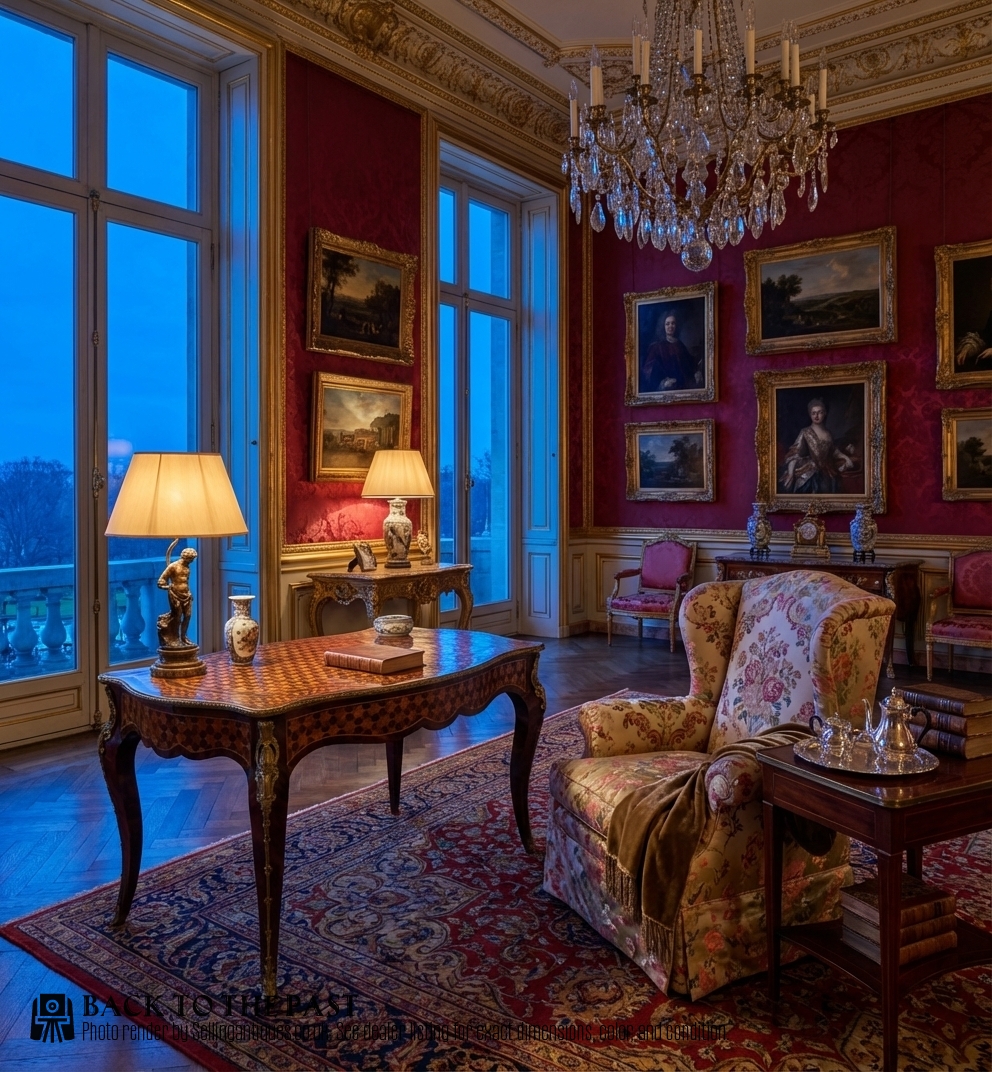
Understanding the Scalloped Edge Centre Table
A scalloped edge centre table stands as a prominent freestanding piece designed to sit in the middle of a room rather than against a wall. These tables emerge primarily from the Victorian period, spanning the decades from eighteen fifty to eighteen eighty.
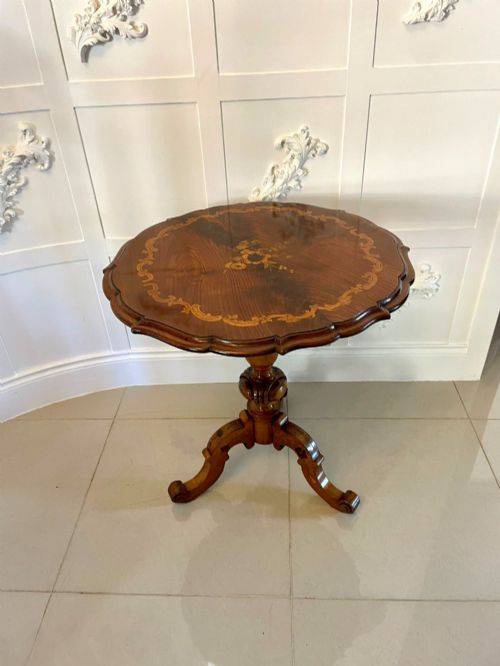
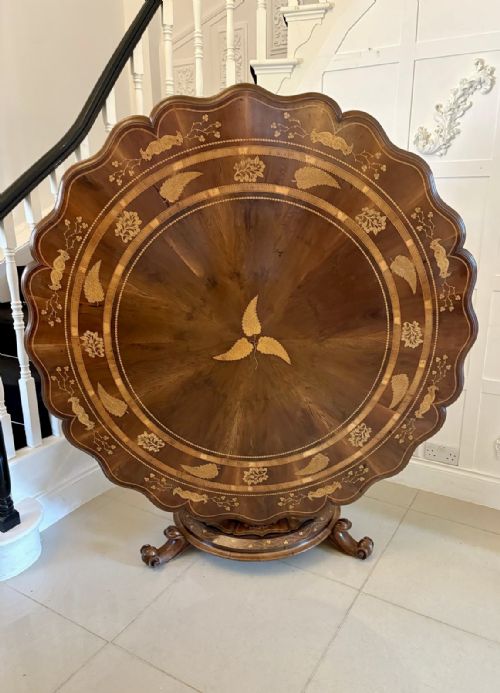
The selections on this page showcase varied forms, from tilt tops and pedestal bases to large round entry hall formats. Styles range across Victorian, Victorian Irish Killarney Ware, Louis XV, French Rococo Revival, and Oriental Export.
Makers and workshops utilise rich timber profiles, creating distinct silhouettes defined by their curved borders. Buyers encounter diverse regional interpretations, including intricate Irish marquetry and French parquetry.

Materials and Construction
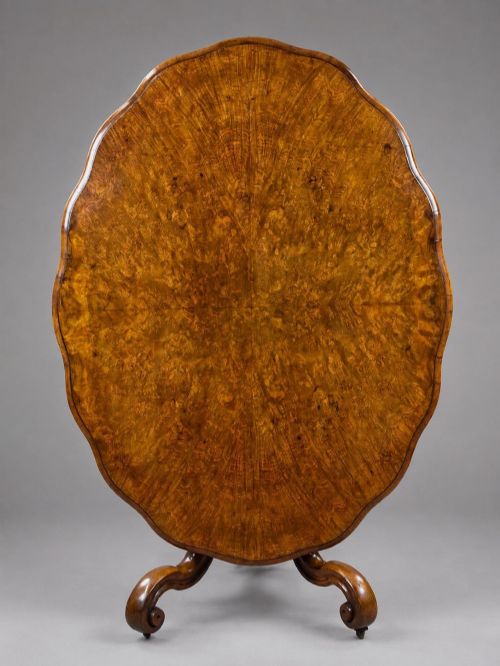
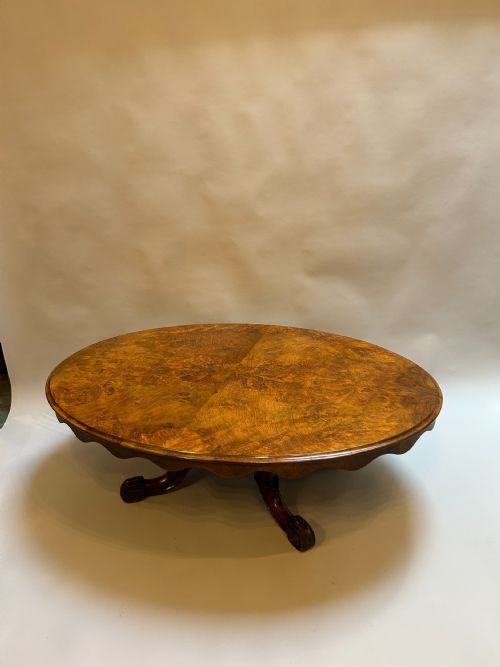
Cabinet makers construct these tables from substantial timbers including burr walnut, walnut, rosewood, yew wood, arbutus wood, mahogany, and Oriental hardwood. The surfaces often incorporate marquetry inlay and parquetry patterns to create visual depth across the top.
Fine examples integrate decorative hardware such as brass and ormolu mounts. The structural joinery supports pedestals, shaped tops, and occasional tilt top mechanisms designed for versatility.
Retail Price Guide 2026
Typical UK retail prices for scalloped edge centre table, calculated from the Sellingantiques database of over a million retail prices indexed since 2003. This retail price guide relies exclusively on Sellingantiques data; no external sources or auction records are used, so the figures do not describe the wider market.
Some tables tilt their heads entirely away from the room, proving that even heavy Victorian timber appreciates a good stretch.
Distinctions in Quality
Quality reveals itself in the choice of timber and the precision of the inlay work. Burr walnut and figured rosewood with complex marquetry represent high levels of workshop skill, whereas simpler mahogany and hardwood builds focus on unadorned grain.
The complexity of the shaped edge and the integration of bronze or ormolu mounts separate standard production from exhibition pieces. Finer tables demonstrate meticulous attention to the curve of the scalloped border and the stability of the pedestal base.
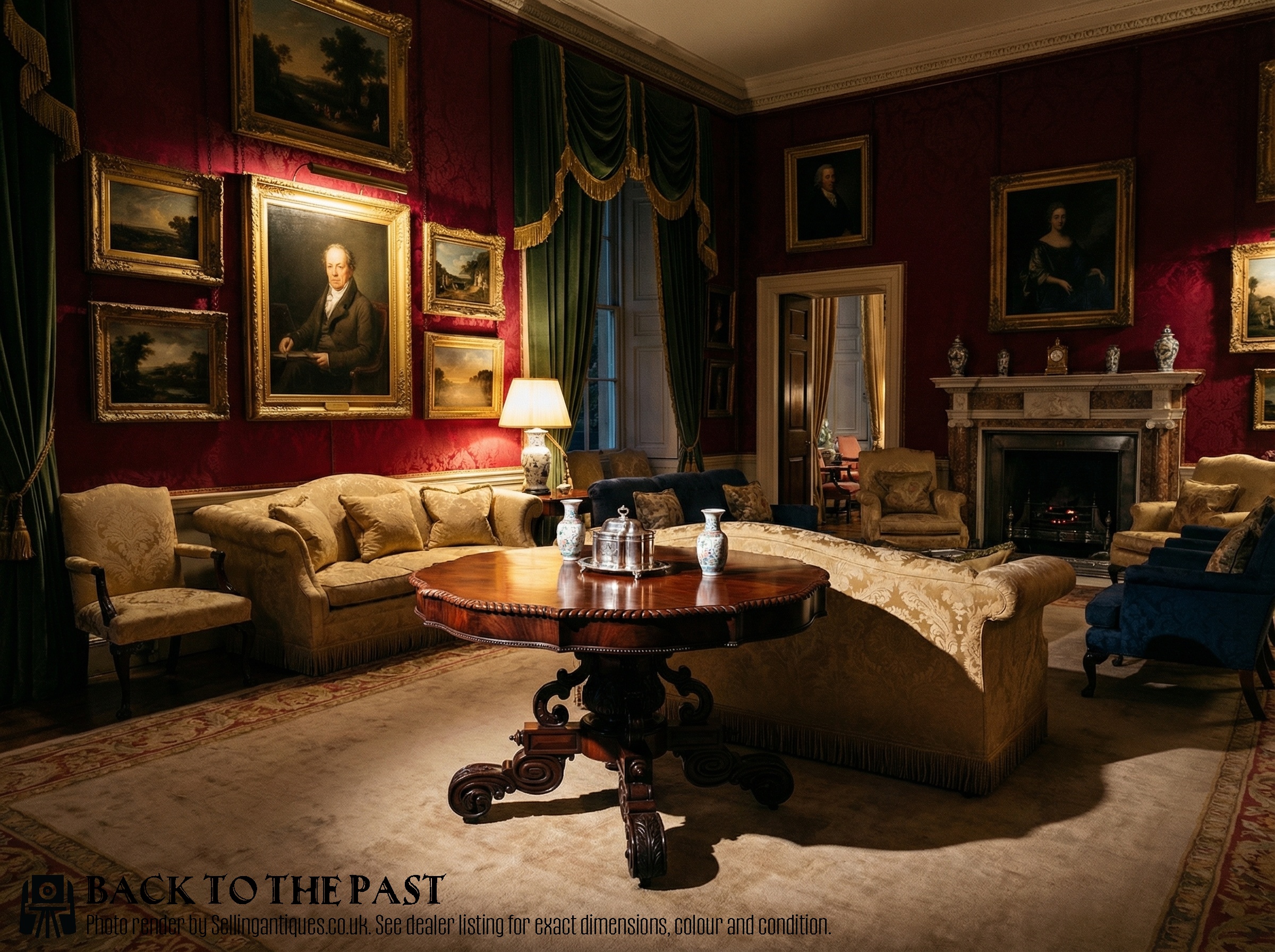
The Scalloped Edge Centre Table Glossary
- Centre table
- A freestanding table designed to be viewed from all sides, traditionally placed in the middle of a room. These pieces often feature decorative tops suitable for central display.
- Marquetry inlay
- An ornamental technique of fitting small pieces of veneer into a wood foundation to form intricate pictorial designs. Craftsmen use varied timber tones to achieve contrast.
- Tilt top
- A mechanism allowing the table top to pivot into a vertical position when not in use. This design saves space and displays the timber grain on the underside.
- Ormolu
- Gilded bronze mounts applied to furniture for decorative enrichment. The technique was particularly popular in French revival pieces.
Frequently Asked Questions
Where should I place a centre table?
A centre table belongs in the middle of a room, entry hall, or large landing where it can be appreciated from all angles.
Because these tables are freestanding, they create a natural focal point and anchor the surrounding seating or architectural layout.
What is Killarney Ware?
Killarney Ware refers to distinctive Irish decorative furniture produced during the nineteenth century, characterised by intricate marquetry using native timbers like yew and arbutus wood.
These pieces often depict local scenery or botanical motifs, making them distinct from standard Victorian production.
How do I care for burr walnut?
Burr walnut surfaces require protection from direct sunlight and excessive moisture to prevent the delicate veneer from drying or cracking.
Routine dusting with a soft, dry cloth preserves the polished finish and natural grain patterns of the timber.
What does a tilt top do?
A tilt top mechanism allows the upper surface of the table to hinge backward into a vertical position.
This historical feature made it easier to store the table against a wall when the room needed to be cleared for other activities.