
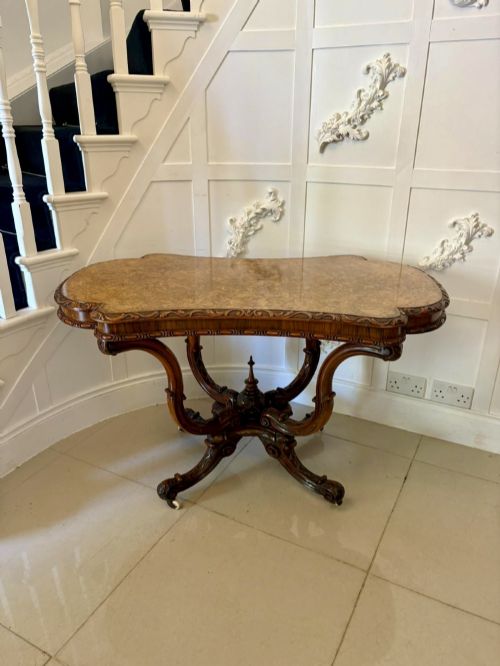
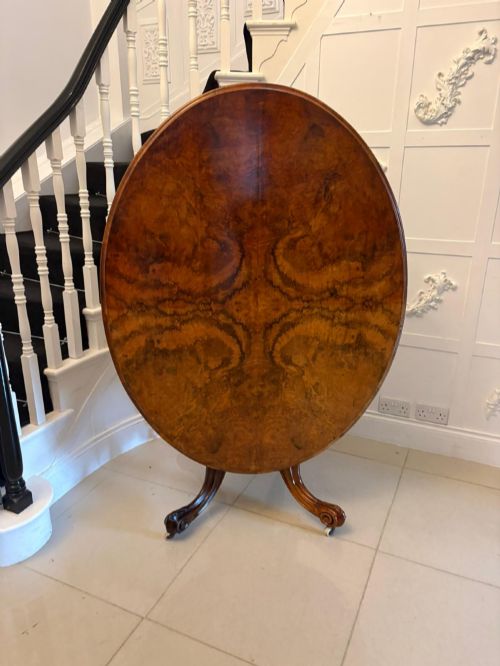

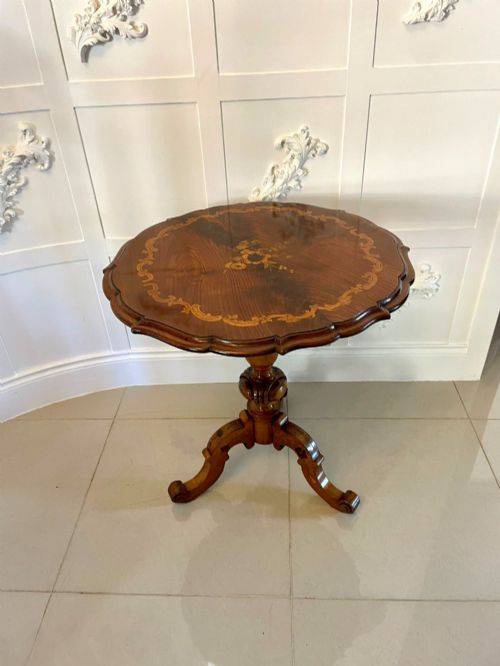
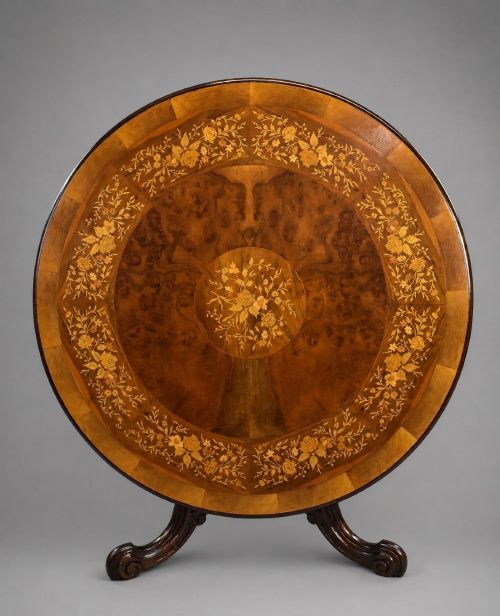
Brown Walnut Loo Table
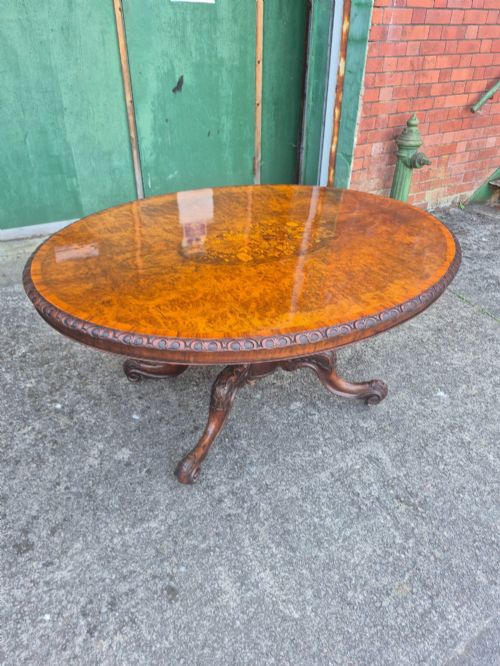
A brown walnut loo table is a centrepiece built for Victorian gatherings, combining timber figure with a tilting mechanism.

Brown Walnut Loo Table
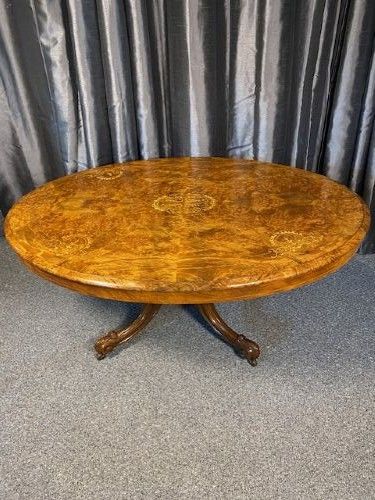
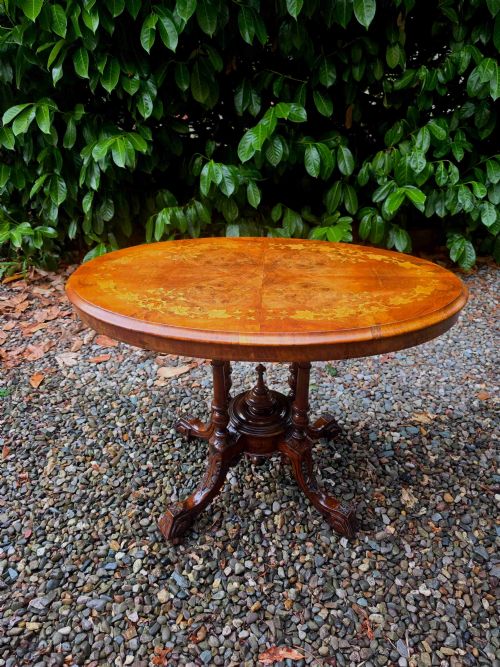
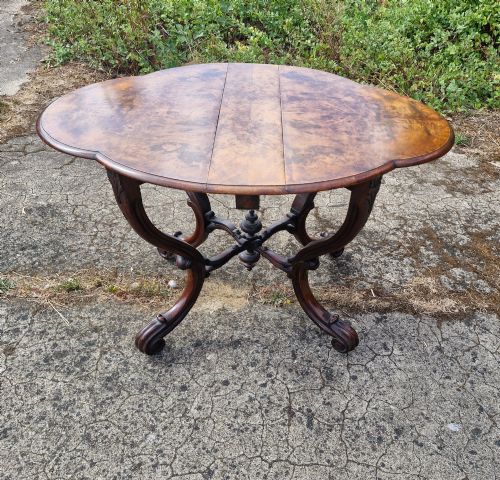
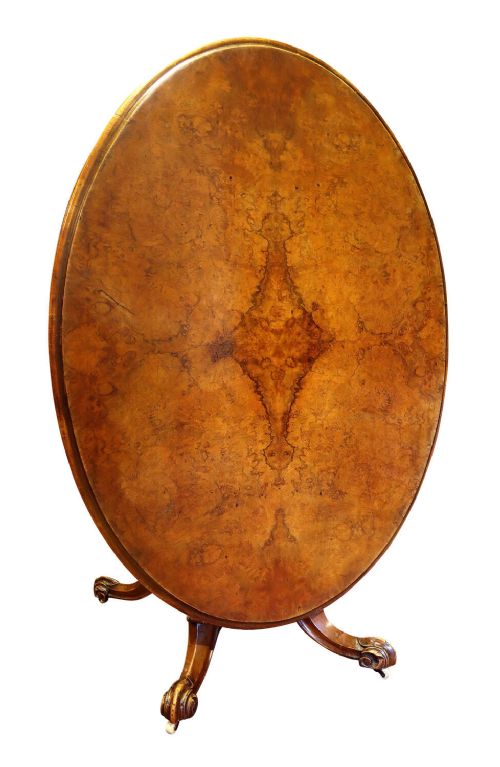
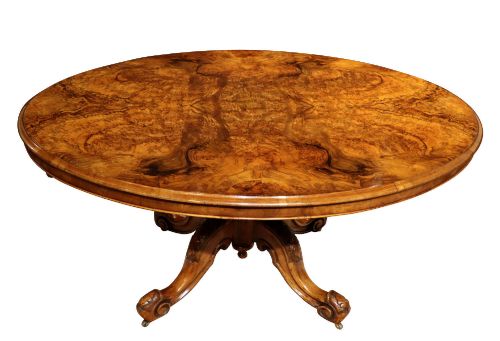
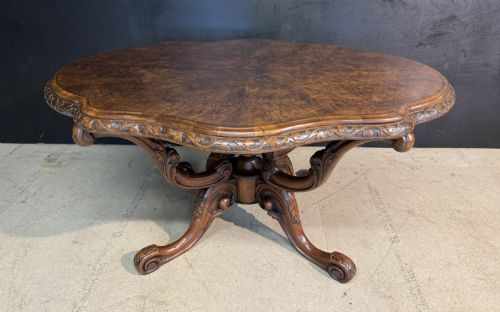
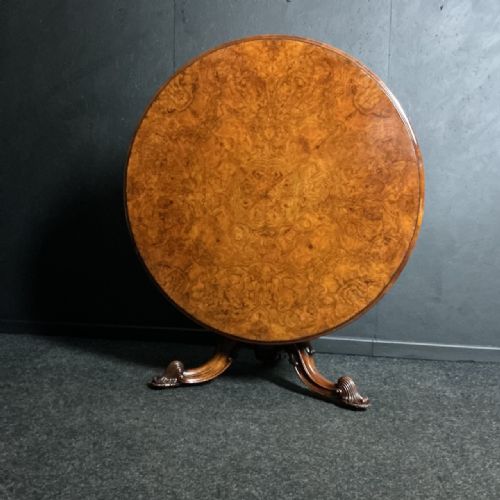
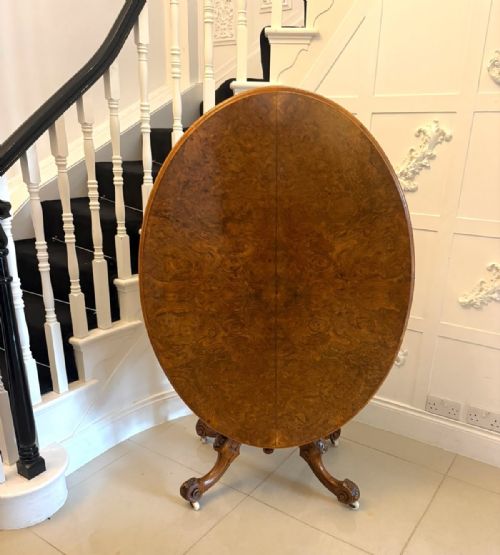
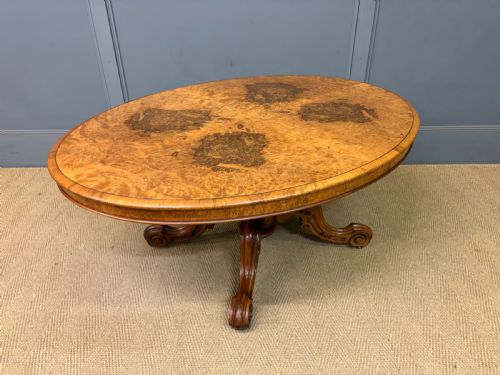
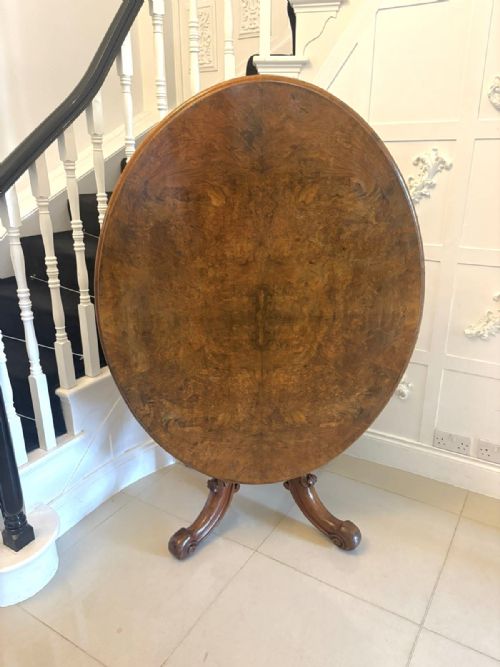
When you examine a brown walnut loo table, you find a large oval or shaped timber top designed to tilt vertically when not in use. These pieces primarily date from the Victorian period, appearing across the middle and later decades of the nineteenth century.
Makers shaped these items to serve as centre tables, breakfast tables, and occasional dining surfaces within the home. The forms you encounter most frequently on this page feature burr walnut timbers and carved quadrapod bases.
How they were made
Cabinet makers utilised solid walnut and applied decorative burr walnut veneers to the expansive table tops to create rich, swirling grain patterns. They integrated boxwood, fruitwood, and general wood inlay alongside marquetry work to ornament the surfaces.
Makers constructed the structural supports using carved timber elements, fitting brass mechanisms where the tilting action operates. They shaped the central pillars and quadrapod legs with hand-carved details before polishing the wood to a finish.
Brown Walnut Loo Table Retail Price Guide 2026
Typical asking prices for brown walnut loo table among the pieces listed under this phrase on Sellingantiques today, from the lower quarter to the upper quarter. They describe what is for sale here now, not the wider market.
Victorian card players needed tables that tipped vertically so they could reclaim their drawing rooms for dancing once the game finished.
What varies in quality
The sophistication of the timber figure and the precision of the marquetry inlay determine the visual standing of each piece. Tables featuring elaborate burr walnut veneers and crisp, hand-carved bases occupy the upper tier of the range.
Structural stability in the tilting mechanism and the condition of the inlaid details separate standard examples from finer works. The depth of the carving on the quadrapod base and the integration of the wood inlay indicate the maker's hand.
Holmes Baldock
The Brown Walnut Loo Table Glossary
- Loo table
- A large Victorian round or oval table with a tilting top, originally used for the card game loo. These tables stood in the centre of the room.
- Burr walnut
- Wood taken from the wart-like growths on walnut trees, producing highly figured, swirling patterns of grain. Cabinet makers used veneers of this timber on prominent surfaces.
- Tilt top
- A mechanism allowing the table top to pivot ninety degrees for storage against a wall. This design saved space in nineteenth-century drawing rooms.
- Marquetry
- Decorative patterns formed by fitting small pieces of veneer into a prepared background. Makers used various woods like boxwood and fruitwood for contrast.
- Quadrapod base
- A heavy central pedestal supported by four carved legs, often resting on castors. This construction provided stability for the tilting top.
Brown Walnut Loo Table: Frequently Asked Questions
What is a brown walnut loo table?
A brown walnut loo table is a nineteenth-century Victorian table featuring a large tilt top and a carved pedestal base. People used these versatile pieces in drawing rooms for social gatherings and card games.
They appear primarily in oval and shaped formats, showcasing figured burr walnut veneers and intricate wood inlay. The tilting mechanism allowed the top to pivot vertically when the room needed extra floor space.
How do you use a tilt top table?
You operate the internal catch beneath the top to release the table surface from its horizontal position. This allows the top to swing upright so the piece occupies minimal space against a wall.
In daily life, the table serves as a centrepiece for lamps, display items, or casual dining when lowered. The robust quadrapod base keeps the table balanced in both positions.
How do I identify a Victorian loo table?
You look for the characteristic nineteenth-century construction methods, including solid walnut framing, burr walnut veneers, and hand-carved pedestal bases. The presence of a working tilt-top mechanism points directly to this era of furniture design.
Examine the timber for period characteristics such as boxwood or fruitwood inlay and marquetry work. Most examples date from the mid-nineteenth century, around the eighteen-fifties and eighteen-seventies.
Where should I place a loo table at home?
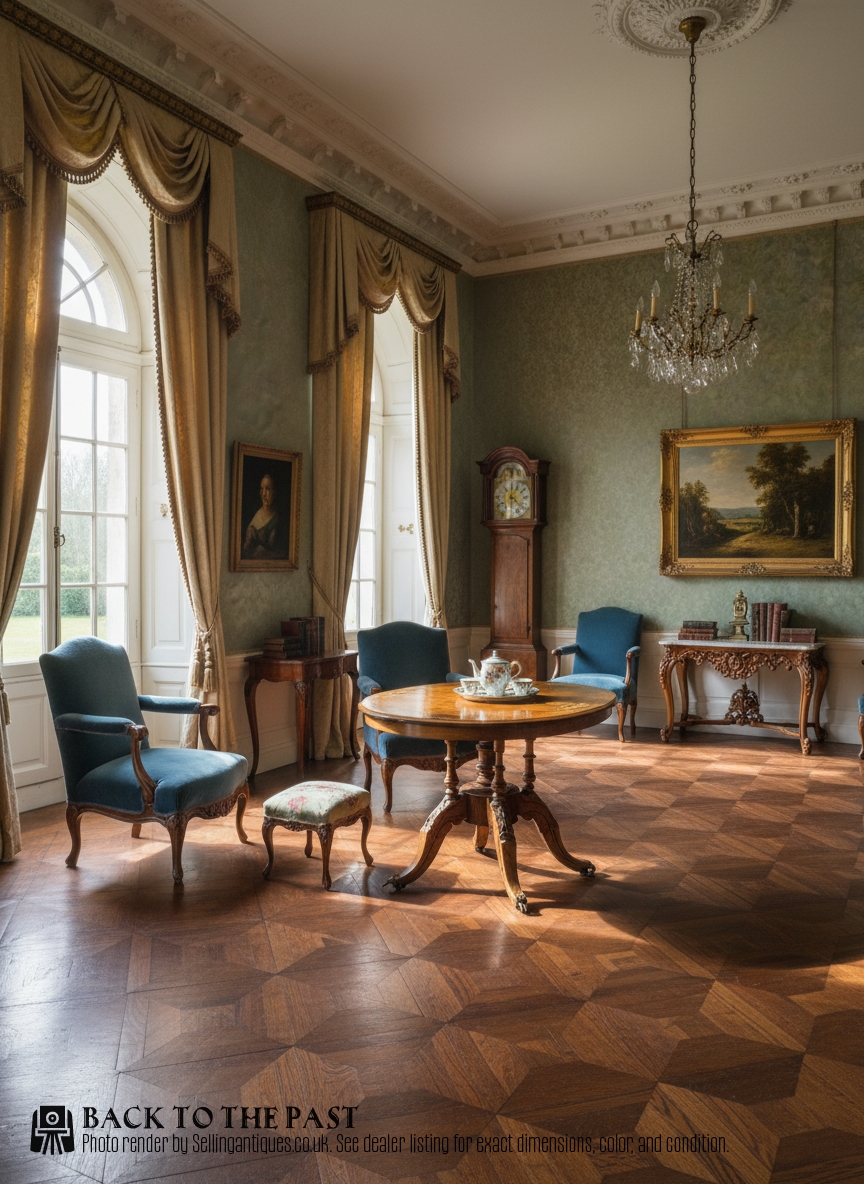
You position a brown walnut loo table in the middle of a room as a centre table or lamp table. Its decorated top rewards viewing from every angle when placed away from walls.
Because many examples seat four to six people, you can also utilise them for small dining gatherings or occasional tea. The tilting top lets you store the table compactly when you require an open floor.