

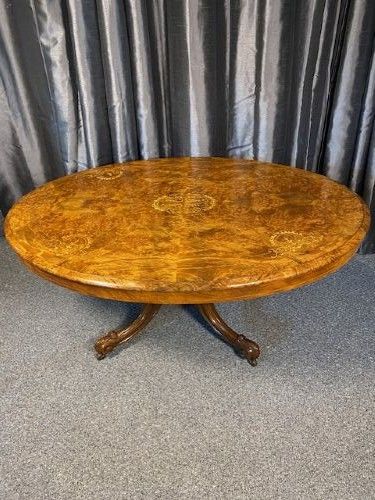
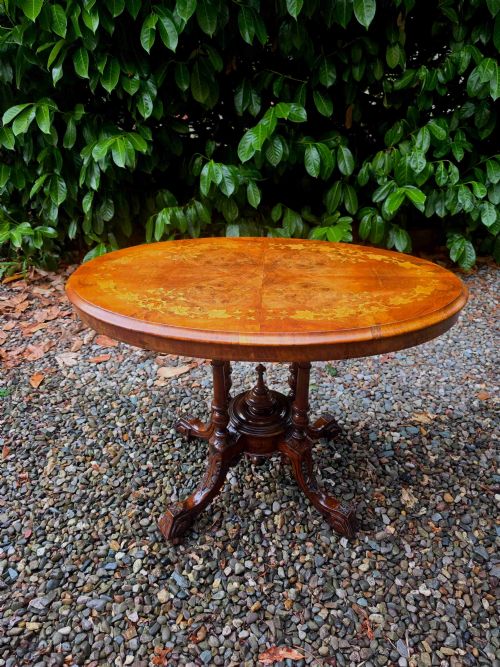
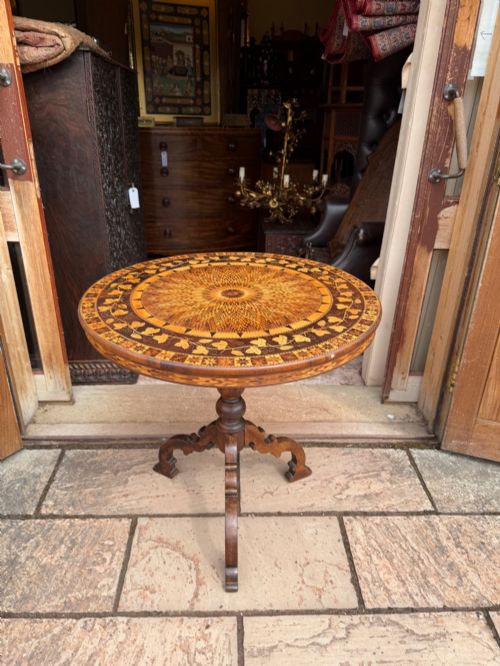
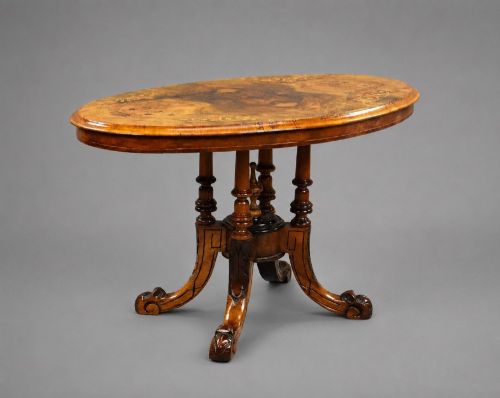
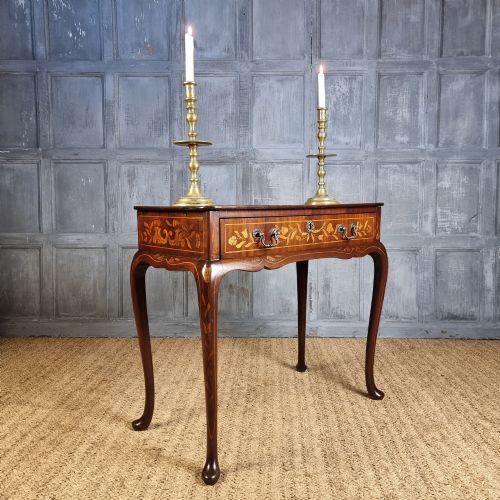
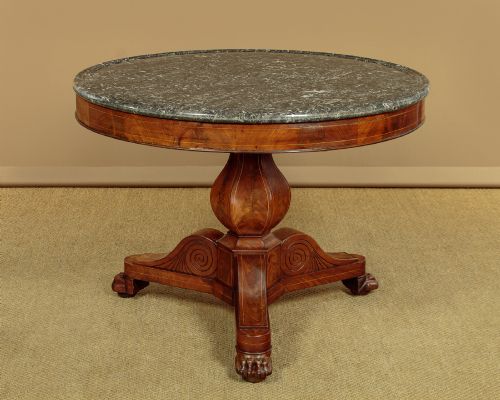
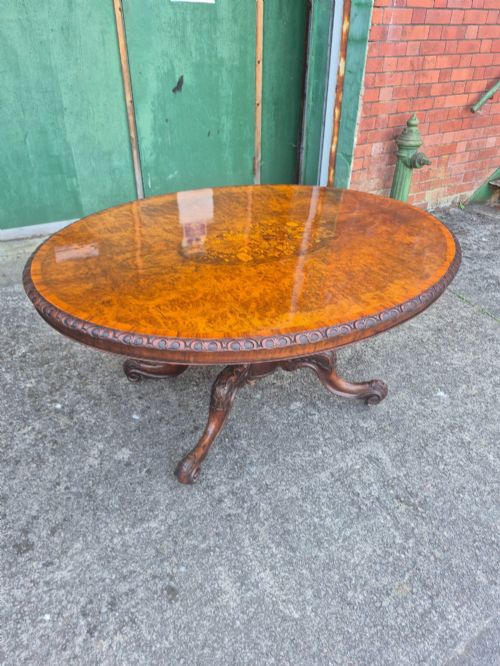
Inlaid Walnut Centre Table
An inlaid walnut centre table combines structural presence with intricate decorative detail, making it a focal point for a formal room.
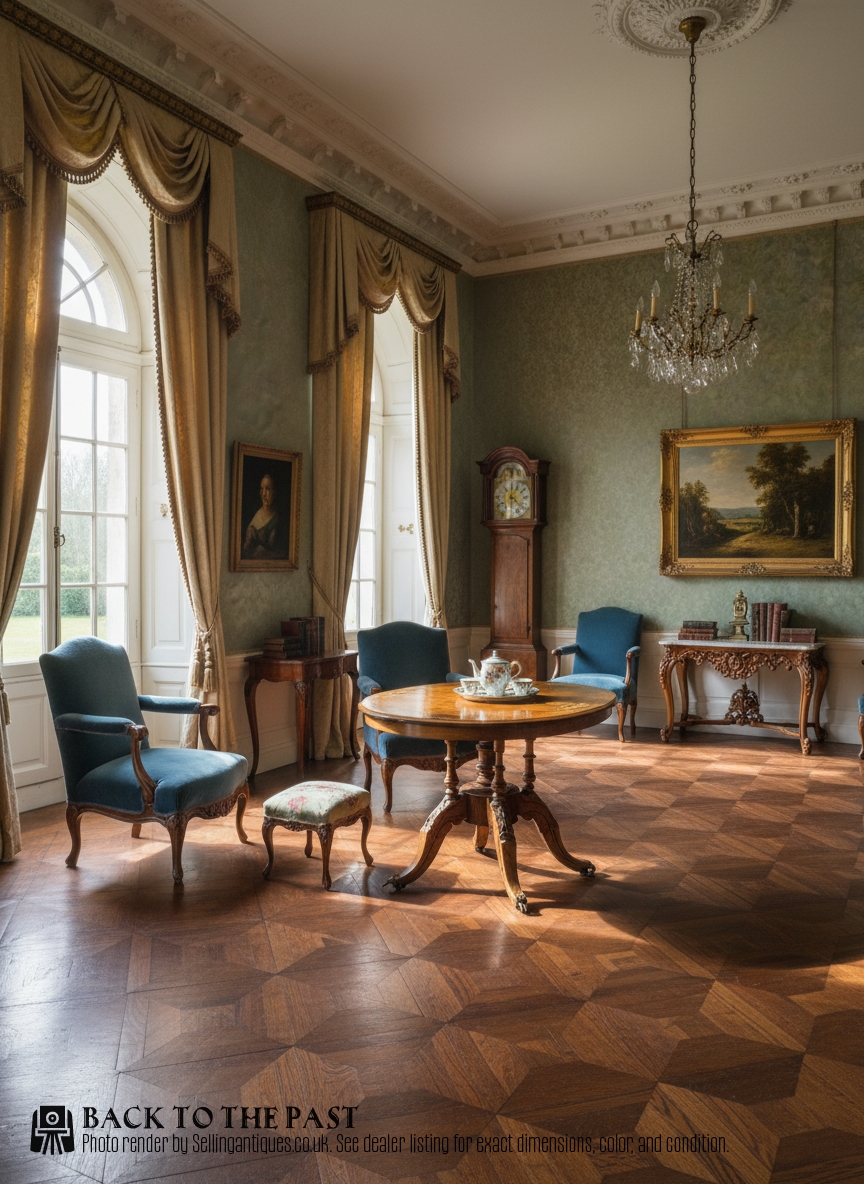
Inlaid Walnut Centre Table
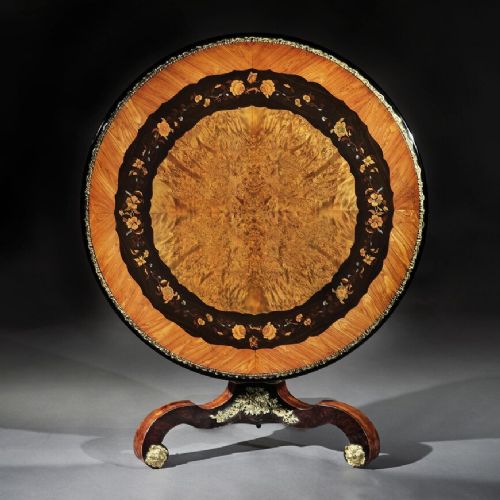
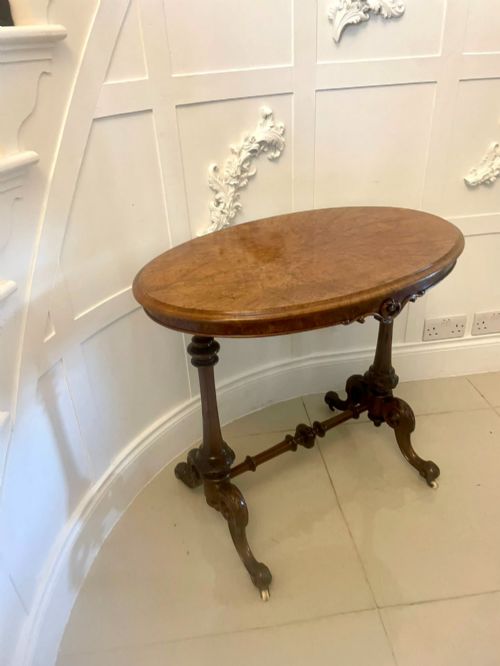
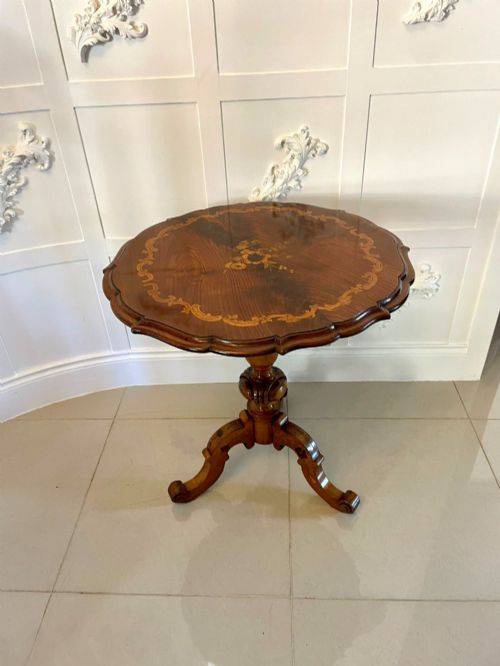
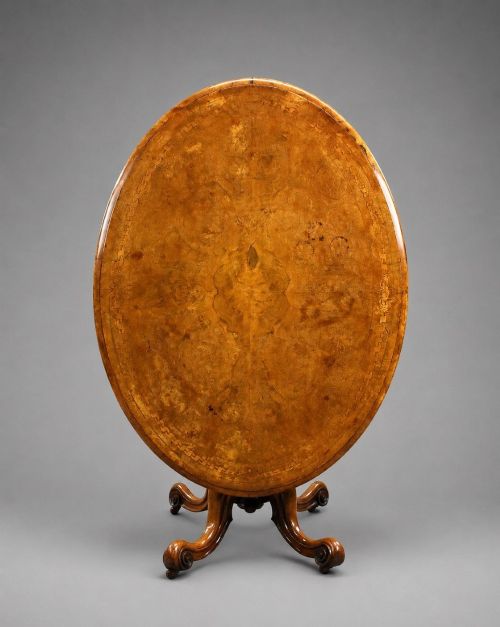
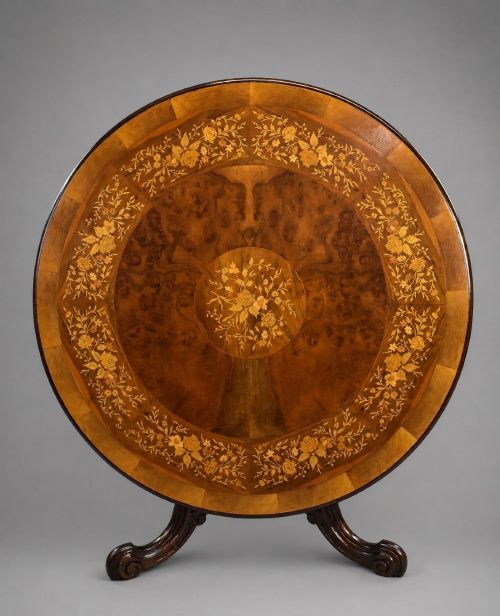
When searching for an inlaid walnut centre table, buyers encounter freestanding pieces designed to sit centrally within a room rather than against a wall. The most common examples seen here date from the Victorian period, frequently employing burr walnut timber and elaborate marquetry.
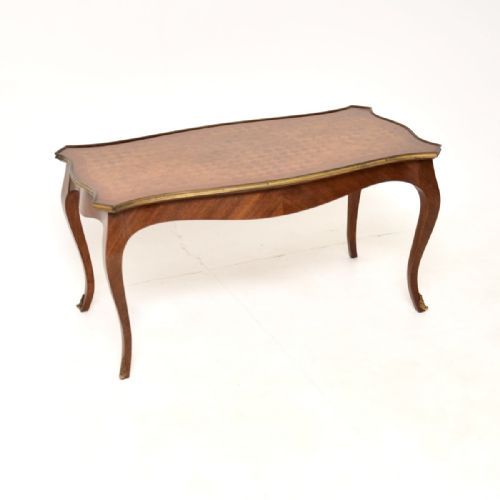
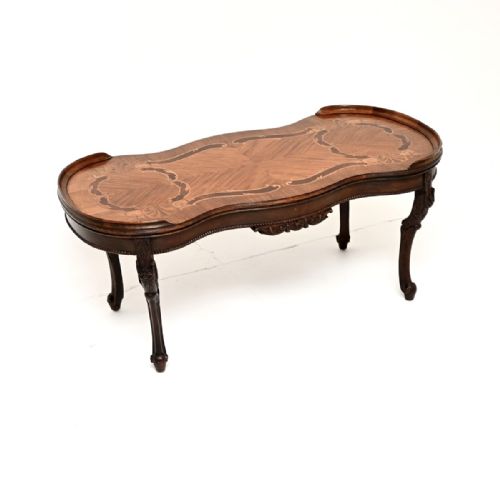
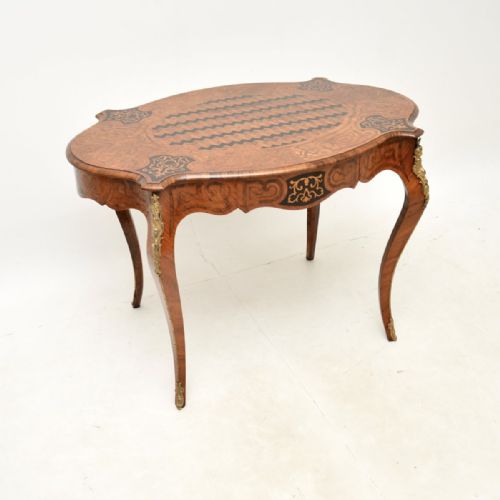
Forms vary significantly across the selection, ranging from round breakfast tables and oval occasional pieces to octagonal lamp tables and games surfaces. Many feature pedestal bases or cabriole legs, while French revival variations introduce ormolu mounts and parquetry patterns.
Materials and construction methods
Cabinetmakers utilised solid walnut and decorative burr walnut veneers applied to stable secondary timbers to achieve rich grain patterns across large surfaces. These veneers were then meticulously cut to receive contrasting wood details.
Boxwood, fruitwood, and satinwood were shaped into complex floral, foliage, or geometric marquetry and stringing. Ormolu mounts, brass details, and marble tops were incorporated into specific French and Victorian designs to add further textural contrast.
Inlaid Walnut Centre Table Retail Price Guide 2026
Typical asking prices for inlaid walnut centre table among the pieces listed under this phrase on Sellingantiques today, from the lower quarter to the upper quarter. They describe what is for sale here now, not the wider market.
Listings feature periods spanning from the eighteenth century through the art deco era, with Victorian burr walnut predominating.
Quality indicators
The distinction between standard examples and top-tier pieces rests on the depth of the timber figuring and the precision of the marquetry work. Finer items exhibit crisp, seamless execution of boxwood and fruitwood inlays with minimal filler, while lesser versions display simpler banding.
Structural integrity also dictates worth, observed in the stability of pedestal bases, the crispness of carved elements, and the retention of original brass hardware or ormolu mounts without excessive restoration.
Edward Holmes Baldock
The Inlaid Walnut Centre Table Glossary
- Burr walnut
- A figured wood grain obtained from the wart or burl growths of the walnut tree, prized for its swirling, highly decorative patterns.
- Marquetry
- An elaborate technique of arranging small pieces of veneer into pictorial or decorative motifs, often using boxwood and fruitwood.
- Ormolu
- Gilt bronze mounts cast and chased for decorative application on furniture, frequently found on French revival pieces.
- Parquetry
- A geometric mosaic of wood veneer pieces laid down in repeating patterns such as cubes or squares.
- Snap-top
- A tabletop mechanism that tilts vertically when not in use, common on circular pedestal tables.
Inlaid Walnut Centre Table: Frequently Asked Questions
Where should a centre table be placed?
These tables are designed to stand freely in the middle of a room rather than being pushed against a wall, allowing access from all sides.
Their finished backs and detailed marquetry make them suitable as central decorative or working surfaces.
How do I care for burr walnut veneer?
Burr walnut requires stable indoor humidity levels and protection from direct sunlight to prevent the thin decorative veneers from drying out or lifting.
Regular dusting with a dry cloth and occasional application of appropriate furniture wax help maintain the finish.
What is the difference between a centre table and a loo table?
While both function as freestanding tables, loo tables typically feature a tilt-top mechanism originally intended for card games or social gatherings.
Centre tables remain fixed in position and serve decorative or general display purposes.
How can I tell a Victorian table from a French revival piece?
Victorian examples frequently rely on burr walnut veneers with floral marquetry and heavy pedestal or cabriole supports.
French revival pieces often incorporate ormolu mounts, parquetry, and lighter wood tones associated with Louis styles.