
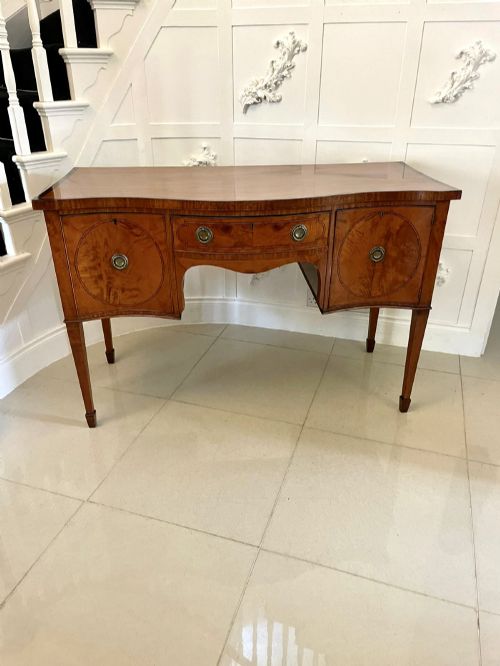
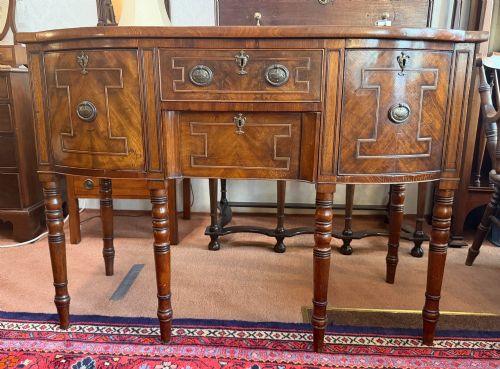
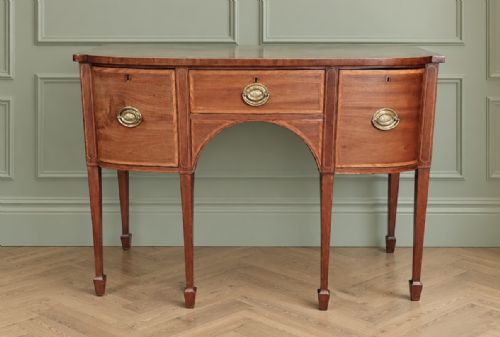
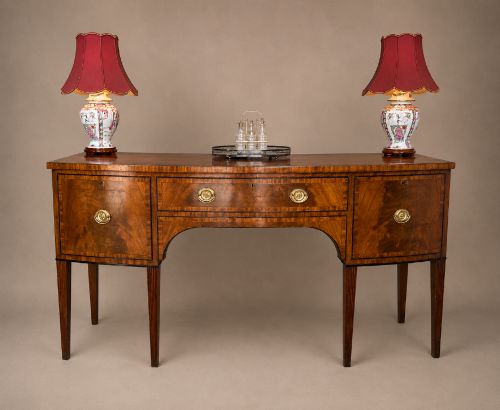
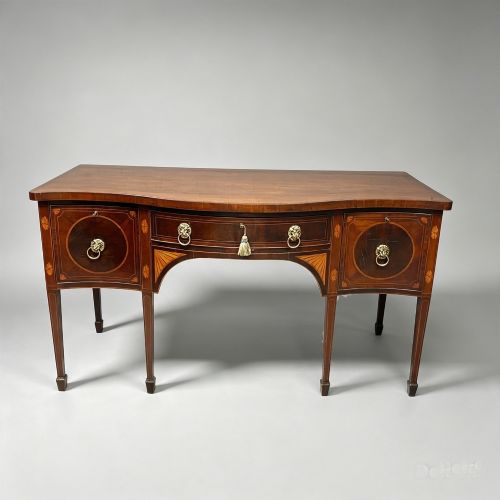
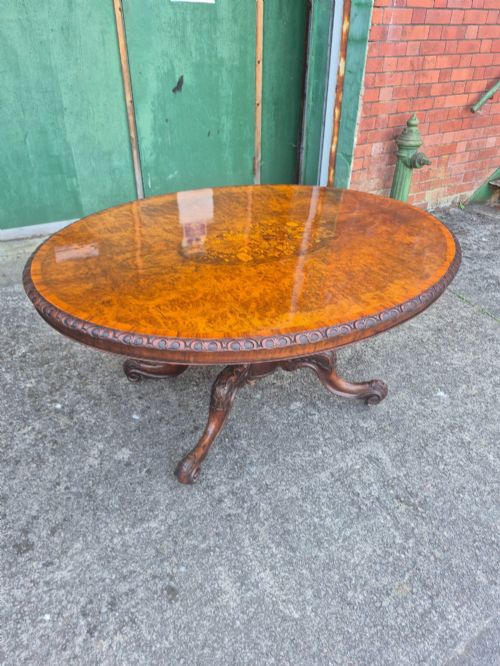
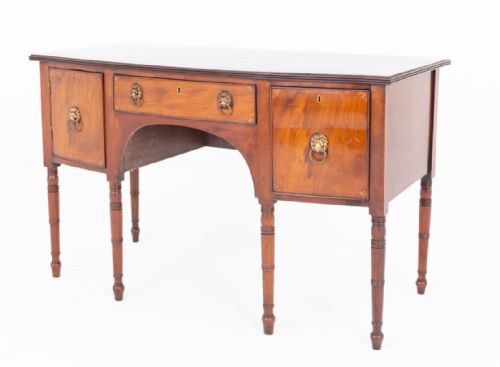

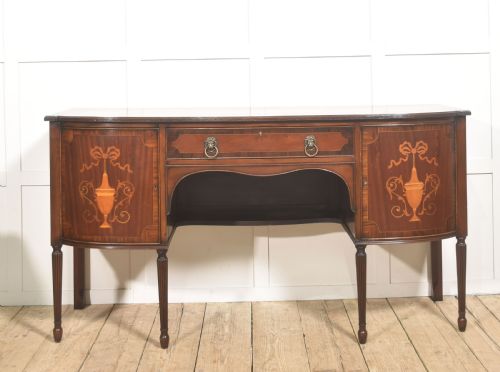


Inlaid Wooden Dining Table
An inlaid wooden dining table brings tactile warmth and classical design to a room.
Inlaid Wooden Dining Table
When you search for an inlaid wooden dining table, you find a selection spanning the Georgian, Regency, Victorian and Edwardian periods. The timber body provides a robust foundation, while contrasting inlay introduces crisp geometric or floral borders.
While many related dining forms and sideboards appear in these listings, tables rely on mahogany bases enriched with boxwood, satinwood or brass stringing. These examples reflect the craftsmanship of earlier centuries adapted for domestic dining.
The prevalent forms date from the late eighteenth century through to the Edwardian era, showing both formal Sheraton Revival influences and simpler provincial construction. Buyers encounter extendable leaves and drop-leaf formats designed for practical household use.
How they were made
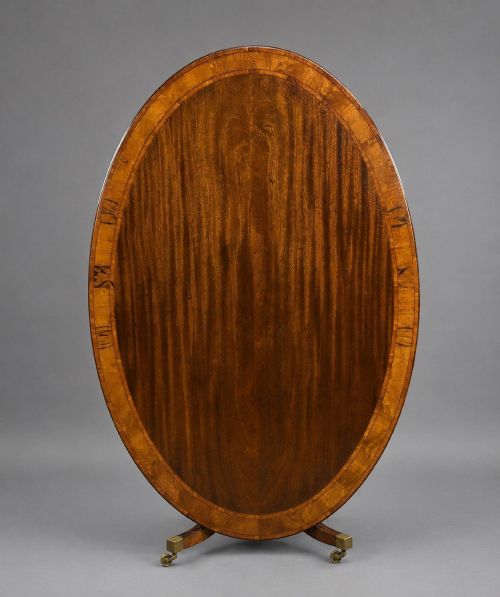
Cabinetmakers constructed these tables primarily from solid and veneered mahogany, choosing the timber for its stability and rich grain. Contrasting details utilise boxwood, satinwood and ebony, carefully cut and pressed into shallow channels to form crisp borders.
Inlay techniques require steady hands and precise chisels to recess lighter woods into darker primary timbers. Brass inlay and stringing also appear, secured into the surface to create linear accents that define the edges of the table top.
Current listings feature mahogany as the primary timber, complemented by boxwood, satinwood and brass inlay across Georgian and Edwardian periods.
What varies in quality
Quality rests upon the crispness of the timber selection and the precision of the inlay work. Finer examples display tight, consistent grain patterns in the mahogany alongside cleanly fitted boxwood or satinwood stringing that remains flush with the surface.
The structure of the underframe and the retention of original finish dictate the standing of a piece. Superior workshops achieved seamless joints and balanced proportions, ensuring the decorative borders enhance the overall architecture of the table.
The Inlaid Wooden Dining Table Glossary
- Inlay
- A decorative technique where pieces of contrasting material are inserted into a recessed timber base to form a flat surface pattern.
- Mahogany
- A durable, reddish-brown tropical hardwood favoured by period cabinetmakers for its strength and polished finish.
- Boxwood
- A dense, pale yellow wood frequently utilised for fine stringing and contrasting geometric details.
- Satinwood
- A luminous, yellow-brown timber used in veneers and banding to create bright visual accents.
- Stringing
- A narrow strip of contrasting wood or brass inlaid into the primary timber to outline edges and panels.
Inlaid Wooden Dining Table: Frequently Asked Questions
How do I clean an inlaid table?
Dust regularly with a soft, dry cloth to prevent accumulation in the recesses of the inlay. Avoid harsh liquid cleaners that might loosen the historic veneer or moisture-sensitive adhesives.
Apply a traditional beeswax polish sparingly to nourish the timber and maintain a gentle lustre. Buff the surface lightly with a clean cotton cloth after application.
Are these tables suitable for daily dining?
Most surviving tables were constructed for regular household use from sturdy timbers like mahogany. Careful placement away from direct heat sources helps protect the wood and delicate inlay.
Using heat-resistant mats protects the polished surface from warm dishes. Regular care ensures the structure remains stable through everyday family meals.
What periods do these tables represent?
The listings encompass items from the Georgian, Regency, Victorian and Edwardian eras. Each period brings distinct design traits, from classical Georgian proportions to lighter Edwardian revivals.
Cabinetmaking standards evolved across these centuries, influencing the complexity of the timber selection and the style of the inlay. Examining the construction reveals the likely period of origin.
How do I identify different inlay woods?
Boxwood presents a pale, uniform yellow tone suitable for fine lines, whereas satinwood displays a golden, chatoyant sheen. Ebony provides a dense, dark contrast against lighter primary timbers.
Close inspection under good light helps distinguish natural grain variations among the contrasting elements. Comparing the colour and texture confirms the specific woods employed by the maker.