
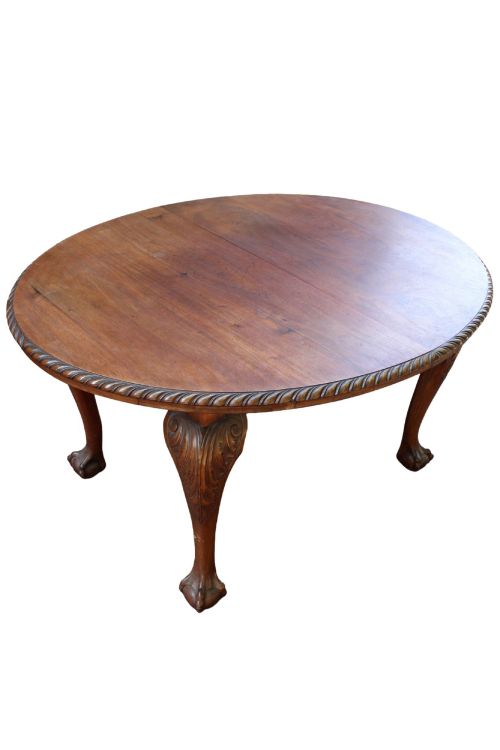
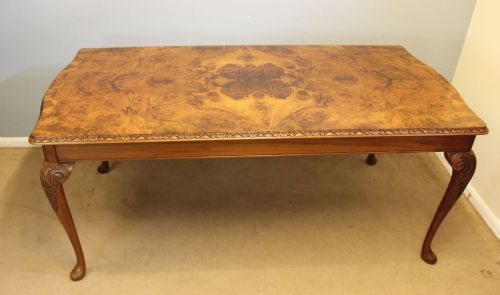
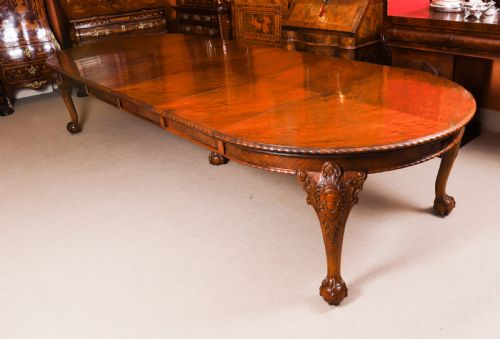
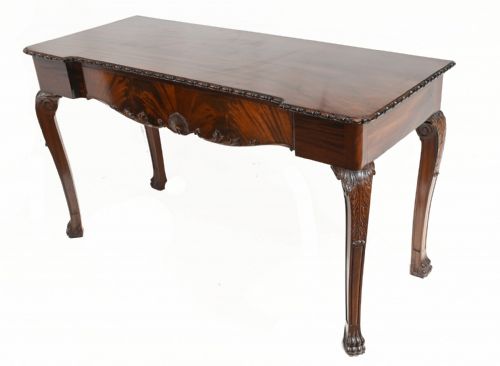



Carved Cabriole Dining Table
A carved cabriole dining table brings traditional woodworking and distinctive curved leg forms into a dining room.
Carved Cabriole Dining Table
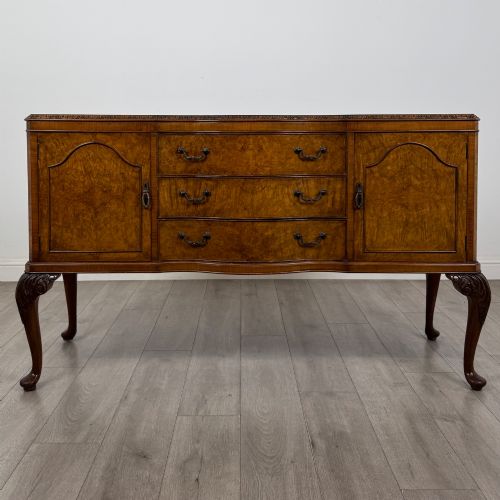
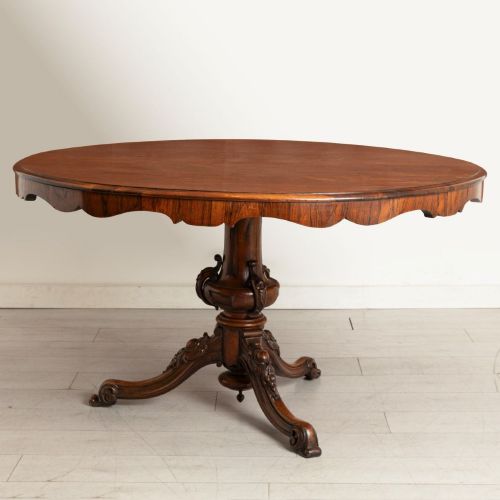
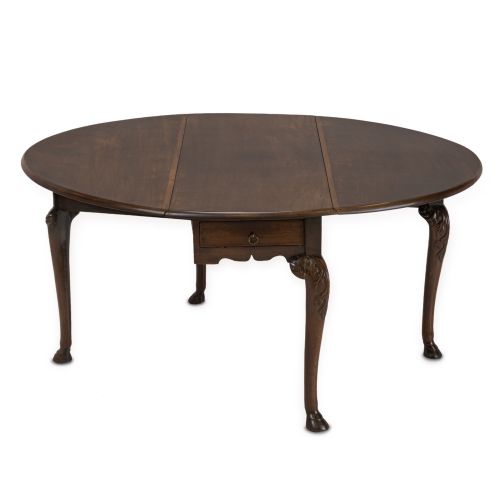
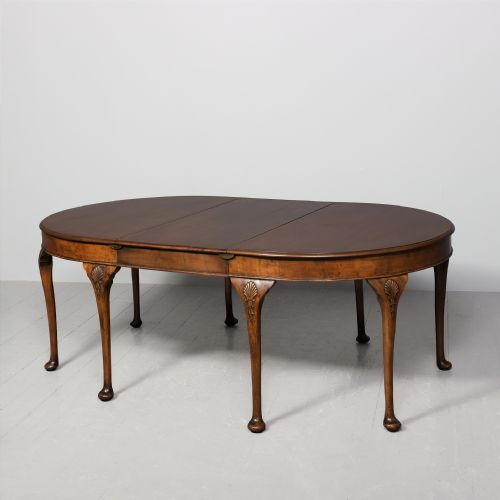
A carved cabriole dining table combines shaped supports with timber surfaces designed for family dining and hospitality. Pieces appearing in these listings span centuries of production, including 18th Century examples alongside 19th Century and 1930s revival interpretations.
The selection ranges from George II style models and Queen Anne revival forms to extending mahogany tables and drop-leaf formats. Walnut, burr walnut veneer, and mahogany serve as the primary woods shaping these dining surfaces.
Materials and construction
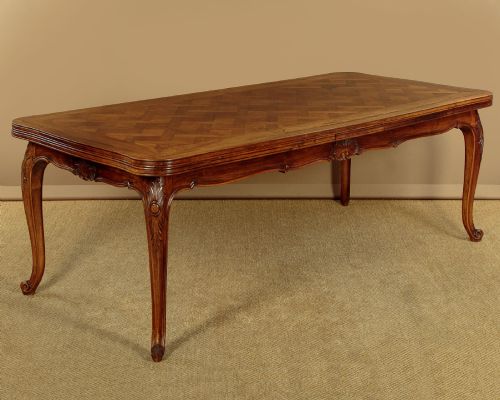
Carpenters utilised solid timbers like mahogany, oak, and rosewood alongside decorative veneers such as burr walnut to construct top boards and supportive framing. Surfaces frequently incorporate parquetry or marquetry patterns to add visual depth to the wood grain.
Legs are shaped into characteristic cabriole profiles, often terminating in hoof or claw and ball feet, and integrated with extending mechanisms or drop-leaf hinges.
Listings feature dining tables spanning from the 18th Century through the Victorian era and into 1930s Art Deco designs.
Craftsmanship and distinction
The standard of a carved cabriole dining table rests on the precision of the timber selection and the depth of the hand carving on the legs. Superior examples display seamless grain matching across table leaves and crisp execution on scrollwork and foot details.
Structural integrity in extending mechanisms and the stability of joint work distinguish finer period pieces from standard commercial reproductions.
Maple & Co·Gillows·Hille of London
The Carved Cabriole Dining Table Glossary
- Cabriole leg
- A furniture leg that curves outward at the knee and tapers inward toward the ankle, imitating animal limbs. This form appears frequently on 18th Century and revival dining tables.
- Drop leaf table
- A table with hinged flaps on the sides that can be folded down to save space or raised on swing legs to expand the surface.
- Draw leaf table
- An extending table containing pull-out leaves stored beneath the main top that slide out to lengthen the surface.
- Burr walnut
- A prized wood veneer taken from the burl growths of walnut trees, displaying complex and swirling grain patterns.
- Claw and ball foot
- A furniture foot carved to resemble an animal's claw gripping a spherical ball, often found on mahogany dining table legs.
Carved Cabriole Dining Table: Frequently Asked Questions
How do I clean burr walnut veneer?
Burr walnut surfaces require dusting with a soft, dry cloth to prevent moisture damage to the delicate veneer layer. Avoid silicone sprays and harsh chemical polishes.
Apply a traditional beeswax occasionally to nourish the timber and maintain a soft sheen without building up excessive residue.
How do extending mechanisms work on vintage tables?
Many older tables utilise a wind-out mechanism operated with a metal crank handle to separate the top halves. Additional leaves are then dropped into the central gap.
Draw-leaf versions operate by pulling concealed leaves out from beneath the main surface, allowing the primary top sections to drop into place.
Can I seat ten people at these tables?
Several larger mahogany and burr walnut models in the listings accommodate ten diners comfortably when fully extended. Check the length and clearance of the cabriole legs to ensure chairs fit underneath.
Drop-leaf and smaller centre tables offer more modest seating capacities suited to compact dining spaces.
How do I identify George II style pieces?
George II style and revival pieces typically feature dark mahogany or walnut timbers, prominent cabriole legs, and detailed carving on the knees. Feet often take the form of pad, hoof, or claw and ball designs.
Construction methods and timber characteristics help distinguish genuine 18th Century examples from later 19th and 20th Century revivals.