
Draw Leaf Table
A draw leaf table gives you expandable surface area without losing timber continuity, making it the practical heart of any dining room.
Form and Period
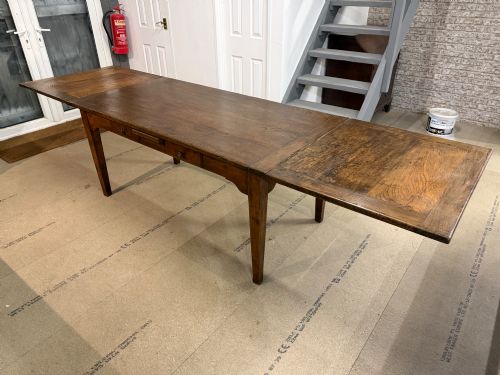
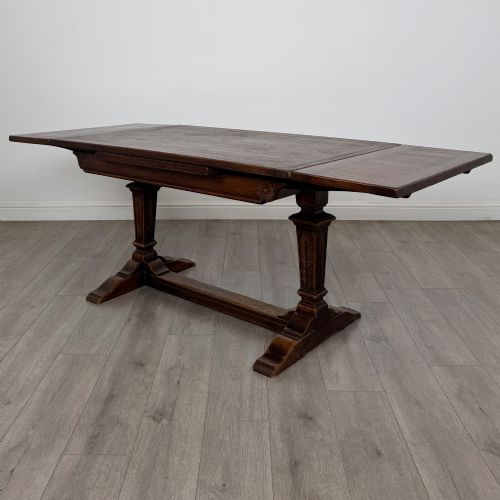
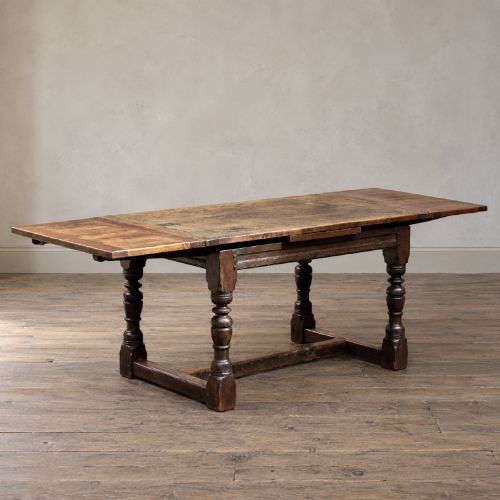
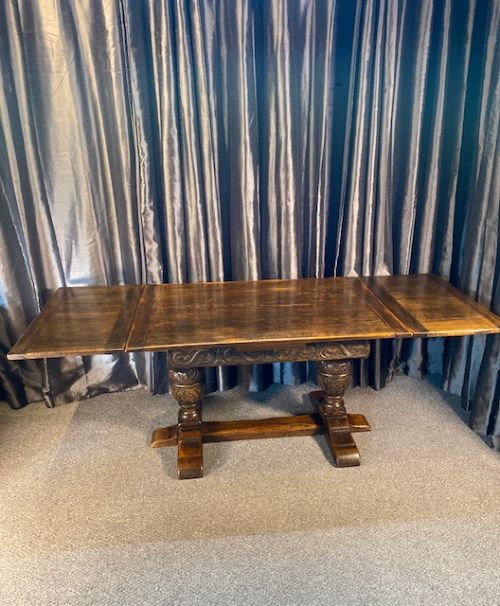
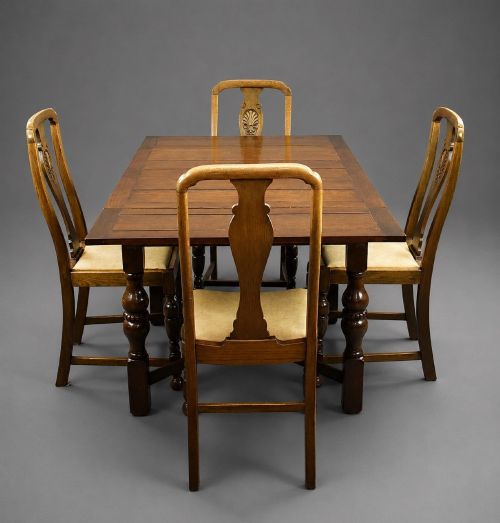
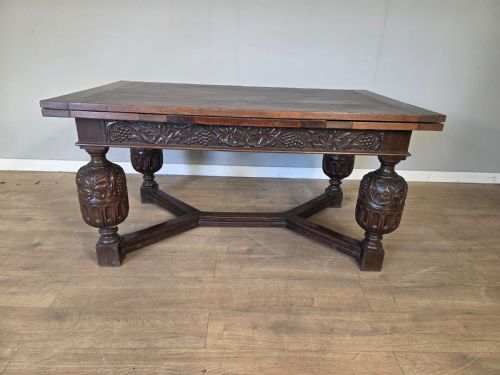
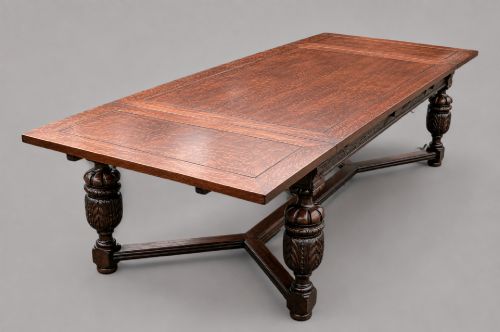
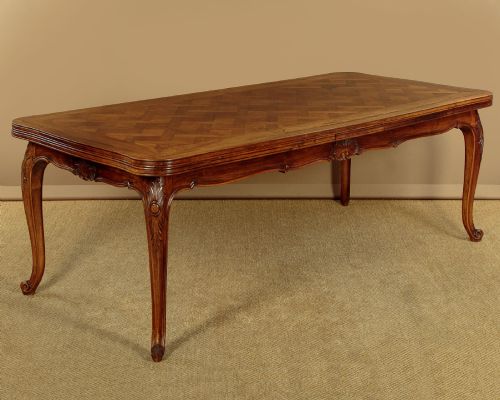
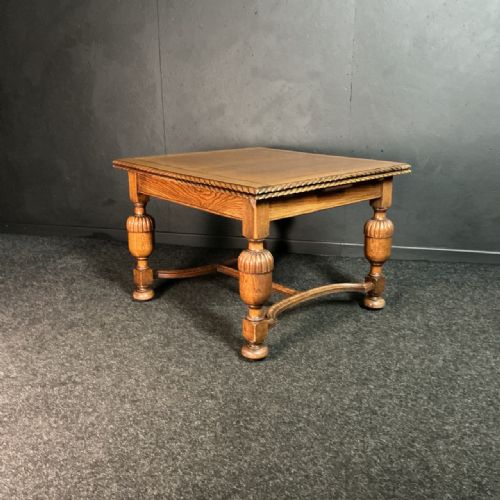
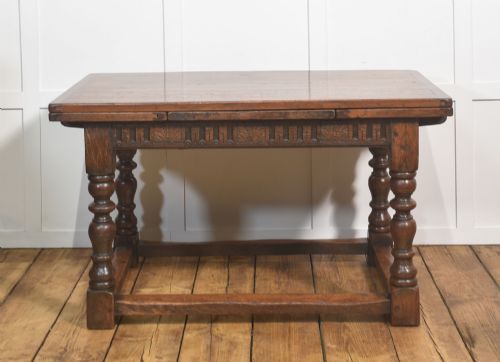
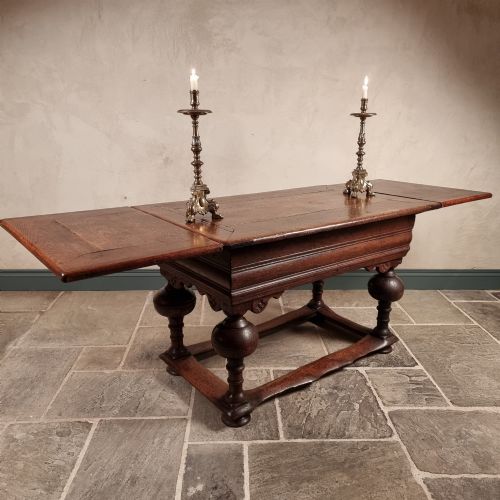
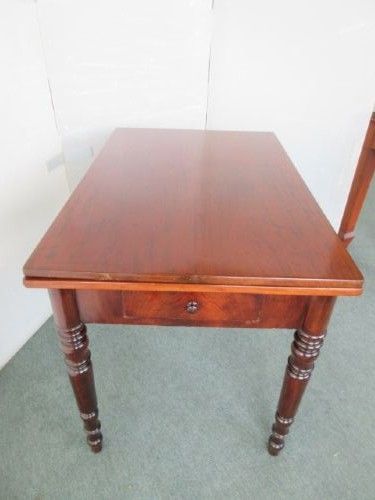
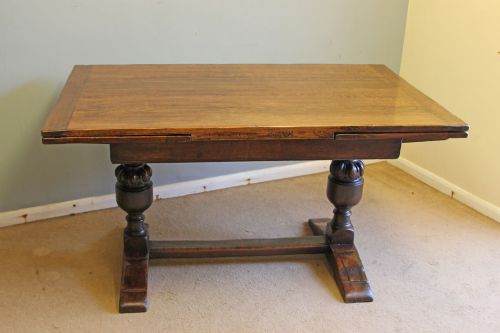
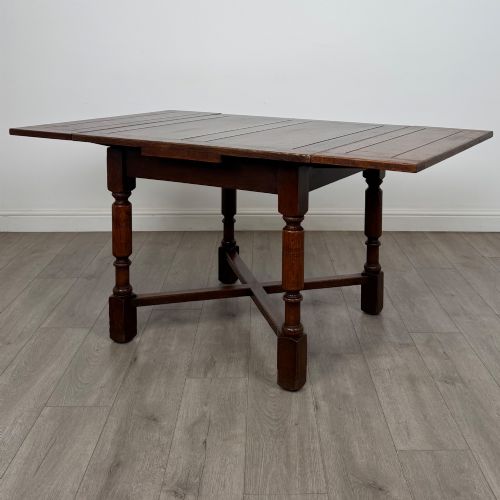
A draw leaf table is an extending dining or refectory table designed to lengthen by pulling out concealed leaves from beneath the main top surface. The pieces appearing here span Edwardian, 1900, 1850, 19th Century, and Regency periods, showing both compact cottage forms and larger refectory proportions.
You are most likely to encounter Edwardian and 20th-century examples in oak, alongside nineteenth-century pieces in cherrywood and mahogany. Styles range from plain utilitarian formats to Jacobean Revival, French Provincial, and Regency designs.
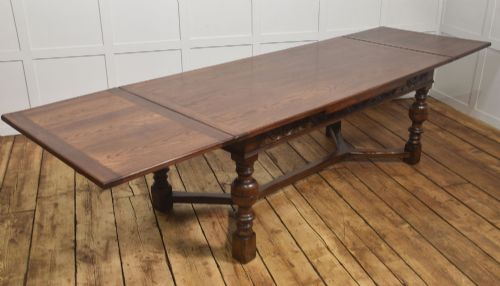
The primary function remains hosting meals, shifting easily from everyday dining to larger gatherings by sliding the end leaves into place beneath the centre board.
Materials and Construction
Makers built these tables predominantly from solid oak, cherrywood, mahogany, and pine, occasionally supplementing the main timber with brass hardware. The construction relies on sturdy refectory frames or farmhouse bases to support the sliding mechanism of the leaves.
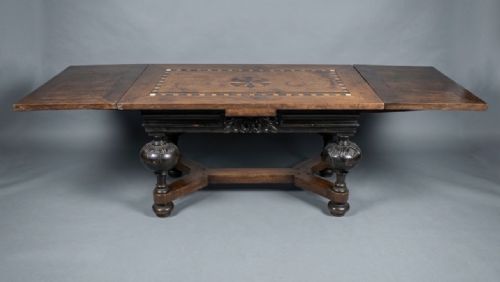
Leaves slide along internal runners beneath the main surface, dropping slightly into place when fully extended to create a level top. Tops feature plain timber planks, scrubbed pine surfaces, or parquetry and marquetry arrangements.
Retail Price Guide 2026
Typical UK retail prices for draw leaf table, calculated from the Sellingantiques database of over a million retail prices indexed since 2003. This retail price guide relies exclusively on Sellingantiques data; no external sources or auction records are used, so the figures do not describe the wider market.
Some draw leaf tables are built long enough to seat sixteen people, requiring teamwork to pull out both ends for dinner.
Standards of Manufacture
Quality rests in the precision of the sliding mechanism and the timber selection for the top boards. Finer tables maintain tight joins when extended, ensuring the leaves align evenly with the centre surface without sagging.
Better examples utilise dense quarter-sawn oak or well-figured mahogany and cherrywood, whereas simpler utilitarian versions employ straightforward pine or plain timber planks. The integrity of the underframe and the crispness of any revival carving separate standard workshop output from exceptional cabinet work.
Gillows
The Draw Leaf Table Glossary
- Draw leaf
- An extending table mechanism where two leaves tuck beneath the main centre top and pull outwards to lengthen the surface. This design keeps the table stable while increasing seating capacity.
- Refectory table
- A long, narrow dining table historically used in monasteries and large halls, frequently adopted for domestic draw leaf designs. They typically feature substantial legs connected by low stretchers.
- Parquetry
- Geometric wood inlay work forming a patterned surface on the table top. It appears on French and formal examples to decorative effect.
- Quarter-sawn
- Timber cut radially across the growth rings, producing a durable board with a distinctive grain figure. This cut resists warping in large dining surfaces.
- Stretcher
- A horizontal wooden brace connecting the legs of a table for structural support. They appear frequently on refectory and revival forms.
Frequently Asked Questions
What timber are most draw leaf tables made from?
Oak is the predominant timber found in these tables, particularly in Edwardian and refectory styles. Cherrywood, mahogany, and pine also appear across nineteenth-century and Regency examples.
The choice of wood dictates the weight and overall formality of the piece.
Are draw leaf tables suitable for daily use?
Solid timber construction and robust underframes make these tables durable for everyday family dining. The extending mechanism is designed for frequent operation.
Regular use benefits from simple waxing to maintain the finish and protect the wood from moisture.
How do I identify an Edwardian draw leaf table?
Edwardian examples typically feature oak construction with straightforward refectory or Jacobean Revival styling. They date from the early twentieth century and often show clean, commercial workshop production.
Examining the underside reveals the mechanical runners and modern hardware standard to that period.