


Cup and Cover Legs
These substantial dining tables known as cup and cover legs bring genuine historic presence and sturdy hospitality to a room.
Cup and Cover Legs
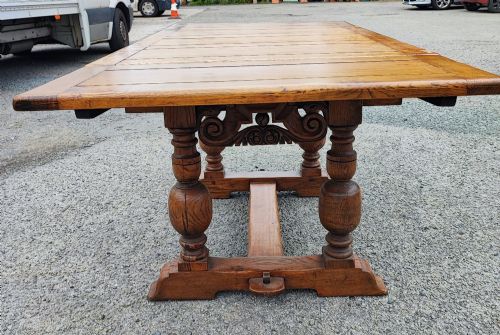
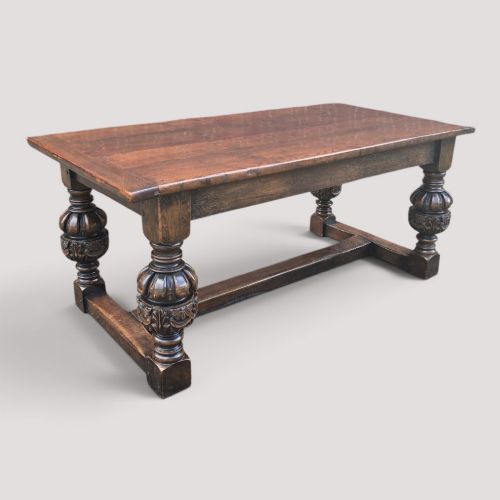
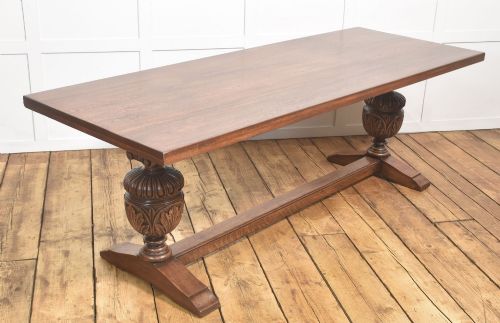
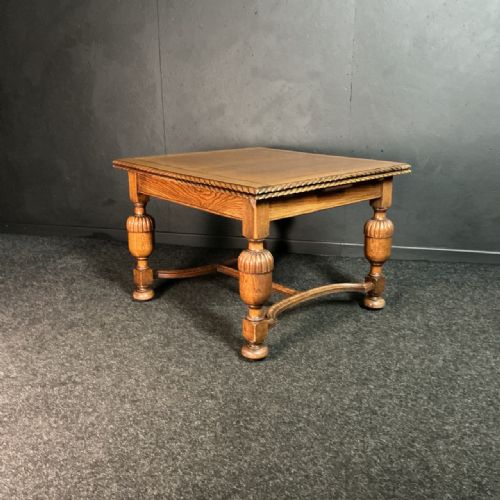
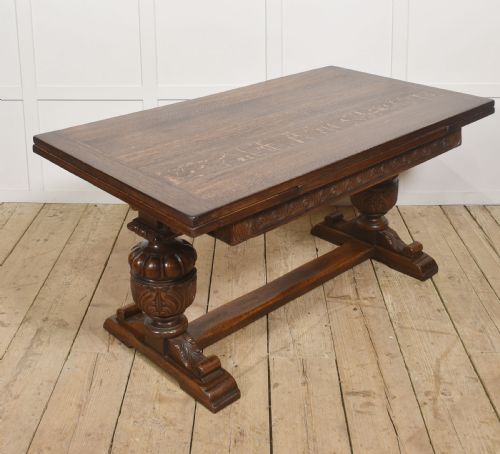
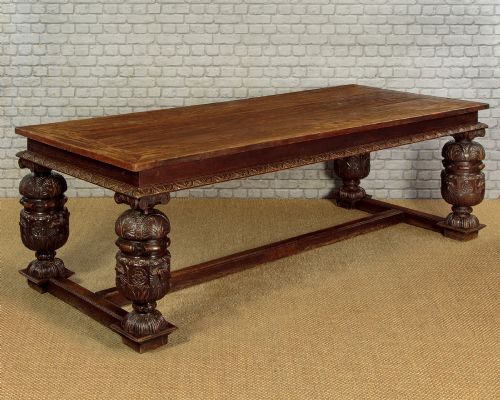
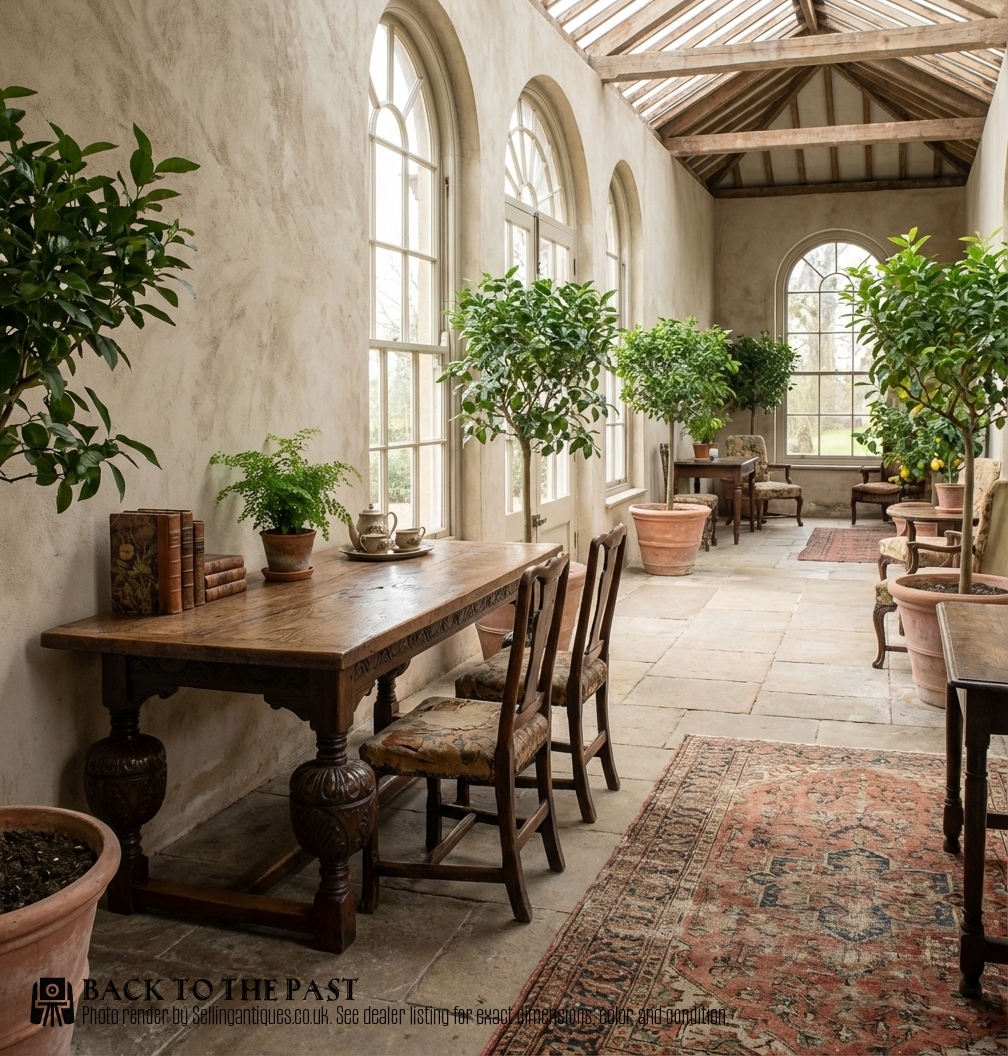
When you search for cup and cover legs, you are looking at substantial oak dining tables designed for communal gatherings and heavy daily use. The examples met on this page span the eighteenth century up to the early twentieth century, showing strong revivalist movements that mimic earlier centuries. They take the form of refectory tables, farmhouse tables, and draw leaf extending tables meant for large dining spaces.
The most common versions on this page are Jacobean Revival and Elizabethan style oak refectory tables dating around nineteen ten. These tables often incorporate pull-out extensions or draw leaf mechanisms to expand the surface area when needed. Oak remains the defining material across every single piece recorded here, anchoring the heavy proportions and structural timber frames.
How they were made
Every piece on this page is built entirely from solid oak, chosen for its durability and prominent grain structure. Carpenters shaped these heavy timbers using traditional joining methods suitable for large refectory and farmhouse dining furniture.
Decoration is achieved through carving, particularly on the prominent bulbous legs and structural aprons characteristic of Elizabethan and Jacobean revival styles. Tables with pull-out extensions and draw leaf mechanisms rely on precise sliding wooden bearers concealed beneath the main top.
All table forms recorded here belong to the refectory, farmhouse, and draw leaf categories.
What varies in quality
The distinction between ordinary and superior pieces lies in the crispness of the carved detail on the bulbous legs and the architectural harmony of the base. Tables that retain balanced proportions and deep, hand-carved ornamentation demonstrate a higher grade of craftsmanship than plain or mechanically reproduced equivalents.
The integrity of the timber and the smooth operation of draw leaf extension mechanisms also divide the range. Well-fitted leaves and stable framing indicate superior workshop standards during construction.
The Cup and Cover Legs Glossary
- Refectory table
- A long dining table originally built for monastic refectories and later adapted for domestic halls. These pieces form the primary furniture type found in this collection.
- Draw leaf table
- An extending table featuring two sliding leaves stored beneath the main top that pull out to lengthen the surface. This mechanism allows the table to accommodate extra guests easily.
- Jacobean Revival
- A nineteenth and twentieth century design style copying the heavy, carved oak furniture of the early seventeenth century. Pieces in this style show bold turnings and dark patination.
- Elizabethan
- A style reflecting the architecture and decorative arts of the late sixteenth century, noted for robust oak construction and prominent structural ornamentation.
Cup and Cover Legs: Frequently Asked Questions
How do draw leaf tables work?
Draw leaf tables operate using two sliding panels hidden directly beneath the main surface. When pulled outward, the main top drops slightly to let the leaves slide into place and create a flush, extended tabletop.
This clever mechanism allows a standard dining table to expand without requiring separate loose leaves that need storage elsewhere.
How do I date an oak refectory table?
Dating an oak refectory table involves examining the tooling marks on the timber, the construction of the joints, and the style of the carving. Revival pieces from the Victorian and Edwardian eras often use machine-cut elements alongside traditional forms.
Original older pieces show hand-planed surfaces and peg construction that differ from later revival interpretations made in the nineteenth and twentieth centuries.
Are these tables suitable for daily dining?
These solid oak tables are exceptionally sturdy and built to withstand regular family use. Their generous proportions provide ample seating space for large households and gatherings.
Using heat-resistant mats and applying appropriate wax maintenance will keep the oak surfaces protected during everyday meals.