
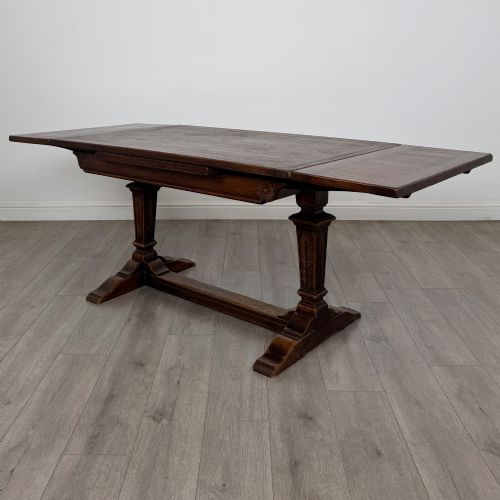
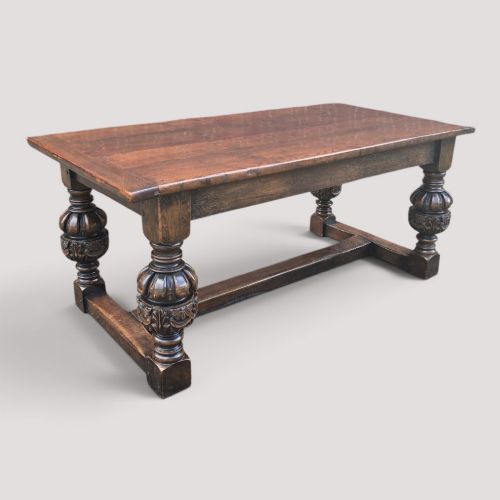
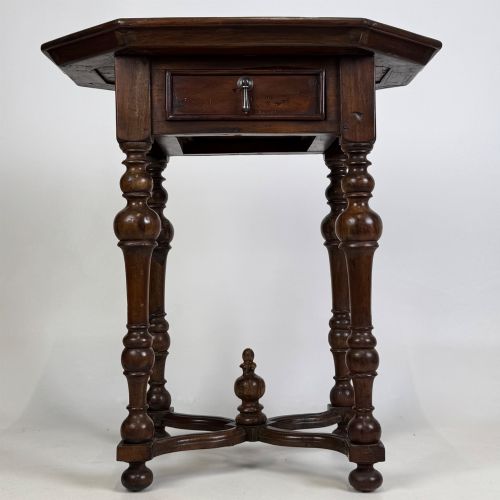
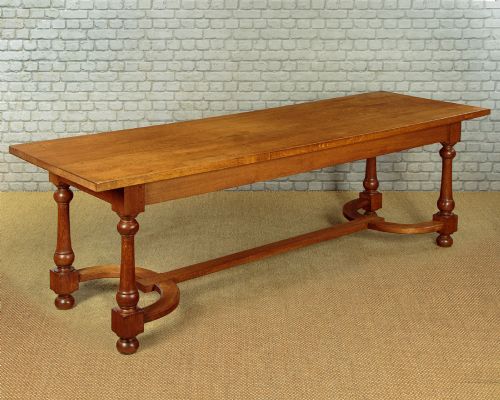
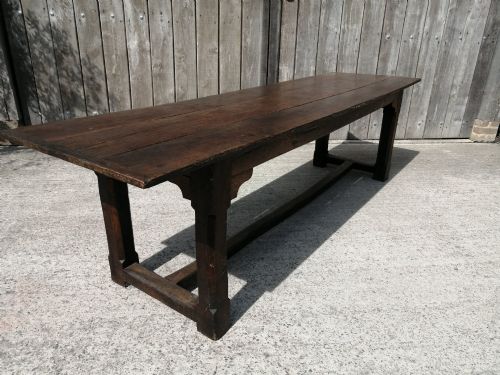
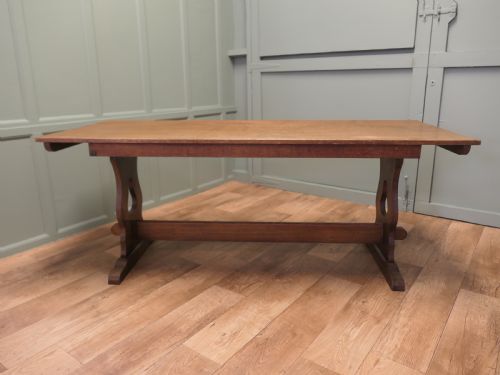
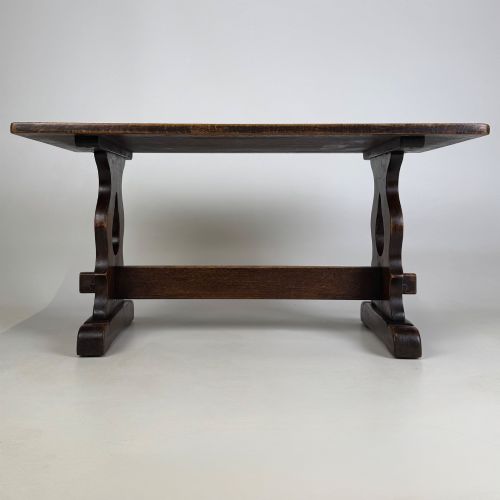
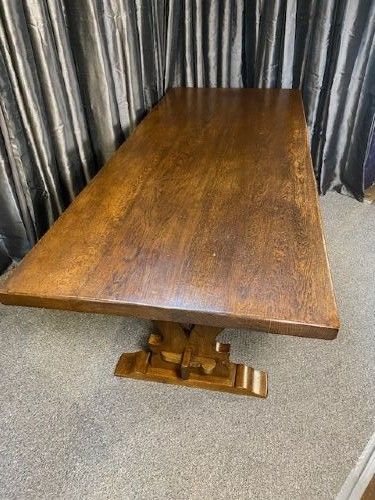
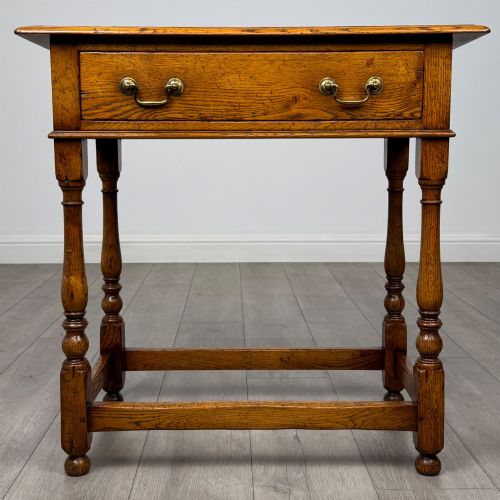
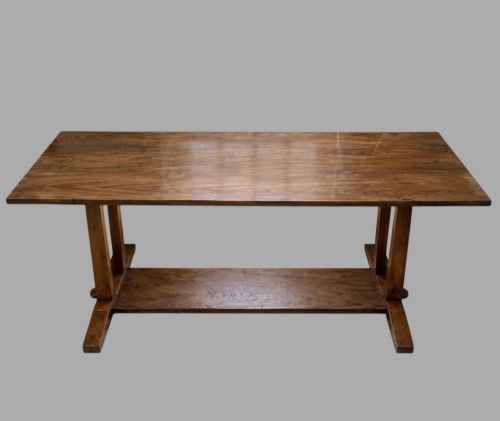
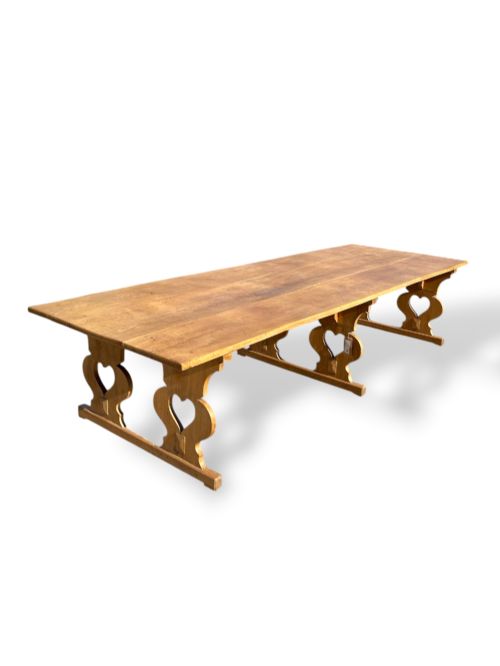
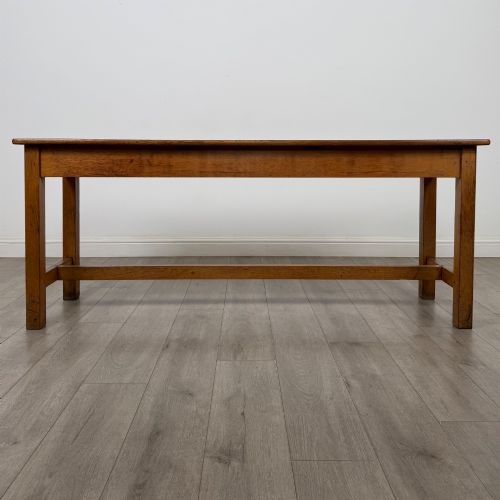
Stretcher Base Table
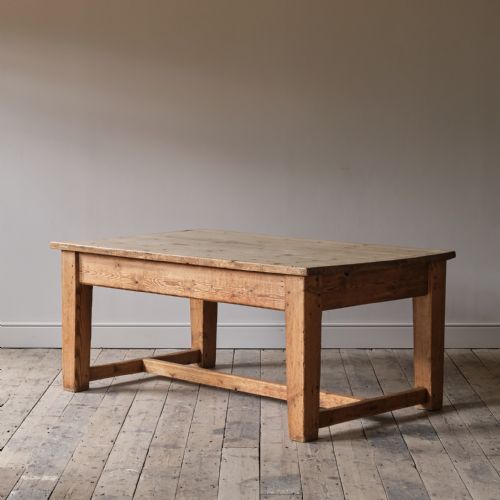
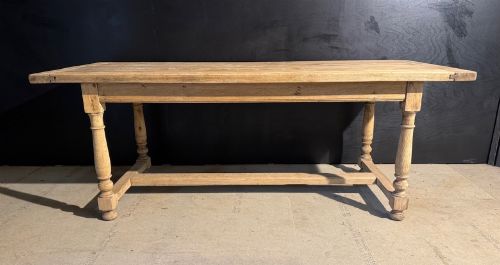
A stretcher base table grounds a room with its architectural bracing, offering sturdy support alongside historic character.
What stretcher base table designs show on this page
A stretcher base table uses connecting horizontal rails between the legs to provide structural rigidity while introducing distinct visual weight. The selection encompasses robust dining tables, practical desks, and smaller occasional pieces.
The evidence records examples ranging from seventeenth and eighteenth century origins through nineteenth century interpretations and twentieth century revivals. Oak dominates the earliest forms, alongside walnut, mahogany, fruitwood, and occasional satinwood or boxwood details.
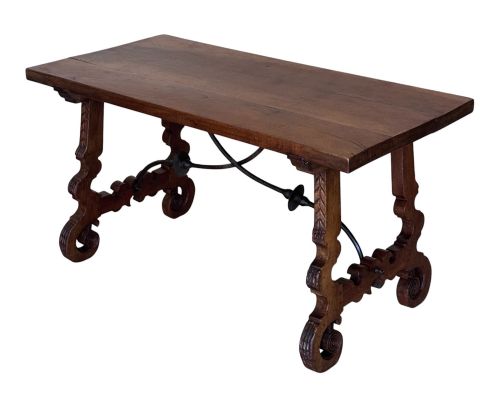
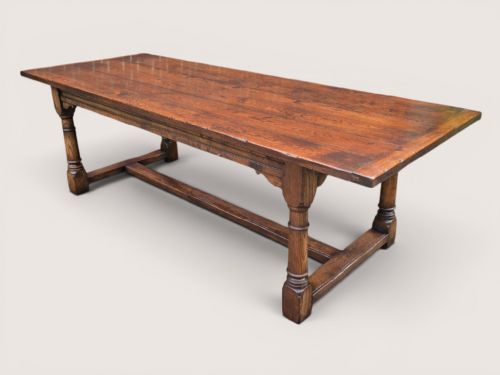
Stylistic influences span rustic farmhouse refectory tables, Italian Baroque designs, Louis XVI fruitwood pieces, and Jacobean revivals. Buyers encounter everything from large kitchen dining formats to compact hall and coffee tables.
How stretcher base tables were constructed
Cabinetmakers utilised solid timbers such as oak, walnut, and mahogany for the primary frames, frequently incorporating fruitwood or exotic veneers on decorative surfaces. Joinery relied on traditional peg and tenon methods to secure the heavy stretchers between the upright legs.
Hardware elements like brass occasionally appeared on related desks or occasional tables, while boxwood and satinwood provided fine inlaid stringing on Edwardian examples. Surface finishes were hand-applied to protect the timber while highlighting natural grain patterns.
Retail Price Guide 2026
Typical UK retail prices for stretcher base table, calculated from the Sellingantiques database of over a million retail prices indexed since 2003. This retail price guide relies exclusively on Sellingantiques data; no external sources or auction records are used, so the figures do not describe the wider market.
The listings span oak, walnut, mahogany, fruitwood, satinwood, and boxwood across dining tables, desks, and coffee tables.
What distinguishes the finest stretcher base tables
Quality rests upon the selection of timber and the integrity of the structural frame. Denser native woods like solid oak and figured walnut command attention through their substantial weight and honest ageing.
Refinement appears in the balance of proportions between the top surface and the stretcher configuration below. Higher grades show seamless integration of joinery and sophisticated stylistic flourishes, from Louis XVI fruitwood carving to Italian Baroque detailing.
The Stretcher Base Table Glossary
- Stretcher
- A horizontal connecting rail or strut between the legs of a table that adds rigidity. These components often sit low to the floor or midway up the support structure.
- Refectory table
- A long, narrow dining table traditionally used in monastic refectories and later adopted in domestic rustic settings. These pieces almost invariably feature heavy stretcher bracing.
- H-stretcher
- A specific stretcher configuration resembling the letter H in plan view, connecting four legs with a central crossbar. This layout provides exceptional lateral stability.
- Inlaid
- The technique of embedding contrasting pieces of wood or other materials into the surface to form decorative patterns. Edwardian makers applied this method using boxwood and satinwood.
Frequently Asked Questions
What is a stretcher base table?
A stretcher base table is any table design that incorporates horizontal rails or struts connecting the legs for extra rigidity and support.
These pieces range from massive oak refectory dining tables to smaller walnut hall and occasional tables.
How do I style a refectory table?
A refectory table works well as the anchor for a dining room or kitchen, pairing naturally with benches or mismatching antique chairs.
The substantial wooden construction lends itself to rustic farmhouse or traditional interiors.
What woods were used for these tables?
The evidence shows a strong preference for solid oak and walnut, alongside mahogany, fruitwood, satinwood, and boxwood.
Earlier pieces typically rely on heavy oak timbers, while later Victorian and Edwardian examples introduce finer mahogany and inlaid details.
Are stretcher base tables sturdy?
The defining feature of these tables is the connecting rail system, which was engineered precisely to prevent the legs from wobbling.
This structural bracing makes them particularly durable for everyday dining and daily use.