

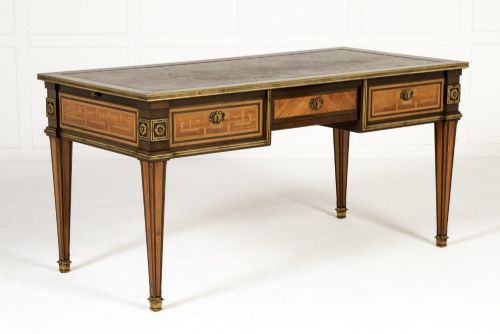
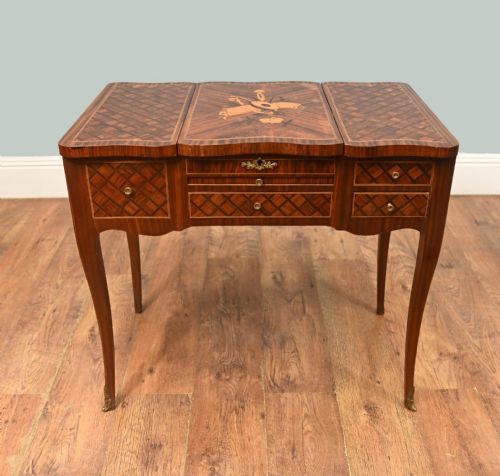
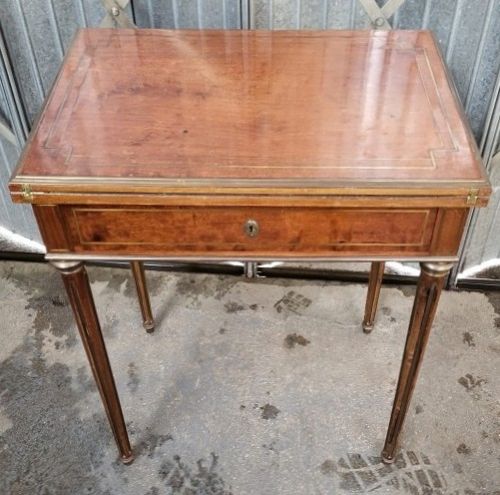
Louis XVI Writing Desk
These louis xvi writing desk examples bring neoclassical symmetry and refined French taste straight into the study.
The Louis XVI Writing Desk
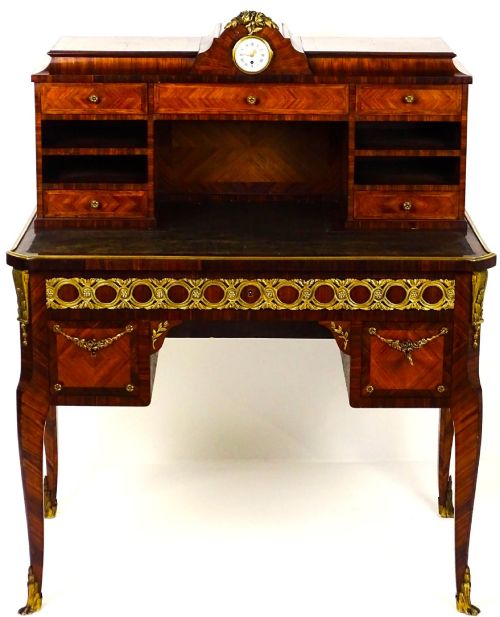
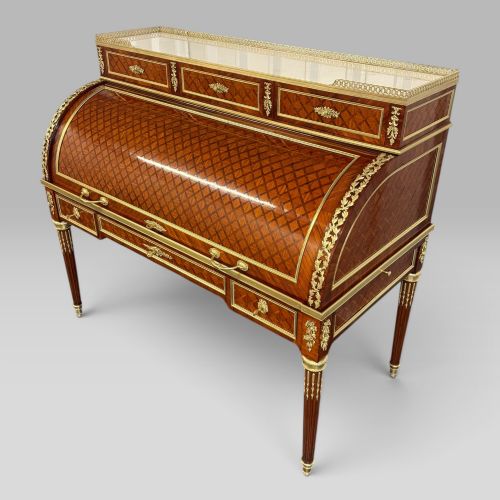
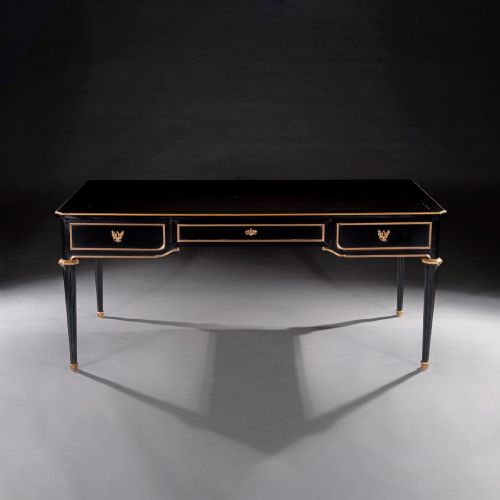
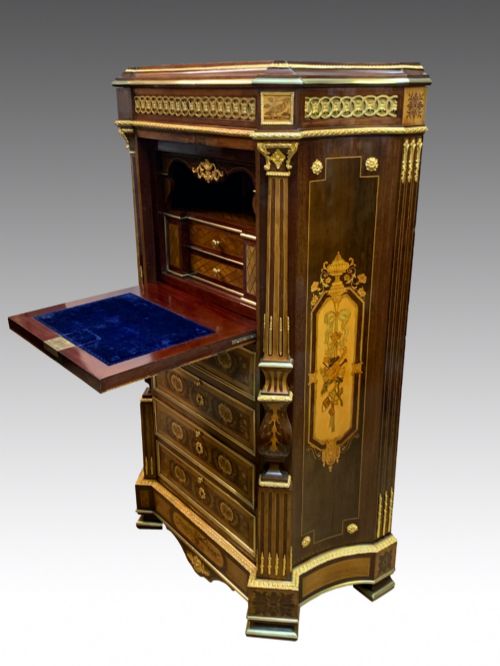
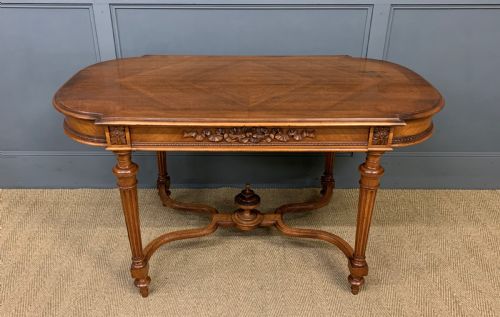
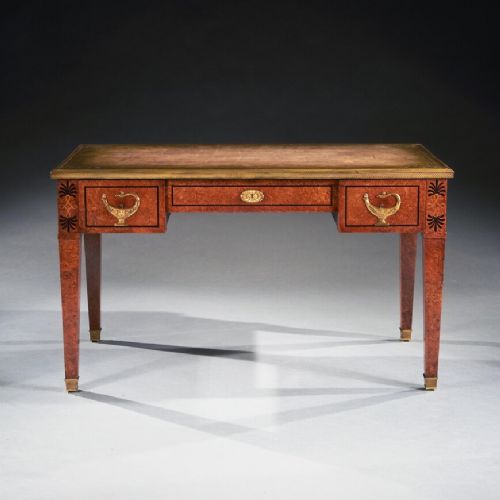
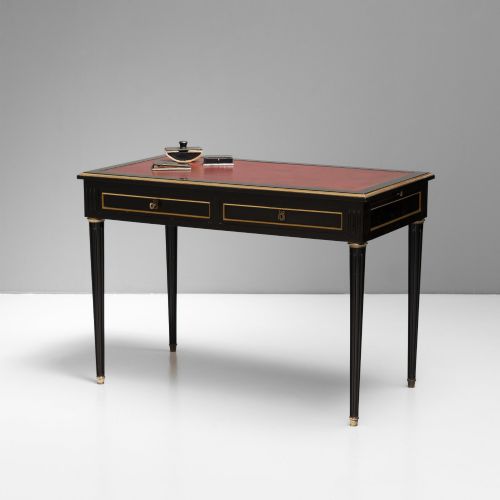
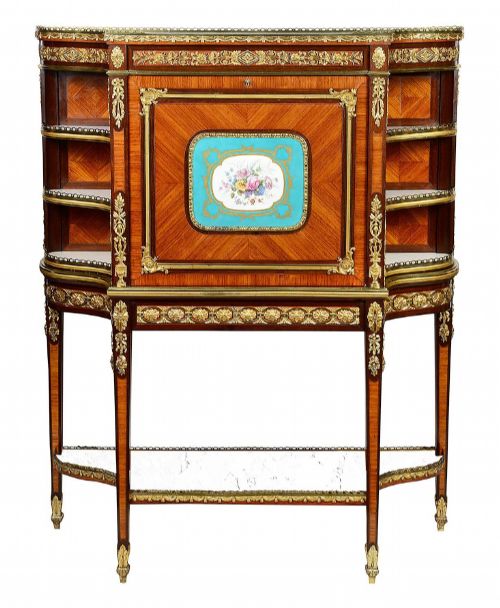
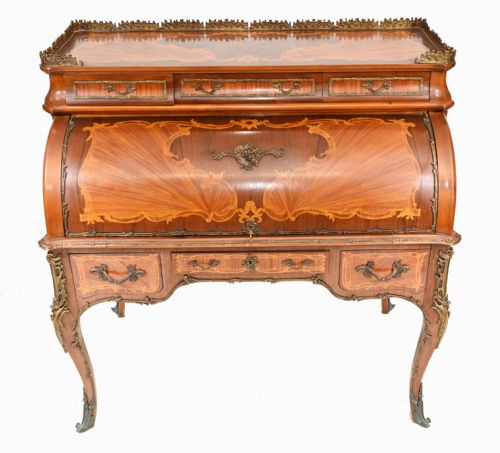
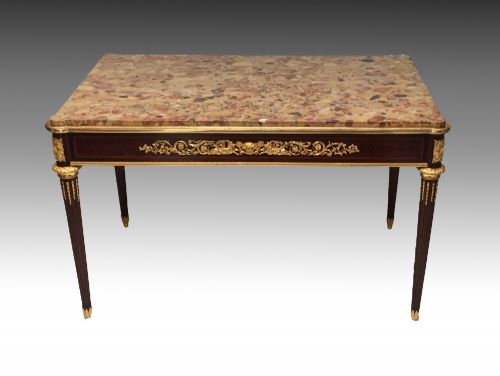
A louis xvi writing desk captures the restrained neoclassical lines and elegant proportions associated with French furniture design. Pieces seen on this page include cylinder desks, bonheur du jour forms, and traditional writing tables.
Most examples date from the nineteenth century through the Edwardian period, largely following the Louis XVI revival and Napoleon III styles. These tables and desks range from compact ladies writing desks to larger bureau plat forms.
Makers and workshops of the nineteenth century adapted original eighteenth-century forms using mahogany, walnut, fruitwood, and kingwood. The resulting forms balance functional writing surfaces with decorative mounts and inlay.
Materials and Construction
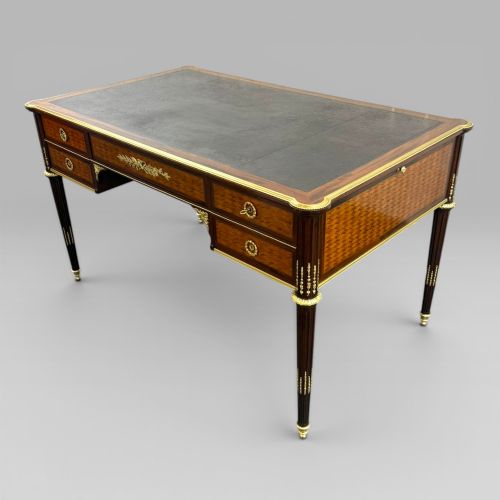
Cabinetmakers constructed these desks using solid hardwoods like mahogany and walnut, often applying burr walnut or kingwood veneers over secondary timbers. Boxwood inlay adds delicate linear contrast to the wood surfaces.
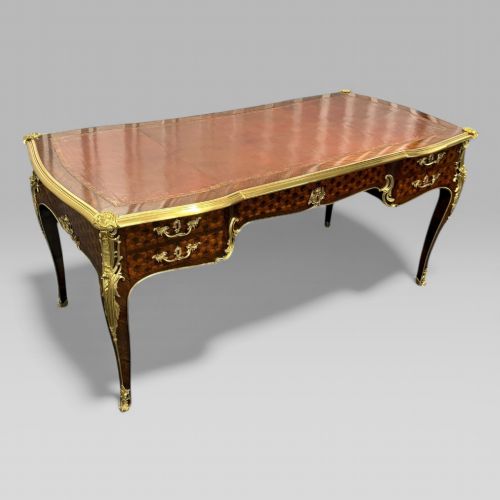
Mounts in cast ormolu and brass accentuate the structural lines of the legs, aprons, and corners. Leather writing inserts, frequently tooled in gilt, provide a durable surface for correspondence.
Retail Price Guide 2026
Typical UK retail prices for louis xvi writing desk, calculated from the Sellingantiques database of over a million retail prices indexed since 2003. This retail price guide relies exclusively on Sellingantiques data; no external sources or auction records are used, so the figures do not describe the wider market.
Many a nineteenth-century lady's writing desk doubles as a sewing table, neatly hiding your mending beneath the correspondence.
Assessing Quality
The refinement of the cast ormolu mounts and the precision of the boxwood inlay distinguish the finest pieces. Crisp chasing on the bronze mounts indicates a higher standard of workshop production.
Choice of timber grain and the quality of the veneer matching across drawers and writing surfaces define the grade of the desk. Secondary woods and the internal joinery of the drawers further reflect the maker's hand.
Alphonse Tahan·Francoise Linke
The Louis XVI Writing Desk Glossary
- Ormolu
- Gilt bronze mounted onto furniture as decorative mounts and sabots. This technique involves applying a gold amalgam to bronze before firing.
- Kingwood
- A dense, heavily figured Brazilian timber utilised for decorative veneers on fine cabinetwork. It displays dark violet and brown contrasting zones.
- Bonheur Du Jour
- A light lady's writing desk featuring a small superstructure with shelves or drawers above the main writing surface. The form gained popularity in mid-eighteenth-century France.
- Bureau Plat
- A freestanding writing table fitted with drawers across the frieze, typically finished on all sides. These tables often feature inset leather writing surfaces.
- Sabot
- A metal mount fitted to the foot of a piece of furniture to protect the timber from wear. They appear frequently in gilt brass or ormolu on revival pieces.
Frequently Asked Questions
What is a louis xvi writing desk?
A louis xvi writing desk is a piece of furniture modeled on the neoclassical style popular in late-eighteenth-century France, characterised by straight tapered legs and restrained geometric ornamentation.
Most surviving examples date from the nineteenth-century revival periods, utilising timbers such as mahogany, walnut, and kingwood alongside ormolu mounts.
How do I distinguish revival periods?
Nineteenth-century revival pieces often display machine-cut veneers and distinct nineteenth-century hardware alongside traditional hand-cut joinery. Makers during this era reinterpreted eighteenth-century French forms with contemporary workshop techniques.
Examination of the secondary woods inside the drawers and the composition of the bronze mounts helps clarify the actual period of manufacture.
How should I care for the leather?
The leather writing surface benefits from gentle dusting and occasional conditioning with appropriate wax-free leather creams to prevent drying and cracking. Avoiding direct sunlight preserves both the leather and the surrounding gilt tooling.
Spills should be blotted immediately with a soft, dry cloth to protect the underlying timber and paper lining.
Where do I place these desks?
Because bureau plat and writing tables are finished on all sides, they function effectively as freestanding centrepieces within a study or library. Cylinder desks and bonheur du jour forms typically sit against a wall or beneath a window.
Consider the scale of the room, as nineteenth-century revival desks often feature substantial proportions and prominent ormolu mounts.