



French Cylinder Bureau
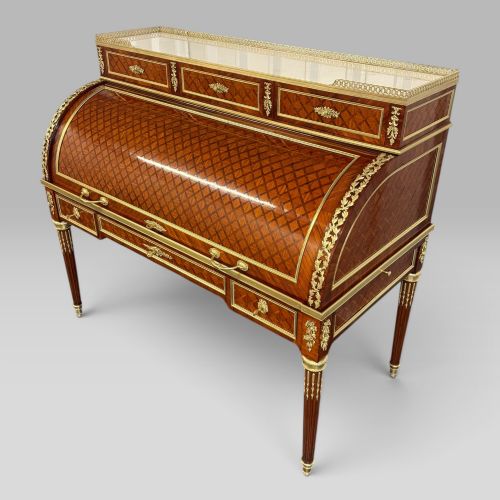
A French cylinder bureau offers a concealed writing surface beneath a rolling curved lid, combining practicality with refined continental cabinet-making.
French Cylinder Bureau
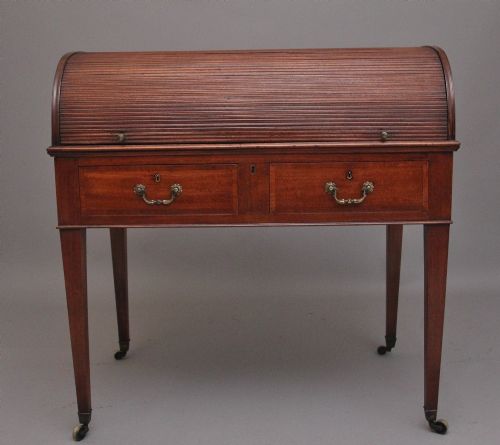
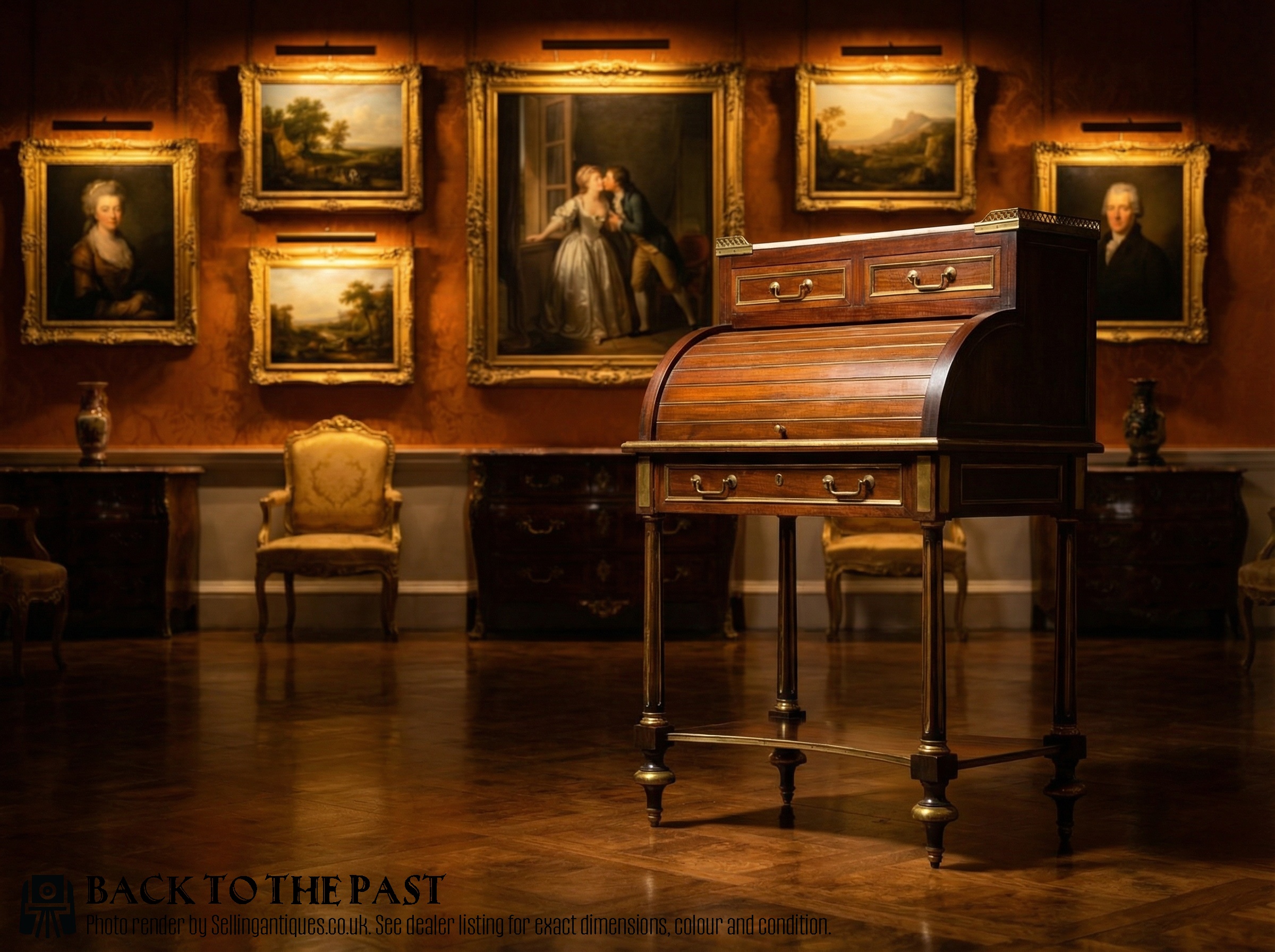
A French cylinder bureau provides a private workspace where the curved roll top retracts to reveal interior fitted drawers and a pull-out writing slide. These desks emerge across multiple periods, including the eighteenth century, the Victorian era, and later revivals spanning the nineteenth and early twentieth centuries.
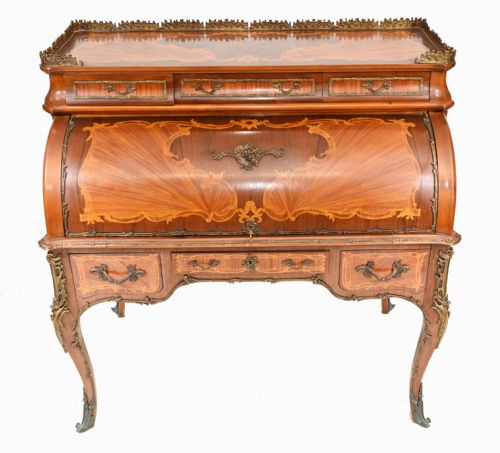
The form appears in various scales, from large library writing desks in flame mahogany to delicate ladies' bureaux inlaid with floral marquetry and parquetry patterns. Makers often shape these pieces within revival aesthetics such as Louis XVI, Louis XV, and Empire styles.
Surviving examples range from grand walnut secretary cabinets to compact miniature desks finished with brass mounts or ormolu details. Each piece reflects the enduring demand for sophisticated continental writing furniture equipped with functional compartments.
Materials and construction
Cabinet-makers build the primary carcass of a French cylinder bureau using dense timbers like mahogany, walnut, rosewood, kingwood, and tulipwood, often laying down elaborate marquetry or geometric parquetry patterns across the surfaces. Secondary woods and fruitwood support the internal compartments and sliding writing shelves.
The characteristic rolling cylinder mechanism requires precise joinery to ensure the curved slats glide smoothly within hidden tracks. Artisans then apply cast brass mounts, ormolu enrichments, and occasionally inset marble tops to complete the decorative scheme.
Tiny secret drawers wait inside for hidden love letters.
Assessing quality and execution
The distinction between standard examples and superior works lies in the depth of the timber selection and the precision of the marquetry inlay. Finely figured flame mahogany or carefully matched kingwood veneers demonstrate higher workshop standards.
The crispness of the ormolu mounts and the smooth operation of the rolling cylinder mechanism indicate the original maker's skill. Finer pieces maintain tight joints in the internal stationery fittings and delicate secret compartments.
Francois Linke
The French Cylinder Bureau Glossary
- Cylinder bureau
- A desk featuring a quarter-circle rolling wooden shutter that conceals the writing surface and pigeonholes when closed. This mechanism keeps correspondence private and tidy.
- Marquetry
- Decorative veneer work forming pictorial or floral patterns using various tinted woods. Artisans meticulously cut and fit these thin wood sections together.
- Parquetry
- Geometric wood inlay arranged in patterns such as cubes, lozenges, or herringbone. It creates a structured, architectural surface texture on furniture panels.
- Ormolu
- Gilded bronze mounts applied to furniture for decorative enrichment. These cast metal details highlight corners, aprons, and keyholes.
- Bonheur de jour
- A light lady's writing desk usually featuring a small cabinet or shelving superstructure above the main writing surface. The phrase translates to day's happiness.
French Cylinder Bureau: Frequently Asked Questions
How does the cylinder mechanism operate?
The curved wooden shutter runs along concealed side grooves, sliding backward into the body of the desk when opened. Pulling the writing slide forward often coordinates with this action to retract the lid automatically.
This clever design protects the writing surface from dust while keeping ongoing correspondence neatly hidden away from view.
Where should I place a cylinder bureau?
These desks suit studies, living rooms, or bedrooms where the polished timber and decorative brass mounts can act as a focal point. Because the back is sometimes finished with veneer, certain examples can stand away from a wall.
Ensure the room maintains stable humidity levels to protect the delicate veneers and keep the wooden rolling mechanism moving freely.
How do I care for antique wood surfaces?
Dust the exterior regularly with a soft, dry cloth and avoid placing the desk near direct heat sources or strong sunlight. These precautions prevent the timber from drying out and safeguard the underlying veneers.
Apply high-quality beeswax sparingly to nourish the wood and maintain a soft, natural sheen without building up heavy chemical residues.