




Marble Top Writing Desk
A marble top writing desk brings a cool, polished stone surface to a traditional workspace, offering both refined Continental elegance and sturdy practicality.
Marble Top Writing Desk
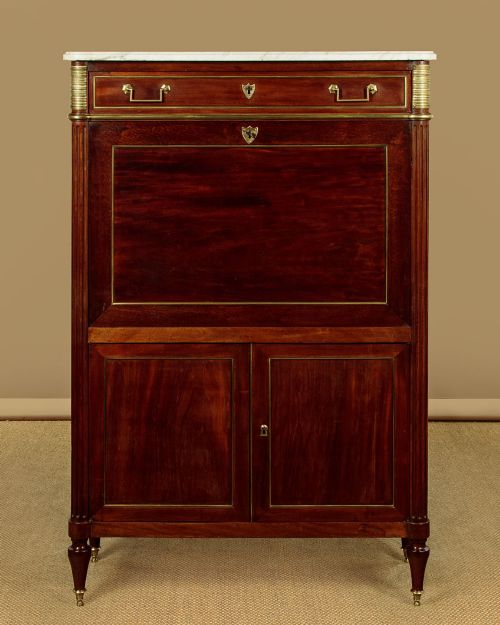
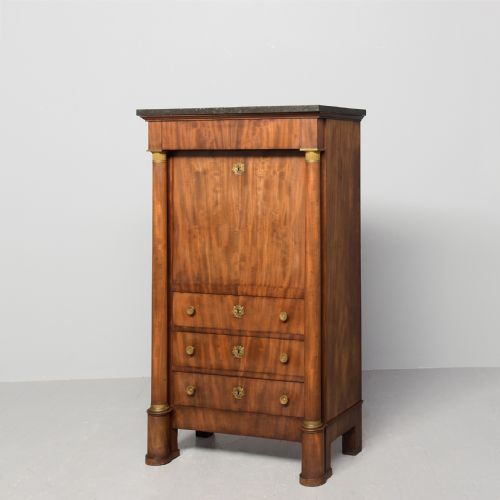
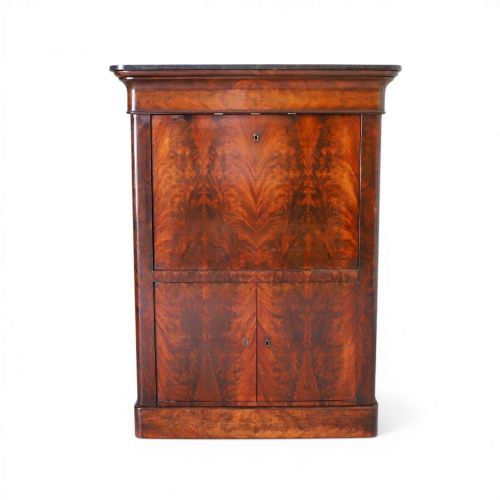
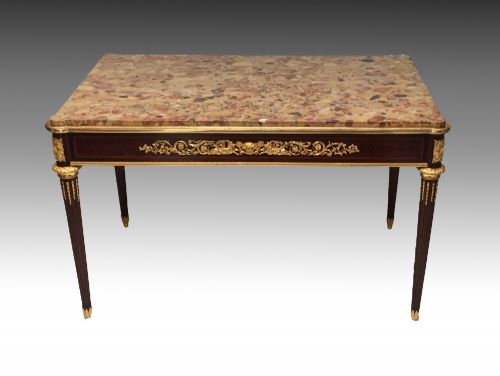
A marble top writing desk combines a heavy stone slab with timber cabinetry built for correspondence, record-keeping, and storage. The search phrase covers upright fall-front cabinets alongside traditional kneehole tables, drawing from nineteenth-century Continental and British cabinetmaking.
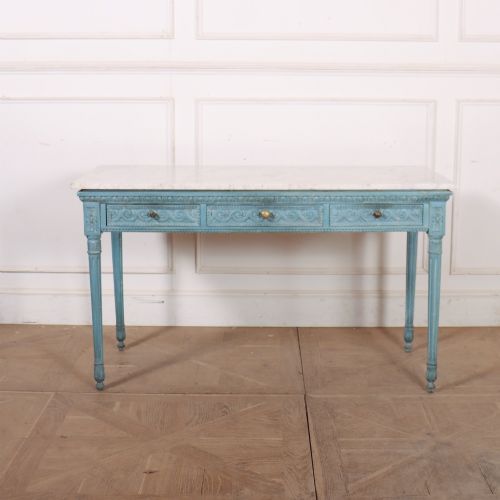
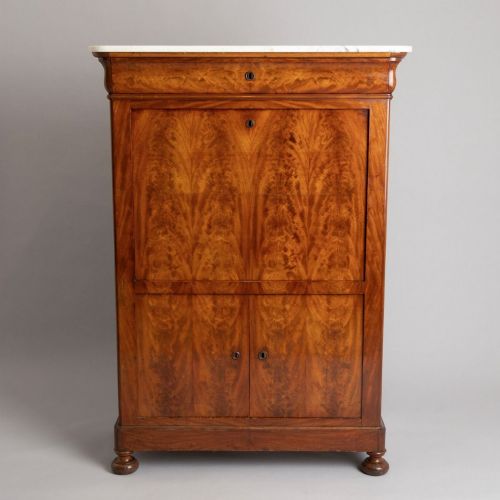
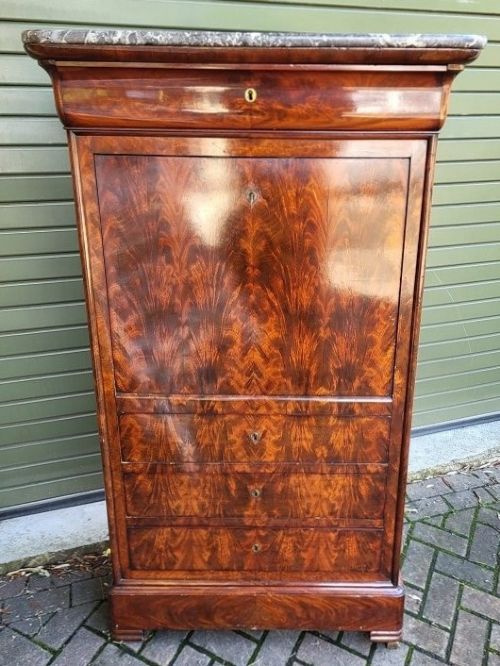
The vertical secretaire à abattant form dominates the selection, featuring a drop-down writing flap that conceals fitted interior drawers. Alongside these upright pieces appear cylinder desks, smaller bonheur du jours, and occasional centre tables fitted with stone surfaces.
Most examples originate from French workshops spanning the Empire, Restoration, and various revival periods, alongside nineteenth-century British and Italian interpretations. Walnut, mahogany, and exotic veneers provide the structural timber beneath the stone tops.
How they were made
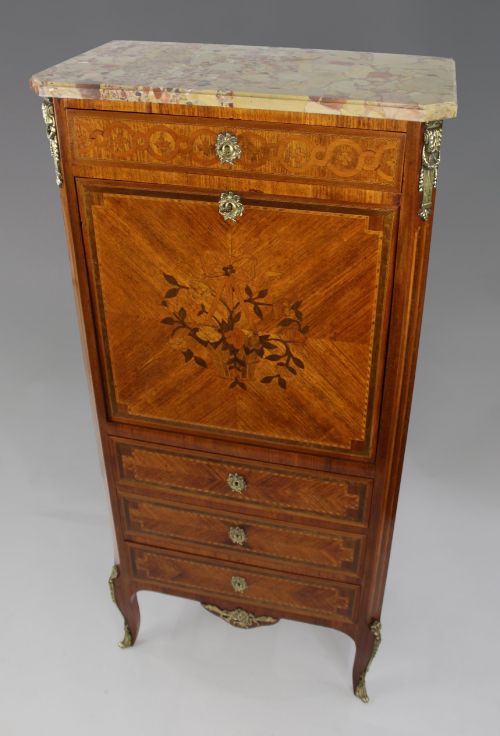
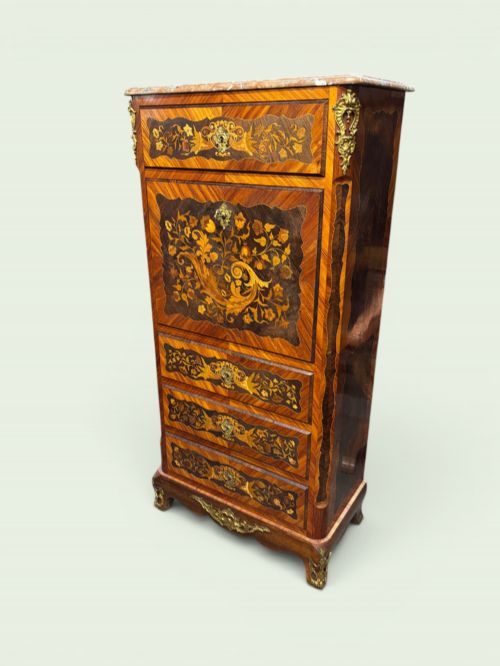
Cabinetmakers constructed the carcases from dense hardwoods like mahogany, walnut, and kingwood, frequently applying intricate marquetry, parquetry, or geometric veneer patterns across the exterior surfaces. Drop-front writing panels and internal compartments required precise joinery to ensure smooth movement within heavy cabinetry.
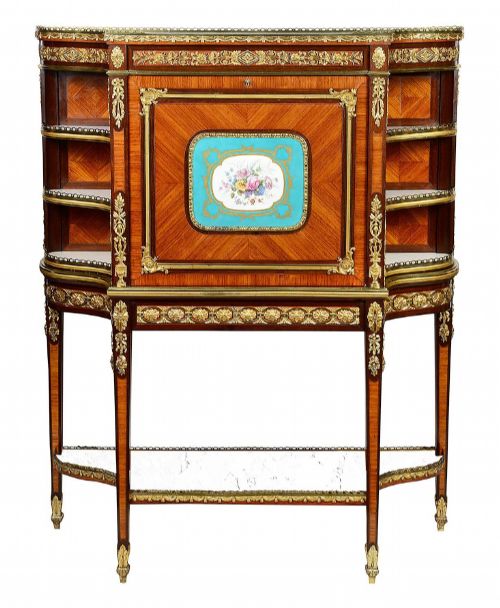
Gilt bronze, ormolu, and cast brass mounts were applied to corners, drawers, and friezes, providing structural reinforcement alongside decorative contrast against the dark wood. Heavy marble slabs, often white or veined grey, were custom-cut and polished to fit precisely onto the upper surface of each desk.
Marble Top Writing Desk Retail Price Guide 2026
Typical asking prices for marble top writing desk among the pieces listed under this phrase on Sellingantiques today, from the lower quarter to the upper quarter. They describe what is for sale here now, not the wider market.
Listings feature nineteenth-century French and British forms, spanning mahogany, kingwood, and walnut construction paired with marble tops.
What varies in quality
The refinement of the cast bronze mounts and the complexity of the marquetry patterns separate standard production from exceptional cabinetmaking. Hand-chased ormolu details and finely figured flame mahogany veneers indicate workshop pieces of high ambition.
The thickness, selection, and original matching of the marble slab alter the visual weight and balance of the piece. Integrated interior mechanisms, secret drawers, and the retention of original brass hardware mark the distinction between well-preserved survivals and heavily restored examples.
Blake London·Maples·Paul Sormani·John Mclean·Millet·Mathieu Befort
The Marble Top Writing Desk Glossary
- Secretaire abattant
- An upright writing cabinet featuring a hinged drop-front flap that opens to reveal a fitted interior with small drawers and pigeonholes. This vertical form saves floor space while providing concealed workspace.
- Ormolu
- Gilded bronze mounts applied to furniture for decorative enrichment and edge protection. Skilled artisans cast and hand-chased these metal elements to achieve sharp relief.
- Marquetry
- The art of applying small pieces of veneer to a structure to form decorative patterns or pictorial scenes. Cabinetmakers used various contrasting timbers to create depth and shade.
- Bonheur du jour
- A light, elegant lady's writing desk featuring a small cabinet or superstructure atop the main writing surface. These portable tables appeared frequently during the nineteenth century.
- Cylinder desk
- A writing desk fitted with a curving quarter-circle wooden shutter that rolls backward to uncover the writing slide and interior pigeonholes. This mechanism keeps correspondence hidden when not in use.
Marble Top Writing Desk: Frequently Asked Questions
What is a secretaire abattant?
A secretaire abattant is an upright cabinet with a heavy fall-front panel that pulls down to serve as a writing surface. Behind this flap lie numerous small drawers and compartments for letters and documents.
When closed, the piece presents the tidy appearance of a standard chest or cabinet, concealing the workspace entirely within the vertical carcase.
How do I care for marble tops?
Marble surfaces require gentle cleaning with warm water and mild, non-abrasive soap to preserve the polished finish. Avoid acidic liquids, oils, and harsh chemical cleaners that can etch or stain the stone.
Using felt pads beneath heavy desk accessories prevents surface scratching and maintains the smooth texture of the polished slab.
Are marble top desks heavy?
These pieces carry considerable weight due to the solid stone slab fitted to the upper surface. The marble sits unattached or pinned lightly into the wooden frame rather than fastening permanently.
When moving the furniture, lifting off the heavy stone top first prevents structural strain on the delicate veneer and timber joints.
Where were these desks made?
The majority of these pieces originate from Parisian workshops responding to shifting revival styles throughout the nineteenth century. British cabinetmakers also produced similar forms, alongside regional Italian and Swedish examples.
Continental makers favoured exotic veneers and gilt bronze mounts, while British workshops often emphasised figured mahogany and walnut timbers.