


French Bureau De Dame
A french bureau de dame offers an elegant, compact writing surface for the home, combining intricate marquetry and fine timbers.

Form and Period
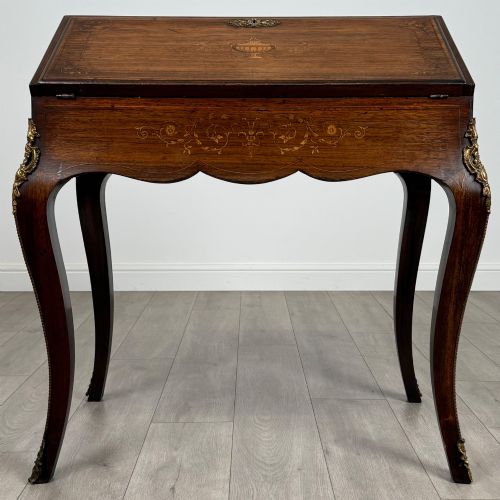
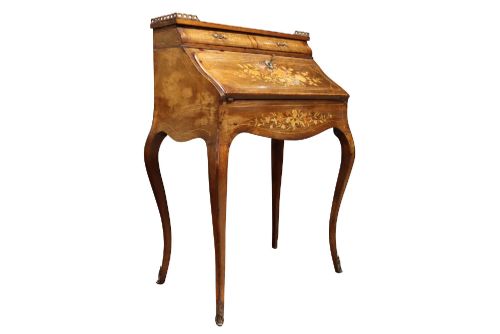
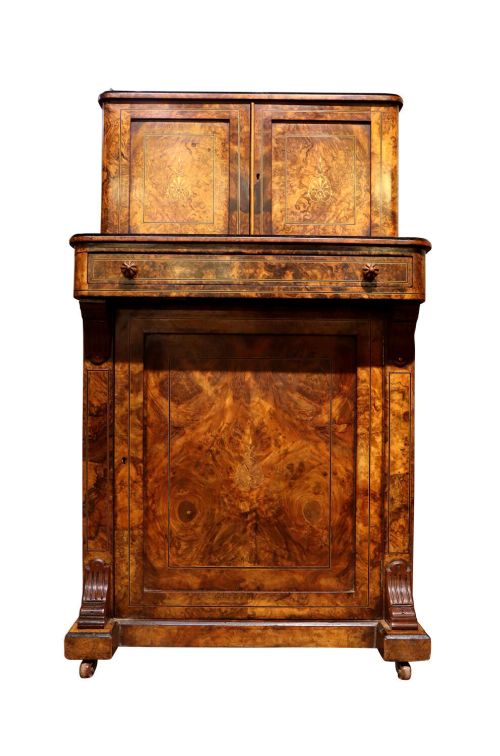
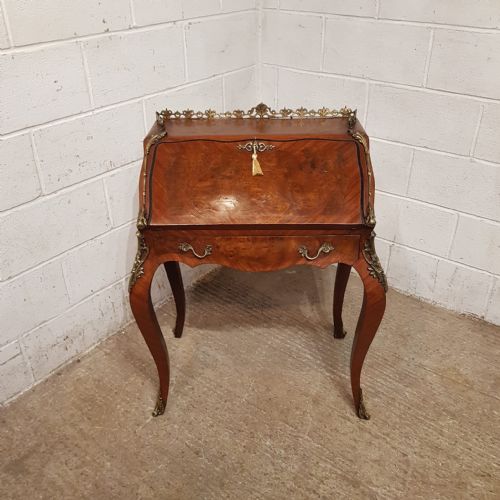
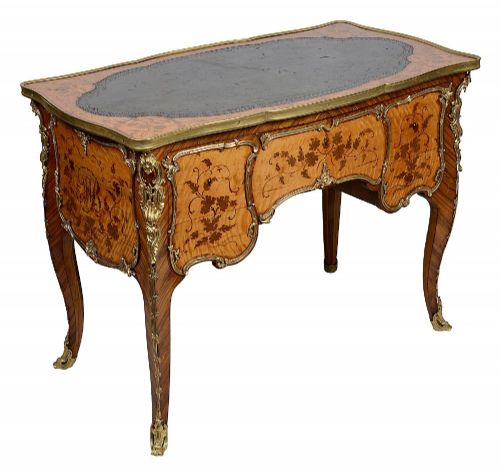
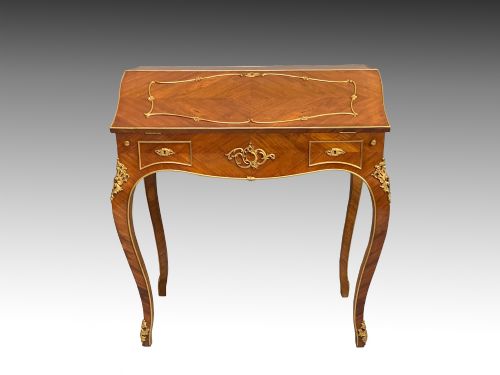
A french bureau de dame is a dedicated ladies writing desk typically designed with a sloping fall front or a superstructure above the writing surface. The pieces on this page span the nineteenth century, including Victorian examples alongside revivalist interpretations.
The dominant aesthetic draws heavily on Louis XV and Rococo revivals, expressing curved lines and decorative veneering. Cabinet makers also employed Empire revival styles alongside simpler provincial fruitwood variants.
The form functions primarily as a domestic writing desk or small cabinet, prioritising refined proportions over large scale storage.

Materials and Technique
Carpenters constructed these desks using a carcase of native or imported timbers, overlaid with decorative veneers such as kingwood, rosewood, mahogany, satinwood, and burr walnut. Marquetry and parquetry patterns frequently adorn the exterior surfaces.
Mounts in cast ormolu and brass accent the contours, protecting corners and framing panels. Certain pieces incorporate leather writing inserts, velvet linings, and occasionally painted panels or porcelain plaques.
Retail Price Guide 2026
Typical UK retail prices for french bureau de dame, calculated from the Sellingantiques database of over a million retail prices indexed since 2003. This retail price guide relies exclusively on Sellingantiques data; no external sources or auction records are used, so the figures do not describe the wider market.
Listings feature nineteenth-century examples predominantly utilising rosewood, kingwood, and mahogany, alongside brass and ormolu mounts.
Assessment of Quality
The distinction between standard production and exhibition quality lies in the execution of the marquetry and the crispness of the ormolu mounts. Finer desks display complex floral or geometric wood veneers meticulously fitted across curved surfaces.
Construction details such as the thickness of the timber, the subtlety of serpentine shaping, and the integration of specialised elements like cylinder mechanisms or signed cabinet work elevate the standing of individual pieces.
H Lebrun
The French Bureau De Dame Glossary
- Bureau de dame
- A ladies writing desk, typically featuring a sloping fall front concealing small drawers and pigeonholes. It serves as a refined piece of domestic furniture.
- Marquetry
- Decorative veneer work forming pictorial or geometric patterns using various coloured woods. Artisans meticulously cut and fitted these thin pieces together.
- Ormolu
- Gilt bronze mounts applied to furniture for decorative effect. The technique involves a mercury gilding process on cast bronze.
- Kingwood
- A dense, heavily figured timber prized for its rich brown and violet hues. Cabinet makers used it extensively in fine French revival furniture.
- Fall front
- A hinged writing flap that drops down to provide a horizontal surface for correspondence. It typically covers an interior arrangement of compartments.
Frequently Asked Questions
What is a french bureau de dame?
A french bureau de dame is a ladies writing desk originating mainly in the nineteenth century. These pieces combine compact proportions with decorative veneers and metal mounts.
They were designed for personal correspondence and light administrative tasks within private rooms rather than large studies.
How were these desks used?
Owners used them primarily for writing letters, keeping journals, and storing stationery within the fitted interior compartments. The fall front provided a convenient surface when opened.
In period homes, they functioned as personal furniture placed in drawing rooms or private boudoirs.
How do I live with one?
These desks suit modern interiors as focal points in studies, bedrooms, or living spaces. Their compact footprint allows them to fit comfortably against walls where large desks overwhelm the room.
Care involves keeping them away from direct sunlight and maintaining stable humidity to protect the delicate wood veneers and marquetry.
How do I tell periods apart?
Dating relies on observing the combination of timbers, revival styles, and construction methods. Nineteenth-century examples often incorporate machine-cut veneers alongside hand-finished marquetry and revival motifs.
Earlier pieces show provincial fruitwood construction, while later Victorian items lean towards heavy rosewood and specific revival aesthetics like Louis XV or Empire.