

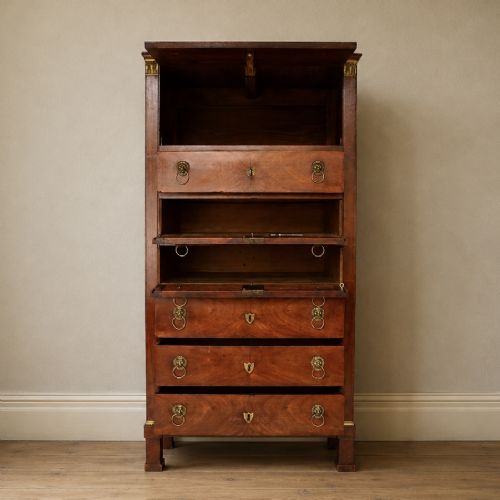
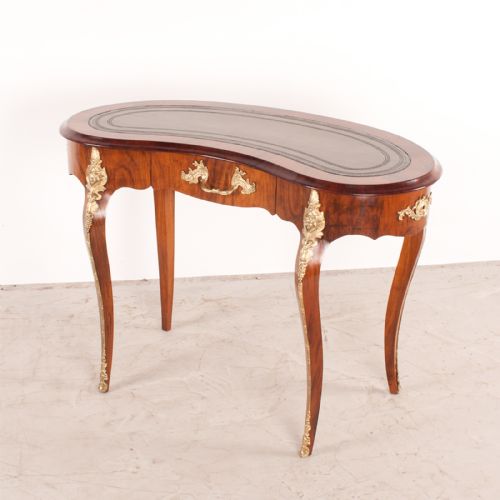
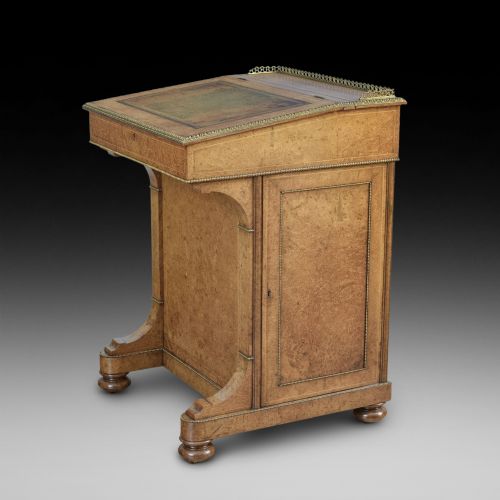
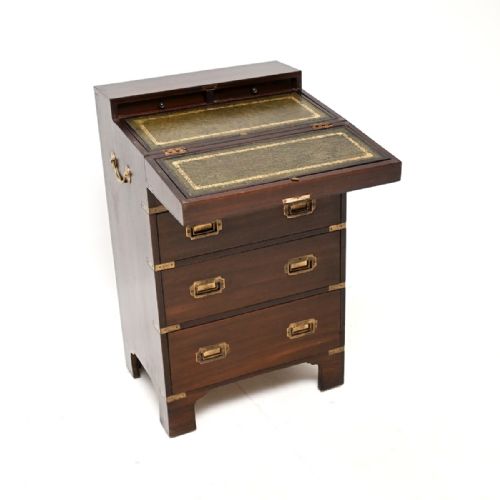
Brass Mounted Bureau
A brass mounted bureau brings fine timber and crisp metalwork together to anchor a study with continental elegance.
Brass Mounted Bureau
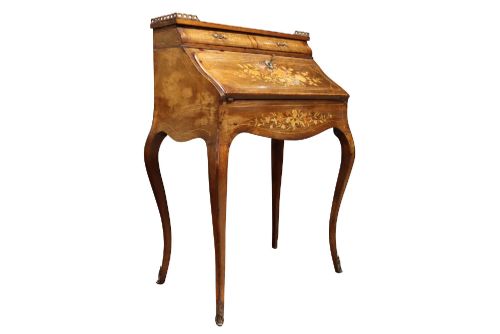
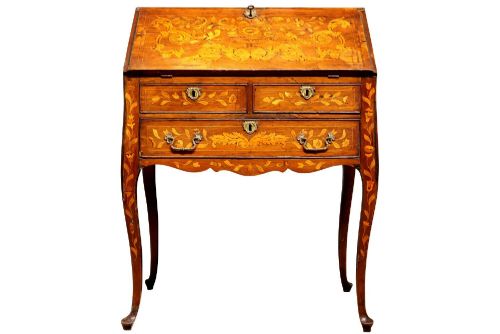
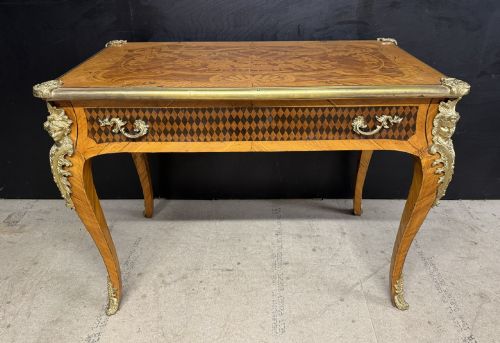
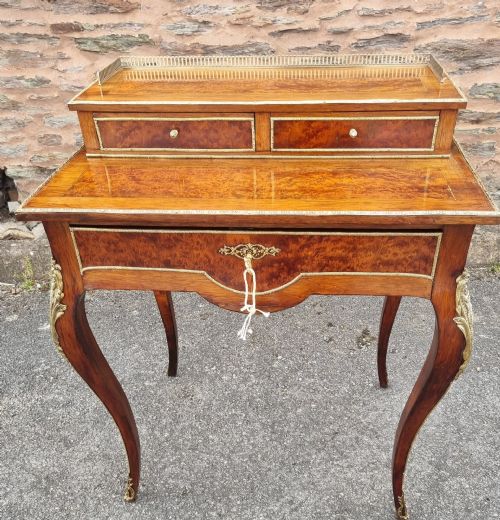
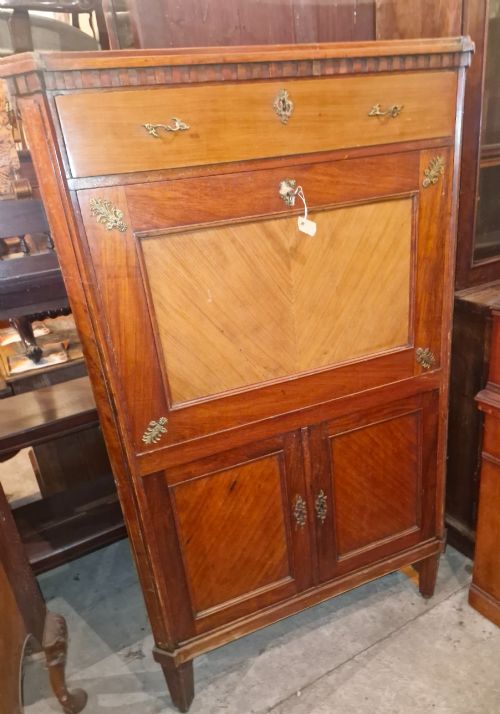
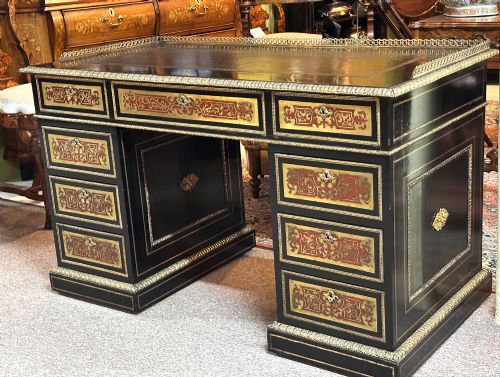
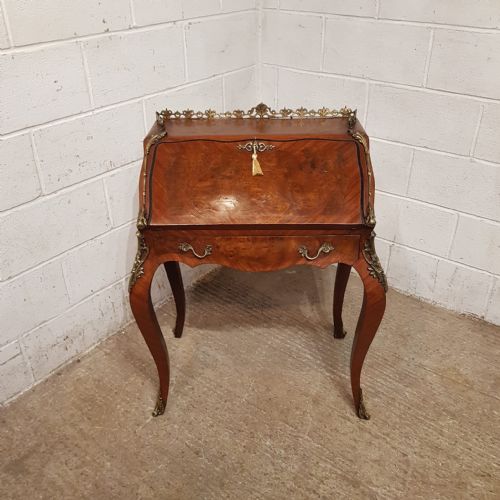
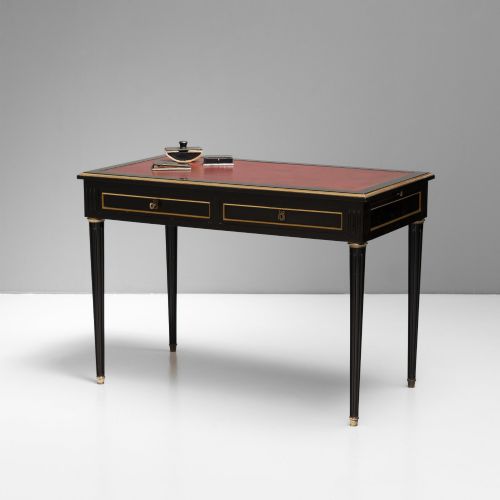
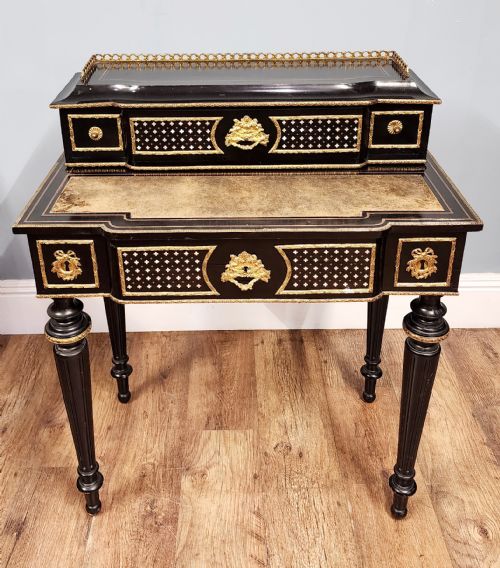
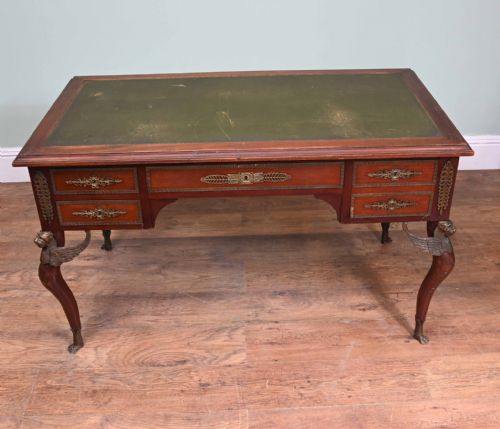
A brass mounted bureau combines a fitted writing surface with structural metal fittings, drawing primarily from nineteenth century continental workshops and Victorian interpretations. Pieces range from compact bureau de dame forms to expansive bureau plat desks designed for central room placement.
Continental revivals dominate the selection, particularly Louis XV and Louis XVI styles alongside Napoleon III ebonised outputs. These designs integrate hinged writing slopes or flat leather-lined surfaces framed by cast metal mounts.
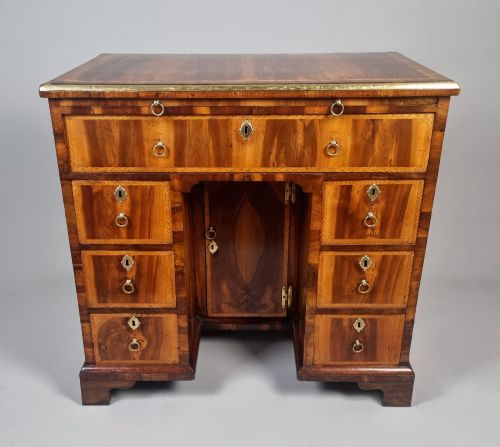
Makers utilised exotic timbers including walnut, mahogany, kingwood and rosewood as grounds for marquetry, parquetry and boulle work. The resulting writing furniture serves both utilitarian and decorative functions within domestic interiors.
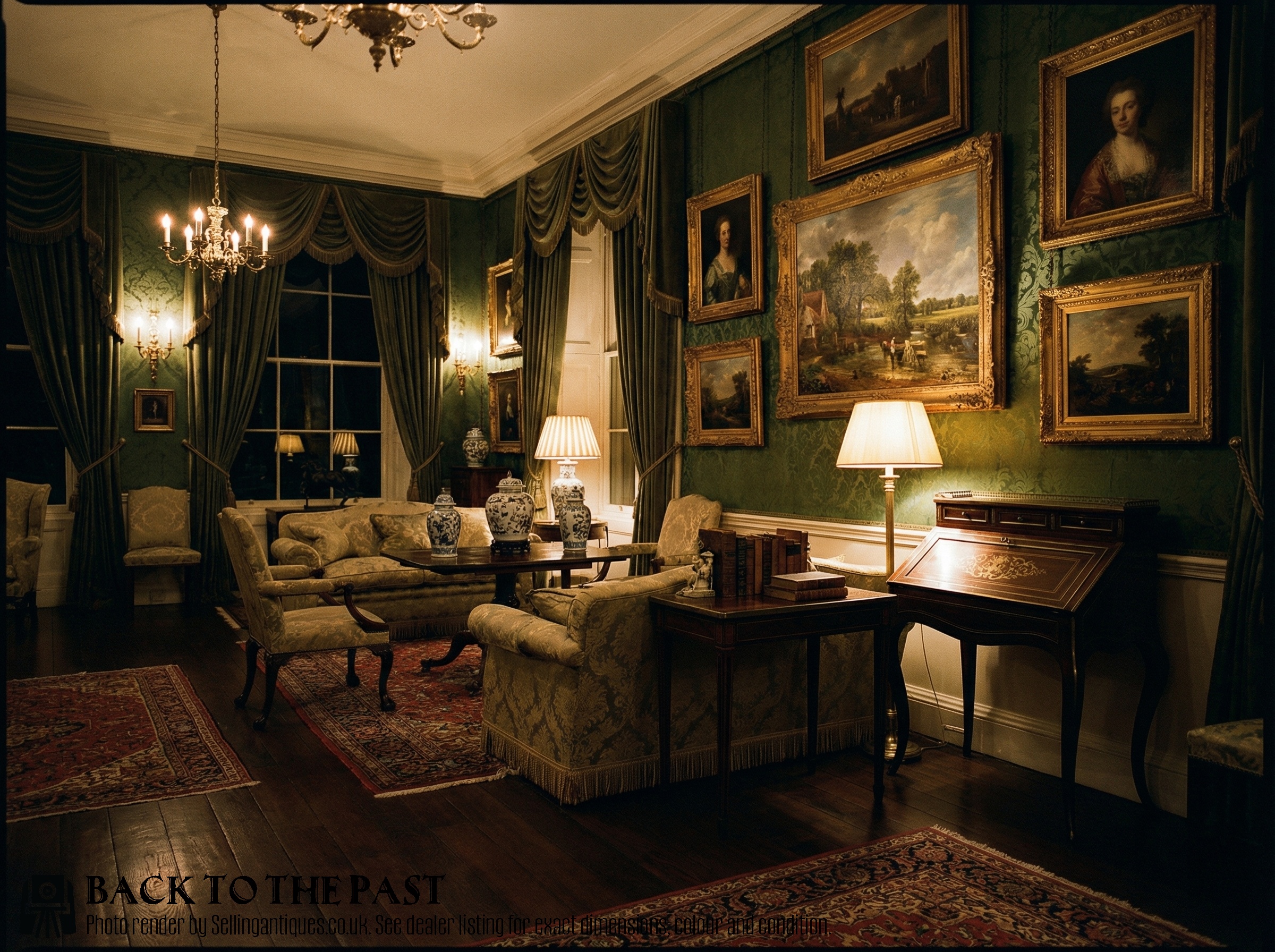
Assessing quality and execution
Quality rests on the crispness of the cast brass and ormolu mounts and the precision of the timber veneers. Finer examples display hand-chased metalwork with sharp relief and well-matched grain patterns across the bureau fall or writing surface.
Internal joinery reveals the standard of construction, where secondary timbers are neatly fitted and drawer linings show dovetailing appropriate to the period. Superior pieces maintain integrity in the timber movement and secure fitting of brass hardware without gaps or distortion.
Brass Mounted Bureau Retail Price Guide 2026
Typical asking prices for brass mounted bureau among the pieces listed under this phrase on Sellingantiques today, from the lower quarter to the upper quarter. They describe what is for sale here now, not the wider market.
Listings feature nineteenth century walnut, mahogany, and kingwood alongside ebonised wood finishes.
Donald Ross·John MaClean·Linke
The Brass Mounted Bureau Glossary
- Bureau plat
- A double-sided writing table with a flat top, usually free-standing and fitted with drawers in the frieze. These tables originated in France and lack the sloping fall-front of traditional box bureaux.
- Ormolu
- Gilt bronze mounts applied to furniture for decoration and edge protection. The technique involves a mercury amalgam applied to cast bronze, fired to bond the gold layer.
- Marquetry
- Decorative veneer work forming pictures or patterns using various woods, shells, or metals. Craftsmen cut thin sheets of timber to fit precise geometric or floral designs.
- Bonheur-du-jour
- A light ladies writing desk featuring a small cabinet or superstructure with shelves and drawers above the main writing surface. These pieces gained popularity during the mid nineteenth century revival periods.
- Boulle work
- Marquetry technique utilising tortoiseshell and brass inlay, named after cabinetmaker André-Charles Boulle. The method produces contrasting dark and metallic patterns.
Brass Mounted Bureau: Frequently Asked Questions
What is a bureau plat?
A bureau plat is a flat-topped writing table featuring a finished back designed to stand away from the wall in the centre of a room.
These desks usually contain frieze drawers and a leather inset writing surface bordered by brass or ormolu mounts.
How do I care for brass mounts?
Brass and ormolu mounts require dusting with a soft dry cloth to prevent dust accumulation in the recessed chased details.
Avoid liquid cleaners and abrasive polishes which strip the original mercury gilding or patination from the metal surface.
Where were these bureaux used?
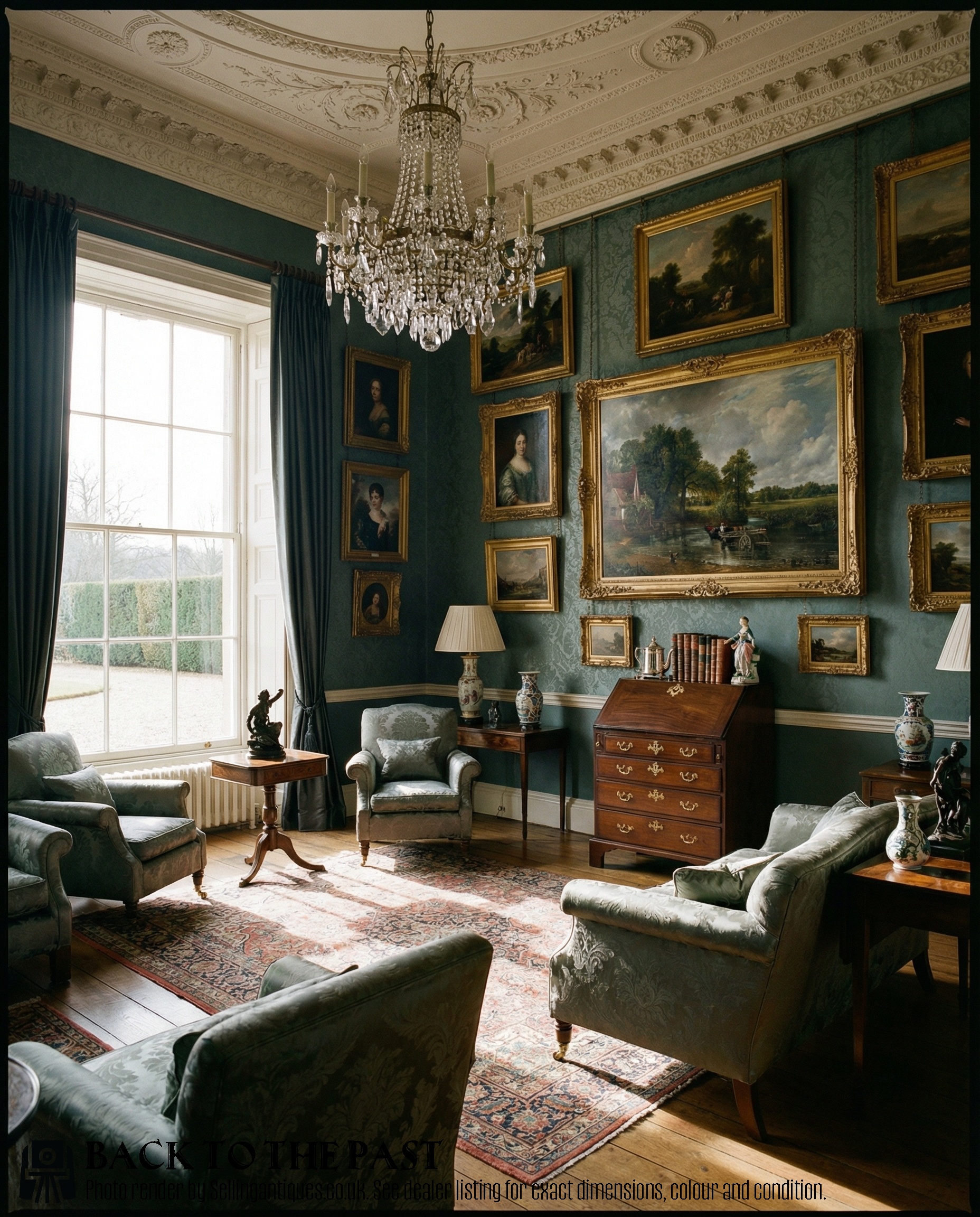
These desks served in drawing rooms, private libraries, and boudoirs as refined writing surfaces for correspondence and estate management.
Their decorative backs allowed placement in prominent positions where both timber grain and metal mounts remained visible.
How do I distinguish nineteenth century revival styles?
Nineteenth century revival pieces adopt Louis XV and Louis XVI vocabulary through kidney shapes, cabriole legs, and elaborate marquetry.
Examination of secondary woods, internal construction methods, and casting sharpness helps separate revival output from eighteenth century originals.