

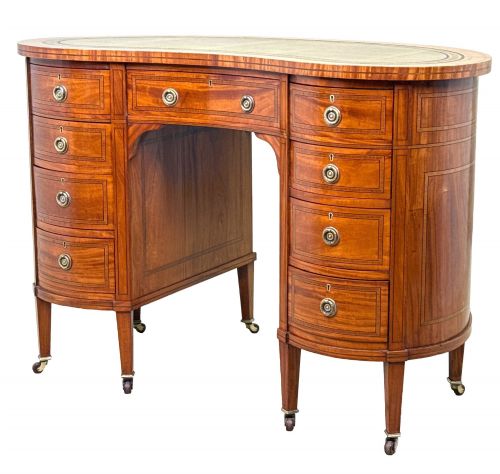
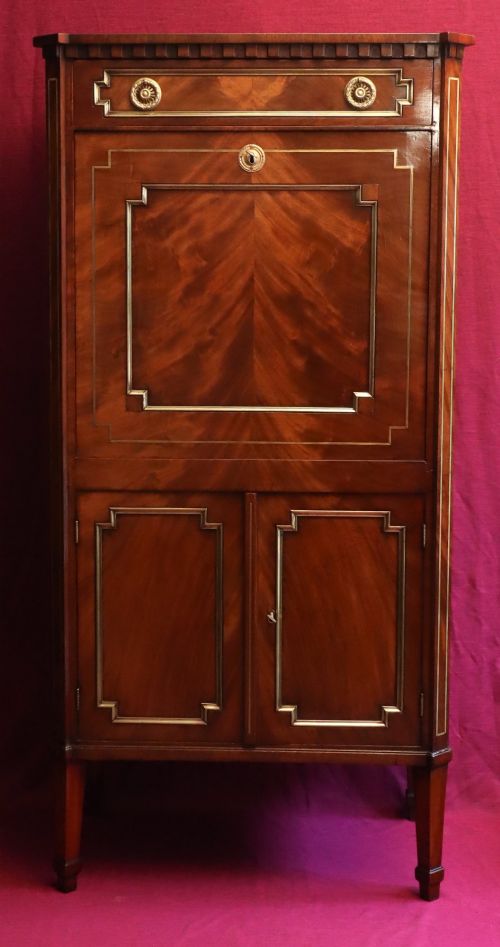
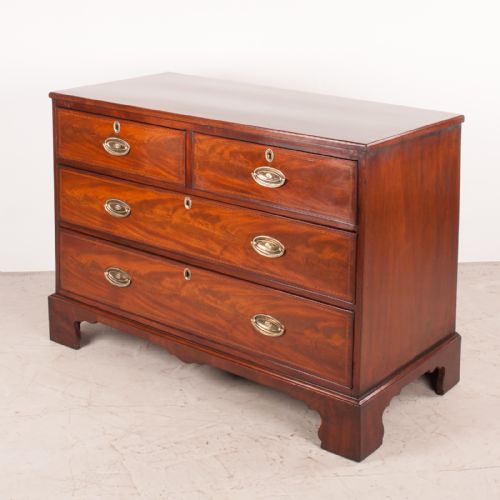
Brass Inlaid Bureau
A brass inlaid bureau brings together fine cabinet timber and metal stringing to form a workspace of lasting presence.
Brass Inlaid Bureau
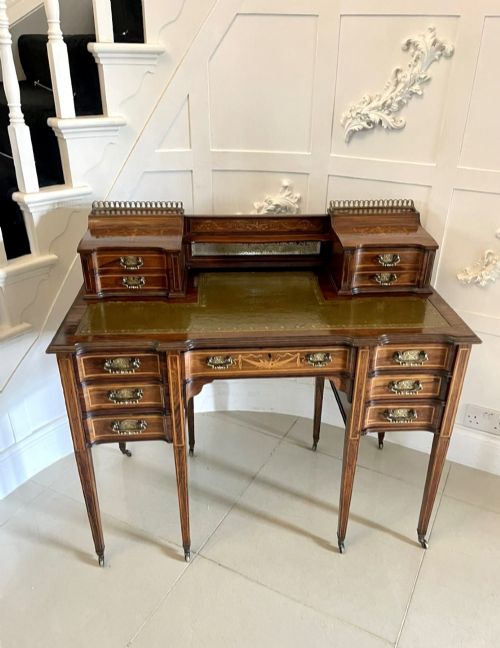
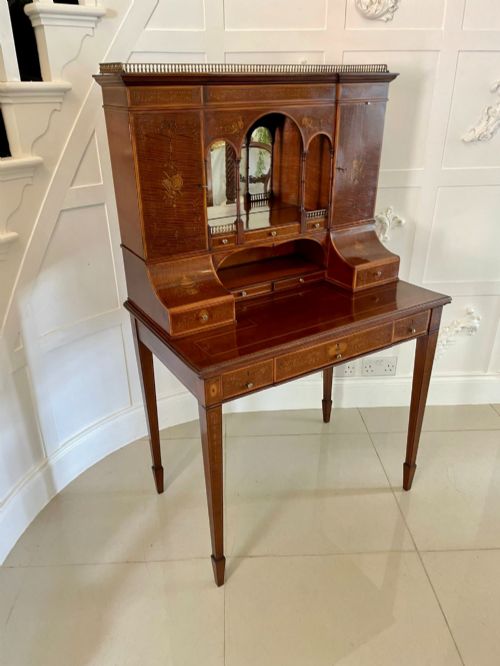
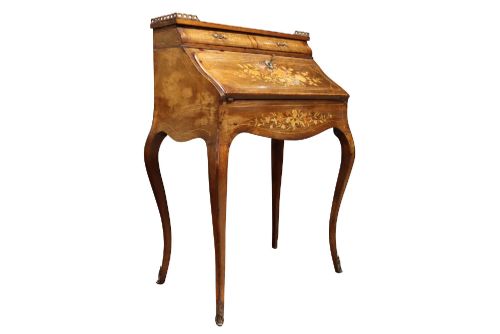
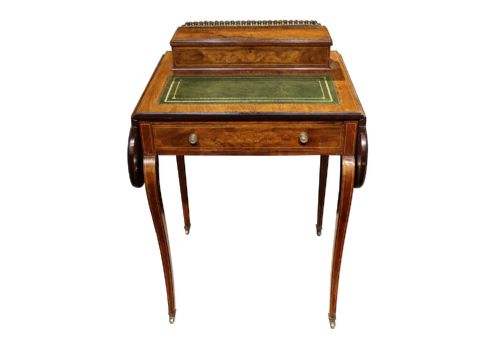
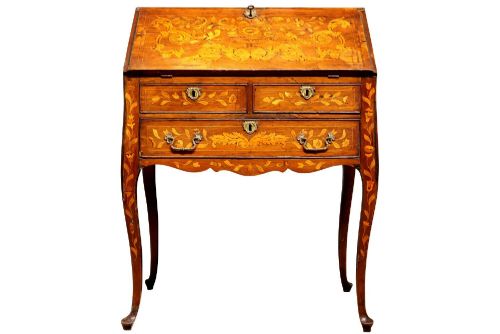
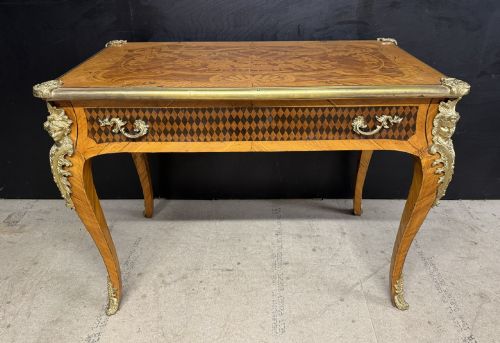
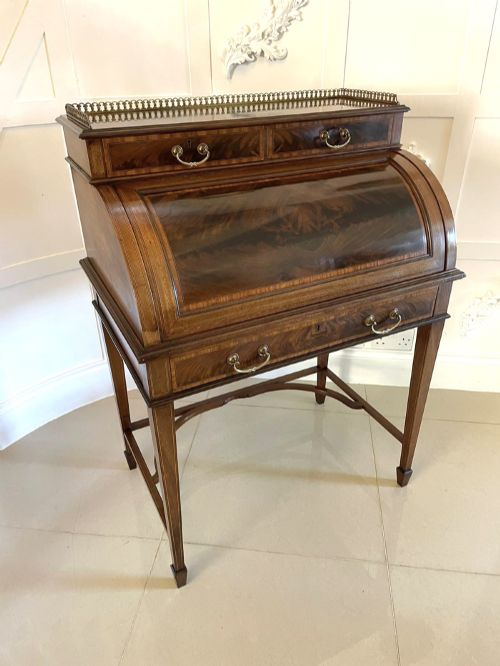
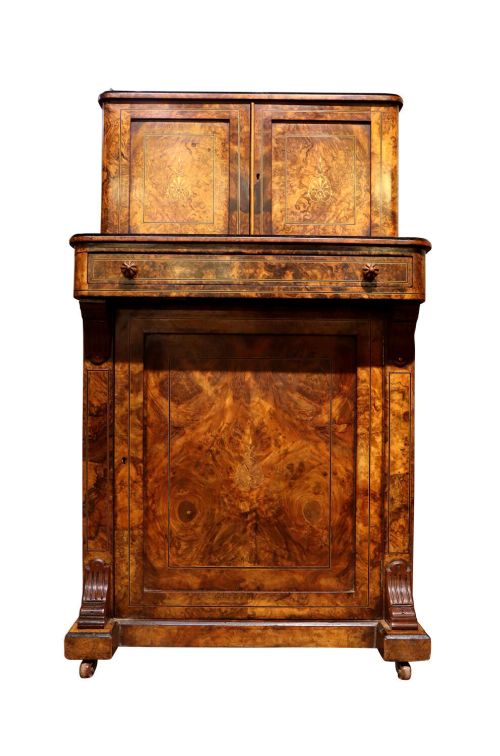
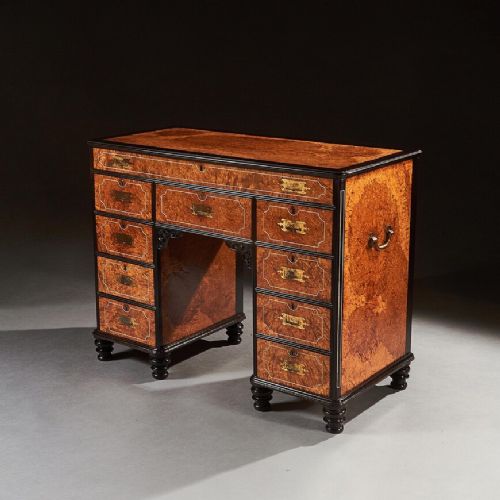
A brass inlaid bureau unites a writing surface with compartmentalised storage, taking forms from compact lady's desks to grand freestanding writing tables across this selection.
Makers shaped these pieces through the nineteenth century and into the Edwardian era, drawing on Regency, Victorian, and French styling to meet domestic writing needs.
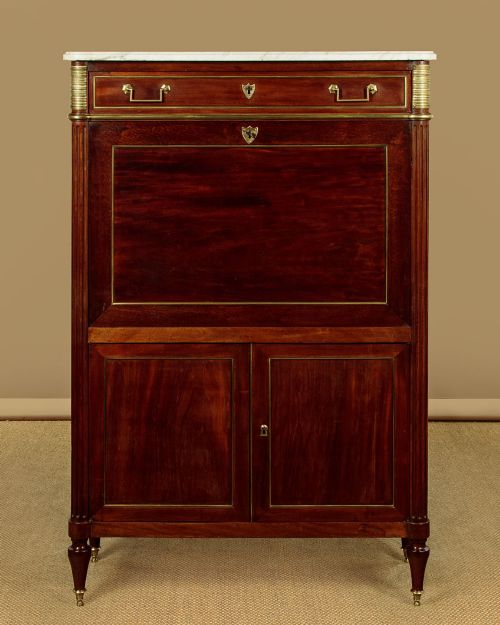
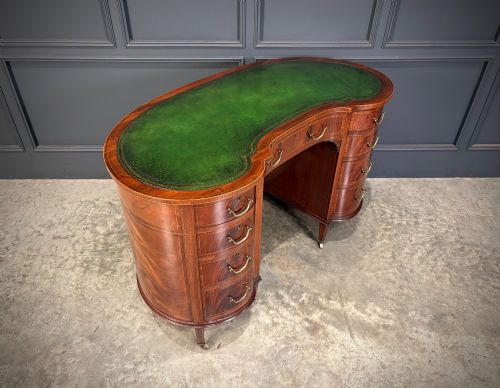
The primary forms on this page include cylinder desks, fall-front escritoires, and kidney-shaped writing tables outfitted with tailored brass details.
How they were made
Cabinetmakers constructed carcass frames from dense hardwoods like mahogany, rosewood, walnut, and satinwood, applying finely figured veneers across primary surfaces.
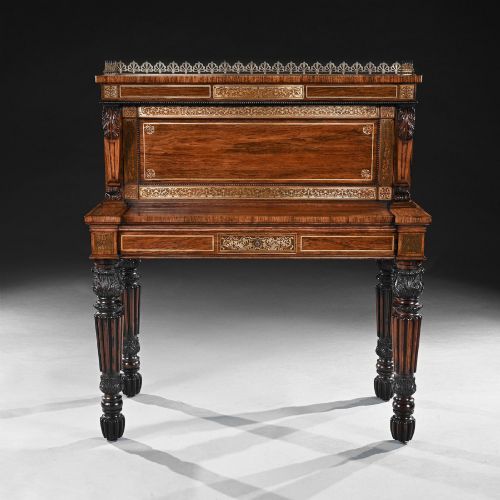
Artisans channelled timber panels to recess thin brass stringing and mounts, securing the metalwork flush with the polished wood face.
Interiors received fitted drawers and pigeonholes alongside leather writing inserts, complemented by cast or stamped brass handles and key escutcheons.
Form variations span cylinder desks, kidney-shaped writing tables, and fall-front escritoires produced by English and French makers.
What varies in quality
Precision in the brass inlay work dictates the baseline standard, separating tight, seamless metal channels from wider, filled gaps in the timber.
Selection of secondary woods and the depth of figuring in veneers like amboyna or satinwood reveal the care taken in workshop selection.
The integration of fitted interior mechanisms and original hardware marks the distinction between standard commercial output and fine cabinetmaker production.
Maple and Co·Gillows Oxford Street Workshop·Mawer and Stephenson·Edwards and Roberts·Donald Ross
The Brass Inlaid Bureau Glossary
- Bureau
- A desk featuring a sloping fall-front that opens to reveal internal drawers and pigeonholes. It provides a concealed writing surface when closed.
- Escritoire
- A tall writing cabinet or desk used for correspondence and document storage. It typically incorporates a drop-down writing flap.
- Ormolu
- Gilt bronze mounted as decorative ornament on furniture pieces. It adds metallic contrast to dark woods.
- Marquetry
- The art of forming decorative patterns using fitted veneer pieces of various woods. It creates pictorial or geometric surface designs.
- Cylinder desk
- A writing desk equipped with a curving, quarter-circle wooden cylinder that rolls back to expose the desk interior.
Brass Inlaid Bureau: Frequently Asked Questions
How do I care for the brass inlay?
Keep wooden surfaces nourished with appropriate wax while avoiding harsh metal polishes that can stain adjacent veneers. Clean metal channels gently with a dry cloth to prevent moisture accumulation.
Maintain stable room humidity to limit timber movement, which protects the brass stringing from lifting out of its routed grooves over time.
Where were these bureaus placed?
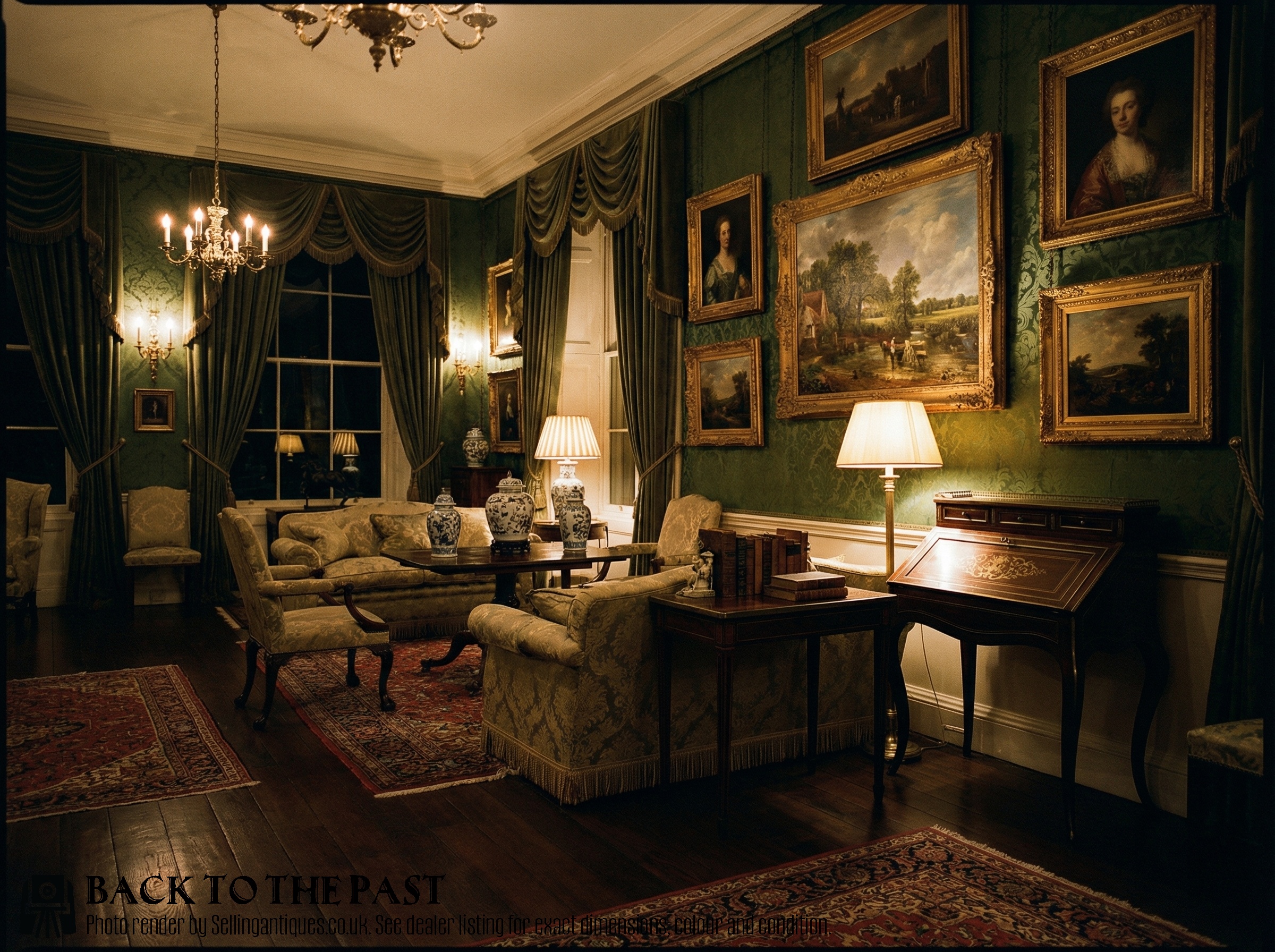
These pieces sat in private drawing rooms, libraries, and studies where correspondence and personal administration took place. Freestanding variants occupied central room positions.
Smaller formats suited intimate boudoirs, functioning as dedicated spaces for letter writing and document organisation.
How do I identify the wood type?
Examine the grain pattern and colour tone across unexposed interior surfaces where original finishes remain intact. Mahogany shows reddish warmth, while rosewood displays dark figuring.
Compare secondary timbers inside drawers against primary exterior veneers to understand the complete construction profile.
Are the writing heights adjustable?
Fixed writing heights prevail across these historic periods, built to standard chair clearances of their respective decades. Most surfaces sit at a comfortable level for seated tasks.
Assess the kneehole clearance dimensions on specific kneehole desks and tables to ensure adequate space for daily use.