




19th Century Campaign Desk
A 19th century campaign desk offers ingenious portable writing space, built for travel and designed with clever internal compartments.
19th Century Campaign Desk
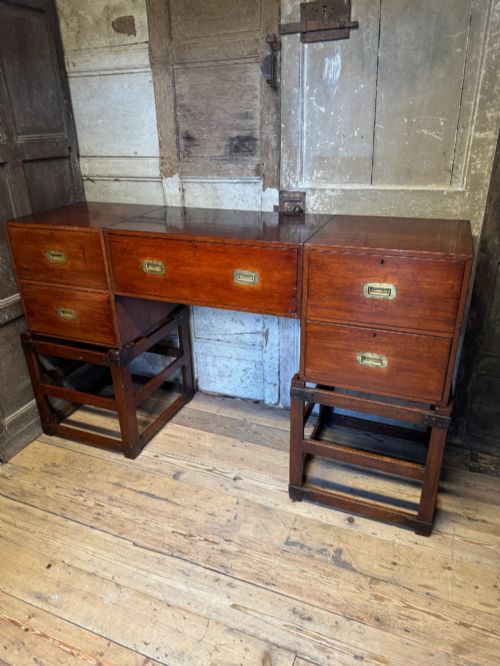
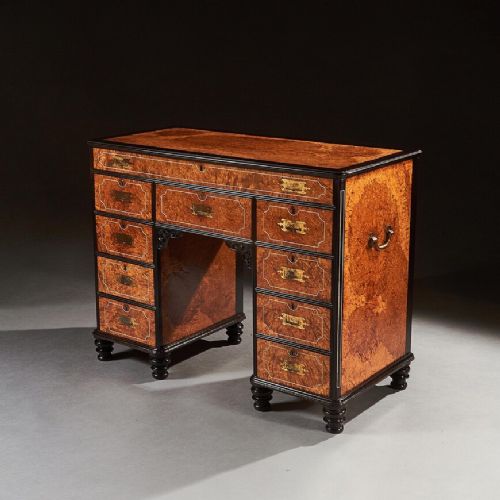
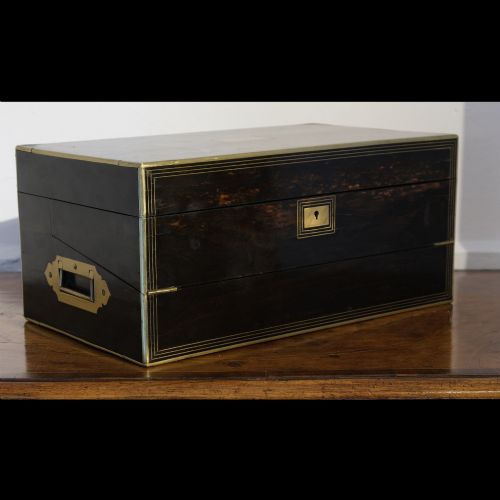
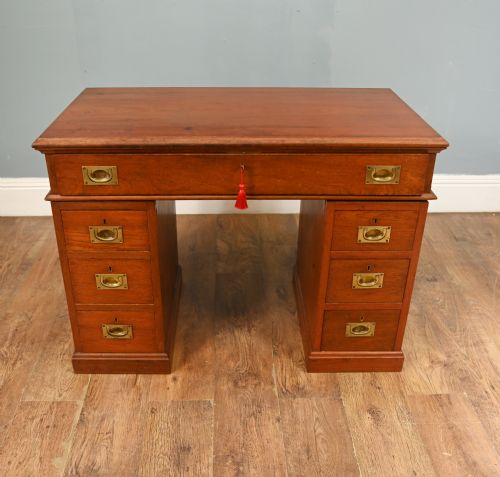
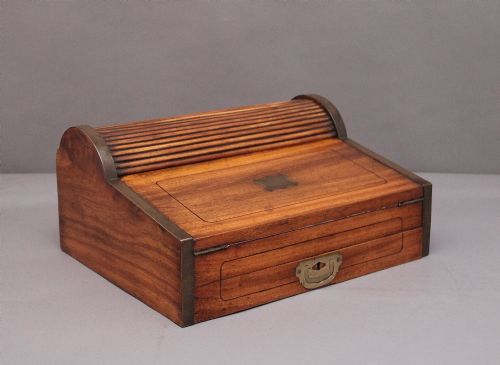
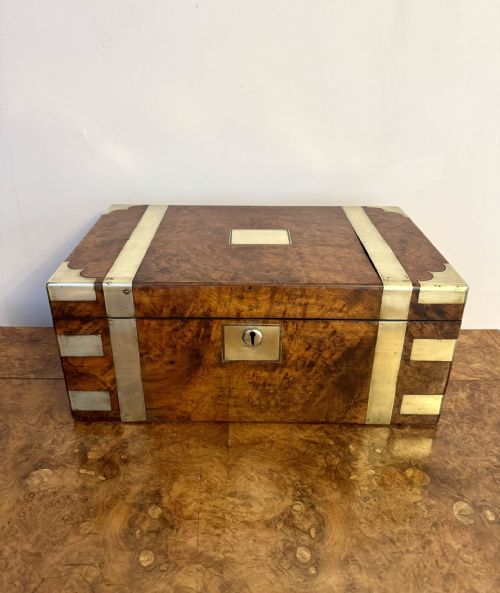
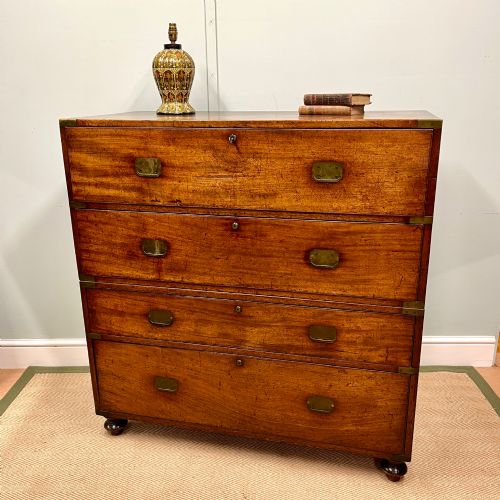
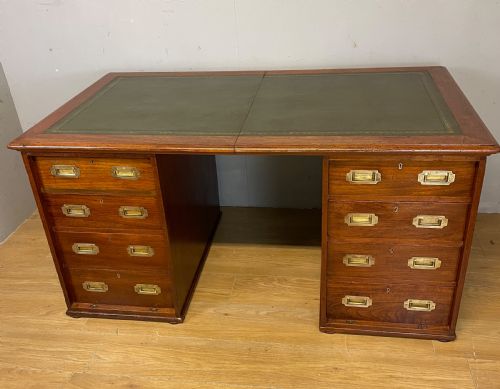
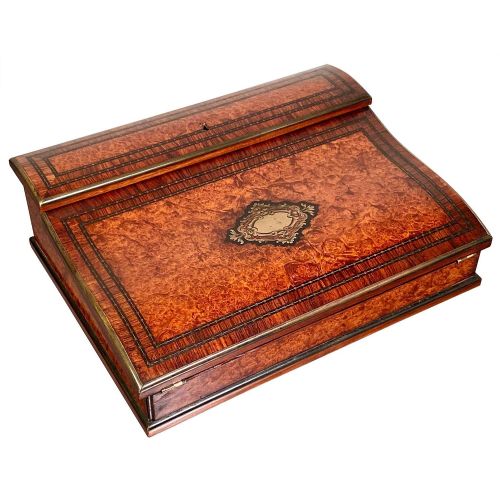
A 19th century campaign desk encompasses a variety of portable writing furniture designed for officers and travellers during the Georgian, Regency, and Victorian periods. Buyers encounter everything from compact writing slopes and lap desks to substantial pedestal desks, secretaire chests, and folding tables.
The materials used reflect global movement and utility, featuring native hardwoods alongside exotic timbers brought back through trade and military deployment. Mahogany, camphor wood, and rosewood dominate the forms available on this page, often fitted with folding elements and segmented interiors.
Materials and Construction
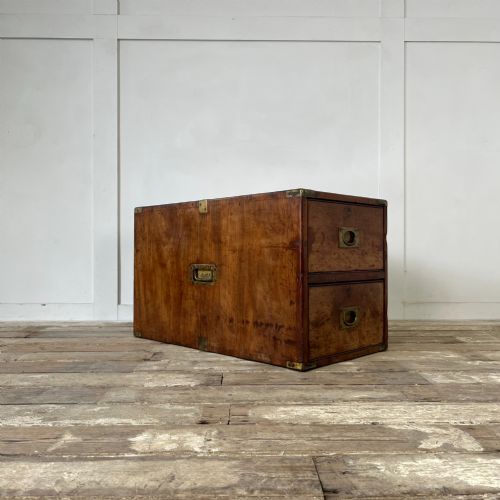
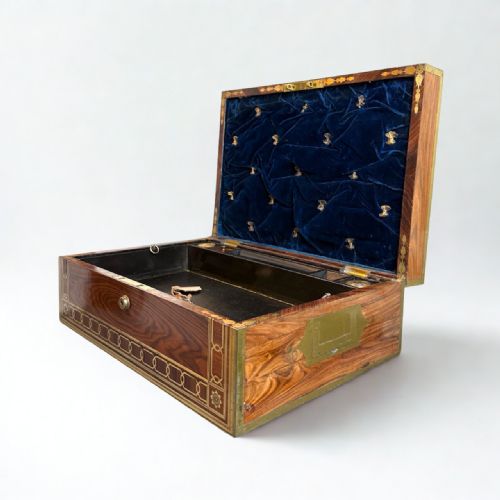
Construction relies heavily on dense timbers such as mahogany, teak, padouk, and camphor wood, chosen for their ability to withstand tropical climates and rigorous travel. These woods are frequently paired with brass corners, strapwork, and flush inset handles to protect edges and prevent snagging during transport.
Internal spaces utilise clever joinery, incorporating secret drawers, fold-out writing surfaces, and leather-lined writing tops. Cabinetmakers built these pieces in modular sections, allowing large chests and desks to separate easily into two or three manageable parts for shipping.
Listings feature woods spanning mahogany, teak, coromandel, and camphor wood, alongside periods ranging from the Georgian era through to the late Victorian period.
The Measure of Quality
Quality rests in the precision of the brass hardware and the tightness of the joinery across sectional pieces. Finer examples display meticulous flush-fitting mounts, carefully selected veneers such as burr walnut, amboyna, or pollard oak, and smoothly operating secret mechanisms.
The choice of secondary timber and the complexity of the interior fittings also distinguish finer items. Superior pieces retain original leather writing surfaces, intact brass carrying handles, and well-figured grain that shows careful selection by the cabinetmaker.
The 19th Century Campaign Desk Glossary
- Campaign desk
- Portable furniture built in sections with recessed handles and brass corners for military transport.
- Secretaire chest
- A chest of drawers featuring a pull-out writing drawer with a drop-front and internal pigeonholes.
- Writing slope
- A portable box with an angled, hinged lid that opens to reveal a slanted writing surface and stationery compartments.
- Flush mount
- Hardware inset level with the wood surface so nothing catches during transit.
- Secret drawer
- A concealed compartment hidden behind other drawers or panels, accessed by pressing a hidden spring or removing a partition.
19th Century Campaign Desk: Frequently Asked Questions
What is a 19th century campaign desk?
These are portable writing pieces made for military officers and travellers, designed to break down or fold for easy transport.
They range from small lap boxes to large pedestal desks fitted with brass mounts and robust timbers.
How were campaign desks used?
Officers used them in the field or at sea to write dispatches, keep records, and store personal stationery securely.
Their modular design allowed them to be packed onto horses, carriages, or ships with minimal risk of damage.
How do I live with campaign furniture?
These pieces suit modern studies, living rooms, or bedrooms as functional desks with exceptional storage capabilities.
Keep them away from direct heat sources to protect the polished wood surfaces and leather inserts.
How can I tell the periods apart?
Earlier Georgian and Regency examples often feature finer rosewood veneers and delicate brass stringing, whilst Victorian pieces tend to utilise robust mahogany or camphor wood with heavier brass straps.
Construction methods also shift from simpler folding boxes toward complex sectional pedestals and secretaire chests as the century progresses.