
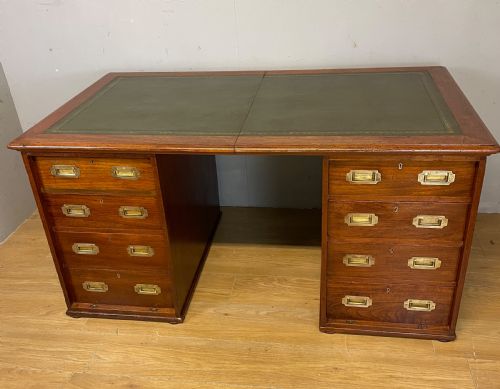


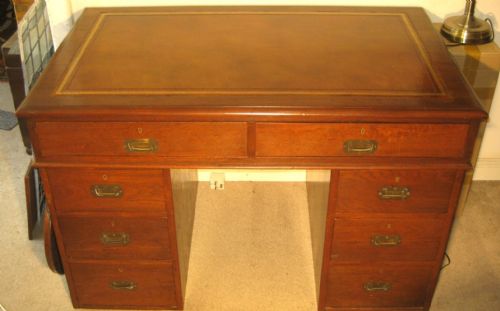


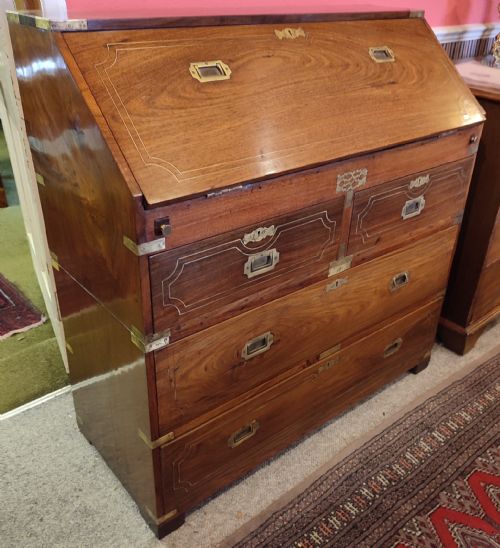

Colonial Military Desk
A colonial military desk offers portable craftsmanship built for officers on the move, combining sturdy timbers with practical brass fittings.
Colonial Military Desk
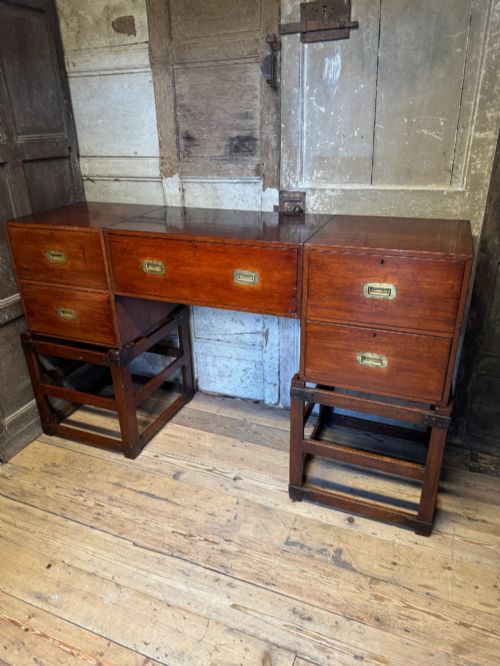
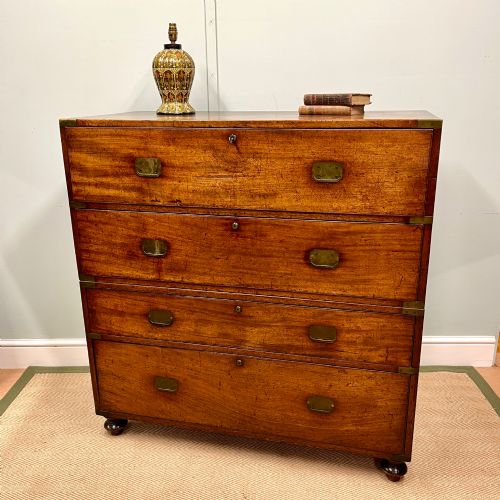
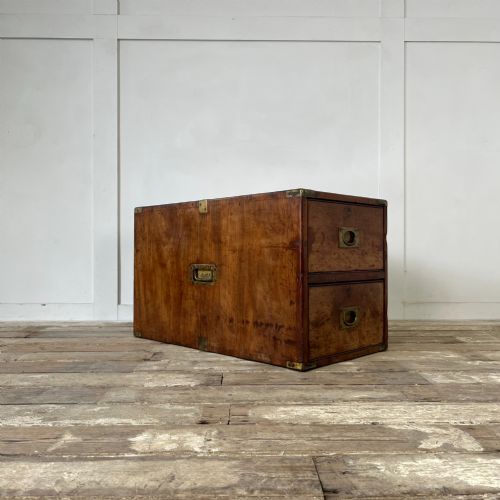
A colonial military desk is designed for travel and service across the British Empire, taking the form of modular writing tables, secretaire chests, and folding boxes. When you search for a colonial military desk, you encounter substantial pieces intended for officers on campaign, often splitting into two or three stackable sections for transport.
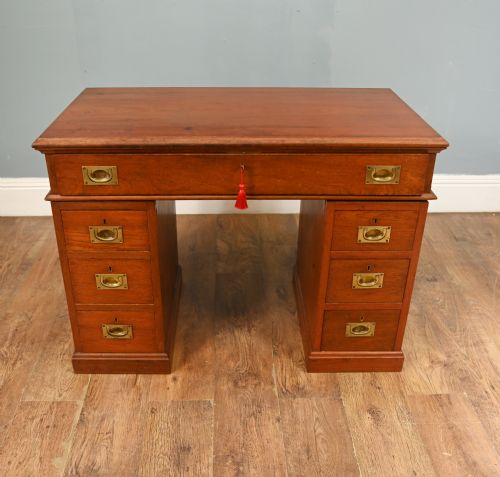
The specimens on this page span the nineteenth century and the early twentieth century, showing styles such as Victorian military, Anglo-Indian, and British colonial. These range from pedestal desks in solid teak and mahogany to compact secretaire chests fitted with drawers and pigeonholes.
You also meet desktop storage items and writing slopes that bring portable officer furniture into domestic spaces. These variations reflect the practical needs of service life, where a writing surface must double as secure storage for correspondence and documents.
How they were made
Makers utilised dense timbers such as teak, mahogany, camphor wood, rosewood, and padouk, which endured tropical climates and rough transport. These woods are joined with robust construction methods to prevent warping during long journeys by sea and land.
Brass mountings protect the corners and edges from heavy impacts, while recessed brass carrying handles allow sections to be lifted without catching. Inset leather writing surfaces provide a durable platform for paperwork, often framed by solid timber borders.
Many chests conceal hidden secondary drawers behind dummy fronts, built to guard an officer's private dispatches.
What varies in quality
The distinction between standard campaign furniture and exceptional pieces rests on the precision of the joinery and the integrity of the original hardware. Superior examples retain their matching modular sections, uncompromised locking mechanisms, and original brass fitments without replacement parts.
Finishing details also separate fine workshop output from utility items, seen in the quality of carved drawer interiors, secret compartments, and the selection of figured timbers like rosewood or camphor wood. The weight and thickness of the brass strapping indicate whether a piece was commissioned for demanding field use.
The Colonial Military Desk Glossary
- Campaign chest
- A modular chest of drawers built in two or three stacked sections designed to be dismantled for transport by baggage train or ship.
- Secretaire chest
- A chest of drawers featuring a fitted top drawer with a drop-front writing surface and internal pigeonholes.
- Writing slope
- A portable box with an angled lid that opens to reveal a slanted writing surface and storage compartments for stationery.
- Recessed handle
- A brass handle let flush into the timber surface so it does not catch during transit or stacking.
- Anglo-Indian
- A style describing furniture made in India using British forms executed by local craftsmen in exotic timbers.
Colonial Military Desk: Frequently Asked Questions
What is a military campaign desk?
A military campaign desk is portable officer's furniture designed to dismantle into sections for travel. These pieces use robust timbers and brass hardware to withstand rough transport.
They allowed officers to maintain an organised workspace while on active service abroad. Today, they function as versatile writing desks in homes.
How do I spot a genuine campaign chest?
Examine the construction for modular sections, recessed brass handles, and corner brackets designed for protection during transit. Genuine pieces often show marks of active service and clever internal locking mechanisms.
Check for dense colonial timbers like teak or camphor wood rather than light modern substitutes. The presence of matching serial numbers on separate sections confirms authenticity.
Why use camphor wood for campaign furniture?
Camphor wood naturally repels insects and resists moisture, making it ideal for trunks and desks transported through tropical regions. Its distinct aromatic quality protected uniforms and paper documents from humidity.
Cabinetmakers utilised this stable timber for both its functional properties and its fine grain pattern. It remains a defining material of Anglo-Indian and British colonial pieces.
How do I care for antique teak and mahogany?
Keep wooden surfaces away from direct sunlight and sudden temperature changes to prevent the timber from drying out. Dust regularly with a dry cloth and apply occasional treatments suited to antique polish.
Leather writing inserts benefit from gentle cleaning and minimal moisture to preserve their texture. Maintaining stable indoor humidity protects the brass mountings and keeps drawers running smoothly.