

French Parquetry Desk
A French parquetry desk brings geometric woodcraft and gilt mounts together into a centrepiece for writing.

What these desks are
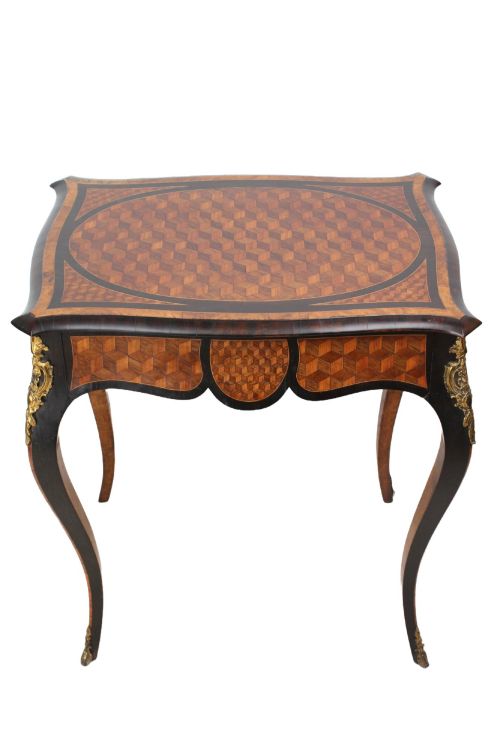
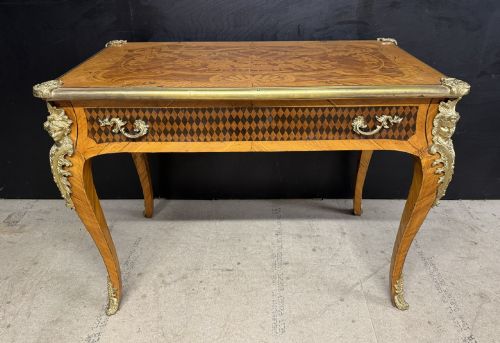
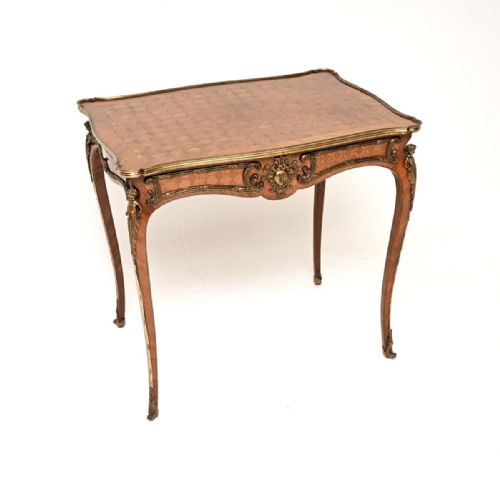
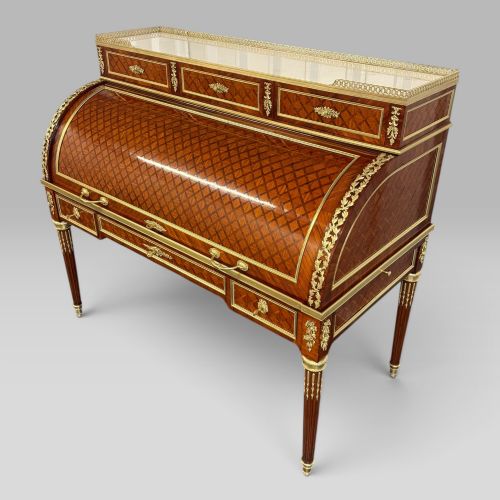
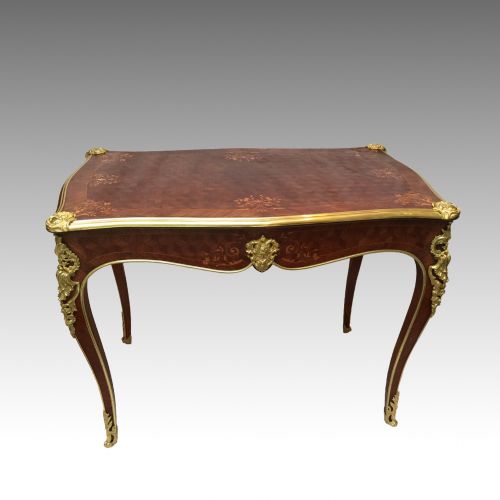
A French parquetry desk unites form and surface through geometric wood veneers arranged in precise patterns across writing tables, cylinder desks, and secretaires. The selection spans the eighteenth century through to the early twentieth century, showing revival movements in Louis XVI and Louis XV styles.
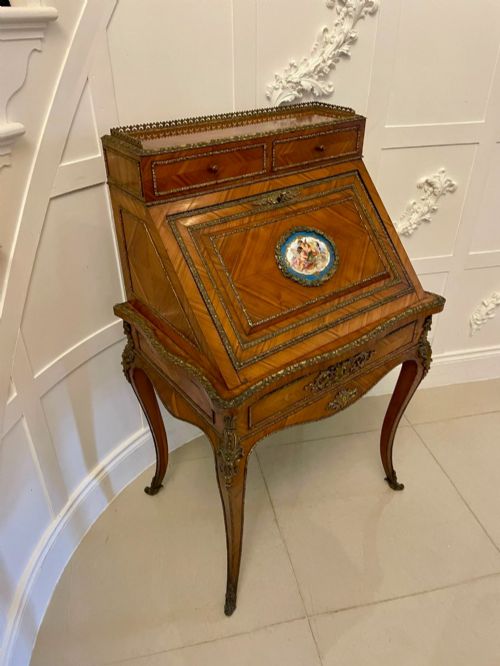
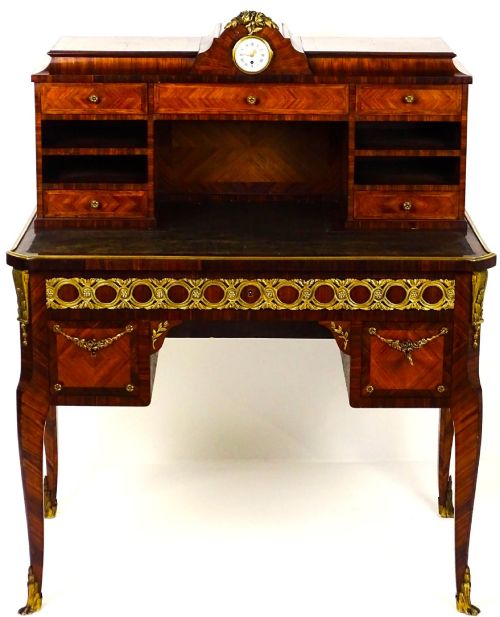
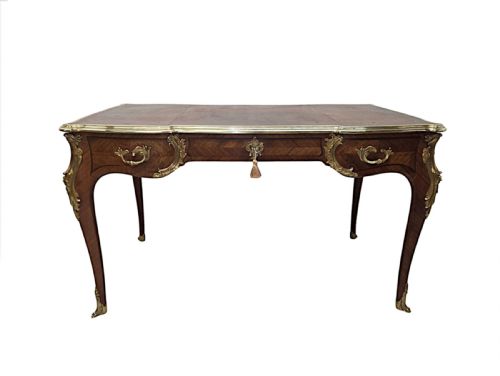
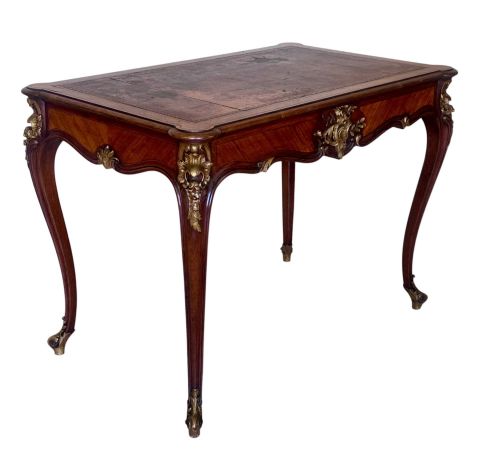
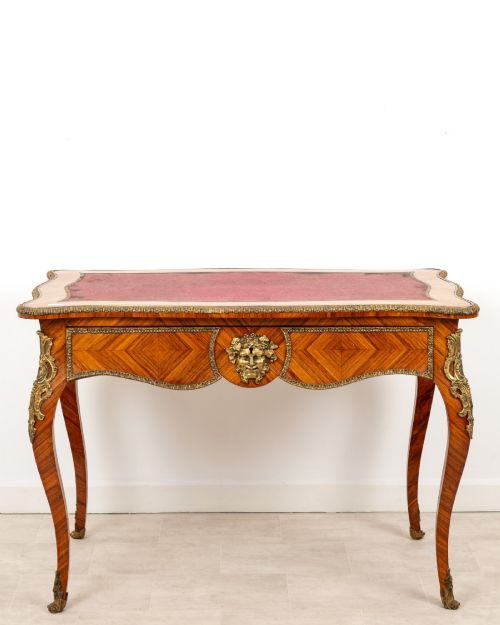
Buyers encounter freestanding writing desks, kidney-shaped tables, and compact bonheur de jour pieces designed for intimate correspondence. Ormolu mounts, brass details, and leather writing inserts frequently accompany the timber construction across these examples.
The nineteenth century yields many revival pieces alongside eighteenth-century originals and later works from the nineteen-twenties. These forms serve as functional writing surfaces while displaying the decorative priorities of French cabinet makers.
How they were made
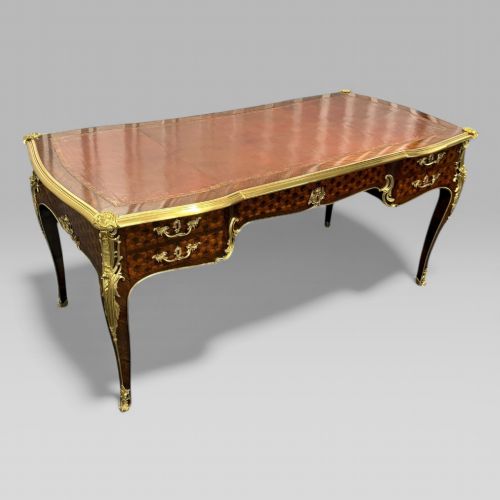
Cabinet makers constructed these pieces using timber veneers such as kingwood, rosewood, walnut, tulipwood, fruitwood, and mahogany over supporting timber cores. Individual veneer blocks were cut and fitted by hand to form the geometric parquetry patterns characteristic of the style.
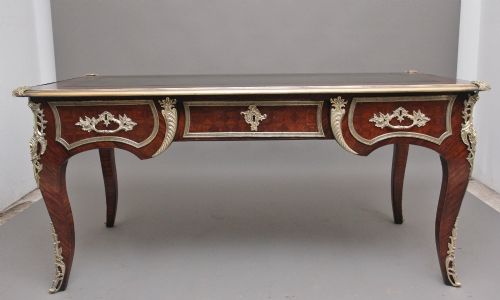
Gilt bronze, ormolu, and brass mounts were cast and applied to protect and ornament corners, edges, and aprons. Leather inserts were tooled and fitted into the writing surfaces, while painted plaques occasionally added further decoration to smaller desks.
Retail Price Guide 2026
Typical UK retail prices for french parquetry desk, calculated from the Sellingantiques database of over a million retail prices indexed since 2003. This retail price guide relies exclusively on Sellingantiques data; no external sources or auction records are used, so the figures do not describe the wider market.
Some cylinder desks hide their papers so cleverly you might lose your letters before you even write them.
What varies in quality
The calibre of a French parquetry desk rests on the precision of the veneer work and the integration of the metal mounts. Finer pieces demonstrate seamless alignment in the geometric patterns and careful selection of exotic timbers like kingwood and rosewood.
Master-level execution appears in signed works by known makers where the chasing of the ormolu mounts and the internal engineering of cylinder actions meet the highest standards of the period. Lesser examples rely on simpler timber choices and standard cast mounts.
Paul Sormani·Millet
The French Parquetry Desk Glossary
- Parquetry
- Geometric mosaic of wood veneers arranged in repeating patterns such as cubes or triangles. This technique defines the primary decorative surface of the desk.
- Ormolu
- Gilt bronze mounts applied to furniture edges, corners, and feet for structural protection and decoration. The finish adds metallic contrast to the timber veneers.
- Kingwood
- A dense, heavily figured Brazilian timber prized for its rich brown colour and dark grain. Makers used it extensively for high-end French veneer work.
- Bureau Plat
- A freestanding double-sided writing table fitted with drawers across the frieze. These desks were designed to stand in the centre of a room rather than against a wall.
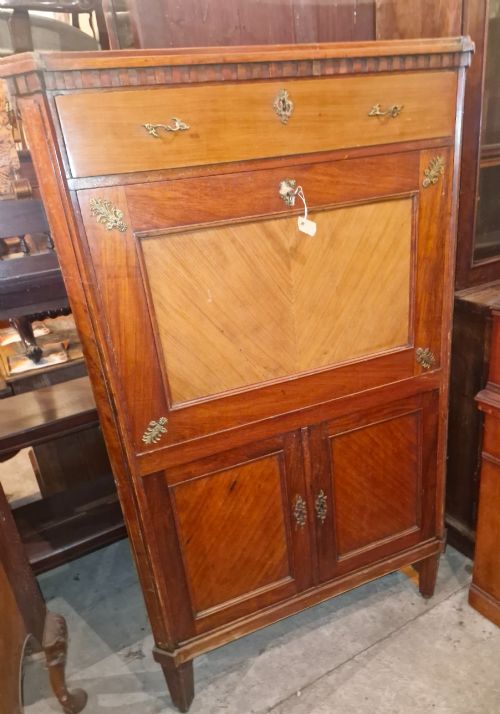
- Secretaire abattant
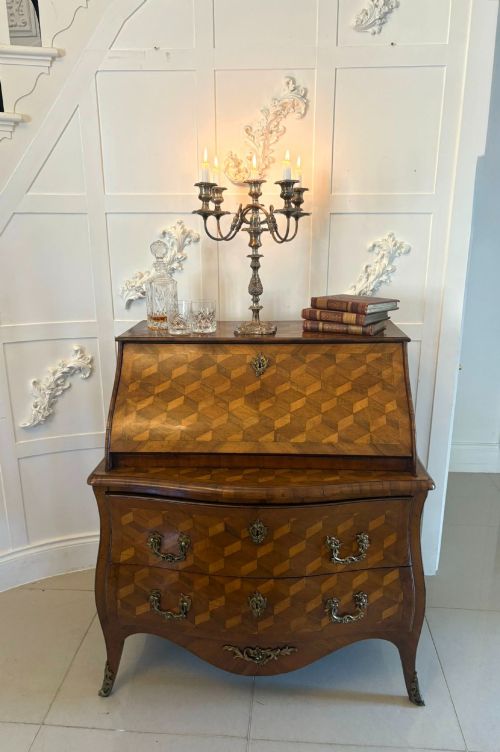
- A tall upright desk featuring a drop-down writing flap that conceals interior pigeonholes and small drawers. This form combines storage with a compact writing surface.
- Bonheur de jour
- A light ladies writing desk featuring a small cabinet or set of shelves superstructure above the main writing surface. These pieces emerged during the eighteenth century.
Frequently Asked Questions
Where should I place a French parquetry desk?
Freestanding forms like bureau plat desks work best positioned in the middle of a study or living space where all sides remain visible. Other compact styles like the bonheur de jour fit well against walls or in smaller rooms.
Keep these pieces away from direct sunlight and heat sources to protect the delicate wood veneers and leather inserts from drying out.
How do I care for the timber and ormolu?
Dust the parquetry surfaces regularly with a soft, dry cloth and apply a quality furniture wax sparingly to nourish the timber veneer. Avoid modern liquid polishes that can seep into the grain.
Clean the ormolu mounts gently without harsh abrasives to preserve the original gilding.
What is the difference between parquetry and marquetry?
Parquetry relies on geometric shapes such as squares, triangles, and cubes to create abstract repeating patterns across the surface of the desk. Marquetry uses pictorial veneers to form figurative scenes, flowers, or landscapes.
Both techniques appeared on French furniture, though geometric parquetry dominates these particular desk designs.
Can I use an antique writing desk daily?
These desks served practical writing functions originally and remain sturdy enough for regular use with proper care. The leather writing surfaces provide durable spaces for contemporary writing tasks.
Exercise caution with heavy modern equipment to avoid marking the antique timber and veneer surfaces.