
Vintage Cylinder Desk
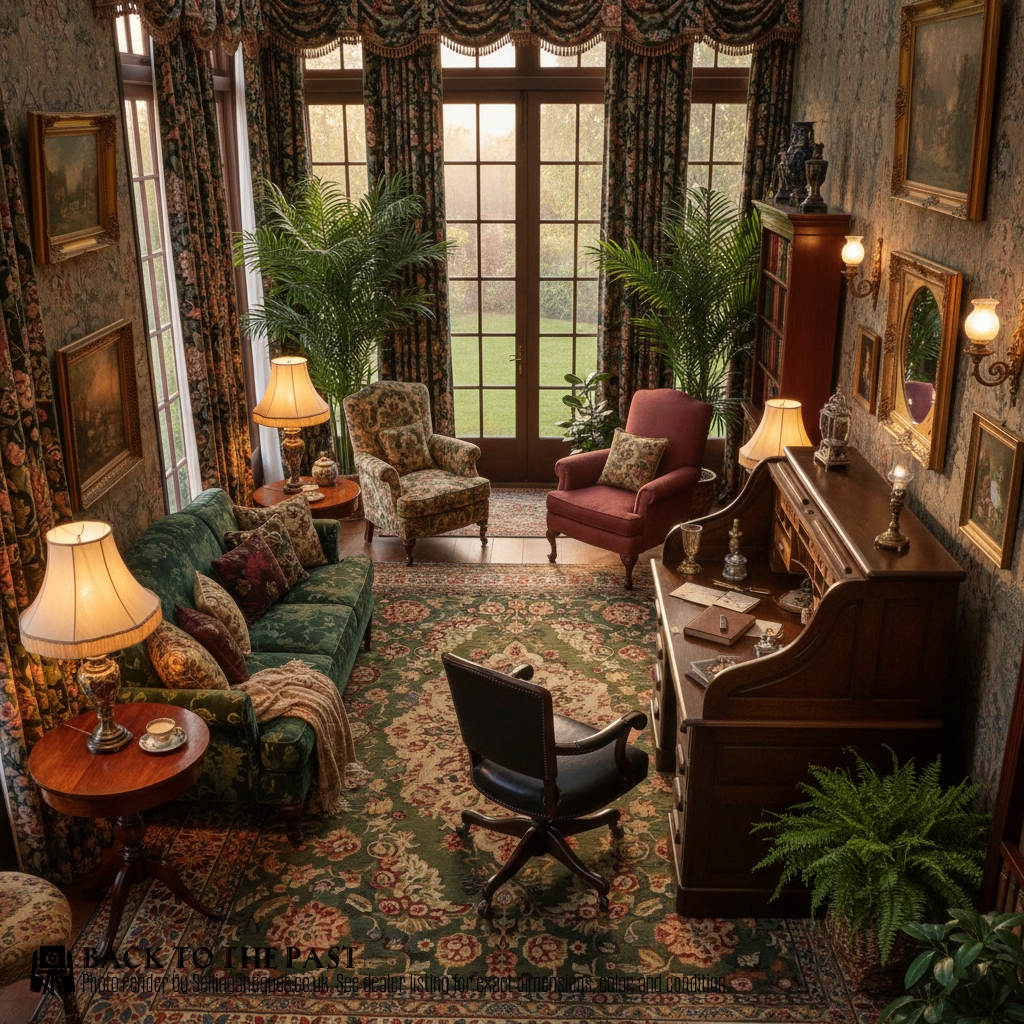
A vintage cylinder desk brings architectural order to a study through its curved mechanical cover.
Vintage Cylinder Desk
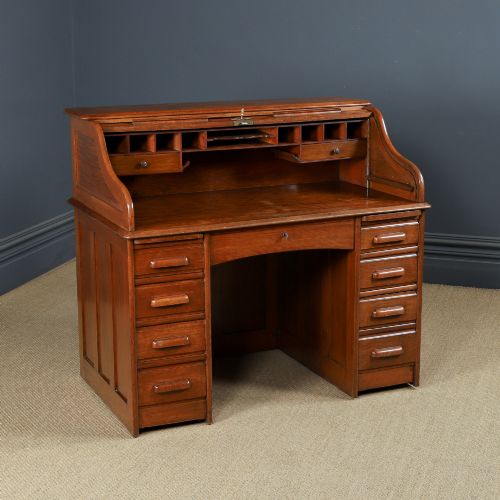
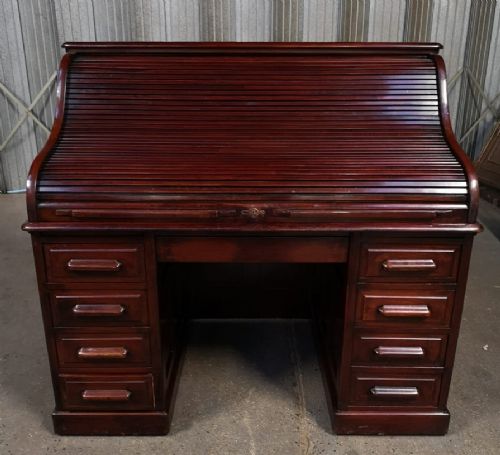
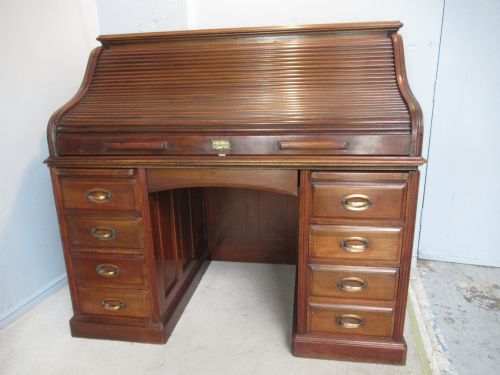
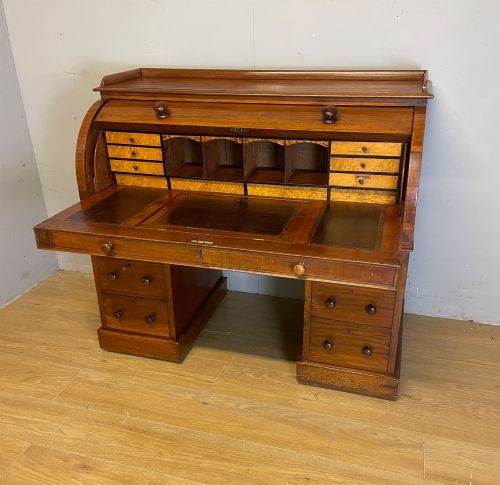
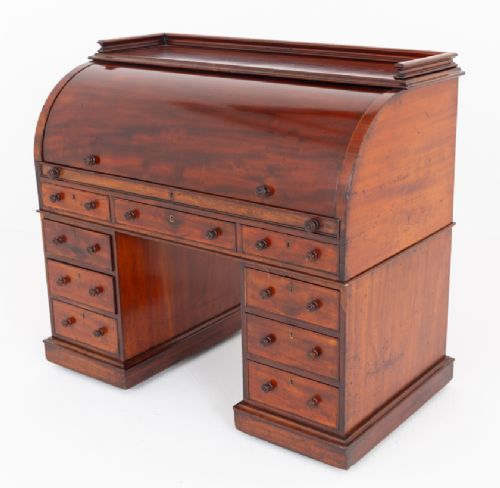
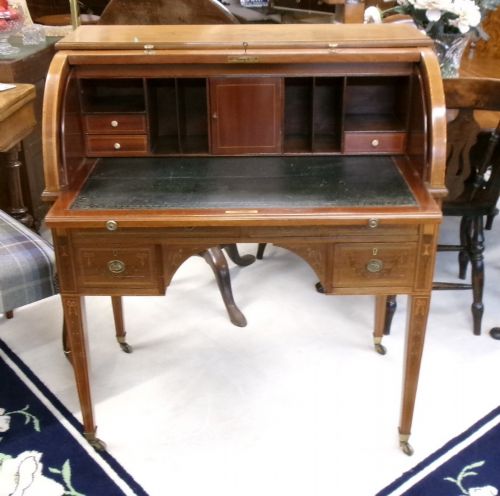
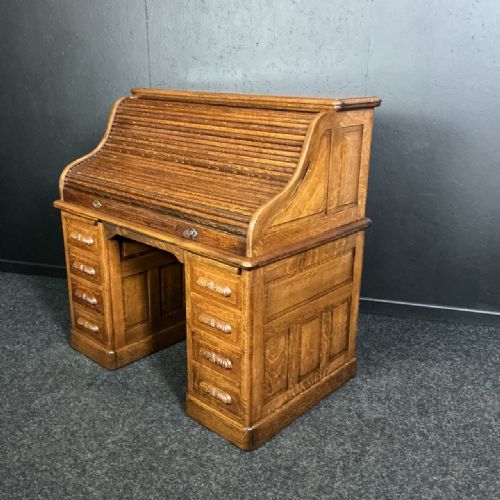
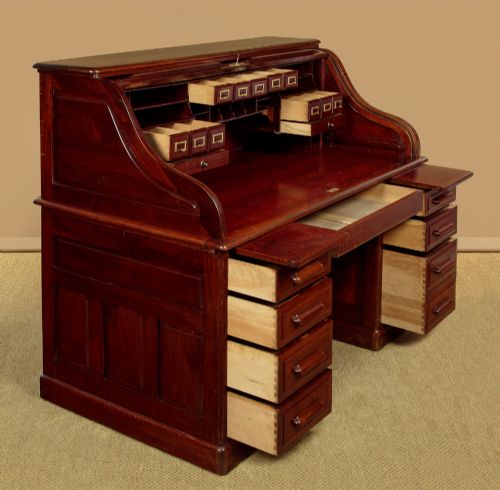
A vintage cylinder desk provides a concealed working surface by means of a rounded wooden shutter that rolls back to reveal fitted interior compartments and pull-out writing slides. Buyers searching this phrase encounter substantial pedestal formats from the Victorian and Edwardian eras alongside lighter inlaid pieces.
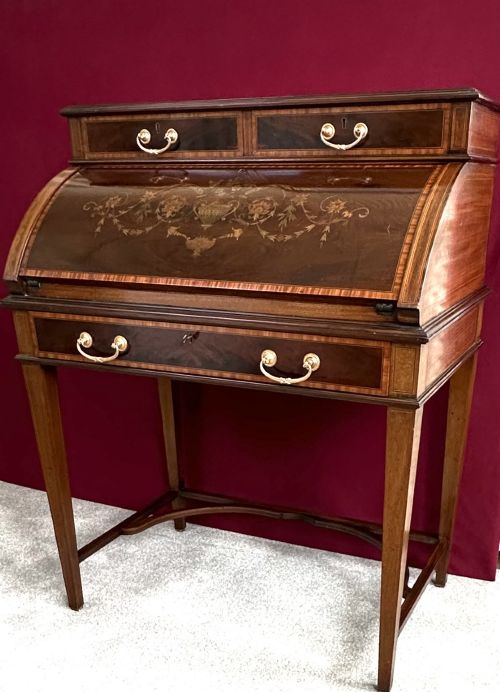
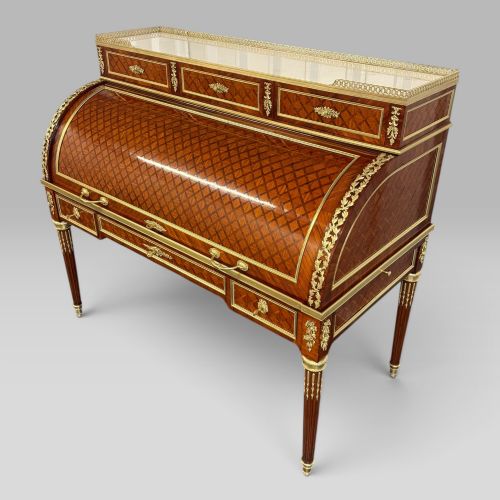
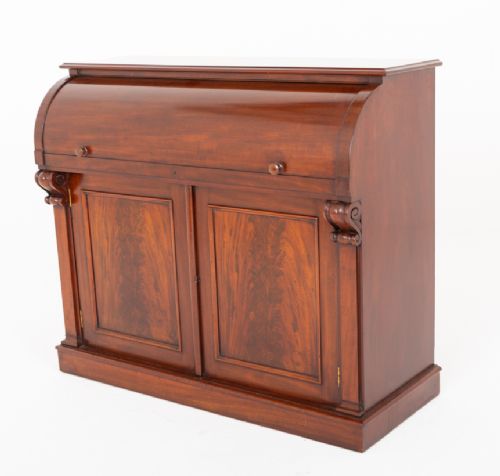
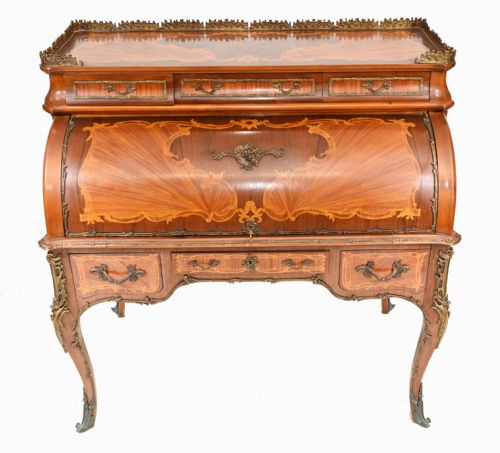
The selection ranges from large oak and walnut office roll tops to refined mahogany and satinwood writing desks influenced by Georgian, Regency, and French revival styles. These pieces originate primarily from British workshops and continental makers active during the nineteenth and early twentieth centuries.
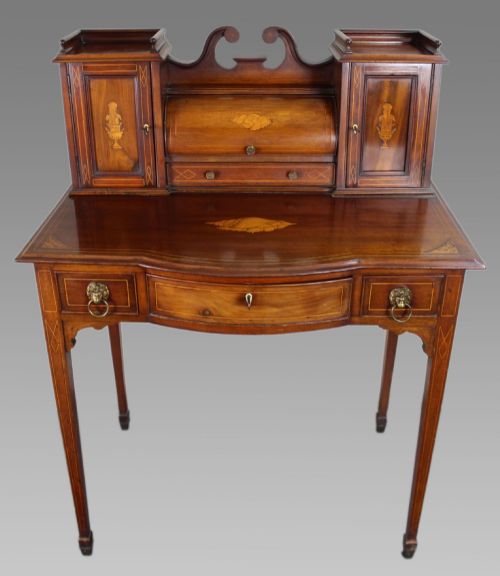
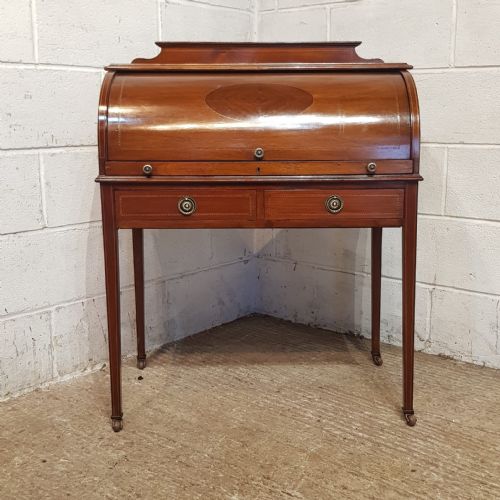
Smaller ladies desks and barrel-fronted writing cabinets appear frequently, offering the same curved mechanical enclosure in more compact domestic proportions. Each variation serves the fundamental purpose of hiding correspondence and stationery behind a continuous curved panel.
Materials and construction methods
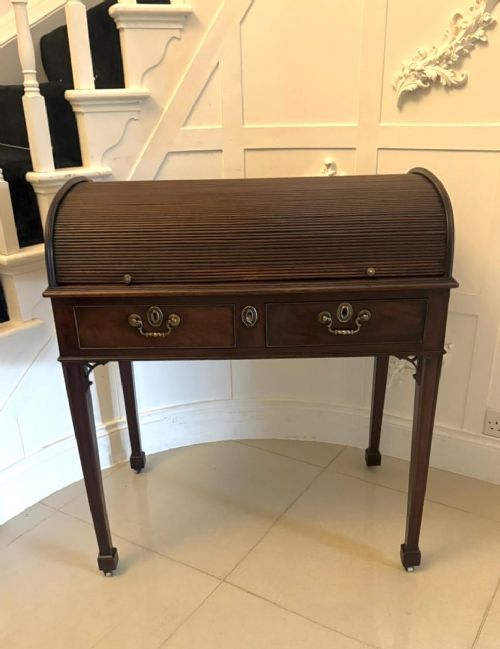
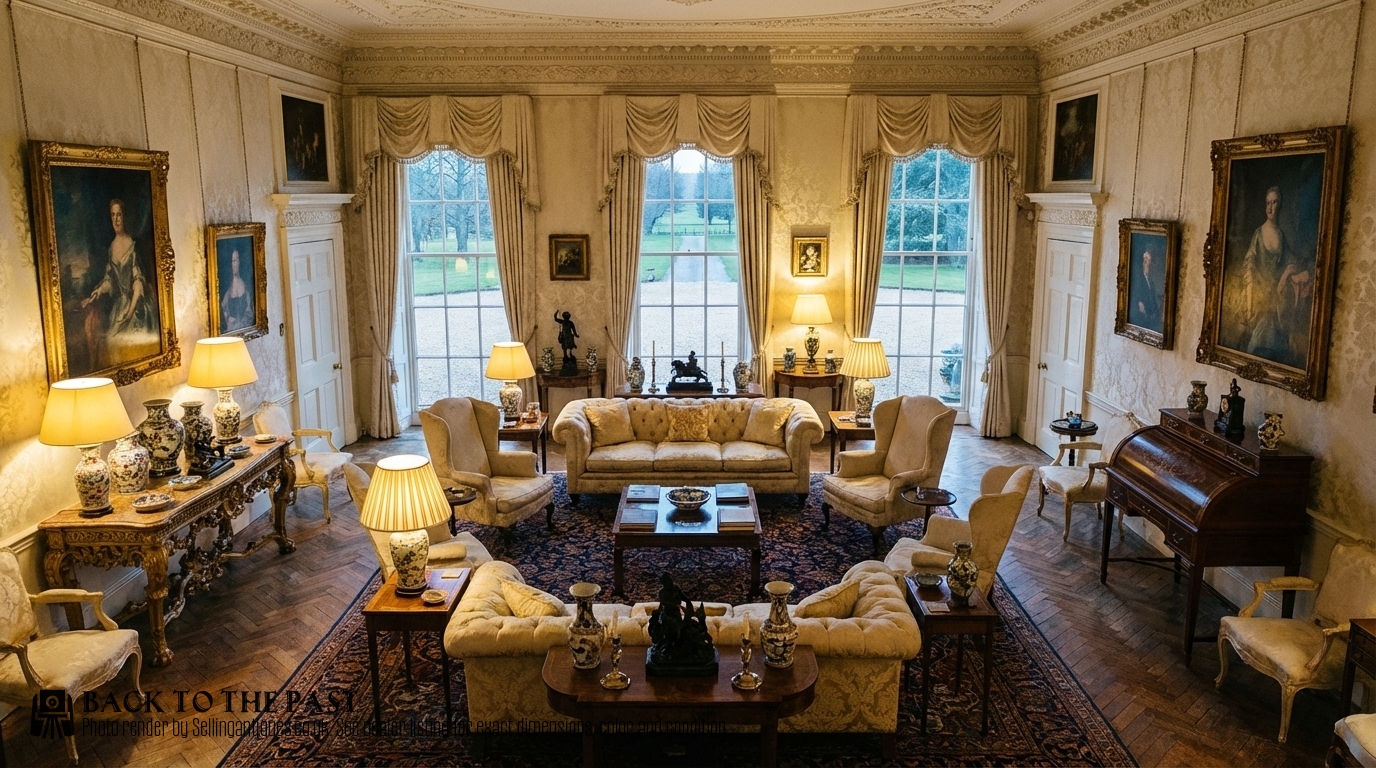
Cabinet makers constructed the curved cylinder shutter from narrow vertical strips of timber glued to a flexible fabric backing, allowing the panel to slide smoothly within concealed tracks. Solid mahogany, oak, walnut, and satinwood form the primary structural timbers, frequently accented with fine marquetry or parquetry inlays.
Brass fittings, leather writing surfaces, and gilt ormolu mounts complete the construction of finer examples, while interior arrangements incorporate small drawers and pigeonholes. French and English makers employed traditional joinery to ensure the mechanical roll-top action endured heavy daily use.
Several cylinder desks retain ingenious secret compartments designed to hide private correspondence from overly curious houseguests.
Assessing construction and design standards
The smoothness of the mechanical roll-top action and the precision of the tracks indicate the initial standard of cabinet making. Superior examples maintain a fluid movement where the curved shutter travels effortlessly without binding.
Timber selection and secondary woods reveal the workshop tier, with top-tier pieces utilising figured mahogany, rich walnut, or intricate satinwood parquetry. The complexity of the internal stationary fittings and the depth of the marquetry inlay further separate standard utility pieces from exceptional decorative works.
The Vintage Cylinder Desk Glossary
- Cylinder desk
- A writing desk featuring a quarter-circle or half-cylinder wooden shutter that conceals the writing surface and interior drawers when closed. The panel rolls backward into the body of the desk when opened.
- Tambour top
- A flexible writing surface cover constructed from narrow wooden slats attached to canvas or leather. It operates on the same sliding principle as a cylinder front.
- Pedestal desk
- A heavy freestanding desk supported by two banks of drawers or cupboards beneath the main writing surface. Many large nineteenth-century roll-top desks follow this architectural format.
- Ormolu
- Gilded bronze mounts and decorative details applied to furniture, frequently seen on continental revival pieces. The technique involves mercury gilding over a cast bronze base.
- Parquetry
- Geometric wood-mosaic work used for flooring and furniture decoration. Makers arrange contrasting timber veneers to form repeating patterns across the writing surface or cylinder front.
Vintage Cylinder Desk: Frequently Asked Questions
How does a cylinder desk differ from a bureau?
A traditional bureau utilises a sloping hinged flap that folds down to create a writing surface. In contrast, a cylinder desk employs a curved rigid shutter that slides backward into the carcass of the furniture.
This rolling mechanism keeps the interior compartments accessible while retaining a fixed upper surface. The enclosed space behind the cylinder often contains a more complex arrangement of small drawers and pigeonholes than a standard bureau.
What woods were used for these desks?
Mahogany and oak dominate the surviving British examples from the Victorian and Edwardian periods. Walnut and satinwood also appear frequently, particularly on finer domestic models and inlaid revival pieces.
Cabinet makers selected dense hardwoods to ensure the stability of the curved shutter tracks and the heavy pedestal bases. Finer continental examples occasionally incorporate exotic veneers like kingwood alongside parquetry patterns.
How do I maintain the roll-top mechanism?
The sliding shutter relies on clean tracks and flexible backing fabric that must remain free from excessive moisture and dust. Periodic gentle cleaning of the interior grooves preserves the smooth travel of the wooden slats.
Applying appropriate furniture wax to the exterior timber maintains the finish without interfering with the mechanical tracks. Avoid placing heavy objects on top of the cylinder casing that might warp the housing.
Are these desks suitable for modern home offices?
The compact footprint of many Edwardian and Victorian cylinder desks makes them practical alternatives to modern office furniture. The roll-top feature allows users to conceal writing materials and laptops at the end of the working day.
Larger pedestal models provide substantial storage capacity within the under-desk drawers. However, buyers should measure clearance space for the pull-out writing slides before placement.