


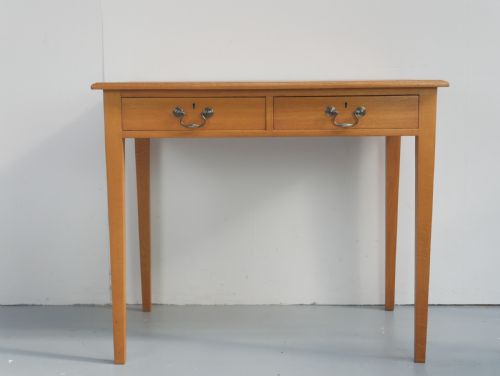


Small Oak Bureau
A small oak bureau provides a compact writing workspace framed in timber, bringing period character and fitted compartments to domestic studies.
Small Oak Bureau
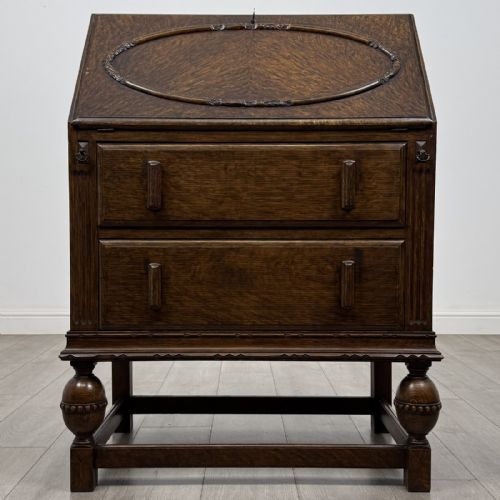
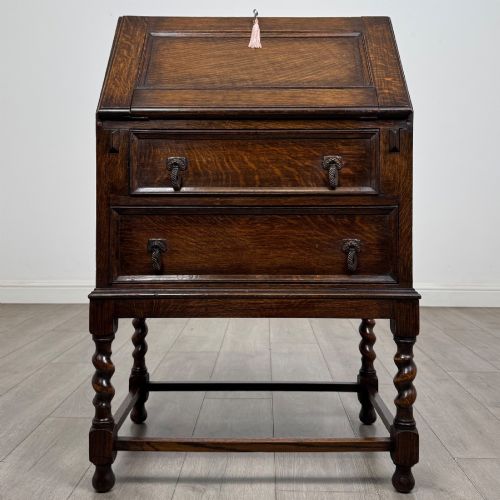
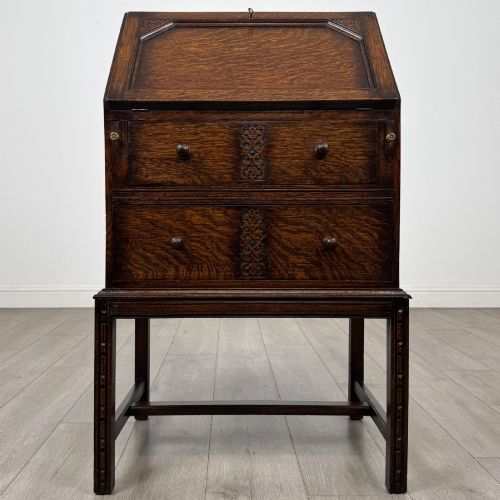
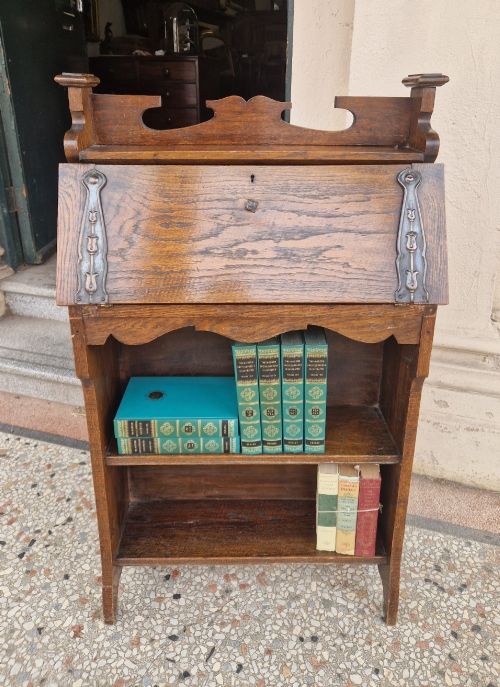
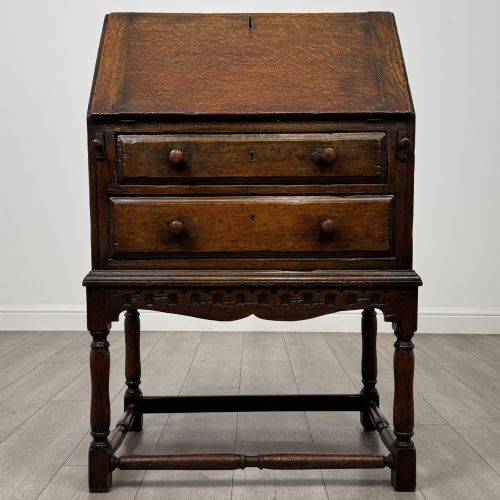
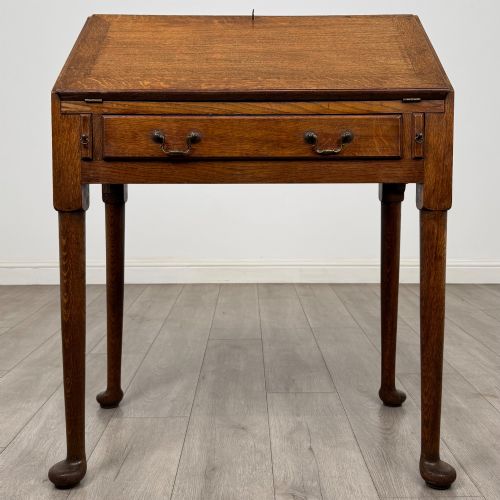
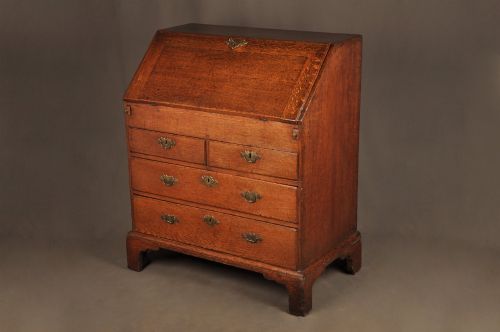
A small oak bureau is a compact writing desk featuring a sloping fall-front that opens to reveal internal pigeonholes and drawers. These pieces range from seventeenth-century forms to Edwardian and Arts and Crafts interpretations.
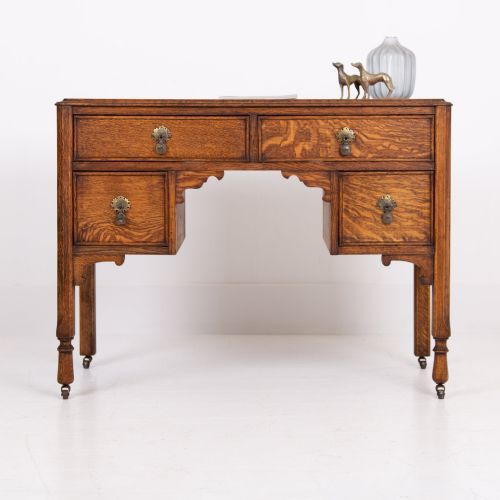
The most common examples on this page date from the Edwardian period, often constructed in golden or figured oak with fitted writing interiors. Buyers also encounter eighteenth-century Georgian editions and earlier seventeeth-century formats.
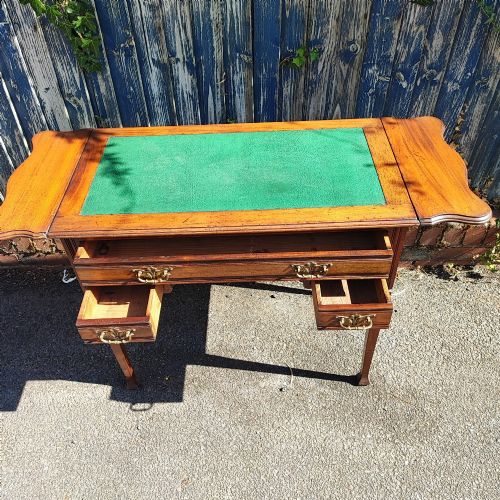
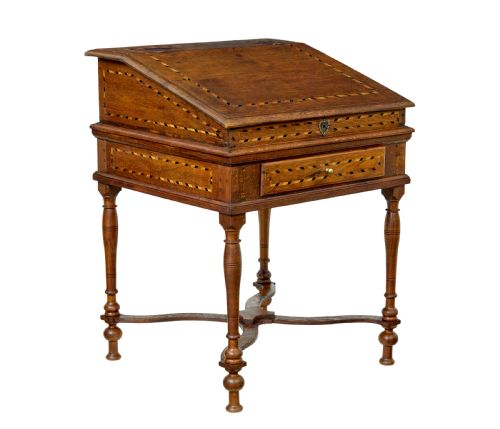
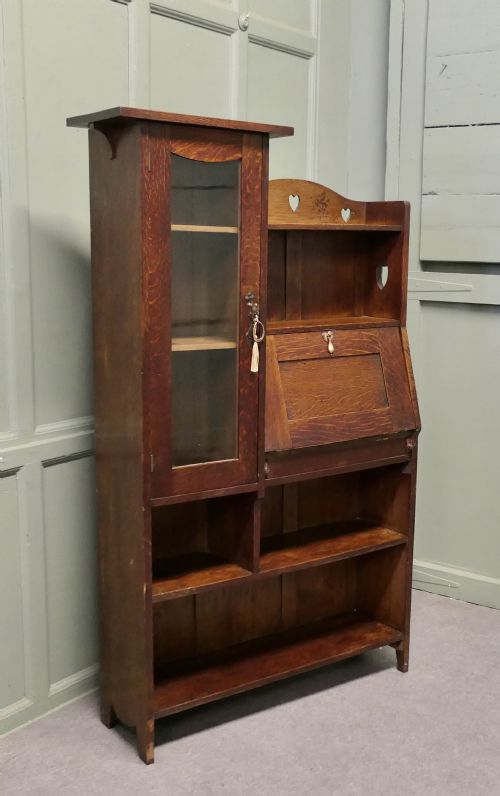
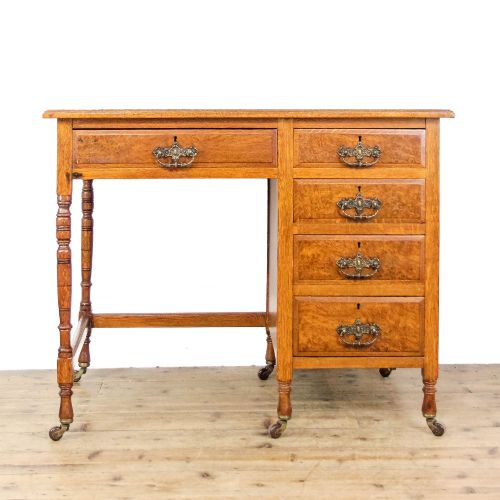
Forms extend beyond the standard fall-front desk to include Davenport desks, table-top formats, writing tables, and secretaire bookcases. Regional pieces such as Welsh miniatures and Dutch inlaid slopes also appear.
How they were made
Makers utilised solid oak, burr oak, pollard oak, and fruitwood, sometimes incorporating mahogany or walnut linings. Surfaces display carved details, turnings such as barley twist legs, or inlay.
Hardware typically includes brass handles, and certain variants incorporate glass panels or leather writing surfaces. Construction methods span centuries of cabinetmaking, from seventeenth-century joinery to twentieth-century production.
Small Oak Bureau Retail Price Guide 2026
Typical asking prices for small oak bureau among the pieces listed under this phrase on Sellingantiques today, from the lower quarter to the upper quarter. They describe what is for sale here now, not the wider market.
Some miniature Welsh bureaus were built so small they sat comfortably upon a larger table to practice penmanship.
What varies in quality
Quality rests in the selection of the timber, such as figured or burr oak, and the complexity of the interior fittings with their small drawers and pigeonholes. Cabinetmaking skill shows in the precise fit of the fall-front and the execution of carved or turned supports.
The integrity of the original hardware, hinges, and internal compartments distinguishes standard utility pieces from finer examples. Regional provenance and early dating also elevate the standing of a desk.
The Small Oak Bureau Glossary
- Bureau
- A writing desk with a sloping hinged lid that covers compartments for papers. It sits on legs, a stand, or a bank of drawers.
- Secretaire
- A piece of furniture containing a concealed writing drawer or fold-down desk surface. These often combine with bookcases or chests of drawers.
- Davenport
- A compact pedestal desk with a sloping writing top and drawers accessed from the side. They frequently feature burr oak or maple interiors.
- Fall-front
- The hinged writing flap of a bureau that drops down to form a horizontal desk surface. It conceals the fitted interior when closed.
- Pigeonhole
- A small open compartment within a desk interior used for sorting letters and documents. They form part of the fitted writing interior.
Small Oak Bureau: Frequently Asked Questions
Where should I place a small oak bureau?
These compact desks suit narrow hallways, alcoves, or living rooms where floor space is limited. Their enclosed fronts conceal working papers when the desk is not in use.
Position the bureau away from direct heat sources and strong sunlight to protect the timber and any leather writing inserts from drying out or fading over time.
How do I distinguish an Edwardian bureau from a Georgian one?
Edwardian examples tend to feature lighter golden oak, sometimes with simpler machine-turned legs or Arts and Crafts influence. They often date from around nineteen hundred to nineteen twenty.
Georgian pieces from the eighteenth century typically display darker patination, denser construction timber, and hand-cut dovetails within the internal drawers.
What is a bureau bookcase?
A bureau bookcase combines a sloping writing desk at the base with an enclosed shelving section above. These tall units served as combined workspaces and libraries in compact rooms.
They appear in various periods, offering glazed or solid wooden doors on the upper cabinet depending on the exact date of manufacture.
How do I care for the oak surface?
Dust the timber regularly with a dry cloth and apply a quality beeswax periodically to nourish the grain. Avoid silicone-based polishes that build up residue on old finishes.
Keep the humidity in the room stable to prevent the oak panels from shrinking or warping across the seasonal changes.