



Edwardian Rolltop Desk
An edwardian rolltop desk offers a clever slatted tambour mechanism to conceal paperwork, combining practicality with refined period timberwork.
Edwardian Rolltop Desk
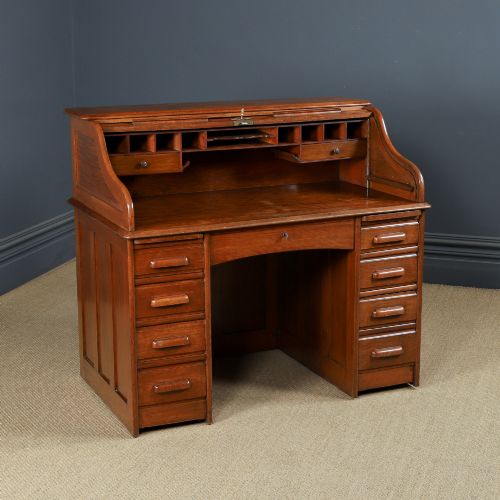
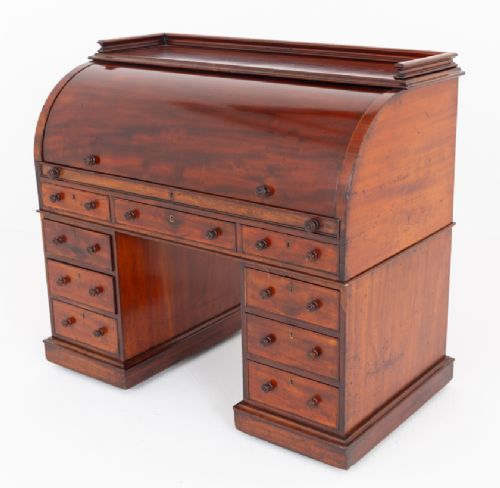
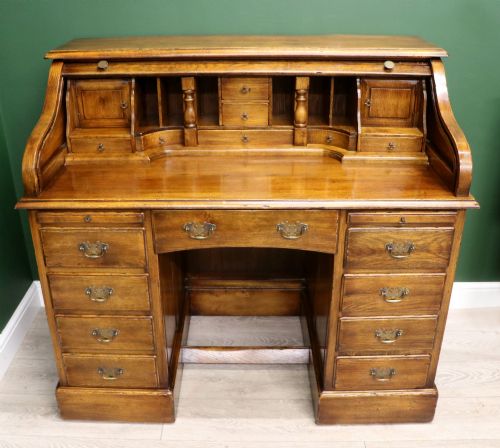
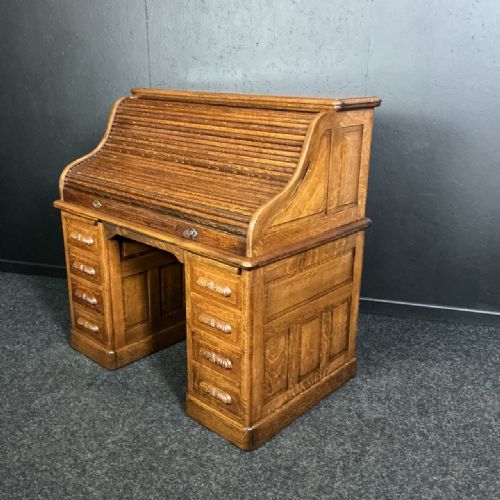
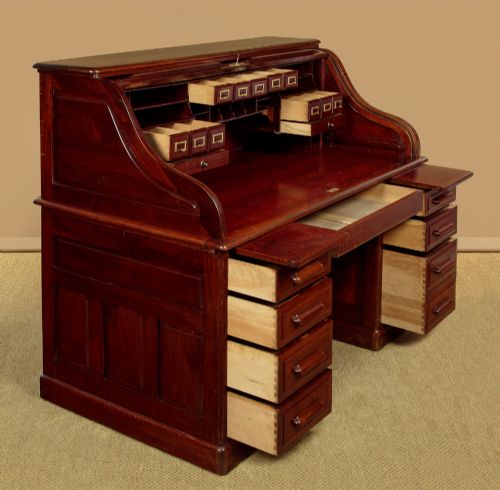
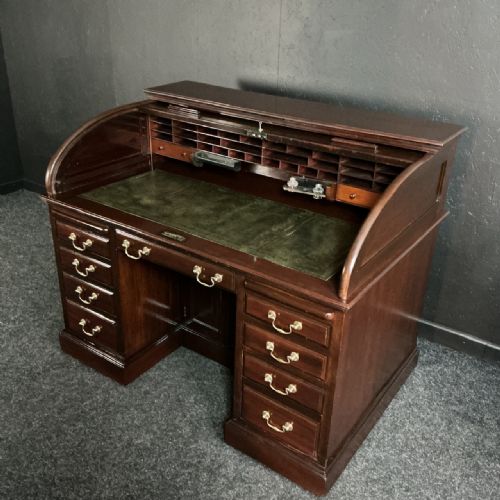
When you search for an edwardian rolltop desk, you encounter robust pedestal forms and refined cylinder variants designed for domestic studies and commercial offices. The most common examples on this page are substantial oak and mahogany pieces from the early twentieth century featuring internal pigeonholes and drawers.
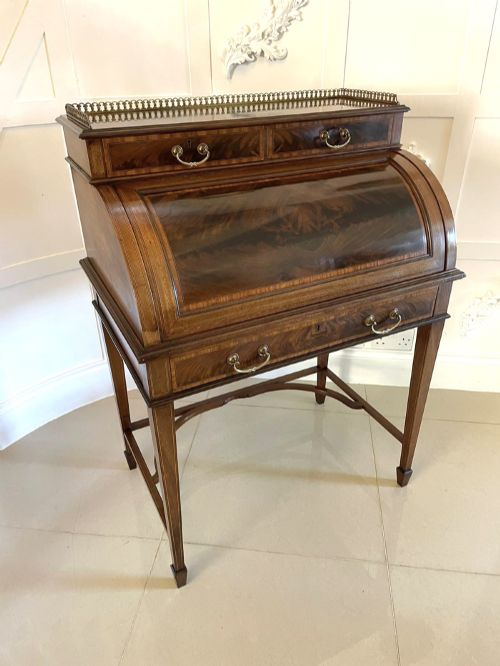
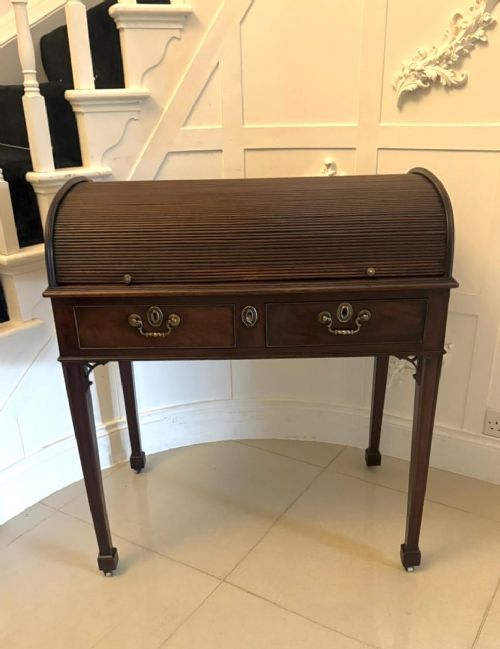
Beyond the standard office pedestals, the selection includes Sheraton Revival marquetry inlaid cylinder desks and taller bureau bookcase combinations in walnut and satinwood. These variations show how the basic slatted closure adapted from heavy clerical furniture into lighter domestic writing cabinets.
Makers such as Maple & Co provided high-end variations in mahogany with inlaid details, while standard commercial iterations relied on solid oak and panelled construction. Each piece maintains the characteristic tambour shutter that slides down to secure the writing surface.
Materials and construction
Makers utilised solid oak, mahogany, walnut, and satinwood, often pairing dense hardwoods with panelled frames to prevent warping in the slatted tambour top. Brass fittings, leather writing inserts, and glass doors appear on bookcase variants to complete the functional hardware.
The flexible tambour shutter relies on narrow vertical strips of wood glued to a canvas or leather backing, allowing the curtain to glide smoothly within curved side grooves. Pedestal bases house banks of internal drawers secured by the locking mechanism of the descending shutter.
Period designations across the available inventory span from Victorian and Regency antecedents through to Edwardian and Interwar 1930s forms.
Quality differences
The smoothness of the tambour action separates superior examples from lesser pieces, as well-adjusted slats glide silently without binding in their tracks. Timber selection also dictates grade, moving from plain commercial pine and utility oak up to finely figured mahogany with satinwood stringing and marquetry.
Internal complexity defines the upper tier of the range, where fitted stationery compartments, concealed compartments, and polished mahogany drawer linings supersede basic open pigeonholes. Freestanding capability with panelled backs rather than plain utility sides indicates a desk built for the centre of a room.
Maple & Co·Maples of London and Paris·Horrocks Desk Company·Globe Wernicke
The Edwardian Rolltop Desk Glossary
- Rolltop
- A desk featuring a flexible slatted wooden shutter that pulls down over the writing surface to conceal the interior. This mechanism uses textile backing to hold the individual wooden laths together.
- Tambour
- A series of narrow wooden strips attached to canvas, allowing the surface to curve around a track. It serves the same enclosing function as the rolltop.
- Cylinder desk
- A writing table with a smooth, curved solid wooden cylinder that rolls backward into the body of the desk to open. This form generally represents a more refined domestic style than the standard slatted office desk.
- Pedestal desk
- A heavy table form supported by two separate stacks of drawers with a central kneehole space. These often incorporate the rolltop enclosure above the main writing surface.
- Marquetry
- Decorative inlay using various tinted wood veneers to create pictorial or geometric patterns on the surface. It appears frequently on Sheraton Revival writing cabinets.
Edwardian Rolltop Desk: Frequently Asked Questions
How do you open a stuck rolltop?
Stuck shutters usually result from humidity changes causing the wooden tracks to swell or the canvas backing to sag. Gentle lateral adjustment while lifting usually releases the mechanism without forcing the slats.
Lubricating the internal grooves requires specialised wax rather than liquid oils, which can attract dust and gum up the canvas backing over time.
Where were these desks used?
Commercial offices and domestic studies utilised these desks for daily correspondence and secure document storage. The lockable tambour shutter allowed clerks to secure paperwork at the end of the day without clearing the desk.
Later Edwardian iterations moved into home libraries and drawing rooms, adopting lighter satinwood and mahogany marquetry to suit residential interiors.
How do you clean leather writing inserts?
Original leather surfaces require gentle cleaning with a damp cloth and mild soap to remove accumulated dust without stripping the historic finish. Harsh chemical solvents damage the aged grain and underlying gold tooling.
Applying a neutral leather cream restores suppleness to dry hide after cleaning, preserving the material against further cracking.
Are these desks easy to move?
Most pedestal examples separate into three distinct sections consisting of the two drawer pedestals and the heavy upper rolltop carcass. This modular construction assists with transport through doorways and up staircases.
Freestanding cylinder desks and smaller bureau bookcases generally remain as single rigid units requiring careful lifting due to solid hardwood construction.