
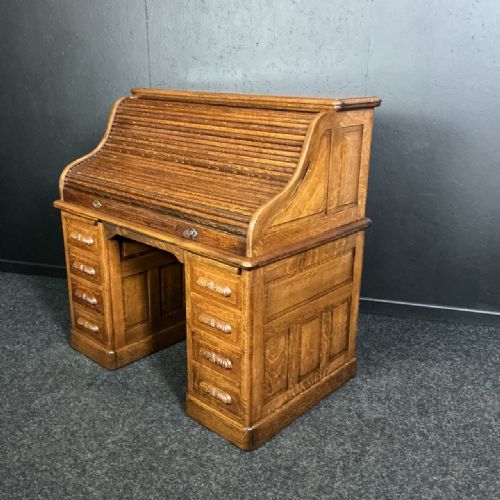

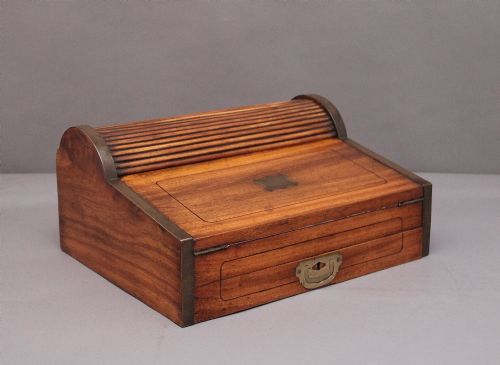


Wooden Tambour Desk
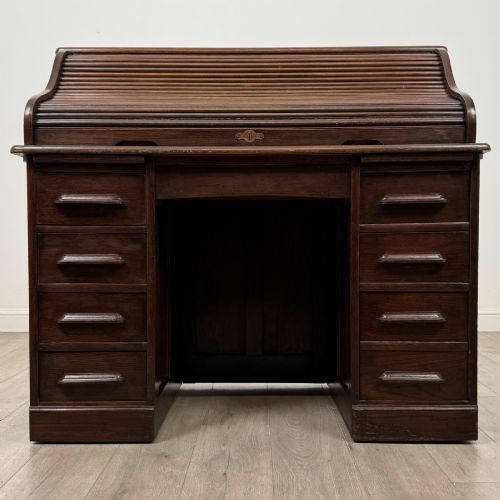
A wooden tambour desk brings order to paper and ink through a slatted sliding top that conceals your daily work.
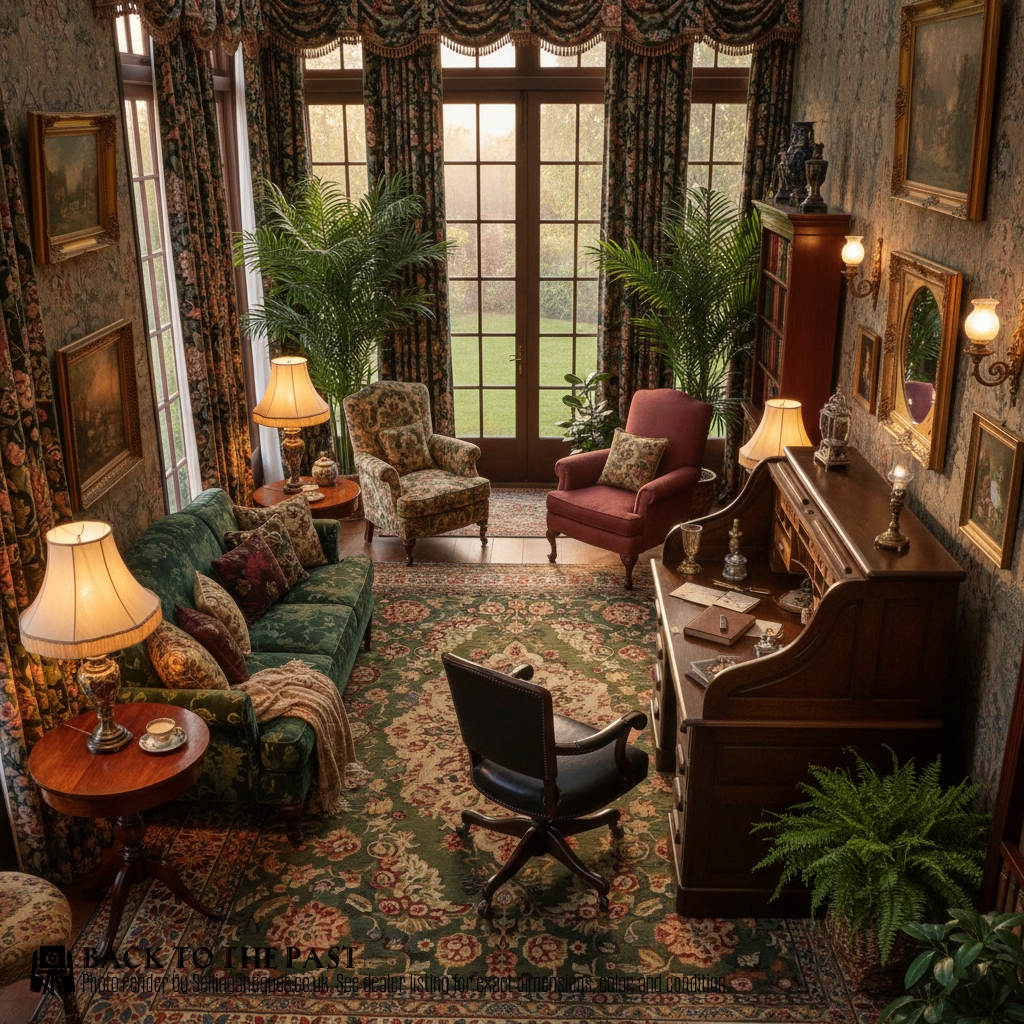
Wooden Tambour Desk
When you search for a wooden tambour desk, you encounter clever writing furniture designed to secure papers with a flexible slatted shutter. The versions you are most likely to meet on this page range from compact Edwardian and Victorian office pieces to earlier Georgian forms.
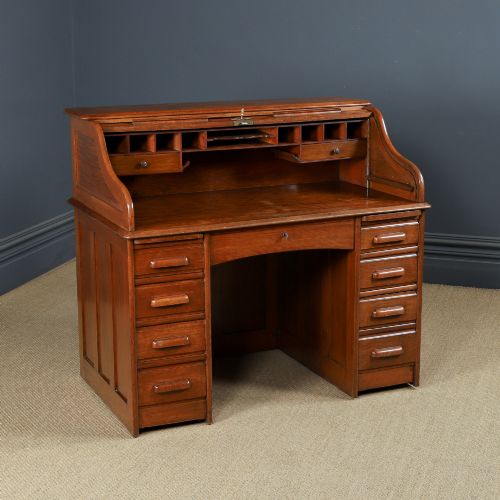
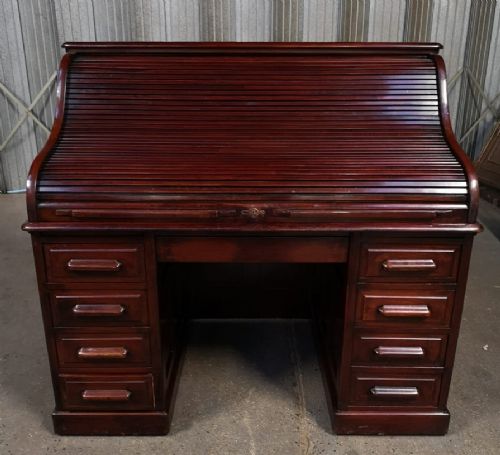
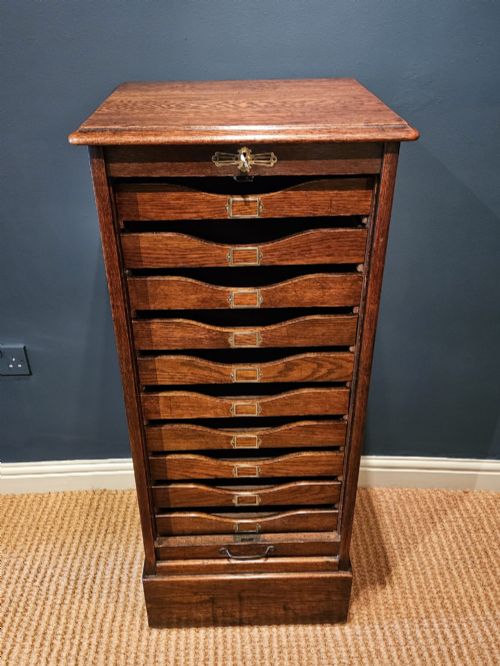
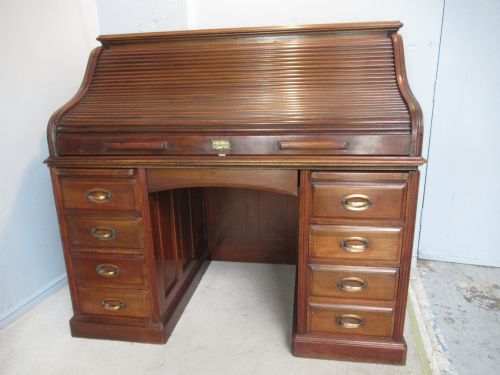
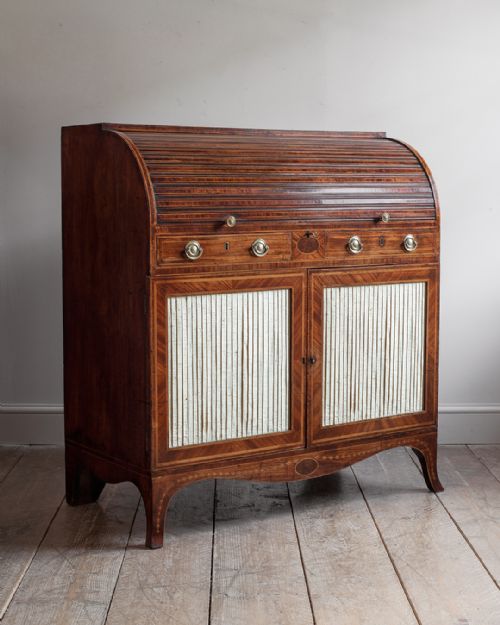
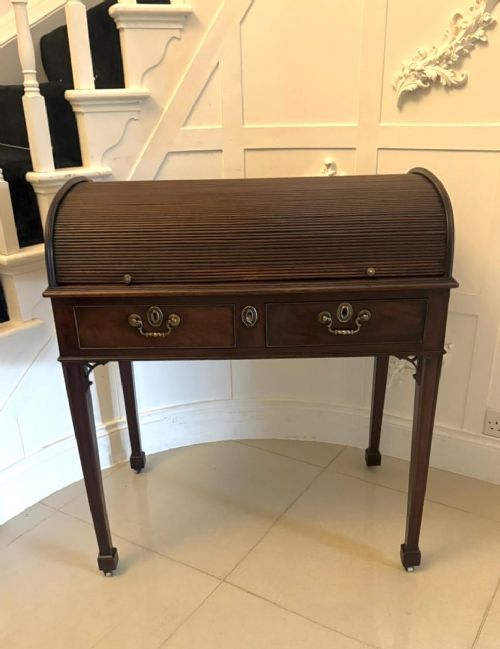
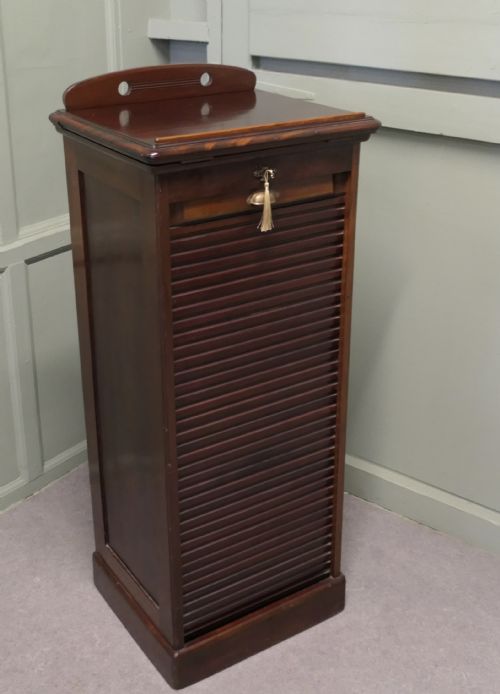
These items appear in formats including large pedestal roll-top desks, smaller filing cabinets, and cylinder bureaux. The structural variety spans simple oak office furniture to refined mahogany cylinder desks with pull-out writing slides.
How they were made
Cabinet makers constructed these desks using timbers such as oak, mahogany, walnut, camphor wood, and yew wood, often accented with brass hardware and steel components. The defining tambour mechanism relies on individual wooden slats glued to a canvas backing, allowing the flexible shutter to glide smoothly along routed tracks.
Joinery techniques ranged from solid panelled construction on heavy pedestals to precise drawer framing on smaller writing slopes and stationery cabinets. Finish depended on the timber, utilising polished mahogany surfaces or plain oak finishes suited to demanding office environments.
Listings feature items spanning the 18th century, Georgian, Victorian, and Edwardian eras, through to the 1920s in oak, mahogany, walnut, and camphor wood.
What varies in quality
The distinction between standard utility office furniture and the finest examples rests on timber selection and the precision of the slatted mechanism. Top-tier pieces exhibit seamless movement in the tambour track alongside finely figured mahogany, walnut, or oak grain.
Construction heft also separates categories, moving from light commercial filing cabinets to substantial pedestal desks with panelled backs and fitted internal stationery compartments.
The Wooden Tambour Desk Glossary
- Tambour
- A flexible shutter made from narrow strips of wood glued to a fabric backing, designed to slide in a curved groove. This ingenious closure secures the desk surface without swinging doors.
- Cylinder desk
- A writing desk featuring a smooth, rotating cylindrical cover rather than slatted tambour strips. It operates on a similar principle to conceal the desk interior.
- Pedestal desk
- A heavy freestanding desk supported by two banks of drawers or filing compartments. These form the substantial base beneath many large roll-top writing surfaces.
- Writing slope
- A portable or table-top box with a slanted lid that opens to reveal storage for paper and ink. These compact writing surfaces often incorporate campaign brass mounts for travel.
- Stationery cabinet
- A desktop box designed to hold envelopes, paper, and correspondence materials. They frequently feature internal pigeon holes and small tambour or panelled doors.
Wooden Tambour Desk: Frequently Asked Questions
What is a wooden tambour desk?
A wooden tambour desk is a workspace featuring a sliding slatted shutter that conceals the writing surface and pigeon holes. It allows you to close up your papers securely without clearing the desk.
These pieces emerged in various sizes, from large office pedestals to delicate Georgian and Victorian cylinder variants.
How do you operate a tambour shutter?
The tambour shutter glides along a recessed track cut into the sides of the desk frame. The individual wooden strips flex around curves because they are mounted onto a continuous canvas backing.
Lifting or sliding the handle pulls the flexible curtain smoothly into the body of the desk.
What woods were used for tambour desks?
Cabinet makers built these desks primarily in oak and mahogany, alongside walnut, yew wood, and camphor wood. Oak appears frequently in Edwardian office furniture and filing cabinets.
Mahogany and walnut tend to define earlier Georgian and Victorian cylinder or pedestal models.
How do I date an antique tambour desk?
Dating relies on stylistic clues, timber choices, and construction methods spanning the Georgian, Victorian, and Edwardian periods. Georgian examples often showcase fine mahogany craftsmanship and cylinder fronts.
Edwardian and later pieces typically use oak with heavy panelled pedestals and roll-top office configurations.
Where were tambour desks used?
These desks served primarily in studies, home offices, and commercial workspaces for managing correspondence and paperwork. Their roll-top or shutter design kept confidential documents concealed throughout the working day.
Smaller variations such as stationery cabinets and writing slopes also functioned in bedrooms and travelling contexts.