


Oak Tambour Front Desk
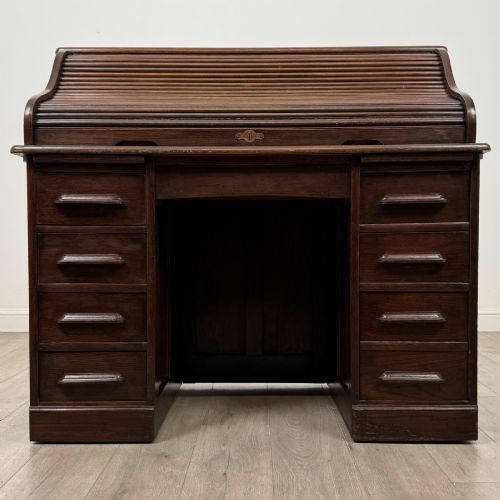
An oak tambour front desk is a practical workspace with a slatted sliding shutter that hides the writing surface, built for sorting letters and keeping papers secure.
Oak Tambour Front Desk
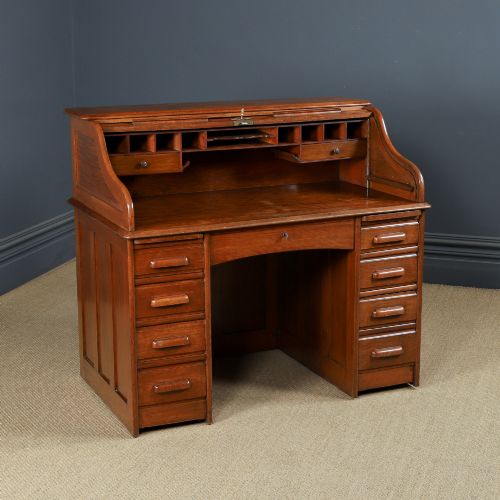
An oak tambour front desk provides a dedicated workspace featuring flexible wooden slats that slide smoothly in recessed tracks to conceal the writing surface and interior pigeonholes. Buyers searching for an oak tambour front desk typically encounter pedestal desks, office cabinets, and bureau bookcases originating from the Victorian and Edwardian eras.
The material palette centres on solid oak and oak veneers, frequently accompanied by brass handles, leather inserts, and internal paper compartments. Surviving examples span simple office filing cabinets to large pedestal desks designed for professional studies and administrative spaces.
How they were made
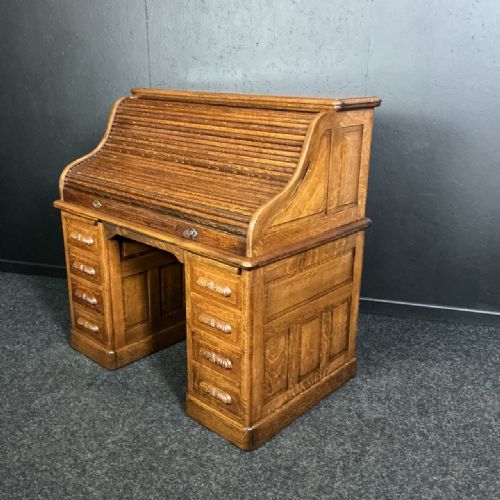
Cabinet makers constructed these desks using solid oak and oak veneers over secondary timbers, often joining individual narrow wooden slats to flexible fabric or canvas backings to form the sliding tambour shutter. This slatted construction allowed the curtain to curve around internal tracks without jamming during daily use.
Hardware details included cast brass pulls, brass label frames, and mechanical locking mechanisms linked to the movement of the tambour shutter. Interiors incorporated fitted stationery compartments, small drawers, and adjustable date calendars fashioned from wood, lead, and glass.
Listings feature oak construction spanning the Victorian, 1890, 1900, 1910, and Edwardian periods, alongside brass, leather, and glass components.
What varies in quality
Quality in an oak tambour front desk depends upon the precision of the slatted shutter mechanism and the smoothness of its travel along the track. Superior examples operate without sticking, whereas inferior versions suffer from warped slats or misaligned grooves due to humidity changes.
The grade of timber and the complexity of the interior joinery further distinguish standard commercial office furniture from bespoke cabinet work. Finely fitted pigeonholes, panelled backboards, and secondary internal locking drawers indicate a higher standard of manufacture.
Maples of London and Paris·James Shoolbred and Co
The Oak Tambour Front Desk Glossary
- Tambour
- A flexible shutter made from narrow wooden slats glued to a fabric backing, designed to slide along tracks to enclose a desk or cabinet interior.
- Pedestal desk
- A heavy freestanding writing desk supported by two pedestals containing banks of drawers beneath the main desktop.
- Bureau bookcase
- A combination furniture form featuring a lower writing desk section with a sloping or tambour front beneath an upper glazed shelving cabinet.
- Stationery cabinet
- A tabletop or desk-mounted box with fitted internal compartments, pigeonholes, and sometimes an adjustable date mechanism for organising letters.
- Arts and Crafts
- A design movement emphasising honest construction, visible joinery, and natural materials without excessive factory ornamentation.
Oak Tambour Front Desk: Frequently Asked Questions
How do I care for the tambour slats?
Keep the wooden tracks clean and free from dust so the flexible slats slide smoothly without catching. Apply a suitable wax polish sparingly to maintain the oak surface.
Avoid placing the desk in overly damp or dry rooms, as extreme temperature shifts cause the timber slats to swell or shrink within their grooves.
Were these desks used in homes?
These pieces served primarily in commercial offices, administrative buildings, and professional studies for managing correspondence and paperwork. Over time, smaller variations found their way into domestic libraries and home studies.
Their lockable shutters made them practical for securing sensitive documents before electricity and modern security systems became common.
How do I distinguish Edwardian from Victorian examples?
Victorian versions tend to feature darker finishes, heavier proportions, and more ornate carved detailing reflecting nineteenth-century taste. Edwardian pieces often display lighter oak tones and simpler lines influenced by changing office efficiency.
Hardware styles and interior stationery arrangements also help indicate the manufacturing decade.
What is the purpose of the internal pigeonholes?
Pigeonholes were built to sort incoming letters, envelopes, and bills into categories for daily administrative work. Many desks also included small drawers for stamps, nibs, and ink.
Adjustable date calendars and letter racks were sometimes integrated into the stationary fittings.