
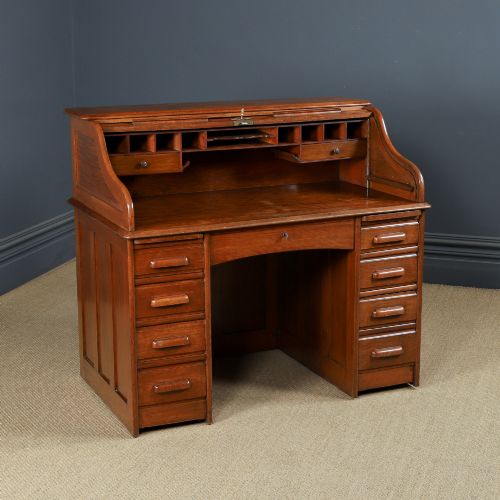
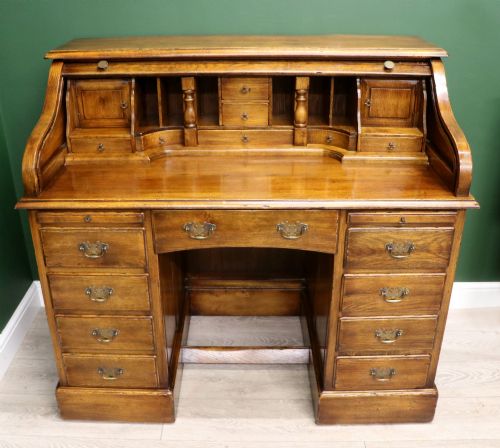
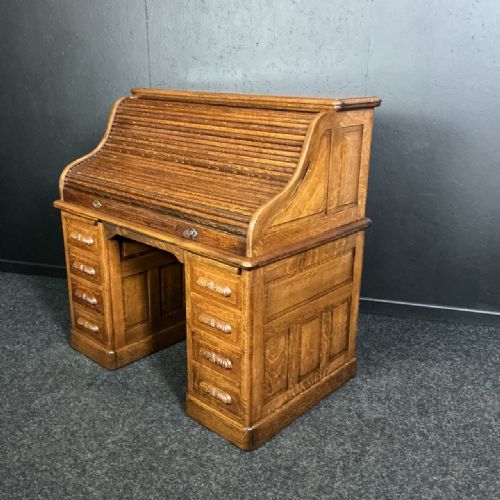


Antique Oak Rolltop Desk
An antique oak rolltop desk brings heavy timber work and practical pigeonholes together for serious daily study or office writing.
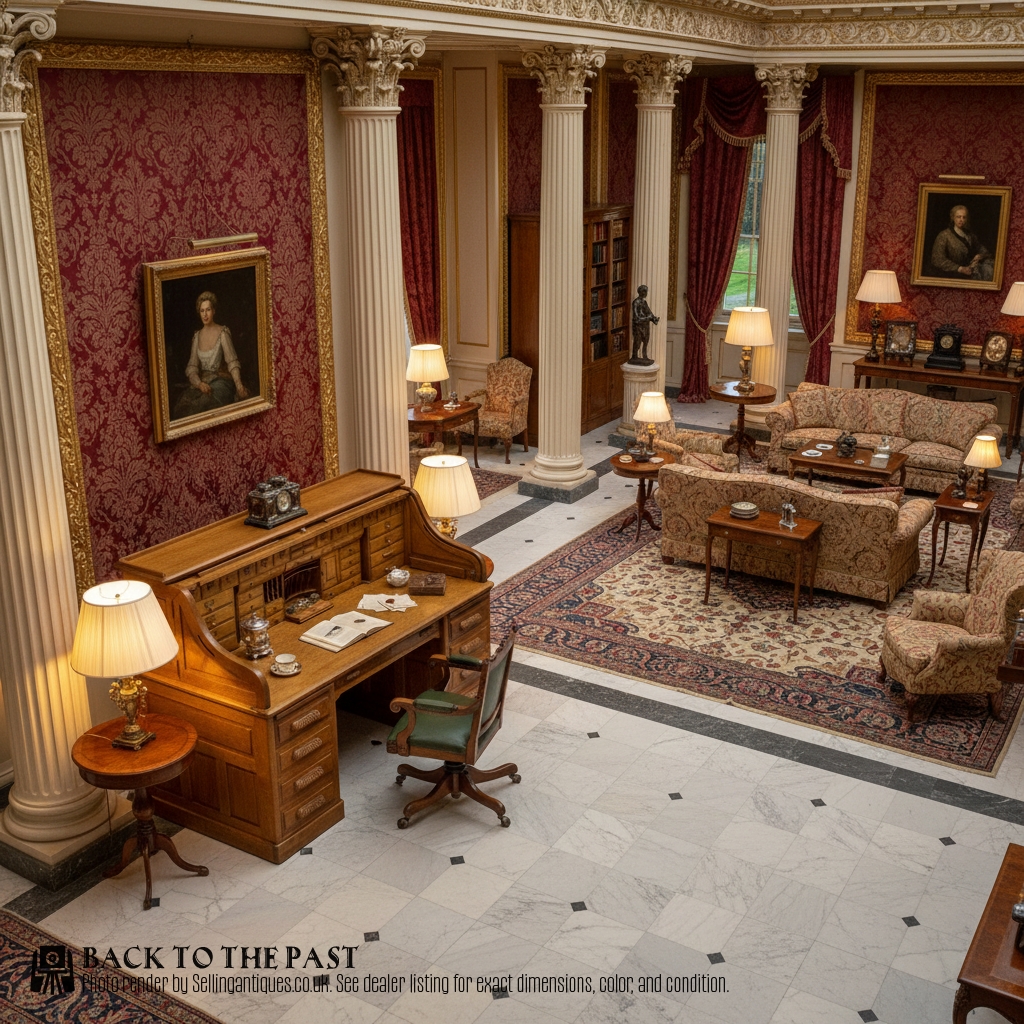
Antique Oak Rolltop Desk
The antique oak rolltop desk is a heavy office or study workstation designed to secure paperwork behind a slatted wooden tambour. When you search for an antique oak rolltop desk, you meet large pedestal configurations with numerous internal pigeonholes and small drawers.
Most examples found here belong to the Edwardian period or the Victorian era, alongside a few interwar twentieth-century pieces. The form spans standard office pedestals, typewriter desks, and larger bureau bookcases with upper shelving.
How they were made
Makers built these pieces predominantly from solid oak, incorporating panelled construction to ensure stability across the large pedestal bodies and sides. The slatted tambour curtain utilises individual wooden strips mounted on flexible backing canvas to slide smoothly into the desk body.
Hardware elements include brass pulls and handles, whilst internal writing surfaces sometimes feature inset leather skivers. Selected components incorporate lead, glass, and supplementary metal fittings.
Some desks hide secret compartments behind the stationary pigeonholes for confidential letters.
What varies in quality
Quality rests primarily on the density of the oak timber, the complexity of the internal letter compartments, and the smoothness of the tambour mechanism. Finer pieces demonstrate robust solid oak framing and precise engineering in the slatted roll shutter.
Workshop origin also separates standard commercial output from high-end cabinetmakers, distinguishing simple utility office furniture from superior retailer commissions.
Maples of London and Paris·Globe Wernicke
The Antique Oak Rolltop Desk Glossary
- Tambour
- A flexible shutter formed of narrow strips of wood glued to canvas or fabric backing. This slides within vertical grooves to conceal the desktop pigeonholes.
- Pedestal desk
- A heavy freestanding desk supported by two banks of small drawers rather than simple legs. This configuration forms the base for most rolltop writing furniture.
- Bureau bookcase
- A combination piece featuring a lower writing compartment beneath an upper glazed bookcase section. Several variations incorporate rolltop mechanisms into the bureau base.
- Edwardian
- The period spanning the reign of King Edward VII from 1901 to 1910, representing the origin date for the majority of these desks.
Antique Oak Rolltop Desk: Frequently Asked Questions
How does a rolltop desk work?
The slatted wooden tambour runs along curved side tracks to slide open or closed over the writing surface. Internal locking mechanisms often secure the entire desk when the shutter shuts.
This design allows users to leave papers undisturbed on the desk while keeping the workspace locked and tidy.
Are these desks heavy?
Solid oak construction and double pedestal bases make these pieces extremely heavy and difficult to move alone. They often require partial dismantling or multiple people for safe transport.
Plan the exact room placement carefully before bringing one into a study or office.
What is the difference between a cylinder desk and a rolltop?
A cylinder desk uses a solid curved wooden shell that rotates on a pivot rather than a flexible slatted tambour. Rolltops rely on many individual narrow wooden strips joined together on canvas.
Both serve the same purpose of concealing the workspace, but use entirely different mechanical shutters.
How do I care for oak and leather surfaces?
Feed the solid oak timber occasionally with quality beeswax to preserve the grain and prevent the wood from drying out. Protect any inset leather writing surface from direct sunlight and excessive moisture.
Dust the tambour slats regularly so grit does not accumulate inside the sliding tracks.