




Vintage Tambour Desk
A vintage tambour desk brings slatted wooden shutters and clever internal pigeonholes together to organise a workspace with timeless mechanical ingenuity.
Vintage Tambour Desk
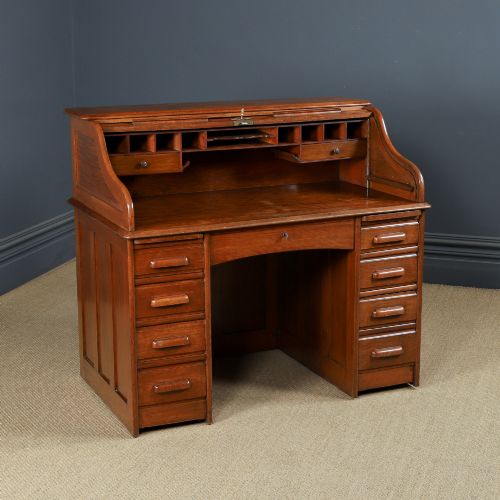
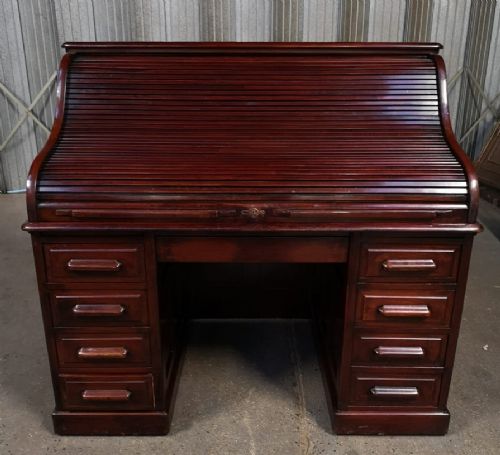
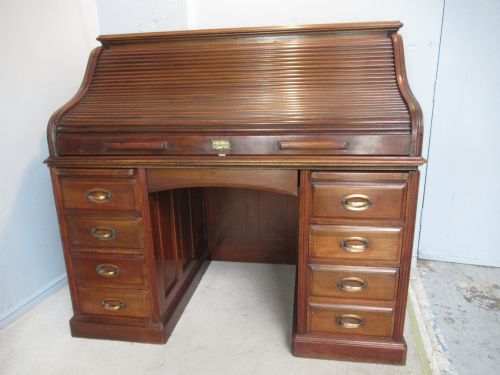
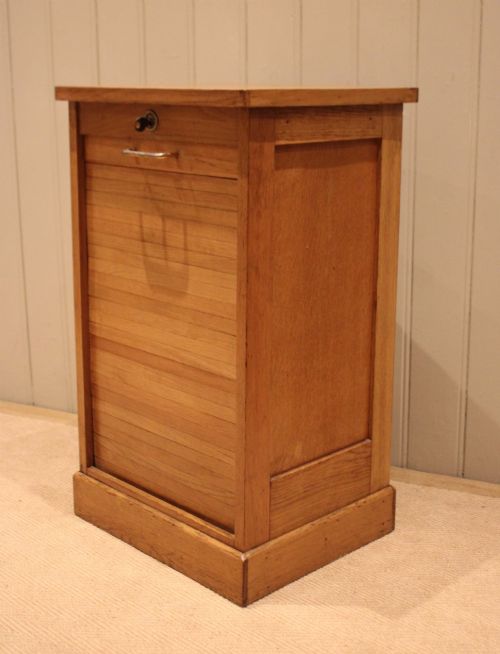
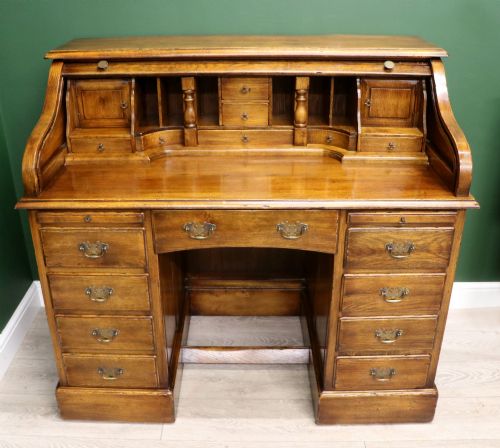
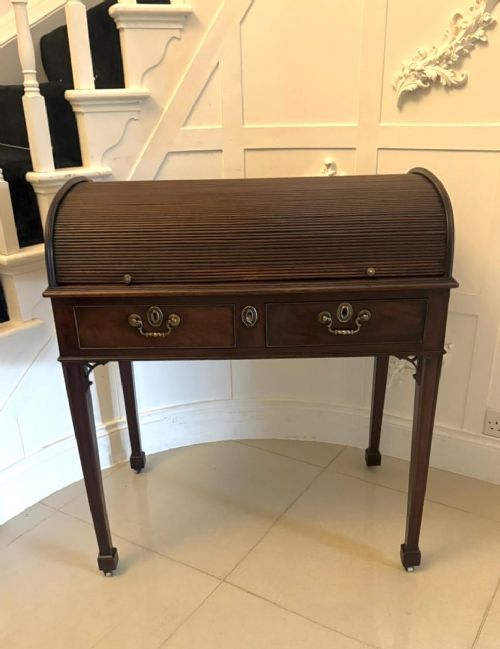
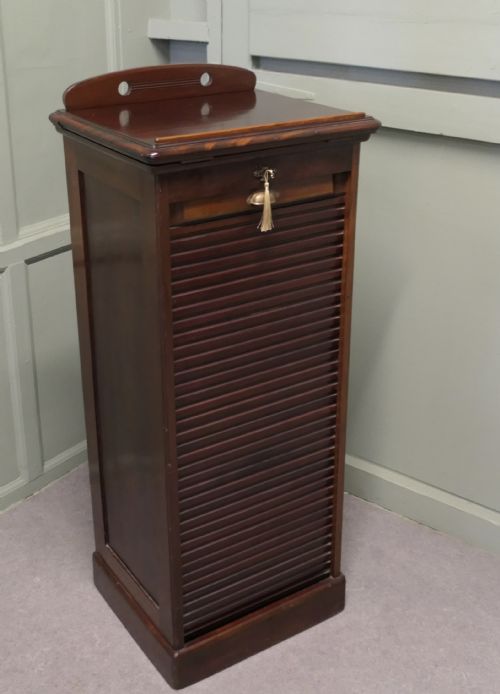
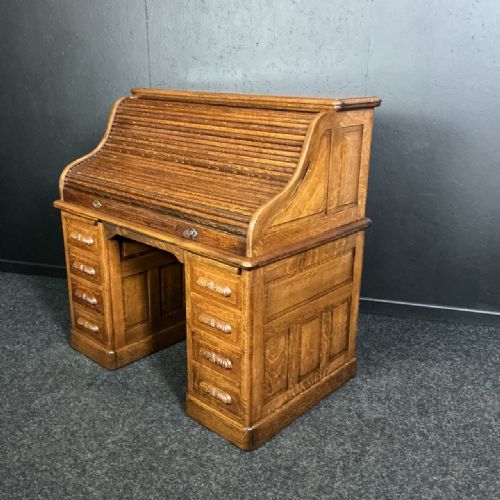
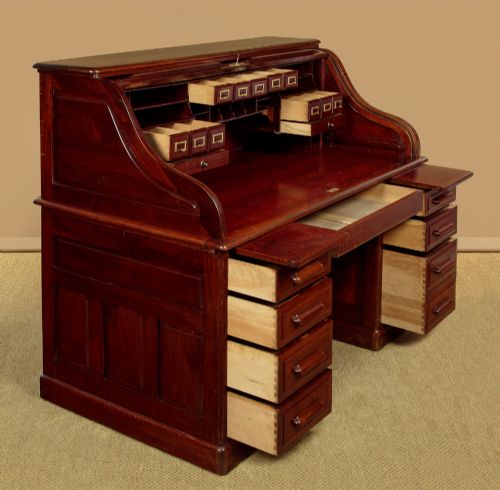
A vintage tambour desk is a piece of workspace furniture defined by a sliding slatted door that conceals the writing surface and pigeonholes. When buyers search for a vintage tambour desk, they encounter various configurations ranging from compact writing tables to large pedestal roll-top desks and filing cabinets.
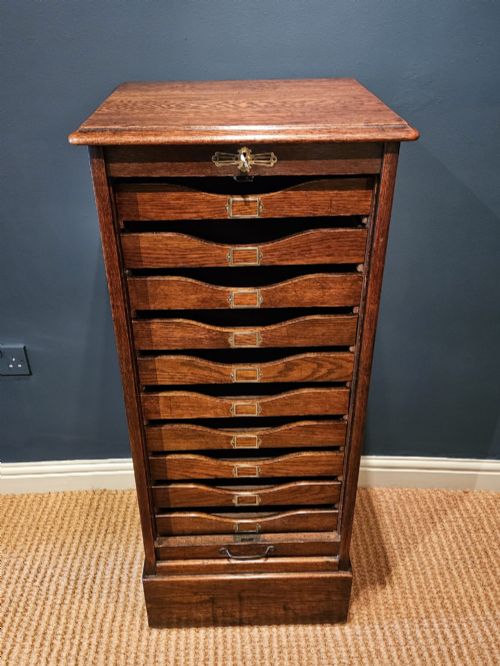
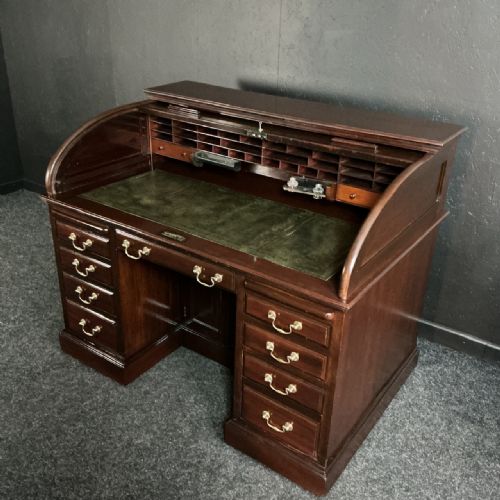
The pieces appearing on this page span several periods, with Edwardian oak examples and Victorian mahogany versions forming the most common discoveries. Alongside standard desks, related office forms such as stationery cabinets, bureau bookcases and tambour front filing cabinets demonstrate the same slatted mechanism adapted for different storage needs.
Origins stretch from the nineteenth century through the interwar years, encompassing both substantial office furnishings and refined residential writing tables. Solid oak and mahogany dominate the offerings, occasionally accompanied by walnut or yew wood finishes.
What varies in quality
Quality in these desks rests upon the smoothness and precision of the sliding tambour mechanism, which should glide along its tracks without binding or sagging. Superior examples feature robust solid timber construction rather than thin veneers, paired with tightly fitted internal pigeonholes and well-joined drawers.
The refinement of the secondary details, such as panelled oak sides, fine brass mounts and well-preserved leather inserts, distinguishes exceptional pieces from standard commercial office furniture. Age-appropriate patination and deep, even wood tones also indicate how well a piece has been maintained over the decades.
Periods represented span the Georgian era, Victorian period, Edwardian years, and the interwar 1920s and 1930s.
Maples of London and Paris·James Shoolbred and Co
The Vintage Tambour Desk Glossary
- Tambour
- Flexible sliding shutter formed of narrow wooden strips glued to canvas. It allows the closure of a curved desk top without requiring outward swinging doors.
- Roll top desk
- Large writing desk featuring a tambour cylinder that rolls backward to reveal pigeonholes and small drawers. This form became a staple of early twentieth-century offices.
- Pedestal desk
- A heavy table design supported by two box-like stacks of drawers. The user sits in the central kneehole space between the pedestals.
- Cylinder desk
- Form featuring a quarter-circle solid wooden lid rather than slats, lifted to access the interior. These often incorporate pull-out writing slides for additional workspace.
- Pigeonhole
- Small compartmentalised recess built into the upper tier of a desk. These spaces store stationery, letters and small documents.
- Stationery cabinet
- Small desktop piece designed to hold paper and envelopes behind a matching tambour door. It brings miniature office storage onto a side table.
Vintage Tambour Desk: Frequently Asked Questions
How do I maintain a tambour door?
Keep the sliding tracks clean from dust and debris so the wooden slats glide freely without catching. Apply a suitable wax polish sparingly to the wooden components to maintain moisture.
Avoid using harsh chemical sprays or excessive moisture on the canvas backing behind the slats. Regular gentle operation prevents the tracks from seizing up over time.
Were these desks used at home or in offices?
These desks served both domestic studies and bustling commercial offices during the Victorian and Edwardian periods. Large pedestal versions outfitted professional workplaces and counting houses.
Smaller ladies writing tables and compact cabinets suited residential interiors for handling personal correspondence. Their secure sliding shutters allowed users to lock away private paperwork at the end of the day.
How can I tell an Edwardian desk from a Victorian one?
Edwardian desks frequently showcase lighter oak timbers with simpler Arts and Crafts influences or straightforward commercial filing formats. Many examples from this era catered to the expanding office administrative needs of the early twentieth century.
Victorian pieces lean toward darker mahogany finishes, heavier proportions and more elaborate classical detailing. Earlier nineteenth-century iterations often display finer cabinet-making techniques intended for grand domestic interiors.