





Victorian Roll Top Desk
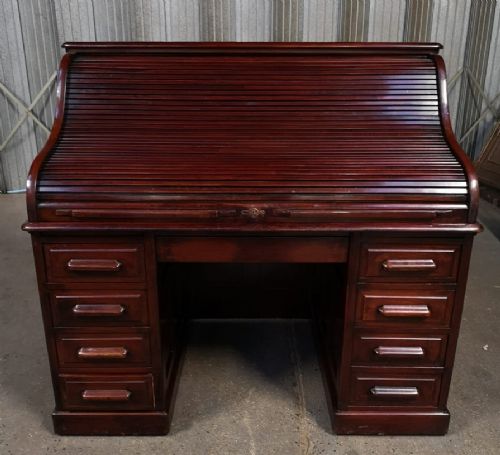
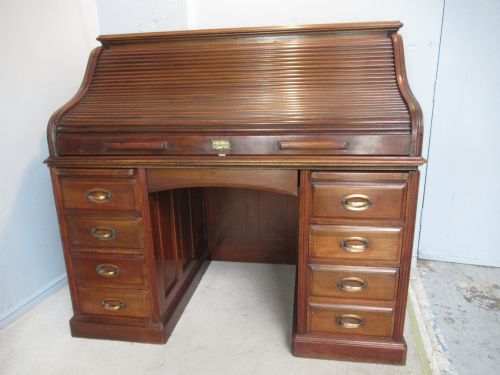
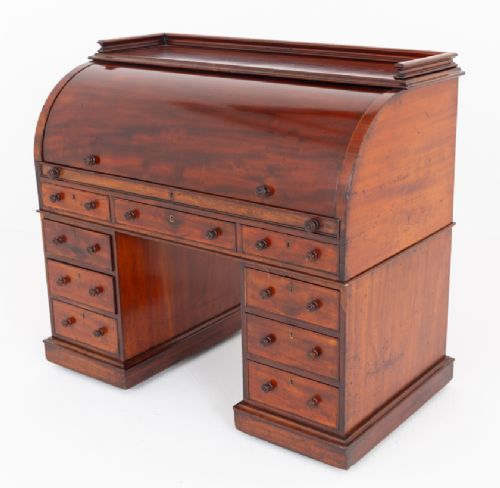
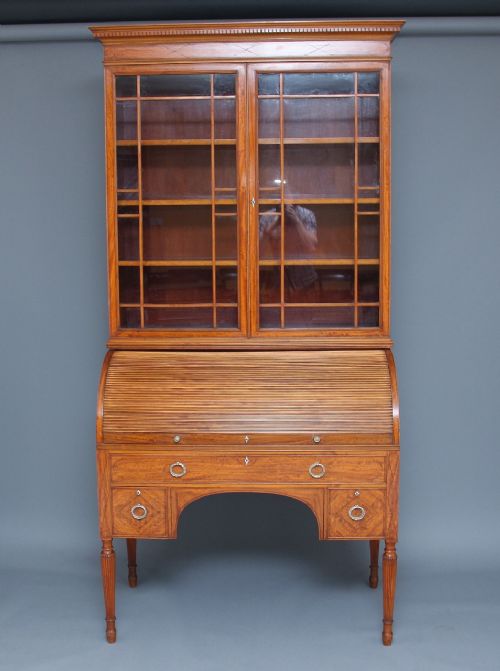
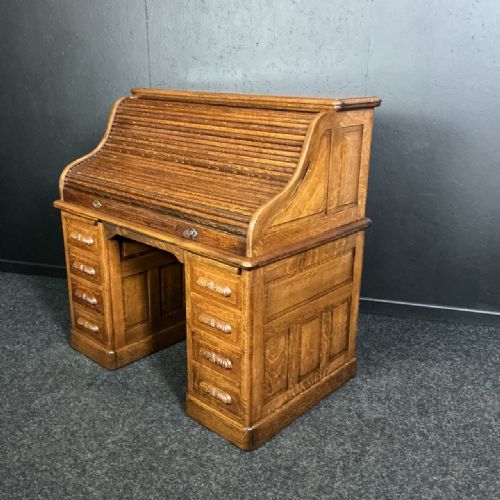
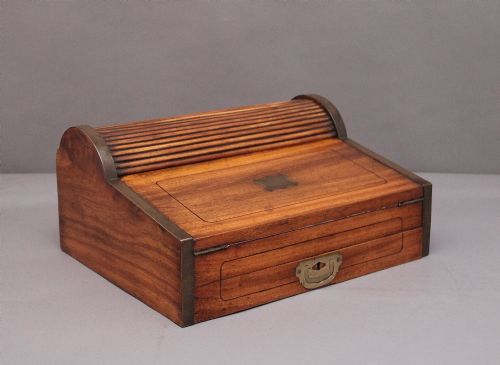
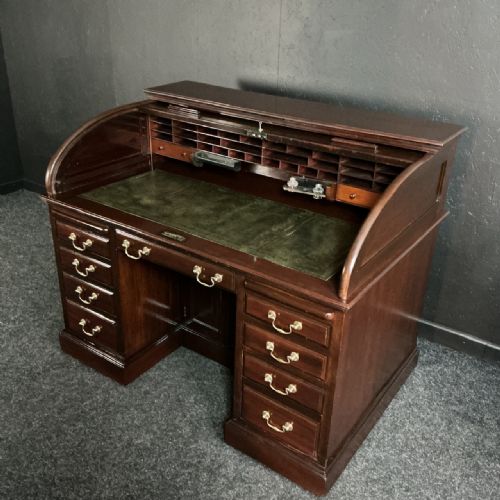
A victorian roll top desk conceals papers and writing equipment beneath a curved wooden sliding shutter.

Victorian Roll Top Desk
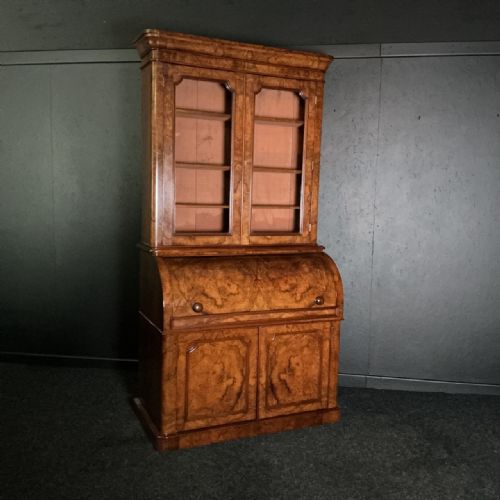
A buyer searching for a victorian roll top desk encounters pedestal forms, cylinder desks, and tambour variations designed for private studies and offices. The selection spans the nineteenth century into the Edwardian era, showing heavy oak, rich mahogany, and figured walnut timbers.
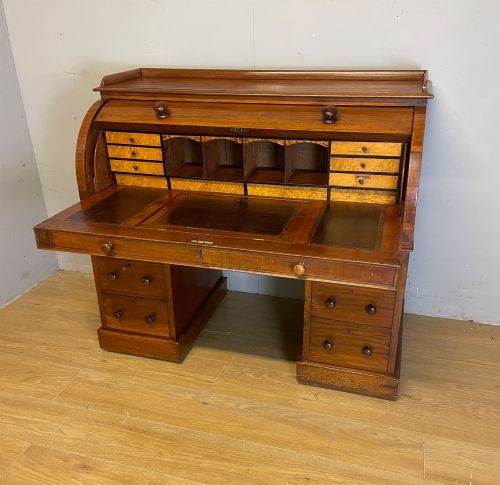
Many examples incorporate internal pigeonholes, small drawers, and pull-out writing surfaces lined with leather. The proportions range from compact domestic pieces to large twin pedestal office furniture originating from British and international workshops.
Materials and Construction
Cabinetmakers constructed these desks using solid timbers and decorative veneers such as satinwood, burr walnut, and mahogany over sturdy framing. Brass hardware, glass panels, and tooled leather writing inserts appear frequently across the documented examples.
The characteristic rolling shutter consists of narrow slats of wood glued to a fabric backing, allowing the mechanism to curve smoothly around tracks built into the desk carcass. Dovetail joints secure the drawer construction, while specialised locking systems protect the internal compartments.
Victorian Roll Top Desk Retail Price Guide 2026
Typical asking prices for victorian roll top desk among the pieces listed under this phrase on Sellingantiques today, from the lower quarter to the upper quarter. They describe what is for sale here now, not the wider market.
Some nineteenth-century models include hidden compartments specifically designed to store private diaries away from prying eyes.
Craftsmanship and Materials
Quality depends upon the selection of timber veneers, the precision of the slatted mechanism, and the complexity of the interior stationery fittings. Desks featuring burr walnut, satinwood, or detailed marquetry inlay represent more ambitious workshop output than plain utility office models.
The smoothness of the rolling mechanism and the integration of secondary locking drawers indicate the level of care invested by the original cabinetmaker. Intricate internal arrangement with secret compartments elevates certain pieces above standard production formats.
Edwards & Roberts·Boston Chair Company
The Victorian Roll Top Desk Glossary
- Roll top
- A flexible slatted wooden cover that slides along a curved track to enclose the desk surface. This shutter conceals the internal pigeonholes and drawers when not in use.
- Cylinder desk
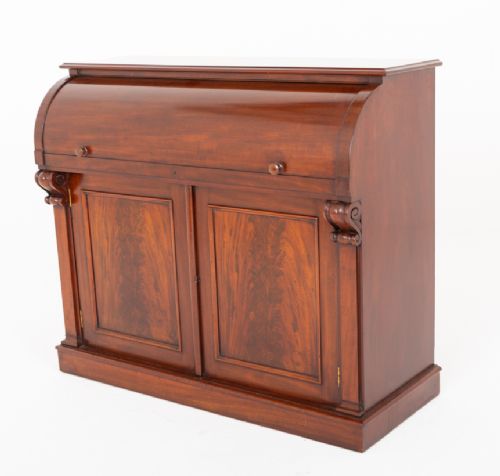
- A piece featuring a solid, rotating cylindrical wooden barrel that rolls backward into the desk body to reveal the writing slope. It offers a more formal alternative to the slatted tambour.
- Tambour
- A flexible covering formed of narrow vertical strips of wood attached to canvas or leather. It allows the wooden top to follow a curved path around the desk housing.
- Pedestal desk
- A heavy freestanding writing table supported by two vertical banks of drawers resting on the floor. The central section provides legroom beneath the rolling top.
- Davenport
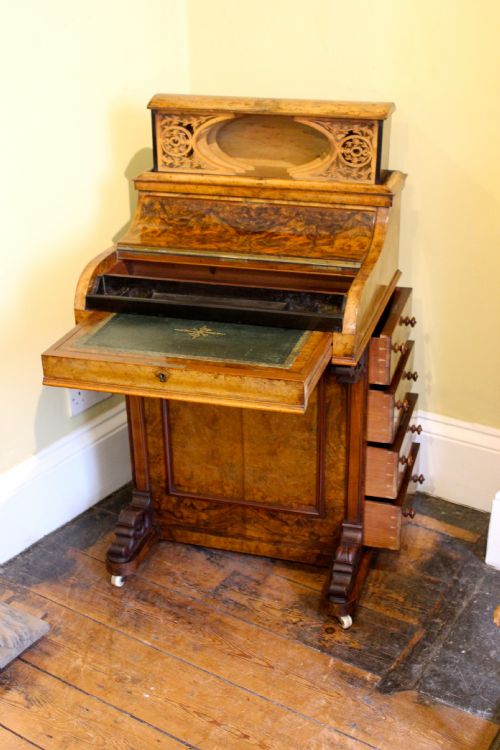
- A compact writing desk featuring a sloped writing surface above a set of side drawers. Early versions often incorporate small upper compartments and stationary wells.
Victorian Roll Top Desk: Frequently Asked Questions
How do cylinder desks differ from standard roll top desks?
Cylinder desks typically use a solid curved wooden shell that rotates on a central axis to open and close. Traditional roll top desks rely on a flexible tambour made of narrow slats.
Both designs serve the same purpose of concealing the working area, but the cylinder mechanism requires a different internal counterbalance system.
What woods were commonly used for these desks?
Mahogany and oak form the foundation of most surviving nineteenth-century examples, offering structural strength and durability for daily administrative work. Walnut and satinwood appear on more decorative residential pieces.
Cabinetmakers often selected burr veneers to add rich grain patterns to the cylinder fronts and drawer faces.
How do I maintain the leather writing surface?
The leather insert requires gentle cleaning with a slightly damp cloth followed by a suitable leather conditioner to prevent drying and cracking. Avoid harsh chemical cleaners that can strip the original gilding and colour.
Keeping the writing surface free from dust helps preserve the subtle tooling around the border.
How do I operate the locking mechanism?
Many desks feature an automatic locking system where lowering or closing the main roll top engages catches on the lower drawers. Opening the cylinder first allows access to the internal locking levers.
Original brass keys operate the primary cabinet locks when the mechanism is fully closed.