



Fitted Interior Rolltop Desk
A fitted interior rolltop desk organises letters and ledgers behind a slatted tambour, offering the serious writer a private workspace.
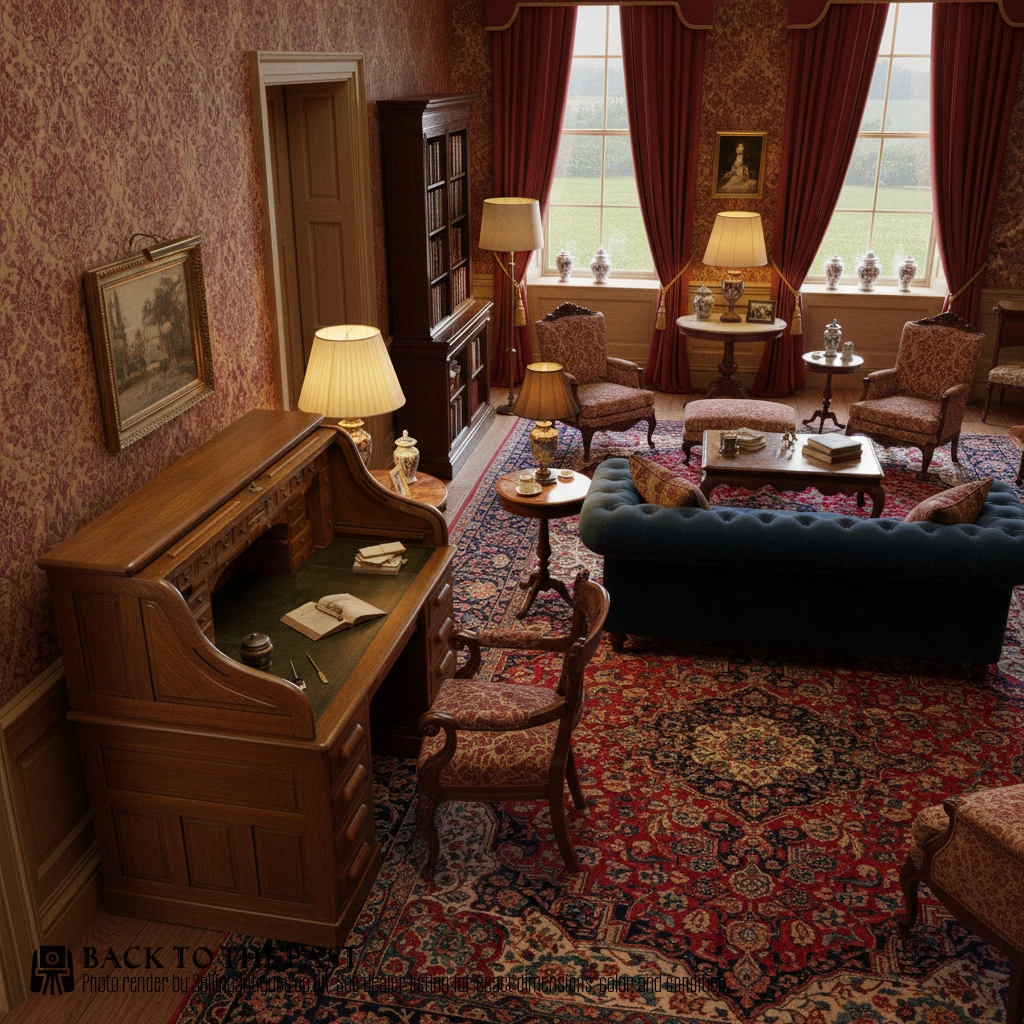
Fitted Interior Rolltop Desk
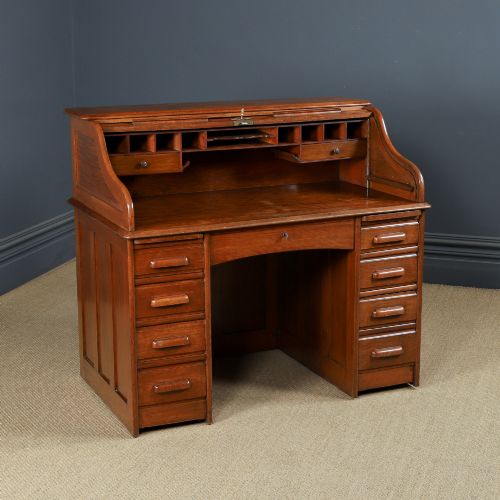
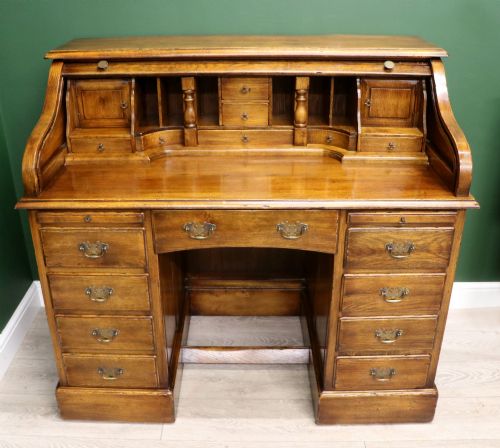
A fitted interior rolltop desk provides a secure writing surface enclosed by a sliding wooden curtain of tambour slats, concealing numerous small pigeonholes and drawers within. Buyers searching for a fitted interior rolltop desk most frequently encounter substantial Edwardian office furniture constructed for institutional or domestic administration.
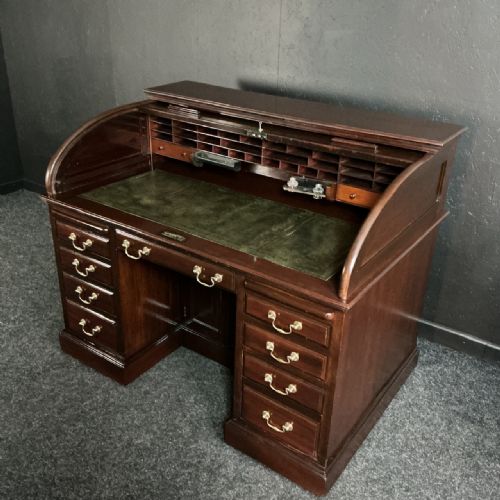
The surviving examples span the Victorian and Edwardian eras into the early twentieth century, presenting pedestal formats alongside bureau bookcase variants. These pieces serve as practical workspaces that keep stationery hidden from view when not in use.
Construction and materials
These desks rely upon robust timbers such as oak, walnut, and mahogany, shaped into structural carcasses and delicate internal pigeonholes. Individual wooden slats are glued to canvas backings to form the flexible tambour shutter that rolls smoothly within tracks.
Makers integrated brass hardware for pulls and handles, alongside inset panels of leather on the pull-out writing surfaces. Glass frequently appears in upper bookcase doors where the form combines storage with a writing station.
At least one maker operated across two capitals simultaneously, branding their massive oak pedestals for international trade.
Judging quality
Quality rests upon the selection of timber and the precision of the tambour mechanism, where tight joints ensure the slatted shutter glides effortlessly without binding. The complexity of the internal arrangement distinguishes standard utility pieces from more ambitious cabinet work.
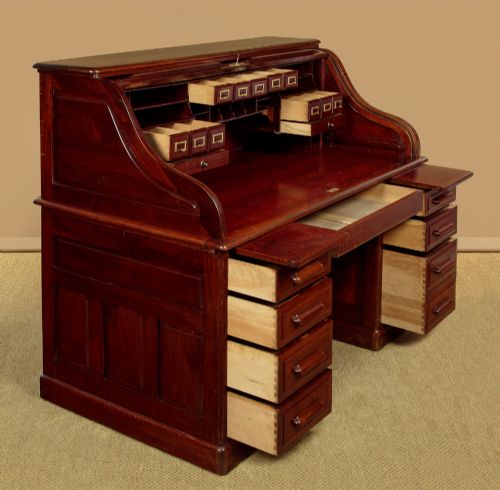
Solid timber construction throughout the carcass and drawers separates superior examples from those employing secondary veneers. The intricacy of the satinwood or contrasting wood details within the hidden compartments further marks the distinction between grades.
Boston Chair Company·Maples of London and Paris
The Fitted Interior Rolltop Desk Glossary
- Tambour
- A flexible shutter composed of narrow wooden strips glued to a fabric backing. This allows the curtain to curve around a track and conceal the desk interior.
- Pedestal desk
- A heavy office form featuring two banks of drawers supporting the upper writing section. The central cylinder or rolltop encloses the writing surface above.
- Bureau bookcase
- A hybrid form combining a lower desk section with an upper glazed bookcase. The fitted interior sits behind the rolling shutter or flap.
- Satinwood
- A pale, lustrous timber frequently utilised for interior drawer fronts and small decorative accents. It provides a sharp visual contrast to darker exterior woods.
Fitted Interior Rolltop Desk: Frequently Asked Questions
What is inside the fitted interior?
The hidden compartment contains an arrangement of small drawers, vertical pigeonholes for correspondence, and occasionally tiny lockable cupboards. These compartments organise stationery and ledger books.
In larger examples, the internal fittings utilise contrasting timbers like satinwood to brighten the recessed workspace.
Are these desks suitable for modern home offices?
These pieces provide substantial surface area and concealed storage that accommodates contemporary laptops and paperwork. The deep pedestals offer considerable drawer capacity for modern filing needs.
Placing the desk requires measuring floor space carefully, as the pedestal format and open kneehole demand a dedicated room layout.
How do I distinguish Edwardian from Victorian examples?
Edwardian desks often display lighter oak timbers and simpler decorative carving compared to earlier Victorian production. Victorian pieces frequently utilise heavier mahogany or walnut with denser proportions.
Makers active around nineteen hundred began adopting standardised office production methods while retaining traditional joinery techniques.