


French Executive Desk
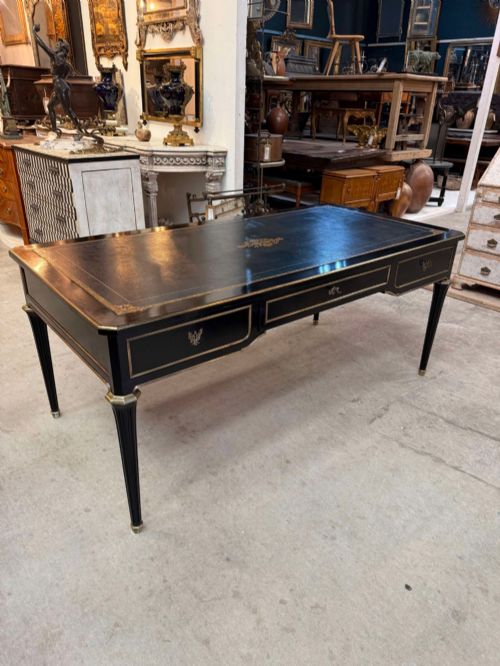
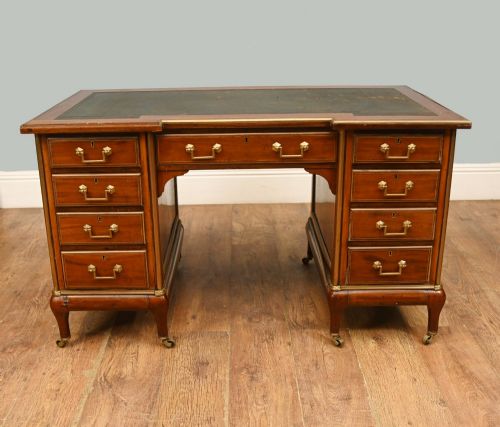
These large freestanding writing tables, known as a french executive desk, command the middle of a room and combine grand scale with practical workspace.
French Executive Desk
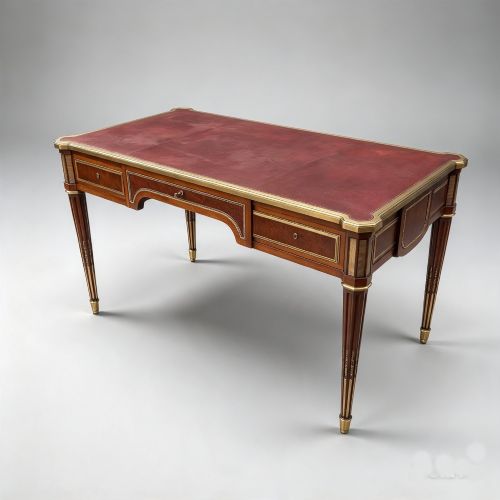
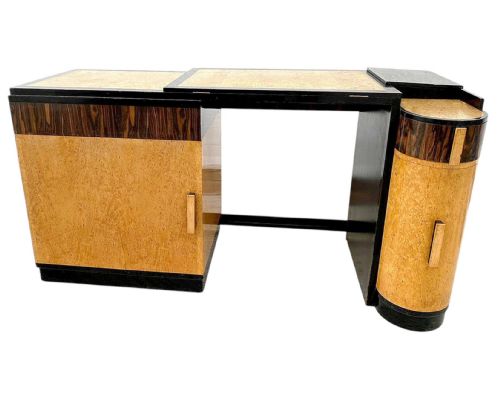
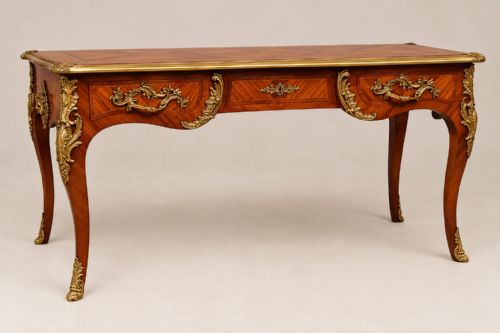
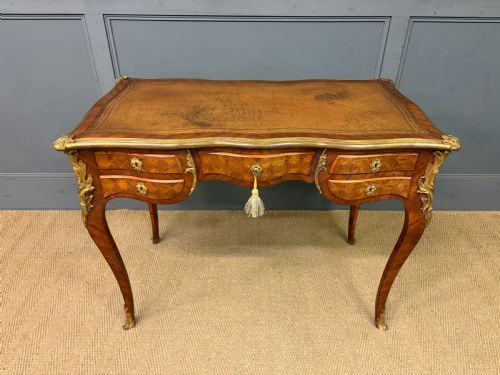
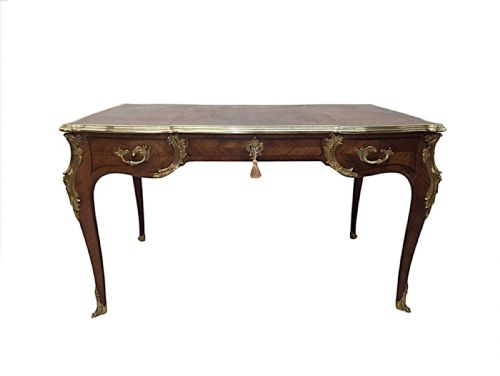
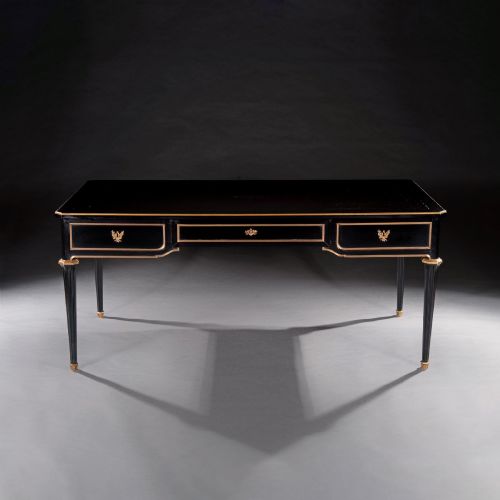
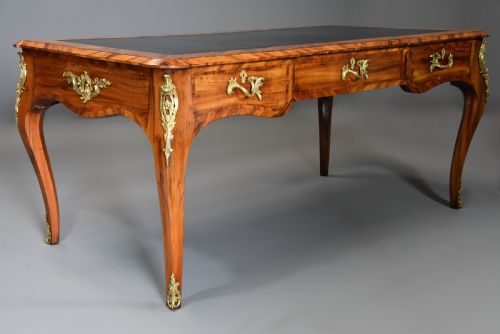
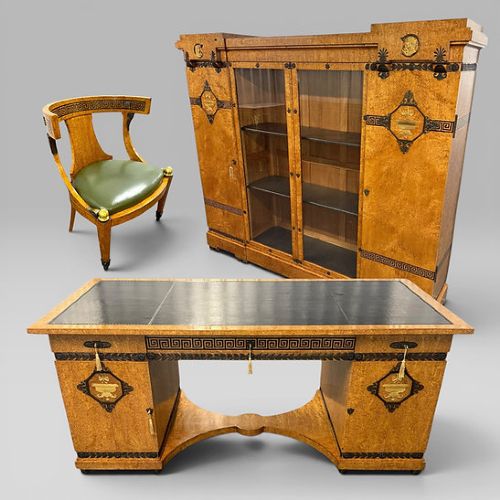
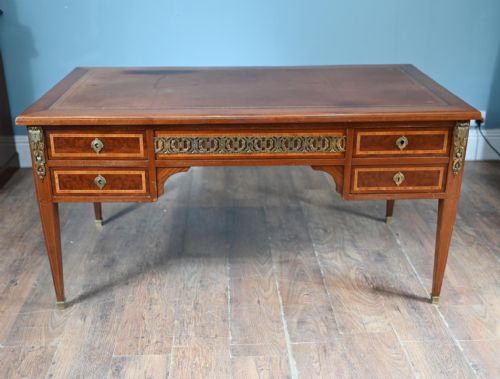
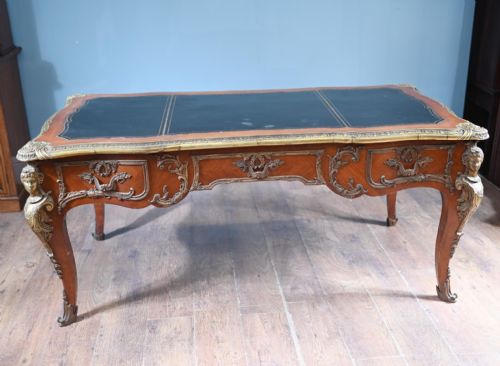
A french executive desk primarily takes the form of the bureau plat, a freestanding writing table finished on all sides so it can float in the centre of a room rather than sit against a wall. The listings here span the nineteenth and twentieth centuries, encompassing the restrained symmetry of the Empire and Directoire periods alongside the elaborate curves of Louis XV and Louis XVI revivals.
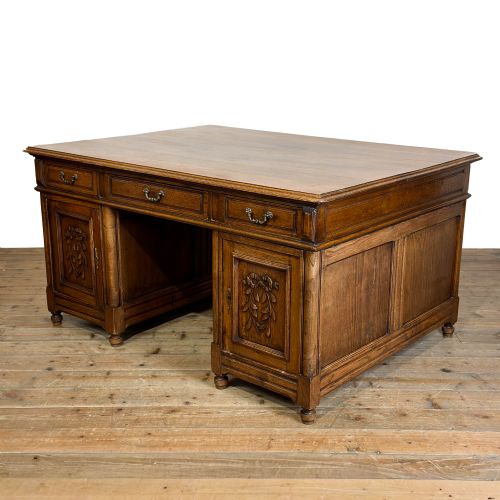
Beyond the standard bureau plat, the selection includes partners desks in oak and matching office sets comprising desks, cabinets, and chairs. Smaller writing tables and specific seating such as desk chairs and library armchairs also appear, alongside occasional writing and extending dining tables from the Art Deco period.
Materials and construction
Cabinet makers constructed these pieces using dense structural timbers like mahogany, walnut, and oak, then applied luxurious decorative veneers including kingwood, rosewood, tulipwood, satine, and amboyna. Parquetry and marquetry geometric patterns often decorate the surfaces, accompanied by inset leather writing panels.
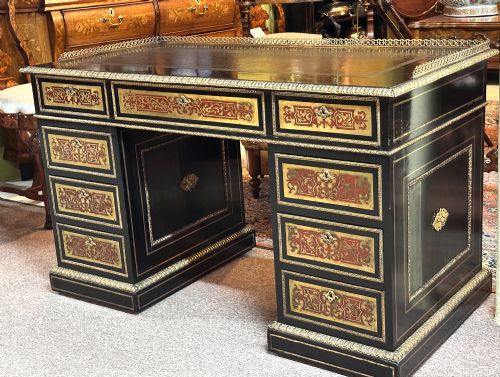
Mounts and embellishments of ormolu, gilt bronze, and brass define the ornamental vocabulary of these works. These cast metal mounts accent the corners, drawer fronts, and legs, while specialised techniques such as boulle work incorporate tortoiseshell and brass inlay.
French Executive Desk Retail Price Guide 2026
Typical asking prices for french executive desk among the pieces listed under this phrase on Sellingantiques today, from the lower quarter to the upper quarter. They describe what is for sale here now, not the wider market.
Materials utilised across these items include leather, ormolu, brass, mahogany, kingwood, gilt bronze, rosewood, and walnut.
Judging the standard
Quality rests significantly on the precision of the cabinet work and the crispness of the ormolu mounts. Finer pieces display hand-chased gilt bronze mounts with sharply defined details, whereas lesser examples use simpler, cast brass elements with softer edges.
The choice and execution of timber veneers also dictate the tier of a piece. Elaborate parquetry, matched grain patterns, and genuine period leather inserts indicate superior workshop production, as seen in works associated with noted makers.
François Linke·Edwards & Roberts·Mercier Frères·Donald Ross·Étienne Kohlmann·Maurice Dufrêne
The French Executive Desk Glossary
- Bureau plat
- A freestanding writing table fitted with drawers, designed to stand away from the wall in the centre of a room. It serves as the primary form for a french executive desk.
- Ormolu
- Gilded bronze used for decorative mounts and accents on furniture. It provides a bright golden finish that contrasts with dark woods.
- Parquetry
- A geometric mosaic of wood pieces used for decorative veneer on furniture surfaces. It creates patterned table tops and drawer fronts.
- Boulle work
- A style of marquetry using tortoiseshell and brass inlay, developed in France. It adds intricate metallic patterns to ebonised surfaces.
- Vide poche
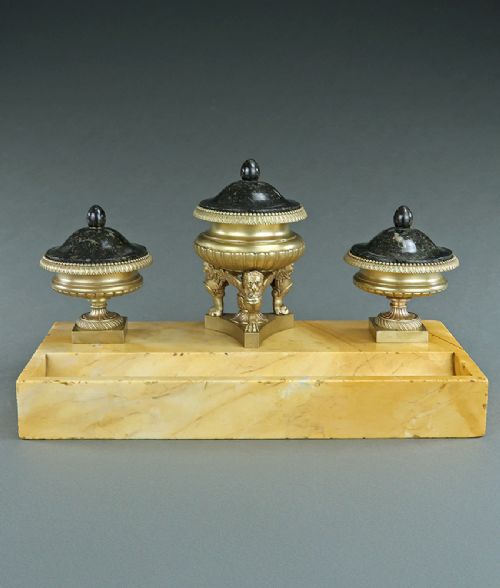
- A small tray or dish intended for emptying pockets of coins and keys. These small desk accessories appear in twentieth-century offerings.
French Executive Desk: Frequently Asked Questions
Where should a bureau plat go?
These tables are designed to stand away from the walls in the middle of a room. Because the back is finished with the same care as the front, they look correct from any angle.
Positioning the piece centrally allows it to function as a primary workspace while displaying the parquetry and mounts properly.
How do I care for the leather top?
The leather writing surface benefits from occasional cleaning with specialised leather balms and soft cloths. Avoid using harsh chemical cleaners or excess water.
Keeping the leather conditioned prevents cracking and preserves the gold tooling often found around the edges of these panels.
What is the difference between Louis XV and Louis XVI styles?
Louis XV pieces feature flowing curves, asymmetrical lines, and prominent rococo mounts. The legs curve outward in cabriole shapes.
Louis XVI furniture introduces straight tapered legs, neoclassical symmetry, and geometric or rectilinear proportions derived from classical architecture.
Can I use a partners desk for two people?
Partners desks feature drawers and workspace on both sides, built specifically so two people can work opposite each other. They offer large surface areas and substantial storage capacity.
These pieces require considerable floor space due to their generous proportions and dual-sided configuration.