
19th Century Bureau Plat
These 19th century bureau plat writing tables bring French classical elegance and functional workspace to any room.
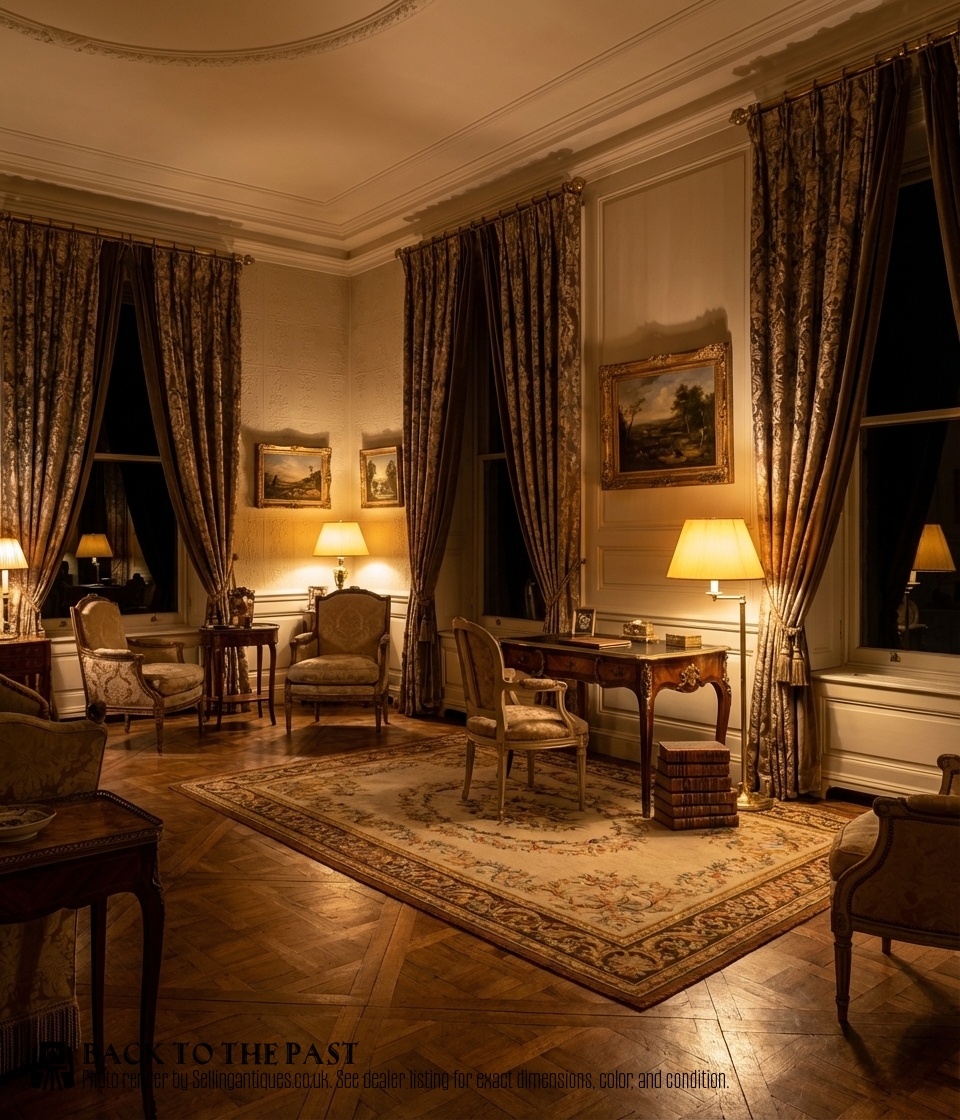
What a bureau plat is
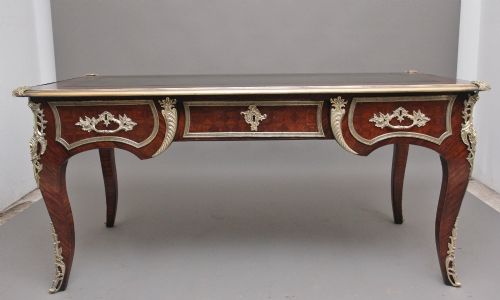
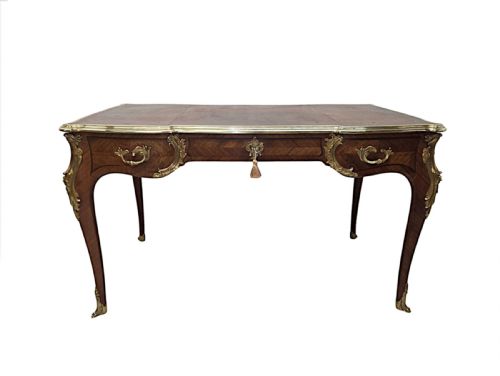
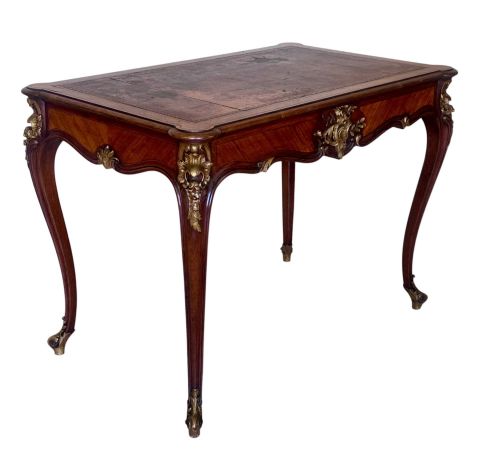
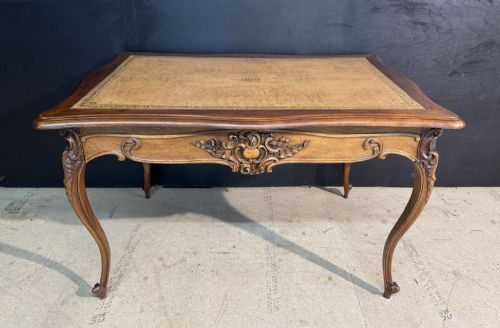
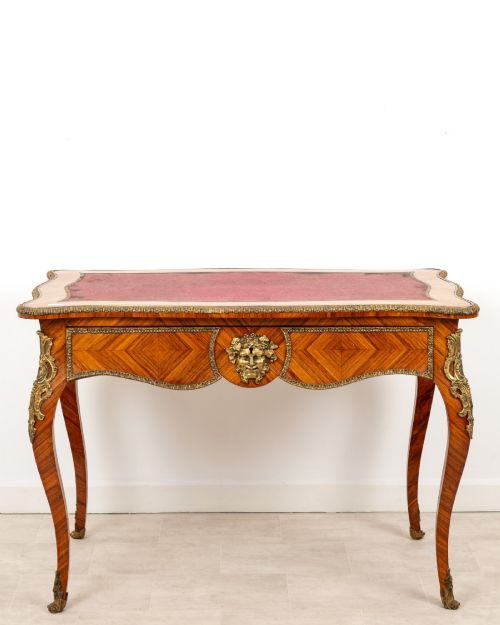
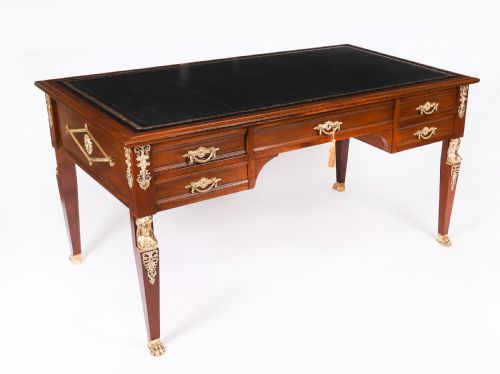
A 19th century bureau plat is a freestanding writing table designed to sit in the centre of a room rather than against a wall. These desks typically feature a rectangular leather-lined top above a frieze containing one or more drawers.
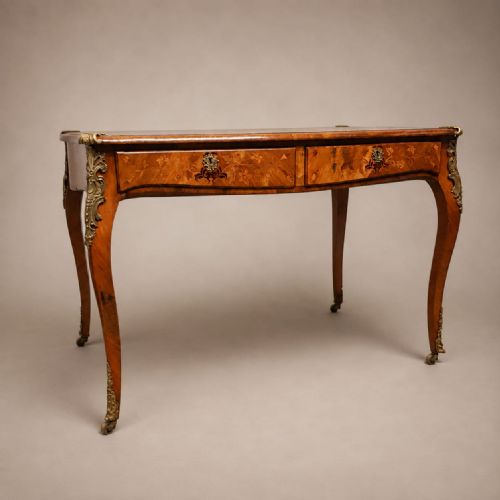
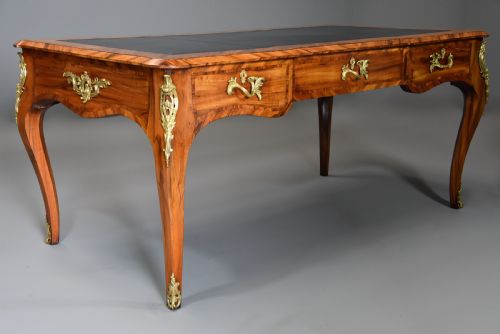
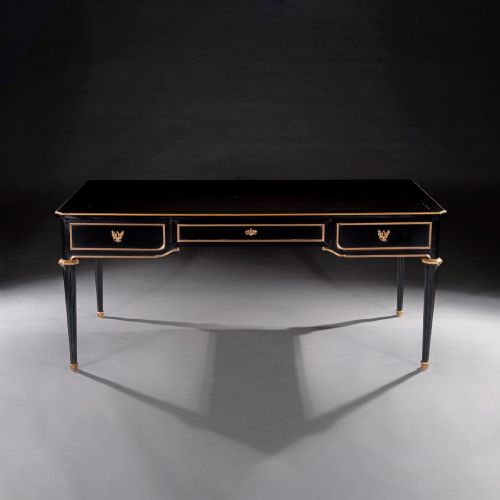
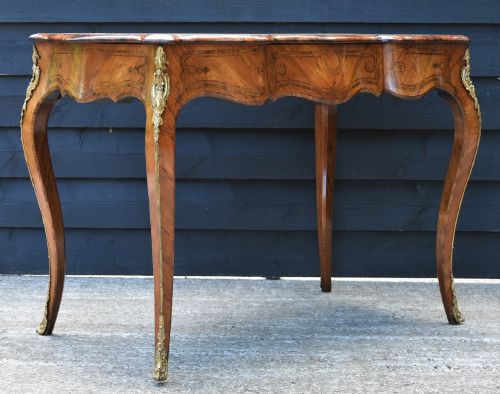
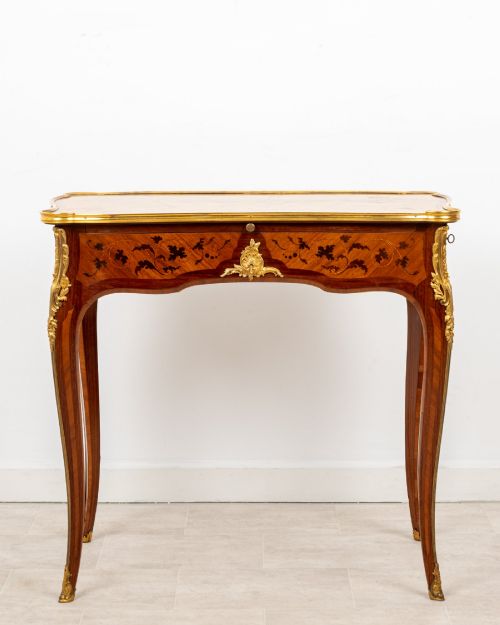
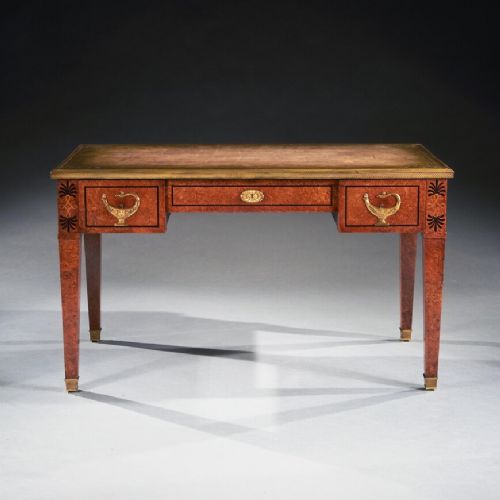
The pieces seen here span revival styles including Louis XV, Louis XVI, French Rococo, and Directoire. Mahogany, walnut, and kingwood form the primary bodies, often finished with elaborate veneers and marquetry.
Makers and workshops drew heavily on earlier royal French designs, producing both restrained mahogany examples and highly ornamented models with gilt bronze mounts.
Materials and construction
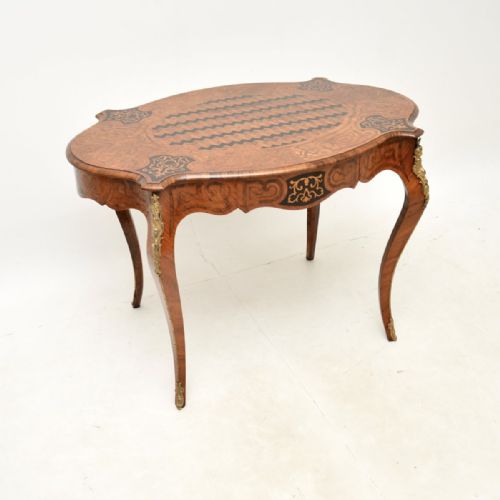
Construction relies on solid timber carcases overlaid with decorative veneers such as kingwood, tulipwood, and mahogany, sometimes arranged in intricate parquetry patterns. Surfaces often incorporate tooled leather writing inserts bordered by wooden frames.
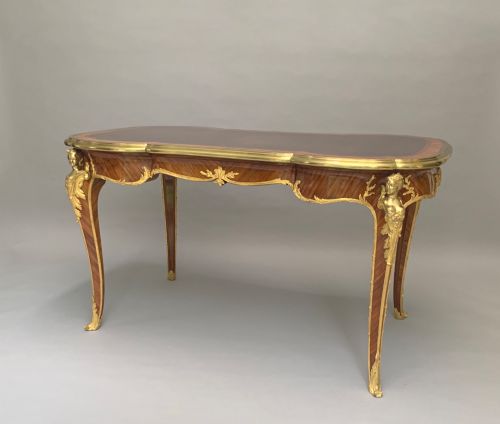
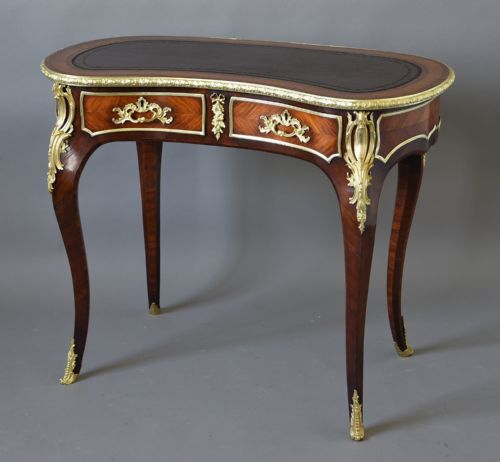
Metal ornament defines the decorative scheme. Cast and chased ormolu, gilt bronze, and brass mounts edge the writing surfaces, frame the drawer fronts, and protect the legs as sabots.
Retail Price Guide 2026
Typical UK retail prices for 19th century bureau plat, calculated from the Sellingantiques database of over a million retail prices indexed since 2003. This retail price guide relies exclusively on Sellingantiques data; no external sources or auction records are used, so the figures do not describe the wider market.
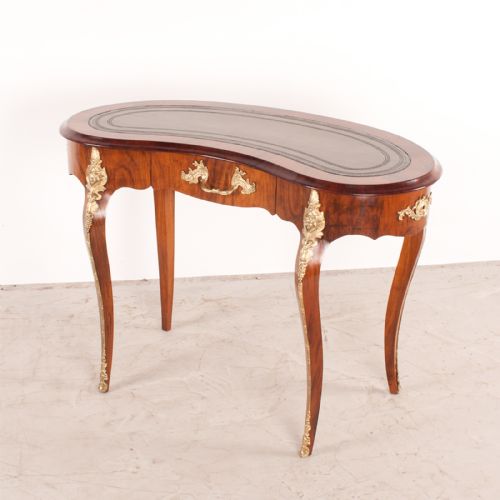
Several desks feature kidney shapes, offering a curved embrace while you write.
Assessing quality
Quality rests upon the precision of the cabinetwork and the weight and chasing of the bronze mounts. Finer examples display crisp, hand-chased ormolu secured firmly to the timber rather than lighter, cast-only metalwork.
The choice of timbers and veneer matching also separate standard pieces from exceptional ones. Continuous grain patterns and rich secondary woods inside the drawers indicate superior workshop standards.
Henry Dasson·Mercier Frères
The 19th Century Bureau Plat Glossary
- Bureau plat
- A freestanding writing table with a flat top and drawers in the frieze, developed in France during the eighteenth century.
- Ormolu
- Gilt bronze ornamentation applied to furniture mounts and hardware, cast and hand-chased to create sharp decorative detail.
- Parquetry
- Geometric patterns of wood veneer laid down on a furniture surface to form decorative designs.
- Frioz
- The horizontal section of a desk directly beneath the top surface, usually housing drawers.
- Sabot
- A metal mount fitted to the foot of a furniture leg to prevent wear and add decoration.
Frequently Asked Questions
Where should I place a bureau plat?
Because these desks are finished on all sides, they work best floating in the middle of a study or living room rather than pushed against a wall.
Allow enough space around the table to pull out chairs and access the frieze drawers comfortably.
How do I care for the leather top?
Clean the leather insert with a dry cloth and treat it occasionally with a specialised leather balsam to prevent cracking.
Avoid placing damp glasses or direct heat sources on the writing surface to protect the leather and the surrounding wood veneer.
How do I distinguish Louis XV from Louis XVI styles?
Louis XV revival pieces feature curved cabriole legs, asymmetrical rococo mounts, and flowing serpentine lines.
Louis XVI pieces introduce straight, fluted legs, symmetrical neoclassical mounts, and rectangular proportions.
Can I use a bureau plat for daily work?
These tables function well as modern desks, though the kneehole clearance is often lower than contemporary office furniture.
Check the height from the floor to the underside of the frieze drawers to ensure adequate leg room for daily seating.