



Rococo Revival Desk
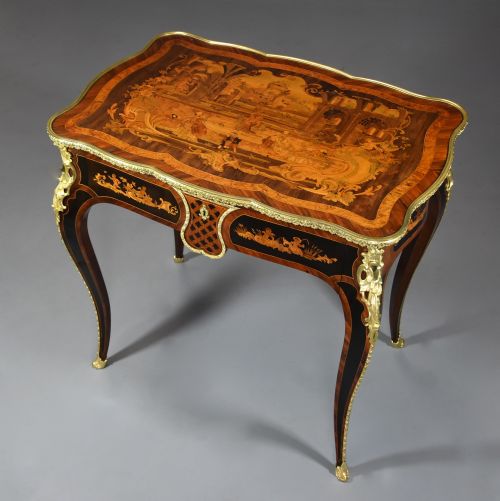
A rococo revival desk brings flamboyant curves, asymmetrical cartouches, and rich cabinet timbers into a room.
Rococo Revival Desk
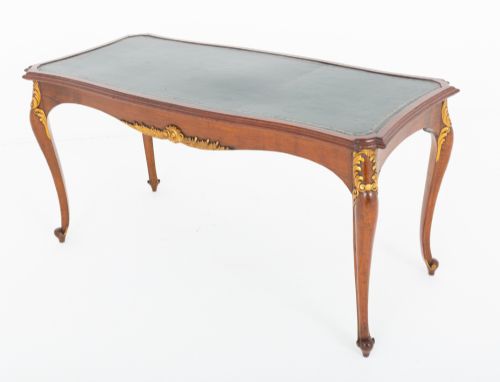
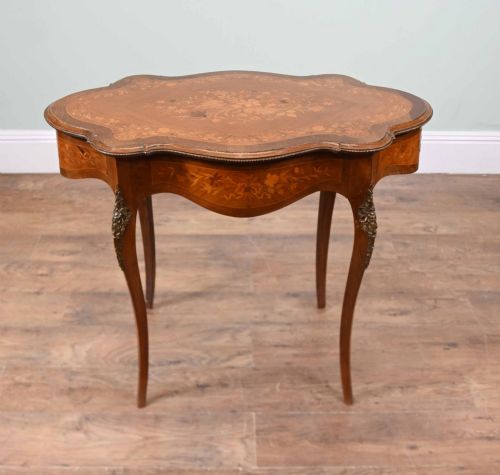
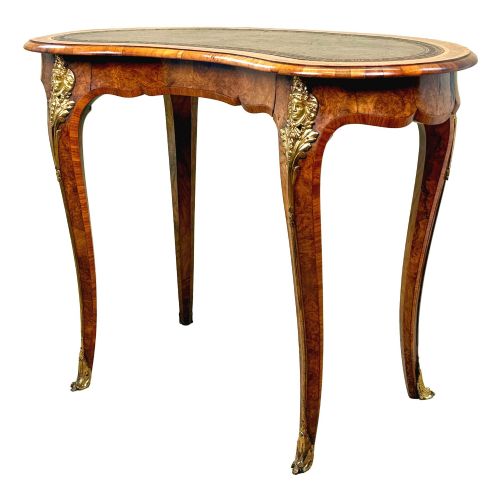
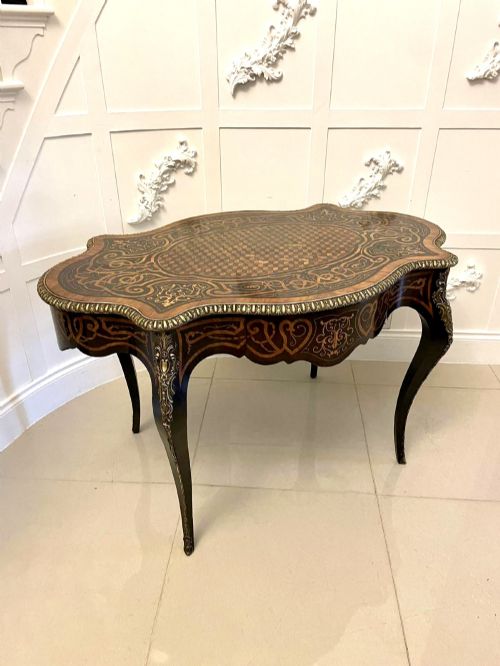
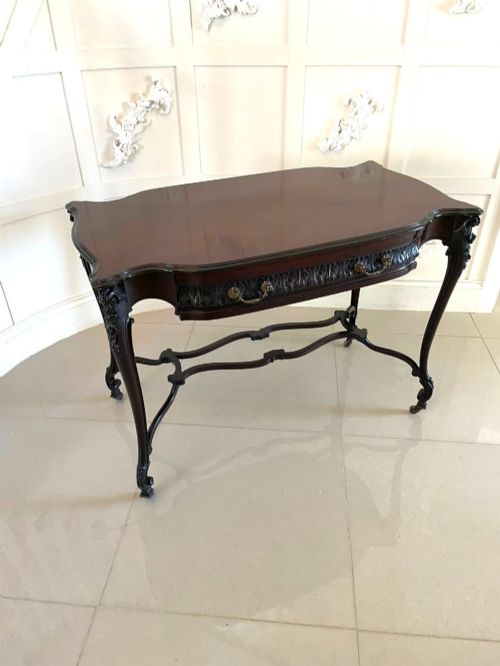
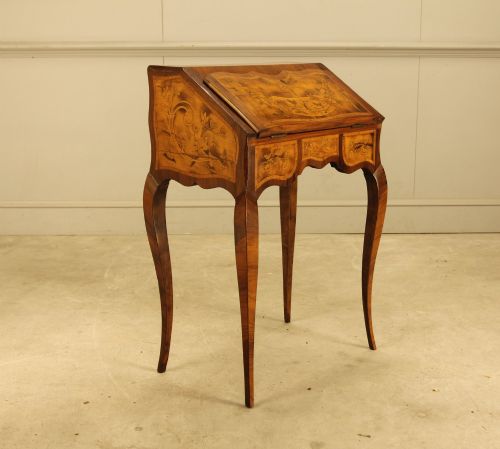
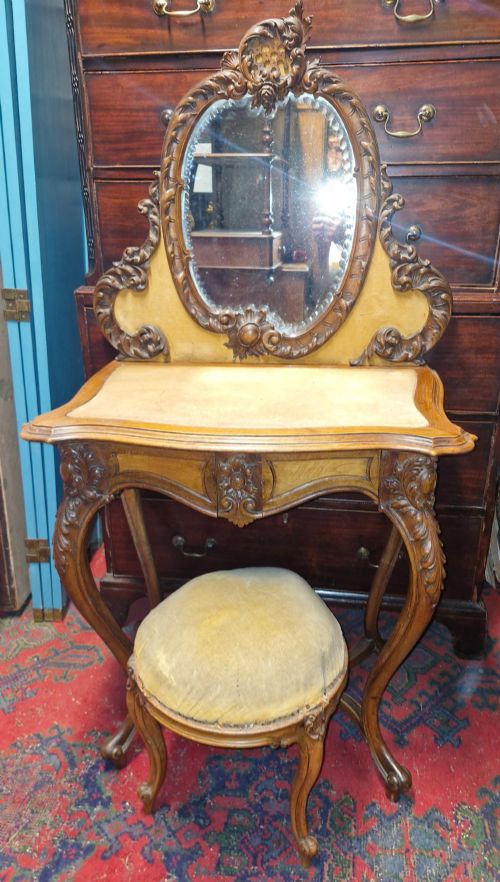
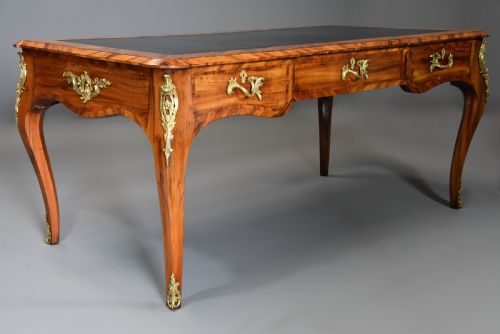
A rococo revival desk draws inspiration from eighteenth-century French design, reappearing across the nineteenth century in walnut, kingwood, and mahogany. These pieces emphasise serpentine outlines, cabriole legs, and elaborate mounts.
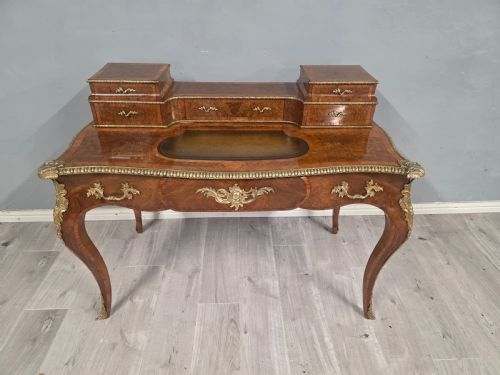
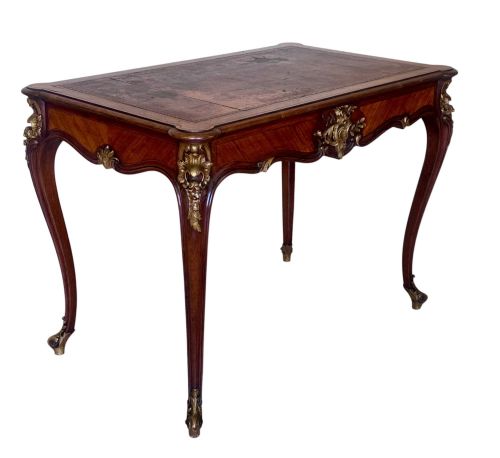
The version most commonly met on this page is the nineteenth-century writing table or bureau plat, often styled with gilt bronze or ormolu mounts and leather writing surfaces.
Materials and construction
Cabinetmakers utilised dense hardwoods such as walnut and kingwood, frequently applying intricate marquetry and parquetry patterns across curved surfaces. The underlying carcase work required precise joinery to maintain stability along exaggerated serpentine contours.
Gilt bronze and ormolu mounts were cast and chased by hand before being pinned or screwed to the corners, apron, and legs to accentuate the organic forms characteristic of the revival.
Rococo Revival Desk Retail Price Guide 2026
Typical asking prices for rococo revival desk among the pieces listed under this phrase on Sellingantiques today, from the lower quarter to the upper quarter. They describe what is for sale here now, not the wider market.
A nineteenth-century letter rack on the market still bears the spirit of the Grand Tour, ready to hold correspondence dispatched by steam train.
Evaluating craftsmanship
The standard of a rococo revival desk is determined by the depth and crispness of the bronze chasing on the mounts, alongside the precision of the wood inlay. Superior examples display seamless integration between the cast metal and the curved timber carcase.
Drawer construction also separates standard production from finer work, with hand-cut dovetails and carefully fitted linings indicating superior workshop practices.

CH. Jeanselme & Co·Achille Brocot·Leon Message·Jollet et Cie·William Payne
The Rococo Revival Desk Glossary
- Ormolu
- Gilt bronze mounted on furniture or clocks, created by applying a mercury-gilding process to cast bronze. This decorative metalwork provides the bright golden highlights seen on revival pieces.
- Marquetry
- Decorative veneer work arranged in pictorial or geometric patterns using various coloured woods. Craftsmen cut contrasting timbers to fit precisely into a prepared ground.
- Serpentine
- A curved shape that undulates inward and outward, resembling the movement of a snake. This profile is frequently used on the top and drawer fronts of revival desks.
Rococo Revival Desk: Frequently Asked Questions
Are these desks suitable for daily writing?
Most antique writing tables function well for modern desk work, provided the leather insert is stable and the height matches your chair. Many period examples offer adequate surface area for paperwork.
Protect the timber and leather top from spills and heavy impacts by using appropriate desk pads. Regular conditioning helps preserve antique leather writing surfaces.
How do I distinguish revival from original eighteenth-century pieces?
Nineteenth-century revival furniture often employs machine-sawn veneer backing and standardised fixings that differ from eighteenth-century workshop practices. The timber selection and secondary woods inside the drawers also point to nineteenth-century production methods.
Examining the construction of the carcase and the style of the hardware clarifies the manufacturing period. Most pieces on this page date from the Victorian era onward.
How should I care for the timber surface?
Apply a coat of quality beeswax periodically to nourish the walnut or kingwood and maintain a soft sheen. Avoid placing the desk in direct sunlight or near heat sources to prevent the veneer from lifting.
Buff the wax gently with a clean cloth after application. Consistent indoor humidity levels protect the wood and inlay from splitting.