
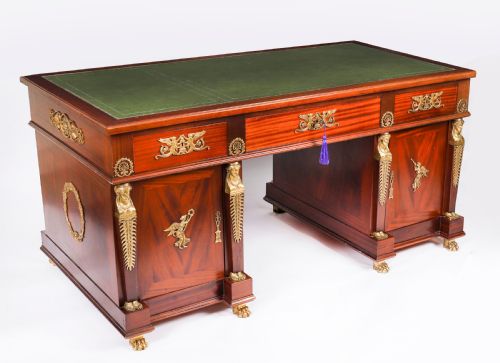


French Partner Desk
A french partner desk offers dual-sided workspace with grand presence, pairing fine timber with metal mounts for serious study.
What a french partner desk is
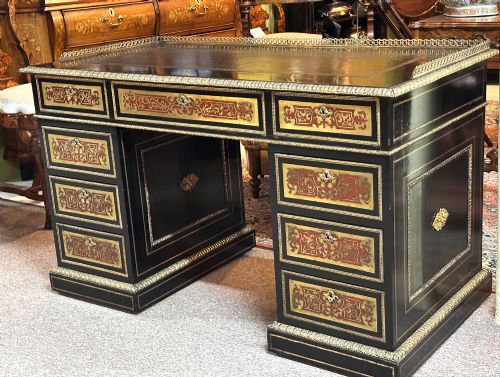
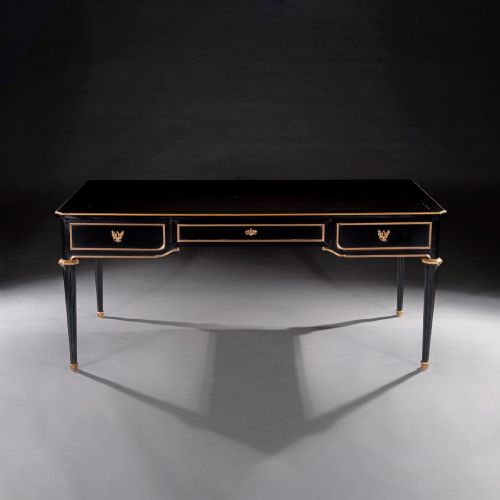
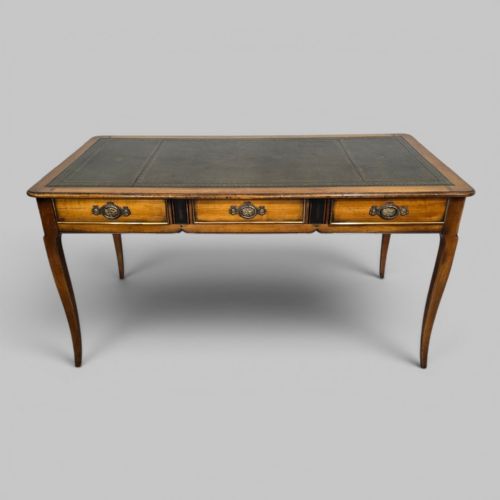
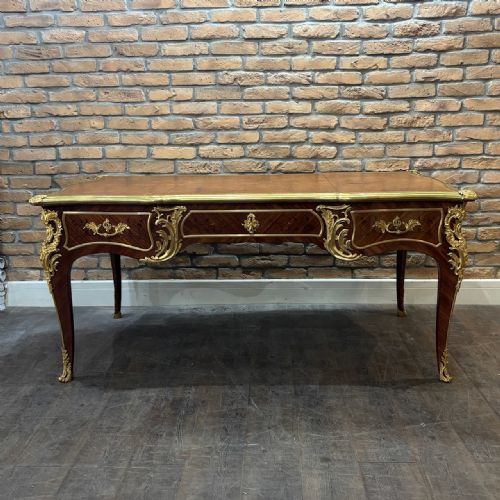
A french partner desk provides dual-sided writing surfaces, designed for two people to work face to face across a central space. These pieces emerge in styles like Louis XV, Louis XVI, Empire, and Directoire, often taking the form of a bureau plat or a pedestal desk.
The materials span mahogany, walnut, oak, and exotic veneers such as kingwood, rosewood, and ebonised wood, complemented by leather writing inserts. Surviving examples date from the nineteenth century into the twentieth century, reflecting varied regional workshops and revival tastes.
Buyers encounter both freestanding bureau plat models and substantial pedestal configurations with numerous drawers. Each version maintains a finished back so the furniture sits proudly in the middle of a room rather than against a wall.
How they were made
Cabinetmakers constructed the carcase using solid woods like oak or mahogany, then applied decorative veneers in kingwood, rosewood, or burr walnut. Parquetry and marquetry patterns often decorate the top surface alongside fitted leather writing panels.
Mounts in ormolu, gilt bronze, and brass were cast and chased to highlight corners, drawer edges, and legs. These metal elements were then secured to the timber frame with precision.
Retail Price Guide 2026
Typical UK retail prices for french partner desk, calculated from the Sellingantiques database of over a million retail prices indexed since 2003. This retail price guide relies exclusively on Sellingantiques data; no external sources or auction records are used, so the figures do not describe the wider market.
Listings feature pieces spanning the nineteenth century through 1920, incorporating oak, mahogany, walnut, kingwood, rosewood, and ebonised wood.
What varies in quality
The refinement of the cast ormolu mounts and the complexity of the wood veneers dictate the upper tier of execution. Heavier gauge brass and deeply chased gilt bronze separate superior pieces from standard workshop output.
Construction details such as drawer linings in solid oak, hand-cut dovetails, and matched timber grain across both sides indicate greater maker investment. The retention of original leather writing surfaces and matching hardware elevates a piece.
Zweiner
The French Partner Desk Glossary
- Bureau plat
- A freestanding writing table fitted with drawers across the frieze, typically finished on all sides for placement in the centre of a room.
- Ormolu
- Gilding technique applying a finely ground high-carat gold-mercury amalgam to a bronze object, creating a durable golden finish.
- Kingwood
- A dense, heavy Brazilian timber displaying rich violet-brown colouring with darker contrasting stripes, favoured for high-end veneering.
- Ebonised wood
- Timber treated with chemical stains or dark finishes to imitate the appearance and weight of ebony.
- Directoire style
- A transitional neoclassical design phase bridging Louis XVI and Empire aesthetics, defined by cleaner lines and restrained classical motifs.
Frequently Asked Questions
What is a french partner desk?
A french partner desk is a large writing table constructed to allow two people to sit and work opposite each other. These tables typically feature drawers and cupboards accessible from both sides.
Originating in various nineteenth and early twentieth-century revival styles, they were built as centrepieces for libraries, studies, and offices.
How do I place it in a room?
Because these desks are finished on all sides, they belong in the middle of a room rather than pushed against a wall. This positioning showcases the dual-sided drawers and decorative veneer work.
Ensure you allow sufficient clearance around all edges for chairs and movement.
What woods were used?
Makers utilised a wide array of timbers depending on the period and regional style. Mahogany and oak form the structural core of many pieces, while decorative surfaces feature walnut, kingwood, rosewood, and ebonised wood.
Exotic veneers and parquetry patterns frequently adorn the main writing top.
How do I identify the style?
Stylistic clues lie in the leg shapes, mount designs, and overall ornamentation. Louis XV pieces display curving cabriole legs and rococo motifs, while Empire and Directoire examples favour straight columns and classical brass mounts.
Revival pieces echo these historical eras using the craftsmanship of the nineteenth and twentieth centuries.