

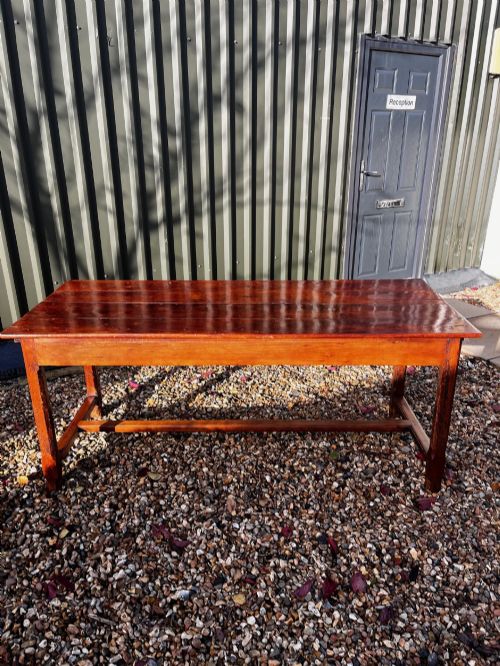

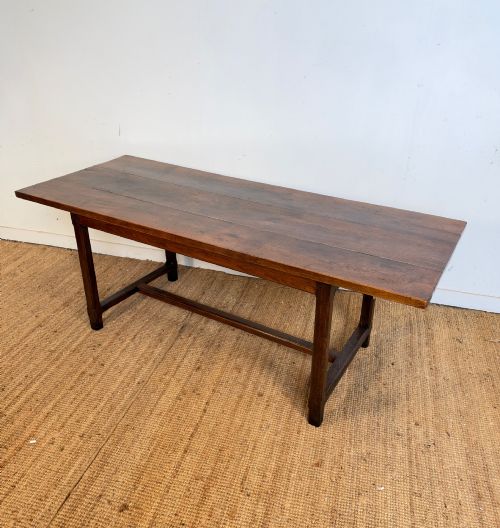
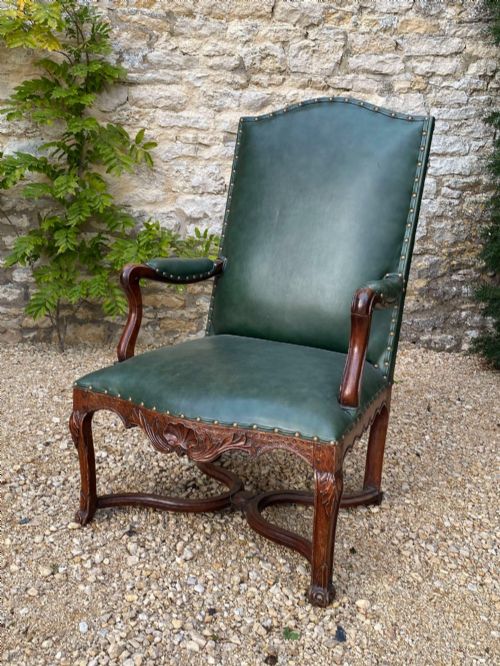
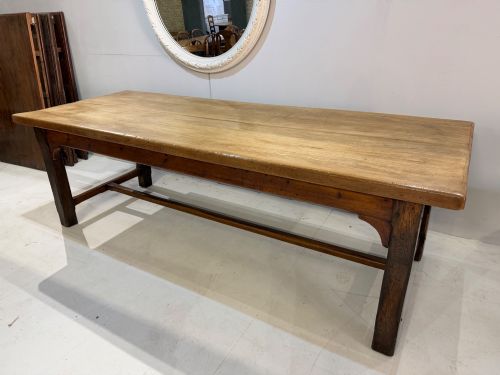
French Provincial Desk
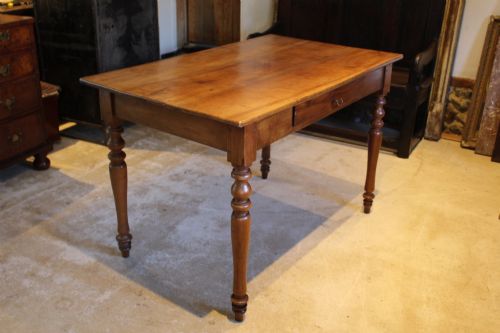
These pieces known as a french provincial desk bring regional character and practical workspace into a room through honest timber construction.
French Provincial Desk
A french provincial desk encompasses writing tables, bureau forms, and freestanding writing pieces produced across various regional workshops. The examples found here span the eighteenth century up to the early twentieth century, reflecting both country craftsmanship and revival tastes.
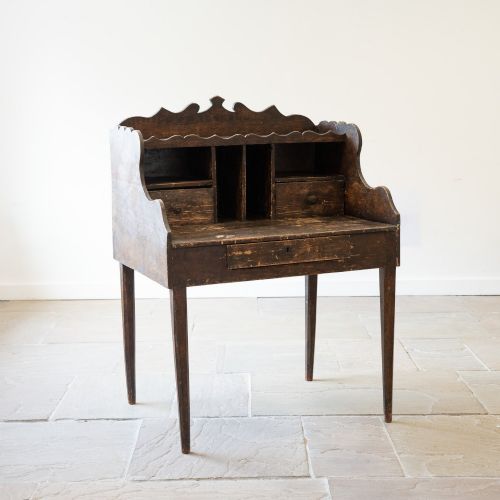
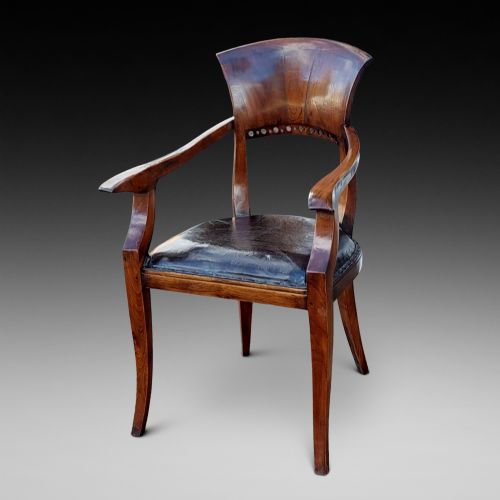
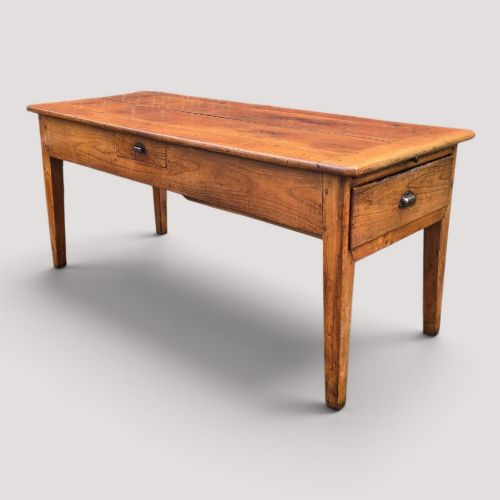
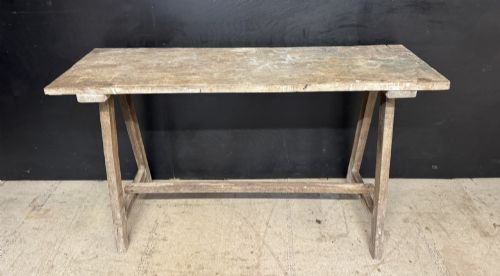
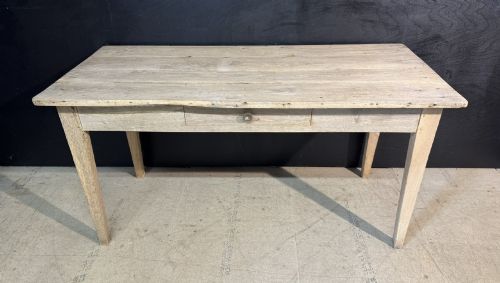
The most frequent encounters on this page involve nineteenth-century oak, walnut, and fruitwood writing tables alongside bureau variants. These practical forms range from simple kneehole designs to compact ladies writing tables fitted with drawers and leather or wooden tops.
What varies in quality
The standard of timber selection and the crispness of hand-carved details set individual pieces apart. Walnut and finely figured fruitwoods command attention for their rich grain patterns and depth of surface finish.
Construction integrity also dictates worth, particularly the retention of original brass hardware, stable drawer runners, and untouched patination built up through generations of daily service.
French Provincial Desk Retail Price Guide 2026
Typical asking prices for french provincial desk among the pieces listed under this phrase on Sellingantiques today, from the lower quarter to the upper quarter. They describe what is for sale here now, not the wider market.
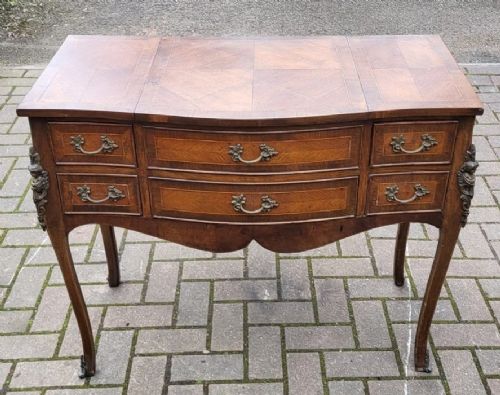
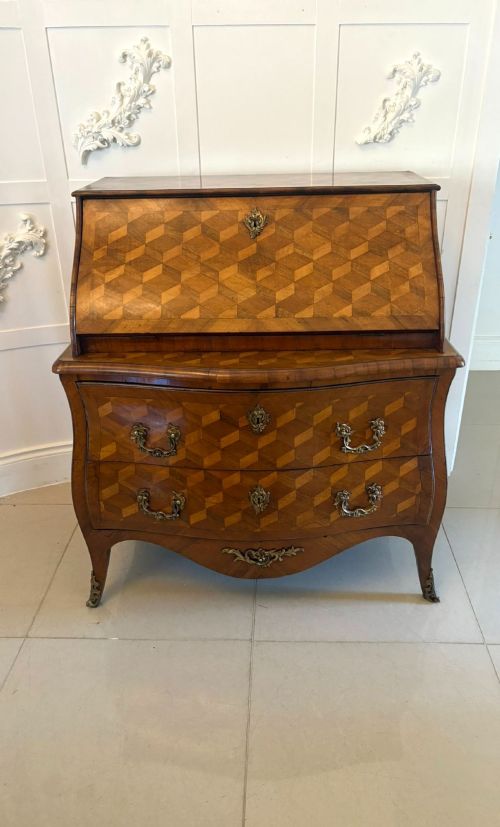
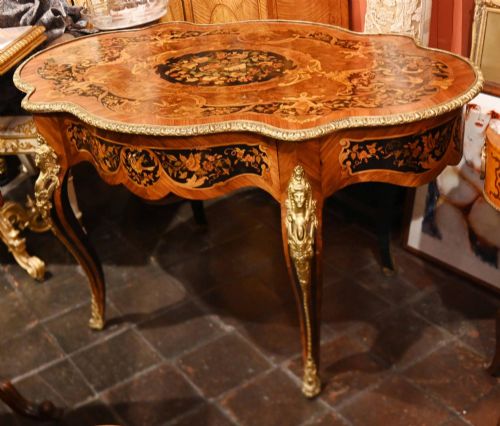
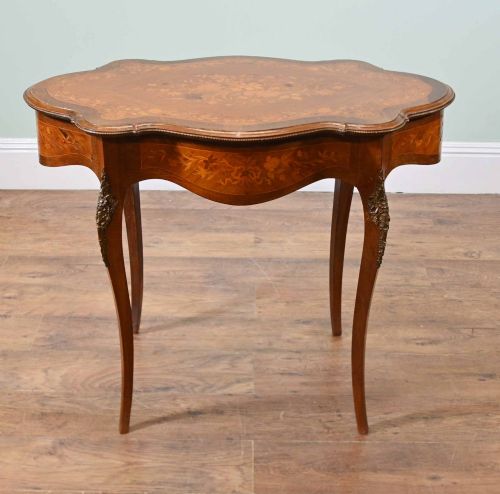
The furniture forms range from simple farmhouse writing tables to elaborate bureau types fitted with ormolu mounts and parquetry.
The French Provincial Desk Glossary
- Bonheur-du-Jour
- A light ladies writing desk featuring a small tiered superstructure with drawers and pigeonholes above the main writing surface.
- Parquetry
- Geometric wood inlay patterns arranged across tabletops and drawer fronts to create decorative surface contrasts.
- Ormolu
- Gilded bronze mounts applied to furniture corners, legs, and aprons for ornamental enrichment.
- Cabriole leg
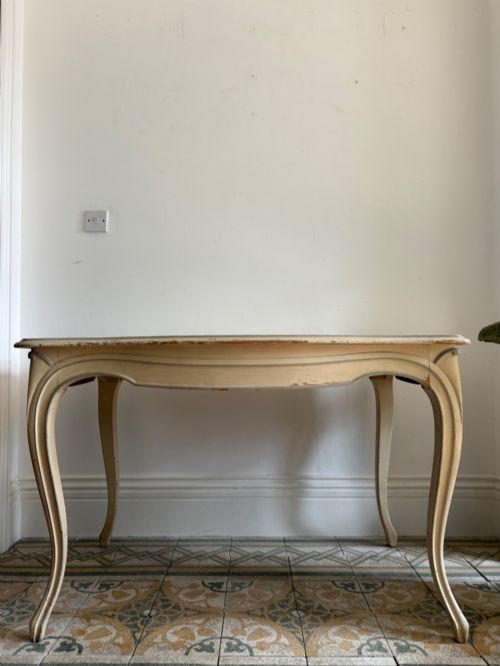
- A furniture leg that curves outward and then tapers inward, finishing in a pad or scroll foot.
- Bombe
- A swelling, convex contour on the front and sides of case furniture typical of eighteenth-century design.
French Provincial Desk: Frequently Asked Questions
What is a french provincial desk used for?
These items serve primarily as functional writing surfaces or decorative side tables within a study or living space. Their drawers provide storage for correspondence and everyday desk accessories.
Historically, they accommodated domestic writing tasks and household administration in provincial homes. Today, they integrate easily into modern workspaces while retaining historical charm.
How do I date a french provincial desk?
Dating relies upon examining the timber species, joinery techniques, and overall stylistic influences visible in the piece. Eighteenth-century examples often display hand-cut joinery and deeper patination.
Later nineteenth-century and early twentieth-century versions may incorporate revival details such as Louis XV or Louis XVI stylistic motifs. Comparing the hardware and construction methods clarifies the era of manufacture.
Are these desks made of solid wood?
Most pieces recorded here utilise regional hardwoods including oak, walnut, cherrywood, and fruitwood for their primary construction. Traditional cabinetmakers built these surfaces to endure heavy daily use.
Secondary timbers might appear inside drawer linings, but the visible surfaces showcase honest timber grain. This solid construction contributes to the survival of these pieces across centuries.
How do I care for a wooden writing desk?
Maintenance involves keeping the timber away from direct heat sources and strong sunlight to prevent wood splitting. Regular dusting with a soft, dry cloth preserves the polished surface.
Applying occasional natural wax helps nourish older wood finishes without damaging the historic patina. Avoiding excess moisture on leather or wooden tops ensures the longevity of the desk.