


French Bonheur Du Jour
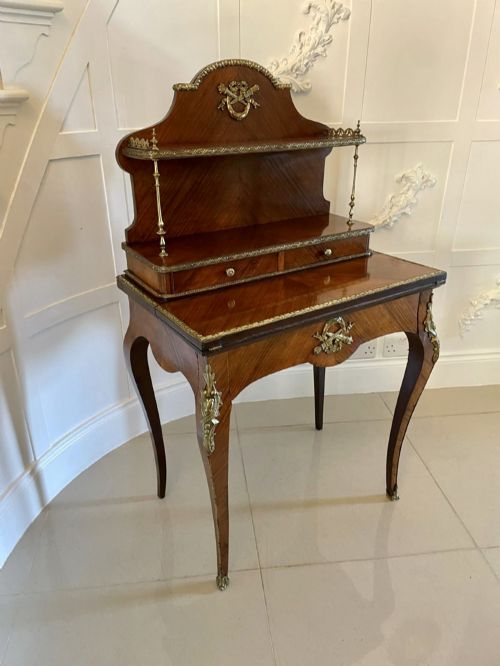
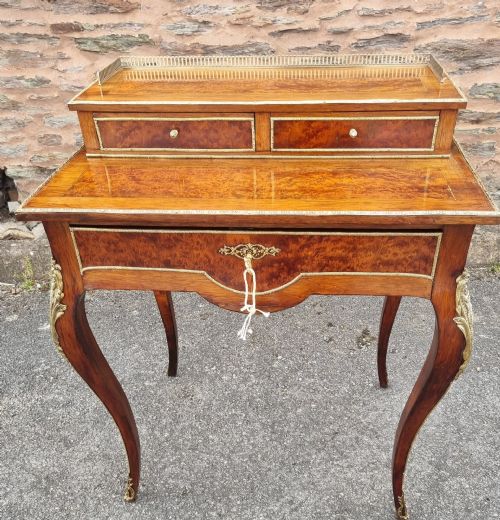
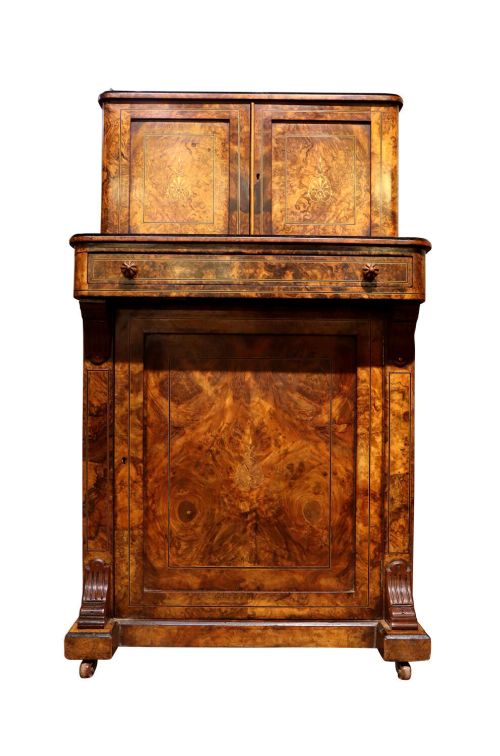
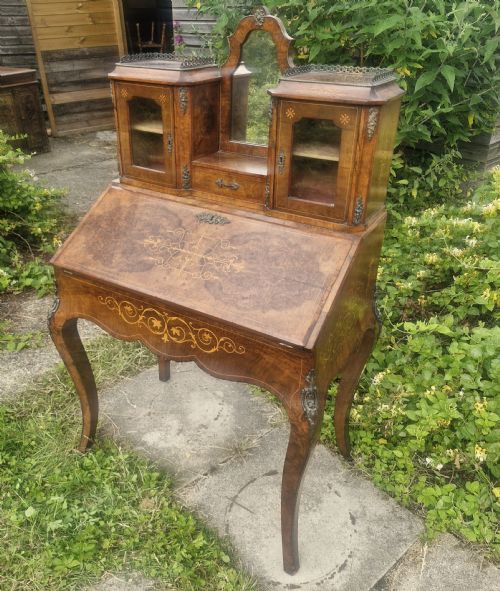
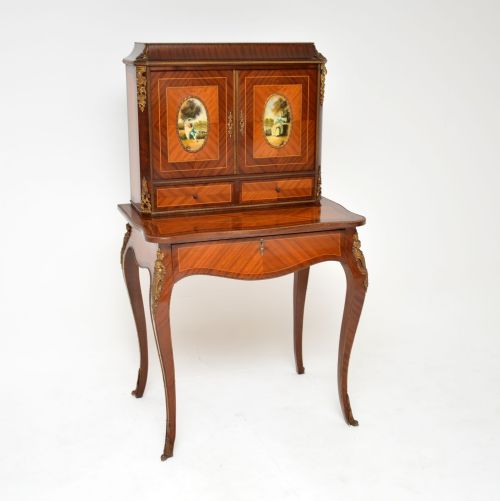
A french bonheur du jour is a small nineteenth-century lady's writing desk with an upper tier of cabinets and shelves, designed for correspondence and valued for compact elegance.
French Bonheur Du Jour
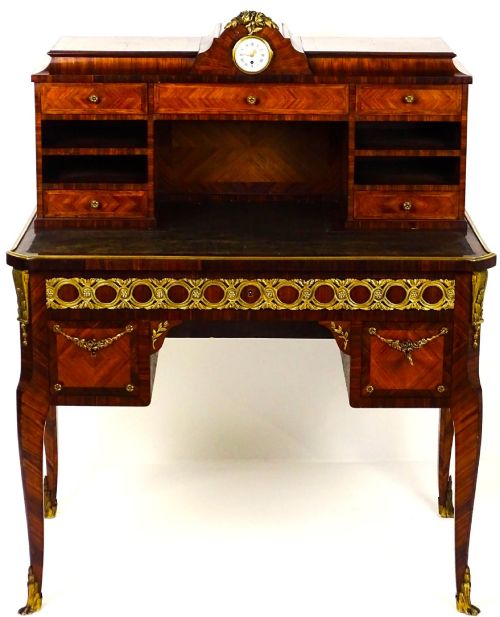
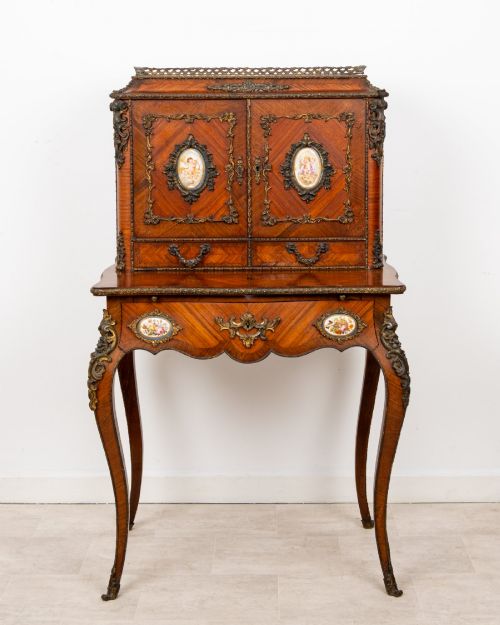
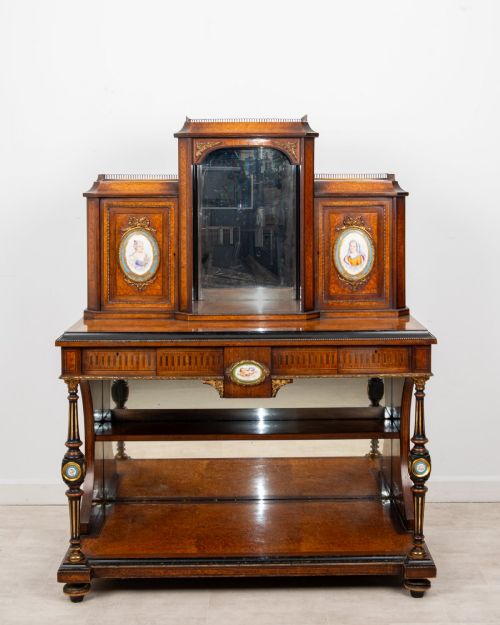
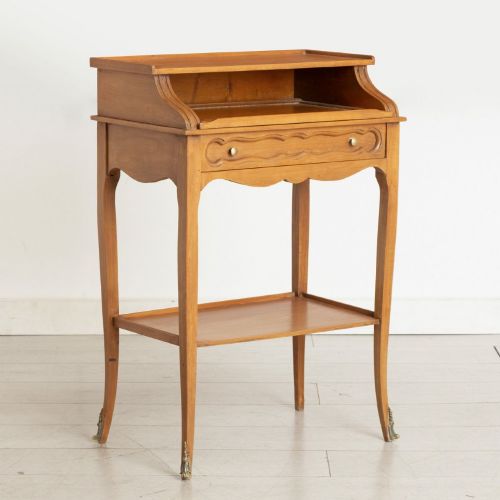
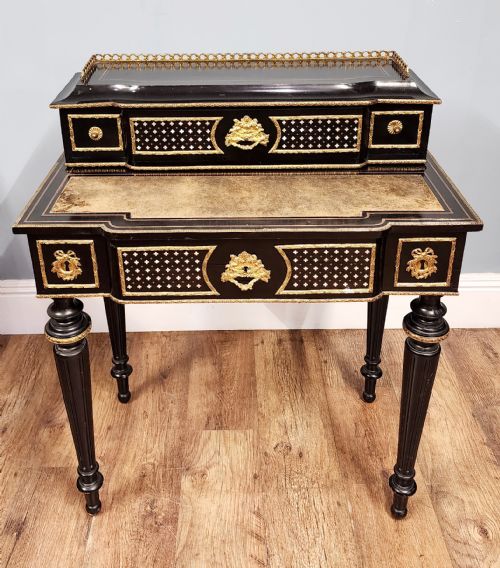
The french bonheur du jour developed as a refined writing desk for domestic use, featuring a distinct superstructure fitted with small drawers, pigeonholes or cupboards above a flat writing surface. The form emerged in eighteenth-century France and enjoyed a major revival during the nineteenth century under Victorian and Napoleon III influence.
Examples on this page span the mid to late nineteenth century, executed in revivalist modes such as Louis XV and Louis XVI styles. Most pieces combine a compact writing table with raised compartments, occasionally incorporating folding ledges or pull-out leather-lined writing slides.
Makers and workshops of the period produced these desks for formal drawing rooms and boudoirs, adapting historical Continental aesthetics for British and European homes. They survive predominantly in walnut, kingwood and mahogany, reflecting the high standards of nineteenth-century cabinet-making.
How They Were Made
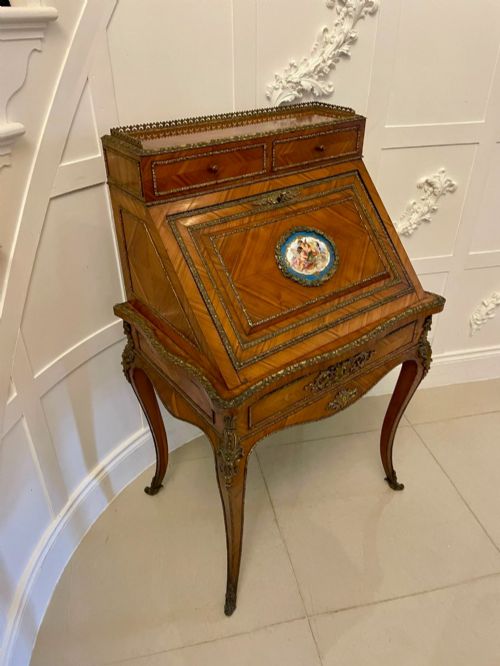
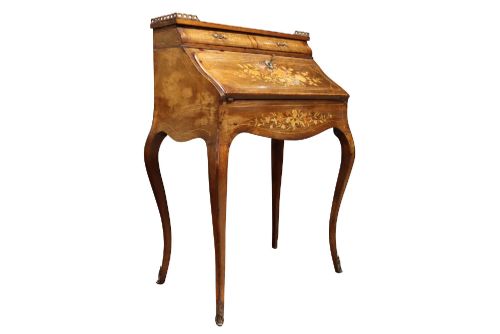
Cabinet-makers constructed carcasses from dense foundational timbers like walnut, mahogany or oak, then veneered the visible surfaces in exotic woods including kingwood, rosewood, amboyna and tulipwood. Marquetry patterns and contrasting stringing define the decorative skin of these pieces, often arranged in symmetrical floral or geometric panels.
Cast gilt bronze and ormolu mounts edge the drawers, frame porcelain plaques and outline the legs, while brass inlay highlights the cabinet doors and writing surfaces. Hand-painted Sevres-style porcelain plaques inset into the wood add a distinct layer of colour and texture characteristic of high-status nineteenth-century production.
French Bonheur Du Jour Retail Price Guide 2026
Typical asking prices for french bonheur du jour among the pieces listed under this phrase on Sellingantiques today, from the lower quarter to the upper quarter. They describe what is for sale here now, not the wider market.
Listings feature nineteen-century pieces predominantly in kingwood, walnut and mahogany, accented with ormolu mounts and porcelain plaques.
What Varies in Quality
Construction standards depend heavily on the precision of the timber matching and the intricacy of the underlying marquetry. Superior examples exhibit continuous grain alignment across drawer fronts and tight, hand-cut joints that resist movement over time.
The refinement of the cast ormolu mounts and the quality of the porcelain plaques distinguish standard production from exceptional pieces. Heavier, crisply chased bronze mounts and hand-painted ceramic inserts indicate workshop output from prominent makers.
Paul Sormani·Edwards and Roberts
The French Bonheur Du Jour Glossary
- Ormolu
- Gilt bronze mounts applied to furniture for decorative enrichment. These chased metal elements accent corners, feet and panel borders.
- Marquetry
- Fitted pieces of veneer assembled to form decorative pictures or geometric patterns. Craftsmen cut contrasting woods together to ensure tight seams.
- Sevres
- Porcelain plaques produced at the French national manufactory and mounted onto cabinet doors and writing slopes. They typically display hand-painted floral or figural subjects within gilt borders.
- Vernis Martin
- A European lacquer technique mimicking Asian japanning, developed to create glossy painted panels. It appears on cabinet doors and fall-fronts with translucent depth.
French Bonheur Du Jour: Frequently Asked Questions
What is a french bonheur du jour used for?
These desks served as light writing tables for women to write letters, manage household accounts and keep stationery. The upper tier provided secure storage for correspondence and small personal items.
Unlike heavy partners desks or library tables, the bonheur du jour was built for intimate parlour use and decorative placement against a drawing-room wall.
How do you distinguish Victorian from earlier pieces?
Nineteenth-century British and French interpretations often mix walnut or burr walnut with distinctive brass inlay and porcelain plaques. Construction details such as secondary pine or oak framing help separate nineteenth-century workshop production from earlier eighteenth-century prototypes.
Revival pieces from the eighteen-eighties onward display heavier ormolu casting and cleaner internal joinery compared to earlier transitional examples.
Are the porcelain plaques original to the desks?
Most porcelain plaques on nineteenth-century desks were integrated during initial construction by the cabinet-maker. Workshops utilised Sevres-style ceramic inserts to enhance the luxury appeal of kingwood and amboyna furniture.
Close inspection of the surrounding ormolu bezel reveals whether the plaque fits the rebate without disturbance to the surrounding veneer.
Where should a bonheur du jour be placed?
Because these desks often feature finished backs and delicate marquetry all round, they suit placement in open rooms rather than strictly against a wall. The compact footprint makes them practical for home offices or drawing rooms where space is limited.
Direct sunlight should be avoided to protect sensitive rosewood, kingwood veneers and hand-painted porcelain from fading.