



Amboyna Wood Furniture
Amboyna wood furniture brings rich, figured burrs and golden warmth to interiors through desks, cabinets, and tables.
Amboyna Wood Furniture
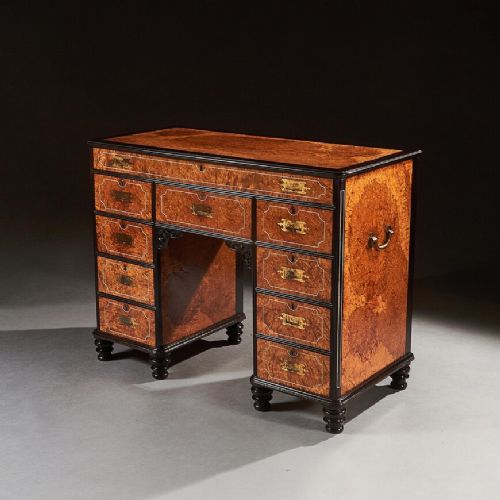
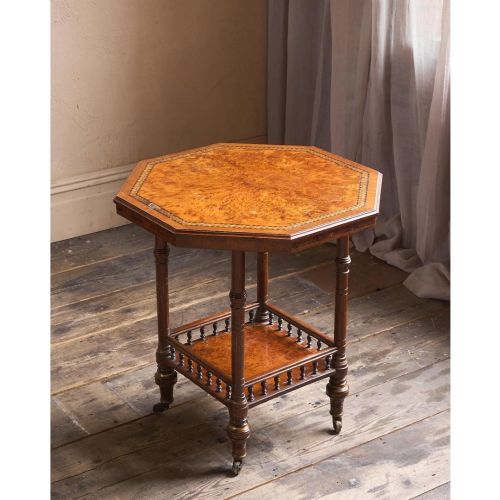
Amboyna wood furniture consists of practical and decorative pieces surfaced or constructed with the highly prized burr timber of the narra tree. When you search for amboyna wood furniture, you encounter items designed for writing, display, and storage across several distinct historic periods.
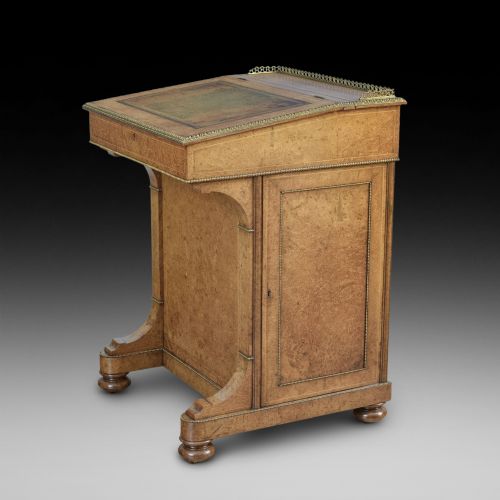
The selections on this page span the seventeenth, eighteenth, and nineteenth centuries, featuring works from English, French, and Chinese workshops. Forms range from compact davenport desks and miniature chests of drawers to large breakfront library desks and credenzas.
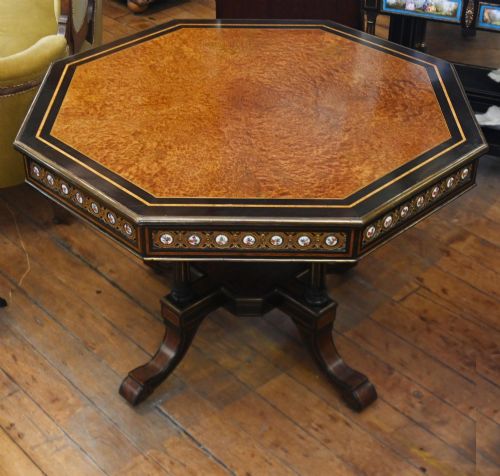
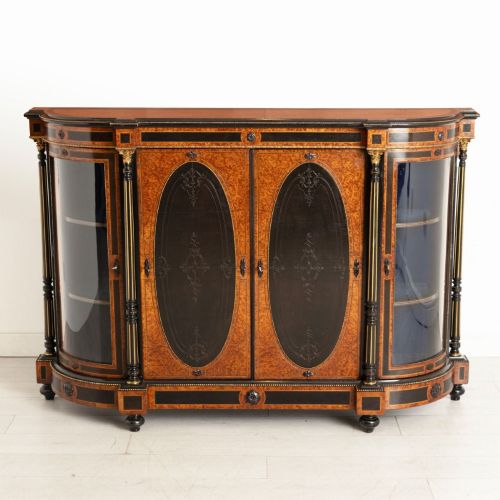
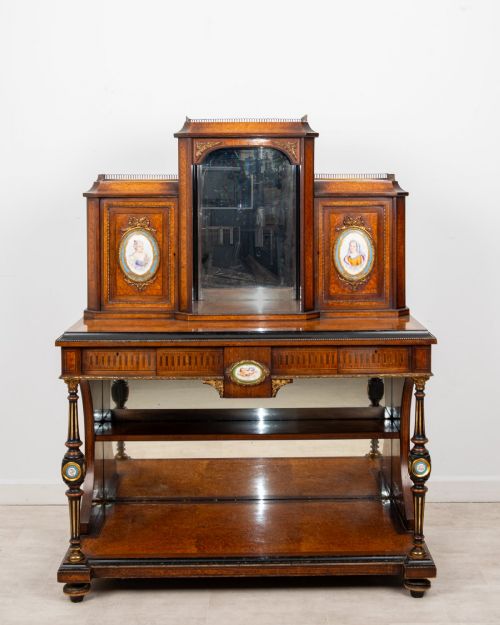
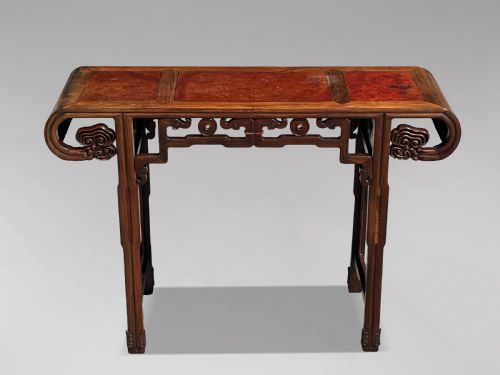
Victorian and Regency examples dominate the offerings, often pairing the distinctive golden-brown burr veneer with ebonised wood, brass mounts, or porcelain plaques. Alongside these formal European pieces, occasional Asian export items utilise the timber for altar tables and campaign desks.
How they were made
Cabinetmakers utilised amboyna primarily as a fine veneer, slicing the dense, knotted burr to reveal intricate patterns of curls and eyes. This decorative layer was applied to secondary structural woods, requiring precise joinery to prevent splitting as the timber aged.
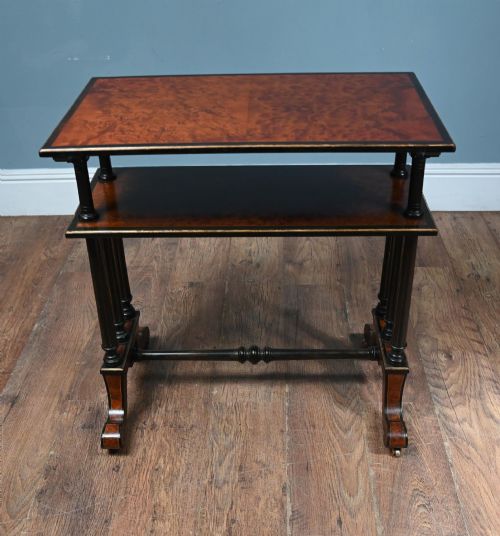
Many pieces incorporate contrasting materials to frame the warm brown veneer. Ebonised wood provides sharp dark borders, while brass stringing, mounts, galleries, and parcel gilt accents highlight the structural lines of desks, tables, and cabinets.
Amboyna Wood Furniture Retail Price Guide 2026
Typical asking prices for amboyna wood furniture among the pieces listed under this phrase on Sellingantiques today, from the lower quarter to the upper quarter. They describe what is for sale here now, not the wider market.
Listings feature items from the seventeenth, eighteenth, and nineteenth centuries, including Regency and Victorian periods alongside Chinese export pieces.
What varies in quality
The density and movement of the burr grain dictate the visual impact of each piece. Superior examples display tightly packed, evenly distributed curls across every visible surface, while lesser pieces rely on plain or patchy veneer.
Execution of secondary details separates standard production from masterwork output. The crispness of parcel gilt, the integration of porcelain plaques, and the precision of brass mounts define the tier of the maker's workshop.
Gillows
The Amboyna Wood Furniture Glossary
- Burr
- A growth on a tree resulting in distorted grain packed with small knots and swirls. This figure is sliced into thin veneers for high-end cabinetmaking.
- Ebonised
- Timber treated with stain, dye, or paint to imitate ebony. This dark finish creates a strong visual contrast against lighter veneers like amboyna.
- Etagere
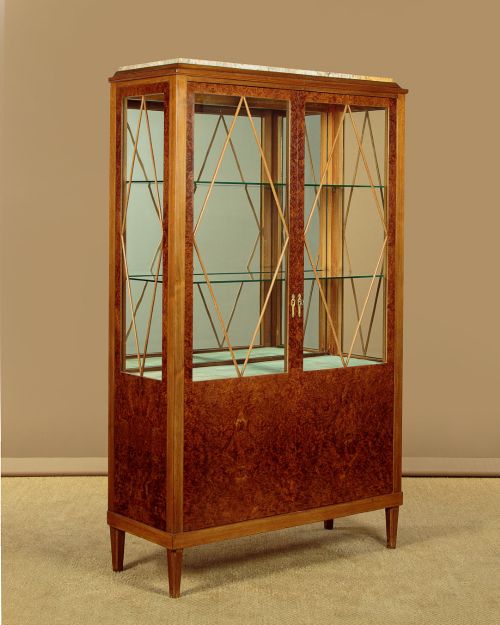
- A set of open shelves for displaying small objects or ornaments. These tiered stands frequently appear in nineteenth-century French furniture.
- Davenport
- A small, compact writing desk featuring a sloping lid and drawers opening to one side. They gained immense popularity during the Victorian era.
- Credenza
- A sideboard or cabinet used for serving food or displaying valuables. They often feature glass doors and elaborate marquetry or veneering.
Amboyna Wood Furniture: Frequently Asked Questions
How do I care for amboyna furniture?
Keep burr veneer furniture away from direct sunlight and steady sources of heat to prevent the wood from drying out or cracking. Maintain a stable indoor humidity where possible.
Dust regularly with a soft, dry cloth and avoid using silicone polishes, which can build up and dull the historic finish over time.
Are all amboyna pieces solid wood?
Almost all pieces use amboyna strictly as a veneer rather than a solid construction material. The burr growth is scarce and unstable in large blocks, making it unsuited for structural framing.
Craftsmen laid thin sheets of the figured timber over stable secondary woods like mahogany, oak, or ebonised timber to create the desired decorative surface.
How do I identify a Victorian piece?
Victorian examples often combine the characteristic burr veneer with ebonised detailing, brass galleries, or inset porcelain plaques. Construction techniques also shift during this period to accommodate industrial innovations.
Examine the secondary woods inside drawers and at the back of the cabinet, as nineteenth-century workshops used specific cutting methods and fixings distinct from earlier eras.