





Porcelain Plaque Desk
A porcelain plaque desk brings painted ceramic into fine woodwork, offering a refined writing surface framed by exotic timbers and metal mounts.
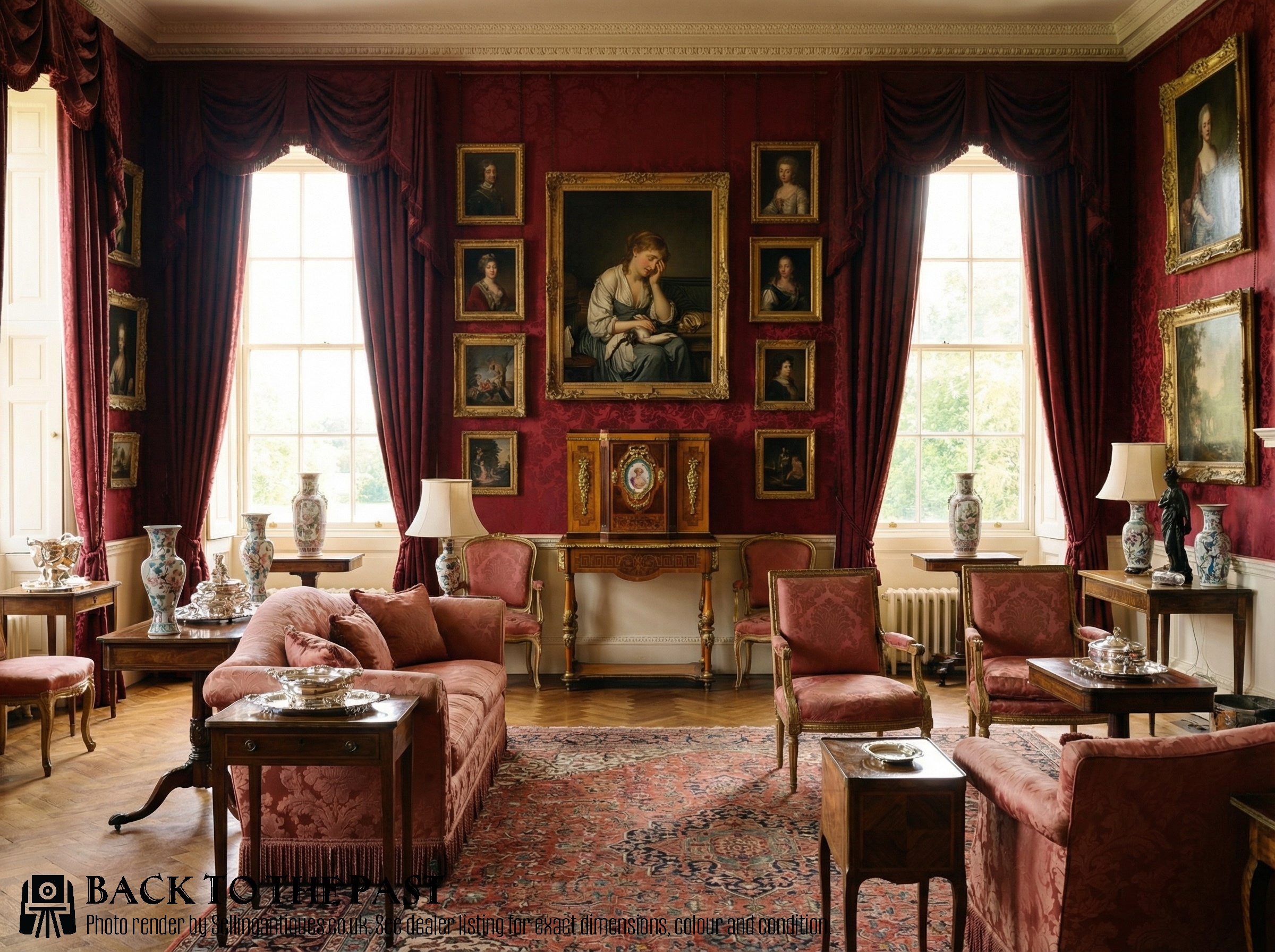
Porcelain Plaque Desk
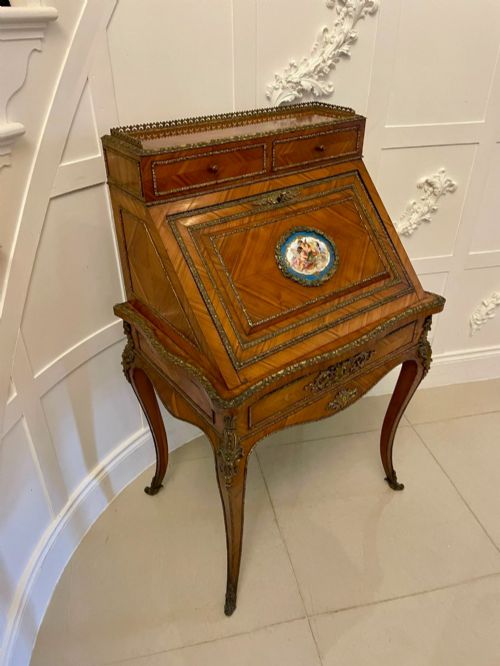
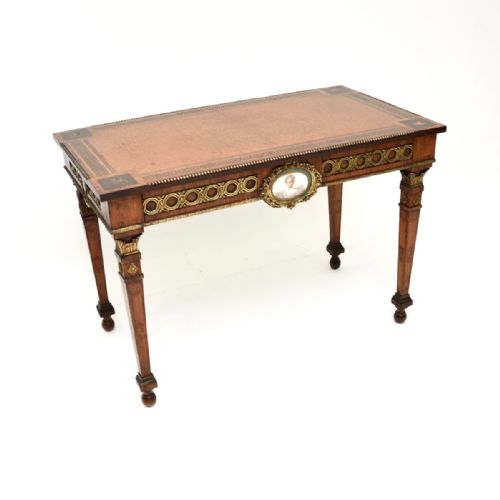
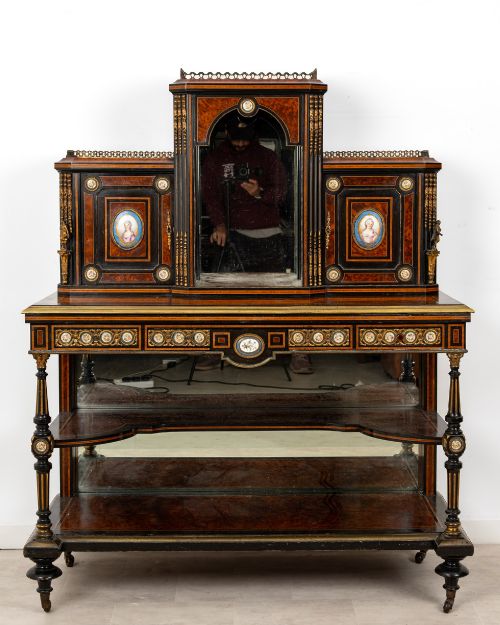
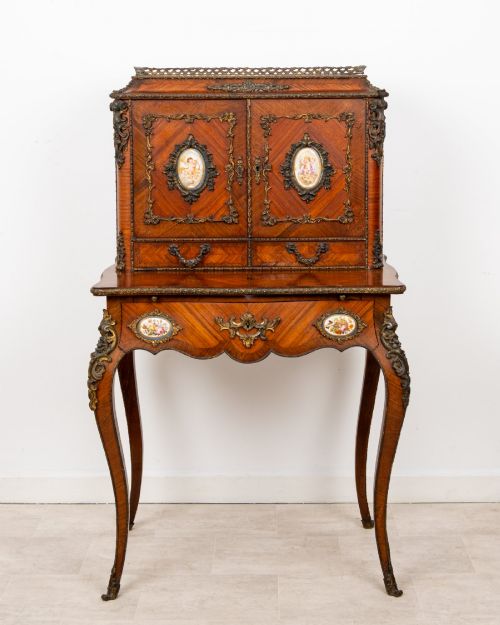
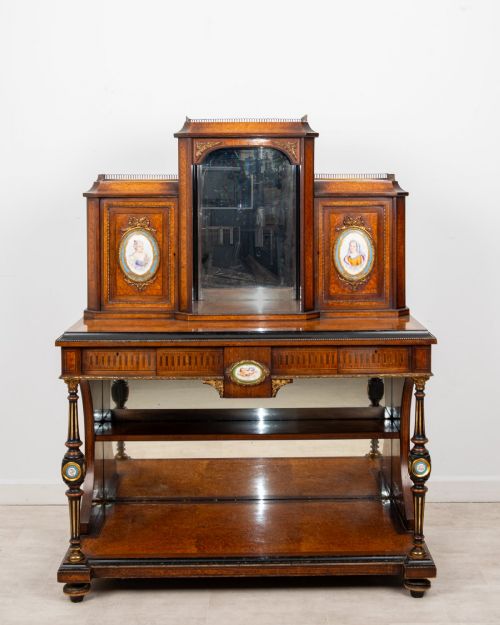
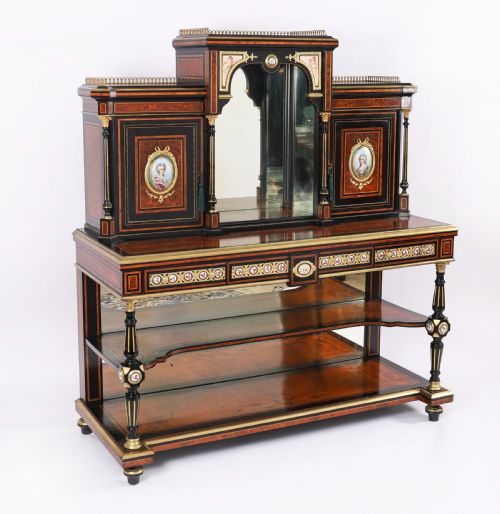
A porcelain plaque desk combines cabinetry with inset ceramic panels, creating a distinct writing surface designed for domestic use. These pieces typically take the form of bonheur du jour desks or writing tables, originating mainly from French and Victorian workshops.
The materials recorded across these items include amboyna, kingwood, walnut, satinwood, and ebonised wood. Ormolu mounts and brass details frequently frame the porcelain inserts, completing the aesthetic of the nineteenth century.
Makers drew on various historical aesthetics, producing pieces in Napoleon III, Louis XVI revival, and Louis XV styles. The combination of exotic timbers and painted ceramics defines the character of this furniture.
Materials and Construction
Cabinetmakers utilised dense hardwoods such as amboyna, kingwood, and walnut for the primary carcase and decorative veneer work. Ebonised wood often provided stark contrast to the warmer tones of the surrounding timber.
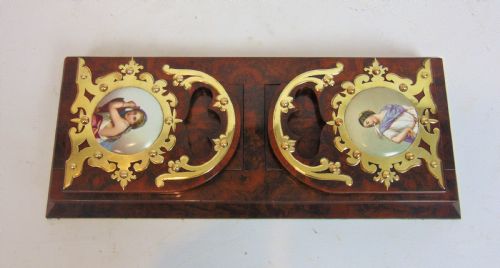
Fired porcelain plaques were integrated directly into the wooden surfaces, secured by ormolu frames or brass mounts. These metal elements were cast and chased before being applied to the angles and borders of the desk.
Porcelain Plaque Desk Retail Price Guide 2026
Typical asking prices for porcelain plaque desk among the pieces listed under this phrase on Sellingantiques today, from the lower quarter to the upper quarter. They describe what is for sale here now, not the wider market.
Listings feature porcelain plaque desks from the 18th and 19th centuries, incorporating amboyna, kingwood, walnut, and ormolu mounts.
Assessing Quality and Execution
The standard of a porcelain plaque desk rests upon the precision of the cabinetwork and the execution of the painted ceramic. Finer examples display meticulous marquetry matching and securely fitted ormolu mounts that follow the contours of the timber.
The selection of timber veneers dictates visual depth, with well-figured amboyna and kingwood elevating the overall presence of the piece. Painted details on the porcelain plaques exhibit varying degrees of brushwork refinement.
The Porcelain Plaque Desk Glossary
- Bonheur du jour
- A small light lady's writing desk, usually featuring a raised back with shelves, drawers, or a cabinet above the main writing surface.
- Ormolu
- Gilded bronze used for decorative mounts and framing on fine furniture, adding metallic contrast to wooden surfaces.
- Amboyna
- A highly decorative wood veneer valued for its speckled, swirling grain pattern, frequently utilised in nineteenth-century cabinetry.
- Ebonised wood
- Timber treated to resemble ebony, providing a deep black finish that highlights surrounding gilt bronze or lighter veneers.
- Marquetry
- The art of applying pieces of veneer to a structure to form decorative designs and patterns.
Porcelain Plaque Desk: Frequently Asked Questions
What is a bonheur du jour?
A bonheur du jour is a small writing desk featuring a superstructure of drawers or shelves above the main writing surface. These pieces emerged in France during the eighteenth century and remained popular through the nineteenth century.
They served as elegant writing furniture for private correspondence and light administrative tasks within the home.
How do I care for amboyna and kingwood?
Exotic wood veneers require stable room humidity and protection from direct sunlight to prevent fading and timber movement. Regular dusting with a soft, dry cloth preserves the polished surface.
Avoid using silicone-based polishes, as they can degrade the traditional finish over time.
What periods do these desks date from?
The desks on this page predominantly date from the nineteenth century, including specific periods around 1800, 1860, and 1880. Stylistic influences draw heavily from earlier French reigns.
Maker revivals of Louis XV and Louis XVI designs were widespread during the Victorian and Napoleon III eras.
Where were porcelain plaques made?
Porcelain plaques on these desks were often produced in European ceramic factories, with Sevres style being a notable point of reference in Victorian and French pieces.
These painted panels were specifically sized to fit into prepared recesses within the wooden cabinetry.