




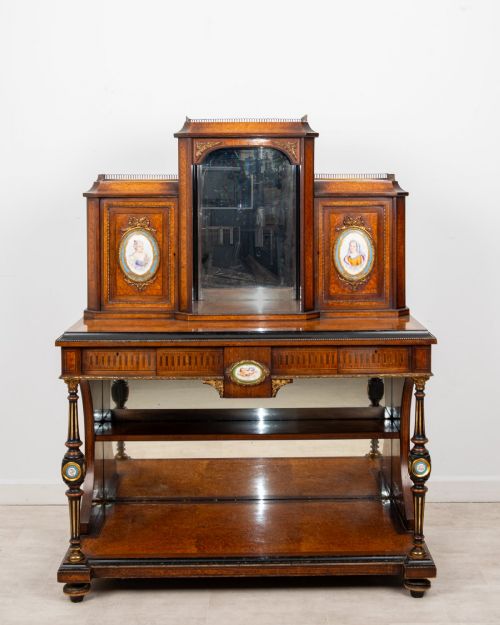
Napoleon III Writing Desk
These pieces are a Napoleon III writing desk, created for refined correspondence and study within grand nineteenth-century interiors.
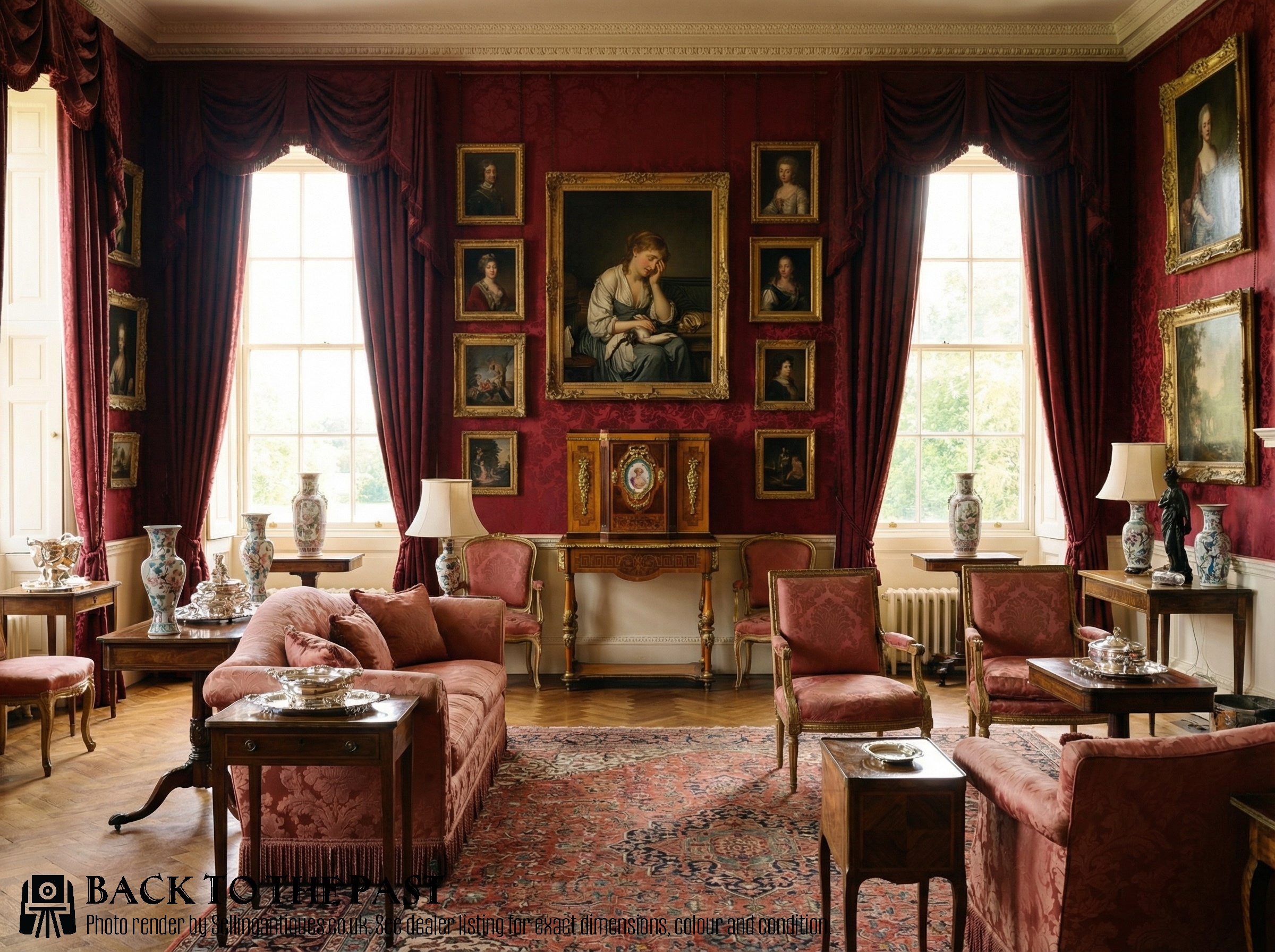
Napoleon III Writing Desk
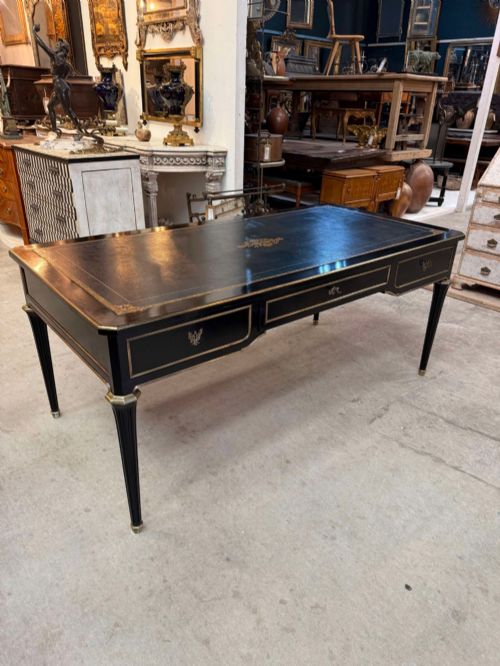
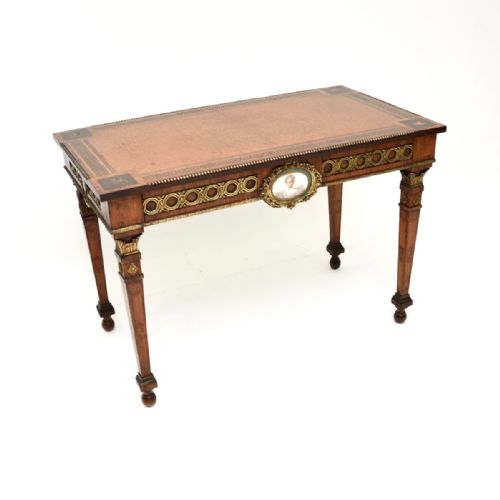
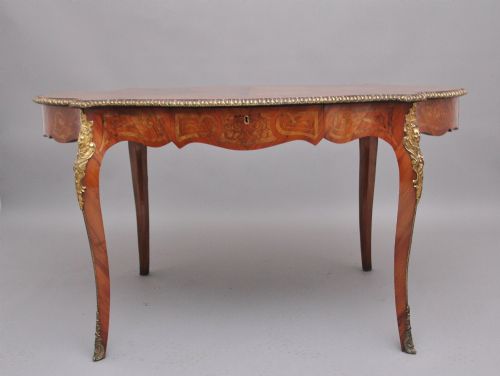
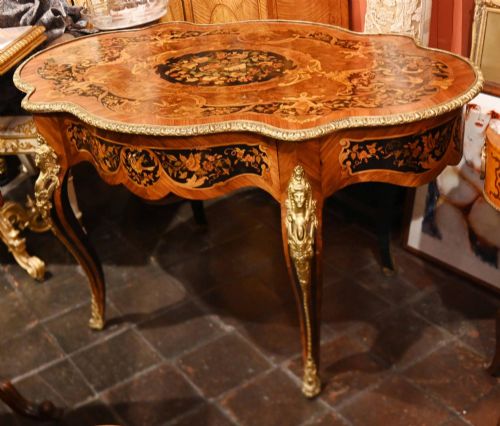
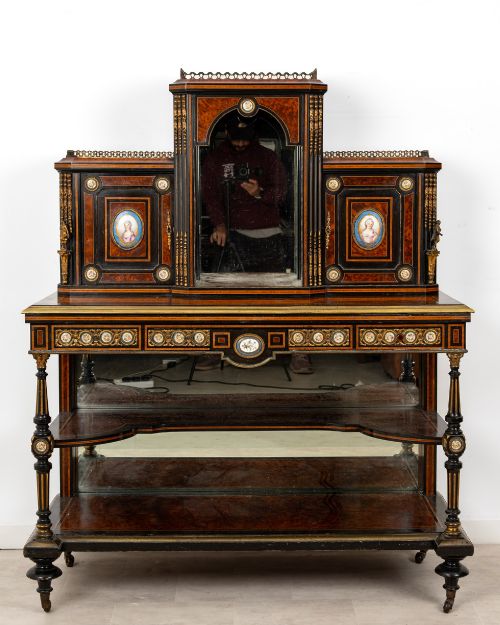
A napoleon iii writing desk represents the opulent furniture of the mid to late nineteenth century, drawing heavily on earlier French royal aesthetics like the Louis XV and Louis XVI revivals. Buyers searching this phrase encounter elaborate forms intended for prominent placement in the home, such as the freestanding bureau plat or the compact bonheur du jour.
The selection ranges from bureau de dame variants to larger writing tables and fitted writing boxes, often featuring shaped tops and tiered superstructures. These surfaces served both practical writing needs and the display of refined taste in formal reception rooms.
Originating largely from French workshops of the nineteenth century, these pieces incorporate diverse regional interpretations while retaining a cohesive decorative language. Walnut, ebonised wood, and exotic veneers dominate the forms seen here.

How They Were Made
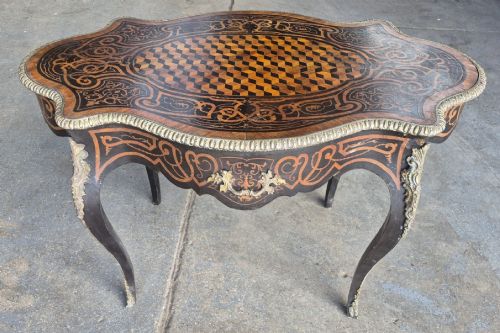
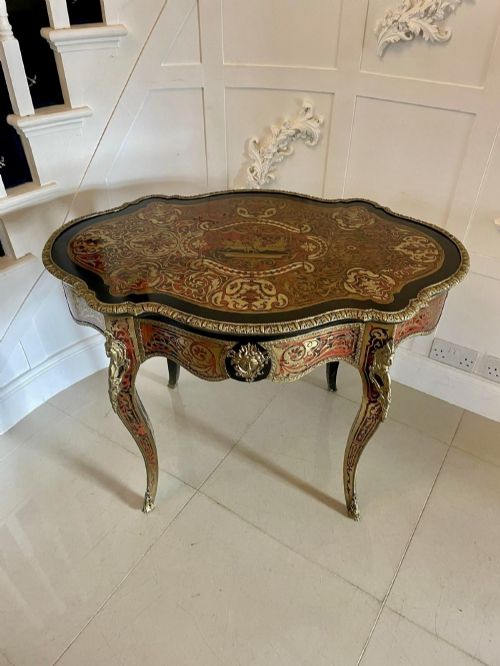
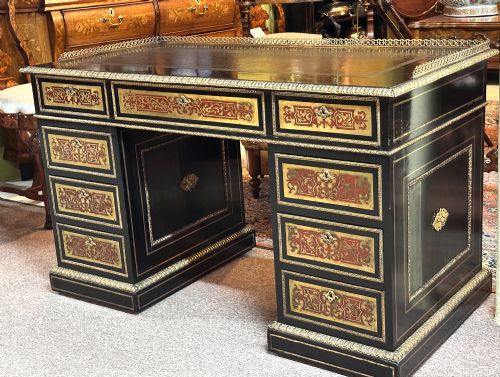
Craftsmen built these pieces using dense structural timbers like walnut and mahogany, overlaid with intricate veneers including rosewood, kingwood, tulipwood, and amboyna. Surface decoration often involved elaborate marquetry and parquetry patterns, alongside contrasting ebonised woods and inlaid brass work known as boulle.
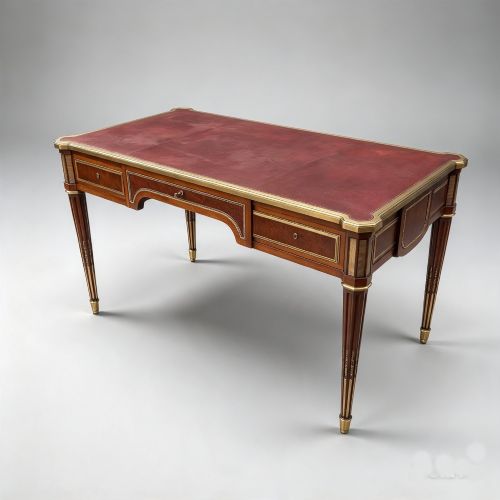
Gilt bronze and ormolu mounts were cast and chased to edge drawers, frame panels, and cap cabriole legs, while porcelain plaques and champleve enamel added vibrant colour accents. Leather writing surfaces were frequently tooled with gold leaf to provide a durable and luxurious medium for daily correspondence.
Napoleon III Writing Desk Retail Price Guide 2026
Typical asking prices for napoleon iii writing desk among the pieces listed under this phrase on Sellingantiques today, from the lower quarter to the upper quarter. They describe what is for sale here now, not the wider market.
Current listings demonstrate a strong preference for ebonised wood and exotic veneers like kingwood, frequently accented with cast ormolu mounts and porcelain plaques.
What Varies in Quality
The distinction between standard production and exceptional execution lies in the depth and precision of the surface ornament. Finer examples display meticulously hand-chased ormolu mounts that integrate seamlessly with the timber contours, whereas simpler pieces rely on standard, less detailed cast hardware.
Maison Millet·Sevres
The Napoleon III Writing Desk Glossary
- Bureau Plat
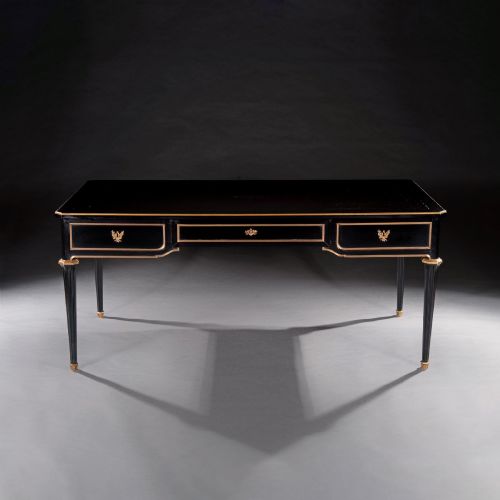
- A double-sided writing table featuring a rectangular top inset with leather and one or more drawers in the frieze. These freestanding desks were designed to sit away from the walls in the centre of a room.
- Bonheur Du Jour
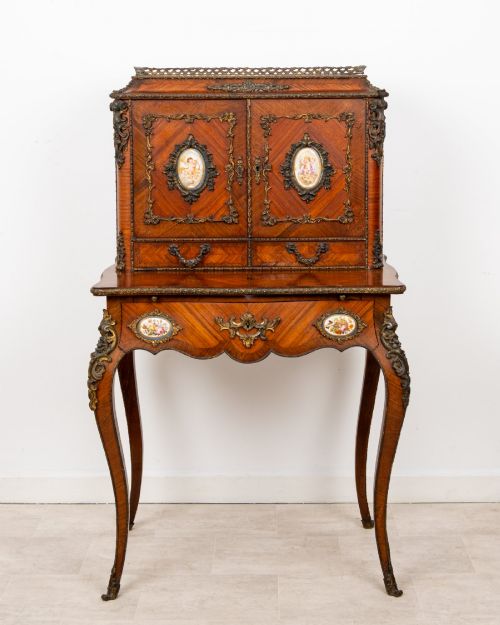
- A light lady's writing desk featuring a small cabinet or set of drawers superstructure on top of the main writing surface. It became popular during the nineteenth-century revival of eighteenth-century French forms.
- Boulle Work
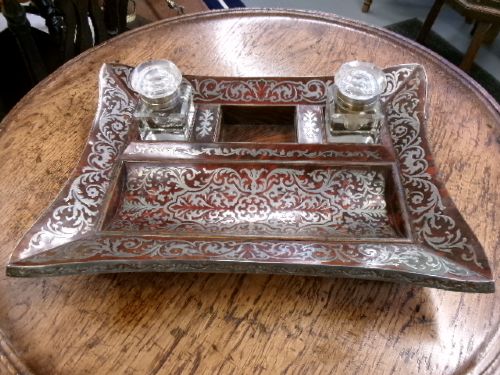
- A style of marquetry using brass and tortoiseshell inlaid into ebonised wood, named after the famous cabinetmaker to Louis XIV. The technique creates a striking contrast between the luminous metal and the dark ground.
- Ormolu
- Gilded bronze used for decorative furniture mounts, handles, and sabots during the nineteenth century. The metal was cast, chiselled, and coated with a gold amalgam to achieve a rich metallic lustre.
- Secrétaire Abattant
- A tall upright desk featuring a drop-front writing flap that conceals a fitted interior of small drawers and pigeonholes. It combines vertical storage with a functional writing surface.
Napoleon III Writing Desk: Frequently Asked Questions
What is a bonheur du jour?
A bonheur du jour is a small, elegant ladies' writing desk featuring a raised cabinet or shelf structure above the main writing surface. These compact pieces were typically used for light correspondence and the storage of letters or stationery in a boudoir.
The design incorporates decorative elements such as ormolu mounts, porcelain plaques, and intricate wood veneers. They represent the refined domestic tastes of the nineteenth-century French elite.
How do I distinguish boulle work?
Boulle work consists of intricate marquetry made from brass and tortoiseshell inlaid into a dark ebonised wood background. The technique catches the light and creates a high-contrast decorative pattern across the surface of the furniture.
First popularized in the seventeenth century, this method was extensively revived during the Napoleon III period. It appears frequently on the tops and drawers of fine writing desks and centre tables.
Where should I place a bureau plat?
A bureau plat is designed as a freestanding desk with finished decoration on all sides, making it ideal for the middle of a room rather than pushed against a wall. Its double-sided nature allows it to serve as a dramatic focal point in a study or library.
Ensure the leather writing surface and gilt bronze mounts receive balanced indirect light to preserve the materials. Pairing the desk with a matching nineteenth-century chair completes the traditional arrangement.
What materials define Napoleon III desks?
These desks rely on a foundation of solid timbers like walnut or mahogany, which are then veneered in exotic woods such as rosewood, kingwood, tulipwood, and amboyna. Ebonised wood is also common, providing a dark contrast to metal inlay and gilt mounts.
Decorative additions include cast ormolu mounts, porcelain plaques from Sevres, champleve enamel, and tooled leather writing inserts. Together, these materials create the ornate and layered aesthetic characteristic of the period.