


Amboyna Writing Desk
An amboyna writing desk offers rich burr timber and refined craftsmanship, making it a striking choice for any study or drawing room.

Identifying an amboyna writing desk
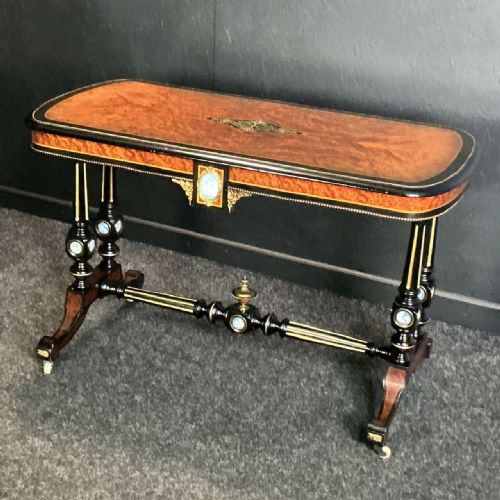
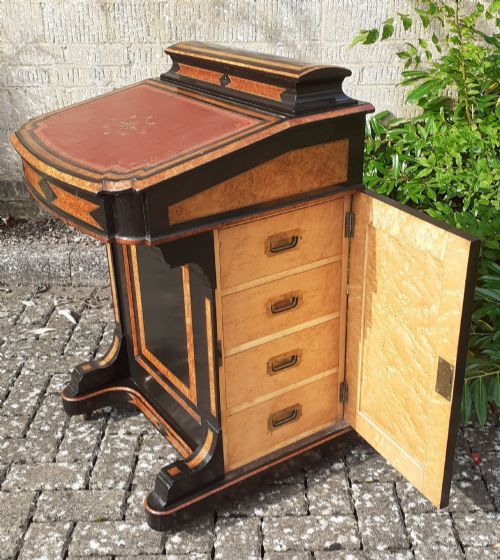
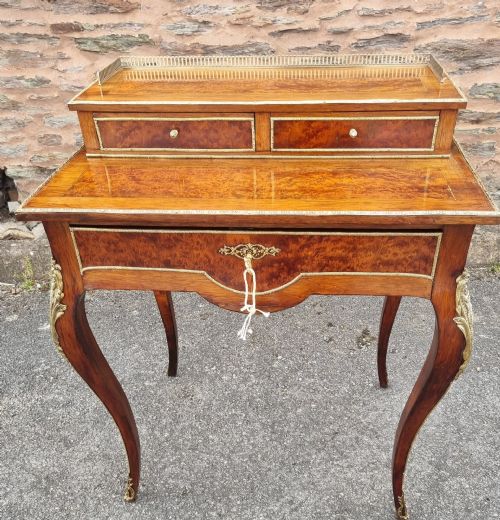
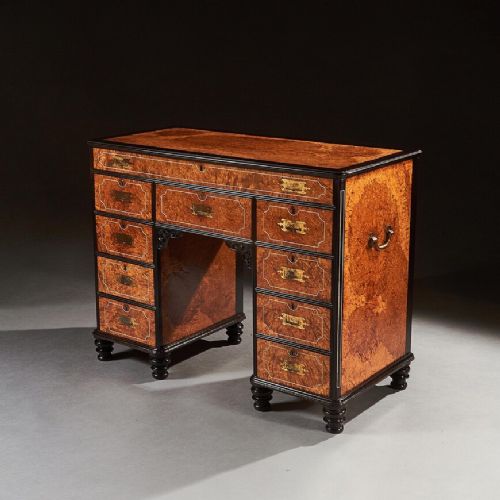
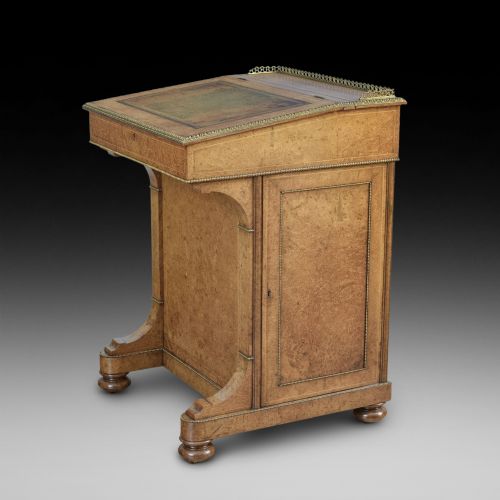
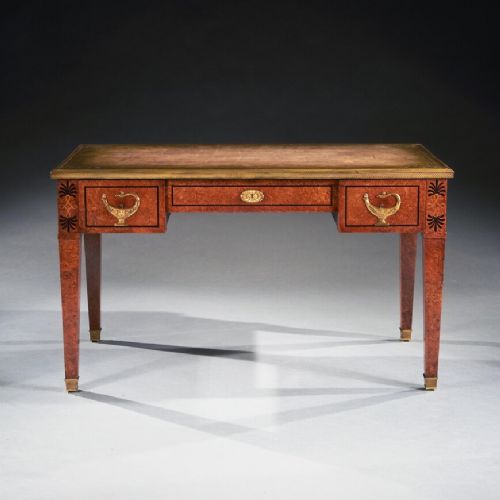
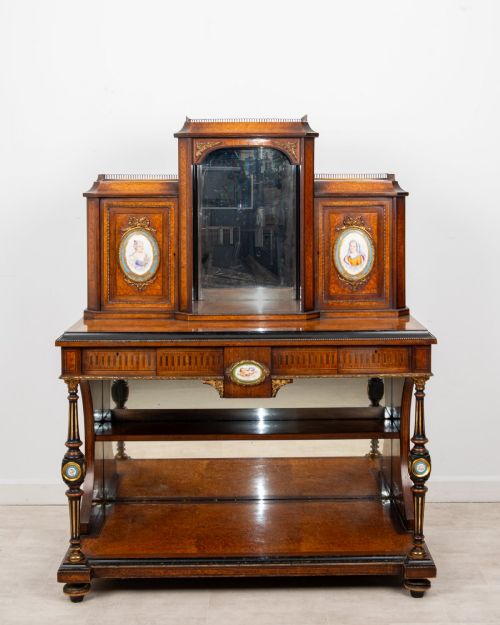
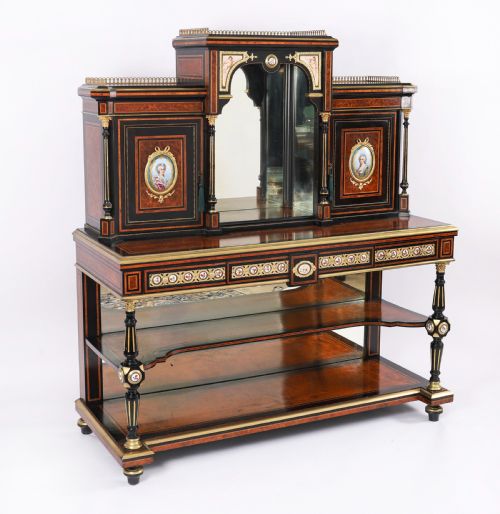
When searching for an amboyna writing desk, buyers encounter sophisticated nineteenth-century forms including compact Davenport desks, elaborate bonheur du jour tables, and secretaire abattants. These pieces showcase distinctive mottled wood grain, often paired with contrasting ebonised timber or delicate inlay work.
Victorian English examples frequently take the form of Davenport desks or brass-mounted campaign slopes, whilst continental French pieces lean towards Napoleon III and revival styles featuring porcelain plaques. The version most commonly met on this page is the nineteenth-century Victorian or French bureau de dame.
Originating primarily from nineteenth-century workshops in England and France, these desks served elite domestic spaces for correspondence and private accounts. Their survival in varied regional styles demonstrates the widespread nineteenth-century appreciation for exotic burl timbers.
Materials and construction
Craftsmen utilised costly amboyna veneer over secondary woods like walnut or mahogany, capitalising on the swirling bird's-eye patterns of the burr timber. This veneer was frequently combined with ebonised wood mouldings and contrasting stringing to accentuate the panels.
Metal mounts in brass and ormolu were cast and applied to corners, galleries, and key escutcheons to protect edges and elevate the visual richness. Selected French pieces incorporate painted porcelain plaques and leather writing surfaces inset into the top.
Retail Price Guide 2026
Typical UK retail prices for amboyna writing desk, calculated from the Sellingantiques database of over a million retail prices indexed since 2003. This retail price guide relies exclusively on Sellingantiques data; no external sources or auction records are used, so the figures do not describe the wider market.
Listings feature nineteenth-century writing desks utilising amboyna, ebonised wood, and ormolu mounts in Victorian and French revival styles.
Judging quality in construction and ornament
The distinction between standard and superior pieces rests on the choice of timber and the precision of the marquetry inlay. Finer desks display tightly figured amboyna burr selected to wrap symmetrically around drawers and falls.
Secondary detailing such as hand-chased ormolu mounts, integrated porcelain plaques, and original fitted interiors with secret drawers signal higher workshop standards. The integrity of the carcass and the retention of original brass hardware further elevate the standing of a piece.
Paul Sormani
The Amboyna Writing Desk Glossary
- Amboyna
- A tropical burl wood known for its mottled, golden-brown grain and knotty texture. It was highly prized by nineteenth-century cabinet makers for luxury veneer work.
- Bonheur du jour
- A small, light ladies writing desk featuring a raised cabinet or shelf superstructure above the writing surface. This form gained immense popularity in mid-nineteenth-century French and English salons.
- Davenport
- A compact desk featuring a sloping, hinged writing top above a pedestal of drawers. It typically includes a side-opening compartment for stationery.
- Secretaire abattant
- A tall writing cabinet with a drop-front writing flap that conceals a fitted interior of pigeonholes and small drawers. It combines vertical storage with a functional desk surface.
- Ormolu
- Gilded bronze applied to furniture as decorative mounts and feet. The technique involves treating bronze with an amalgam of gold.
Frequently Asked Questions
What is an amboyna writing desk?
An amboyna writing desk is a nineteenth-century furniture piece surfaced with decorative amboyna veneer, typically built as a Davenport, bureau de dame, or bonheur du jour.
These desks were designed for correspondence and light administrative tasks, incorporating compartments and drawers suited to personal stationery.
How do I care for amboyna veneer?
Protect the polished wooden surface by placing the desk away from direct sunlight and heat sources that can dry out the veneer. Dust regularly with a soft, dry cloth and avoid chemical polishes.
Maintain stable indoor humidity levels to prevent the timber and veneer from cracking or warping over time.
How can I tell French and English desks apart?
French desks from this period often incorporate gilt ormolu mounts, porcelain plaques, and elaborate marquetry reflecting Napoleon III tastes. English examples tend to focus on the grain of the amboyna timber itself, sometimes utilising ebonised framing or brass inlay.
Construction methods inside the drawers also differ, with English cabinet makers using distinct dovetailing techniques compared to continental workshops.
Were these desks used for daily writing?
Yes, they provided a dedicated surface for writing letters, managing household accounts, and keeping personal journals in the nineteenth-century home. Their fitted interiors kept ink, pens, and paper organised close at hand.
Many styles were specifically scaled for use in drawing rooms and private boudoirs rather than grand libraries.