


Victorian Amboyna Desk
These Victorian amboyna desks are exquisite nineteenth-century pieces prized for their rich, mottled timber and sophisticated French revival forms.
Victorian Amboyna Desk
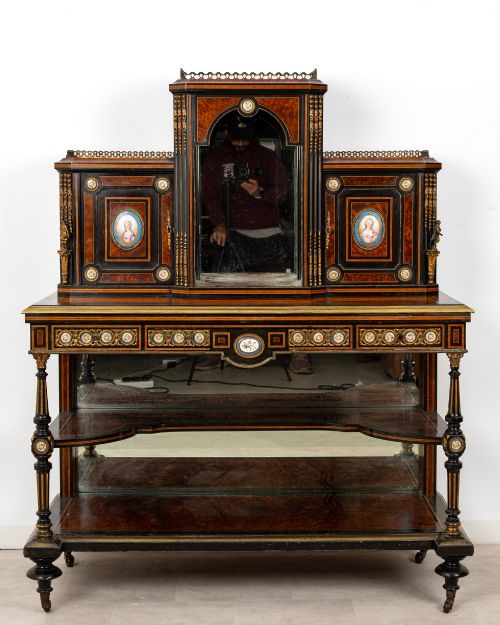
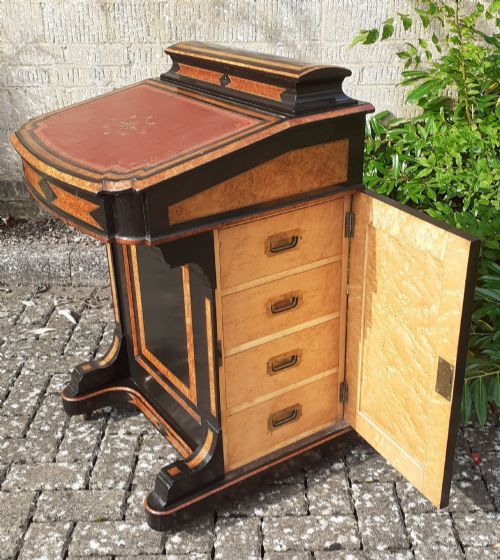
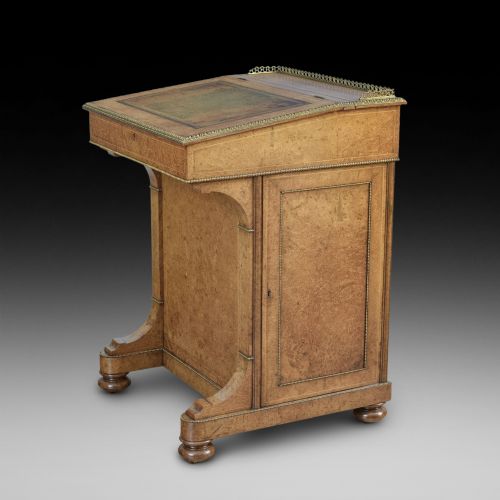
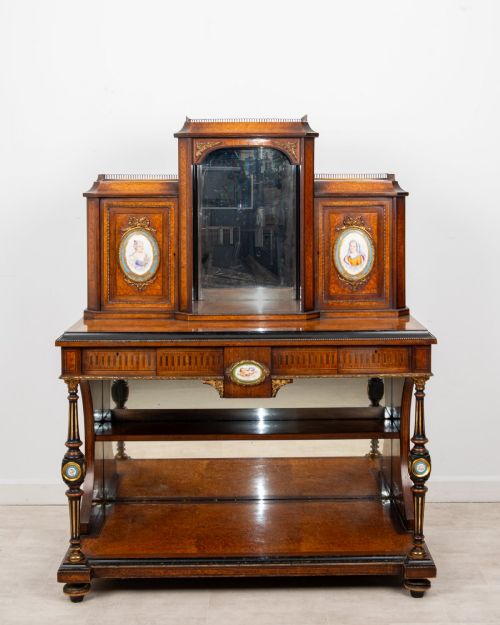
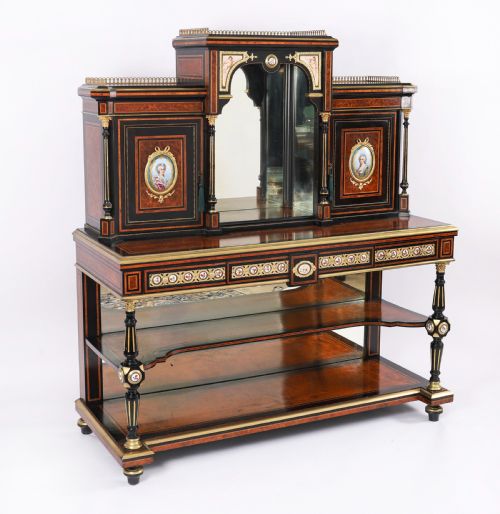
When you search for a victorian amboyna desk, you encounter nineteenth-century writing furniture defined by exotic timber and decorative mounts. The selections span from compact Davenport desks to elaborate bonheur du jour writing cabinets.
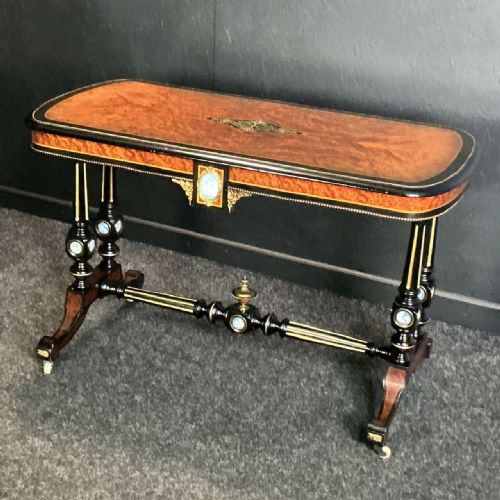
French revival influences dominate the pieces on this page, including Napoleon III and Louis XVI styles. Many examples incorporate ebonised wood details and inset porcelain plaques alongside the distinctive amboyna veneer.
The form serves multiple functions, appearing as centre tables, secretaire abattants, and traditional writing desks. These nineteenth-century creations reflect the high status of amboyna within Victorian and continental interiors.
How they were made
Cabinetmakers utilised amboyna veneer over a stable secondary wood base to showcase the burr timber's intricate grain patterns. Ebonised wood framing provided sharp contrast to the warm golden-brown tones of the amboyna.
Brass mounts, brass stringing, and gilt ormolu details enhanced the structural lines of these writing surfaces. Applied Sevres-style porcelain plaques frequently decorated the upstands and cabinet doors of bonheur du jour desks.
Leather writing surfaces were typically inset into the top of the desks, bordered by delicate gilt tooling. Interior compartments often featured finely fitted drawers and pigeonholes accessed via sloping writing lids.
What varies in quality
The choice and execution of the amboyna veneer distinguish finer examples from standard production. Richly figured burr amboyna with symmetrical grain matching across panels indicates superior craftsmanship.
The quality of subsidiary decoration, such as hand-painted porcelain plaques and cast brass ormolu mounts, elevates certain desks. Pieces bearing documented maker attributions demonstrate higher standards of cabinetmaking.
Complexity of construction, from simple Davenport forms to intricate breakfront library desks and multi-tiered bonheur du jour cabinets, dictates the relative sophistication of the piece.
Gillow
The Victorian Amboyna Desk Glossary
- Bonheur du Jour
- A small lady's writing desk featuring a cabinet or super-structure with shelves and drawers above the writing surface. This French form gained popularity during the Victorian period.
- Davenport
- A compact writing desk featuring a sloping lid that lifts to reveal a compartment, with drawers accessed from the side. Nineteenth-century versions frequently incorporate amboyna veneer and brass mounts.
- Secretaire Abattant
- A tall writing cabinet with a drop-front fall-flap that opens to form a writing desk over lower cupboard doors. These pieces often display elaborate wood veneers and marquetry.
- Ormolu
- Gilded bronze mounts and decorative hardware applied to nineteenth-century furniture to accent corners, legs, and borders. The technique involves applying a mercury-gold amalgam to cast brass or bronze.
Victorian Amboyna Desk: Frequently Asked Questions
What is a bonheur du jour desk?
A bonheur du jour is a light writing desk featuring a small cabinet or shelving unit built onto the rear of the writing surface. These pieces were designed for ladies to write letters and keep correspondence.
Victorian cabinetmakers adopted this French form, frequently embellishing them with amboyna veneer, ebonised wood, and porcelain plaques.
How do I identify amboyna wood?
Amboyna is recognised by its distinctive, swirling burr grain pattern and warm golden-brown to reddish colouring. It comes from Southeast Asia and was prized by nineteenth-century makers for luxury cabinetwork.
Because of its cost, it was almost exclusively applied as a thin veneer over secondary timbers rather than used as solid wood.
How were Davenport desks used?
Davenport desks provided a compact writing station where the user sat with drawers opening to the side rather than the front. The sloping top typically lifted to store writing materials and correspondence.
In Victorian homes, they served as functional pieces in drawing rooms and boudoirs where space was limited but elegance was required.
What is a secretaire abattant?
A secretaire abattant is a tall, upright cabinet with a hinged writing flap that pulls down to create a horizontal desk surface. Behind the flap, the interior contains small drawers and pigeonholes for documents.
These pieces allowed Victorian and French revival craftsmen to display large expanses of figured amboyna veneer on the exterior front panels.