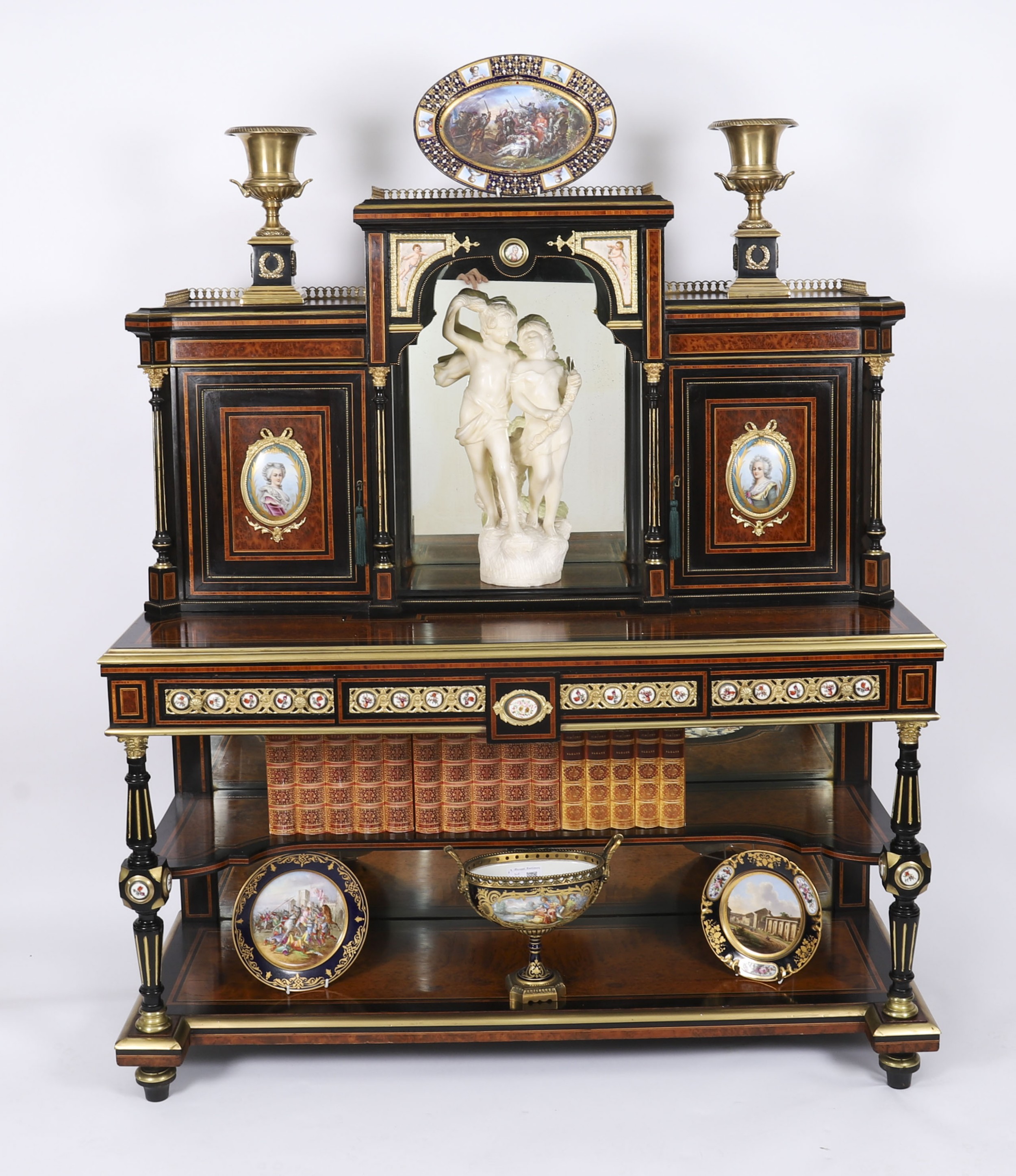
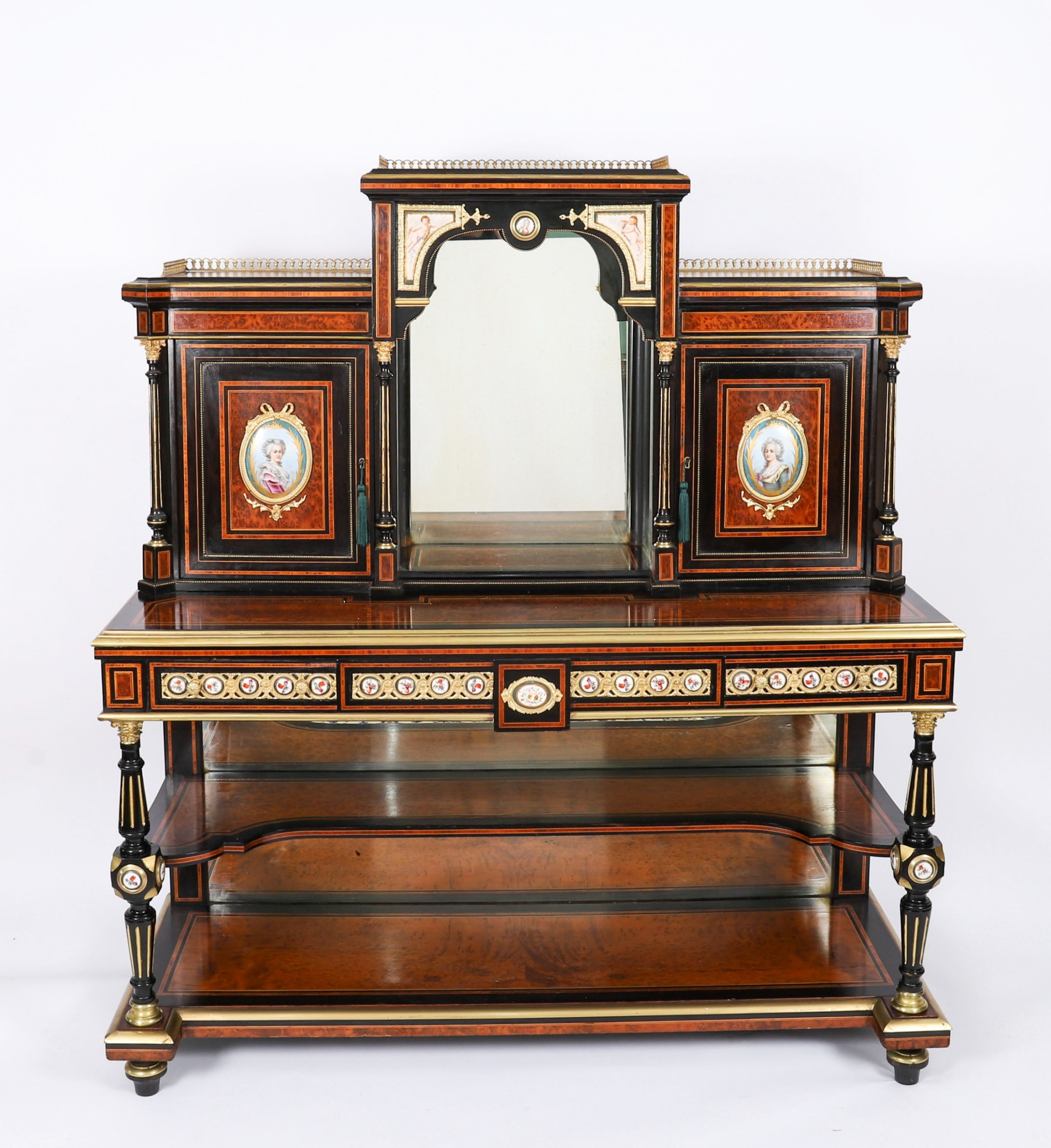
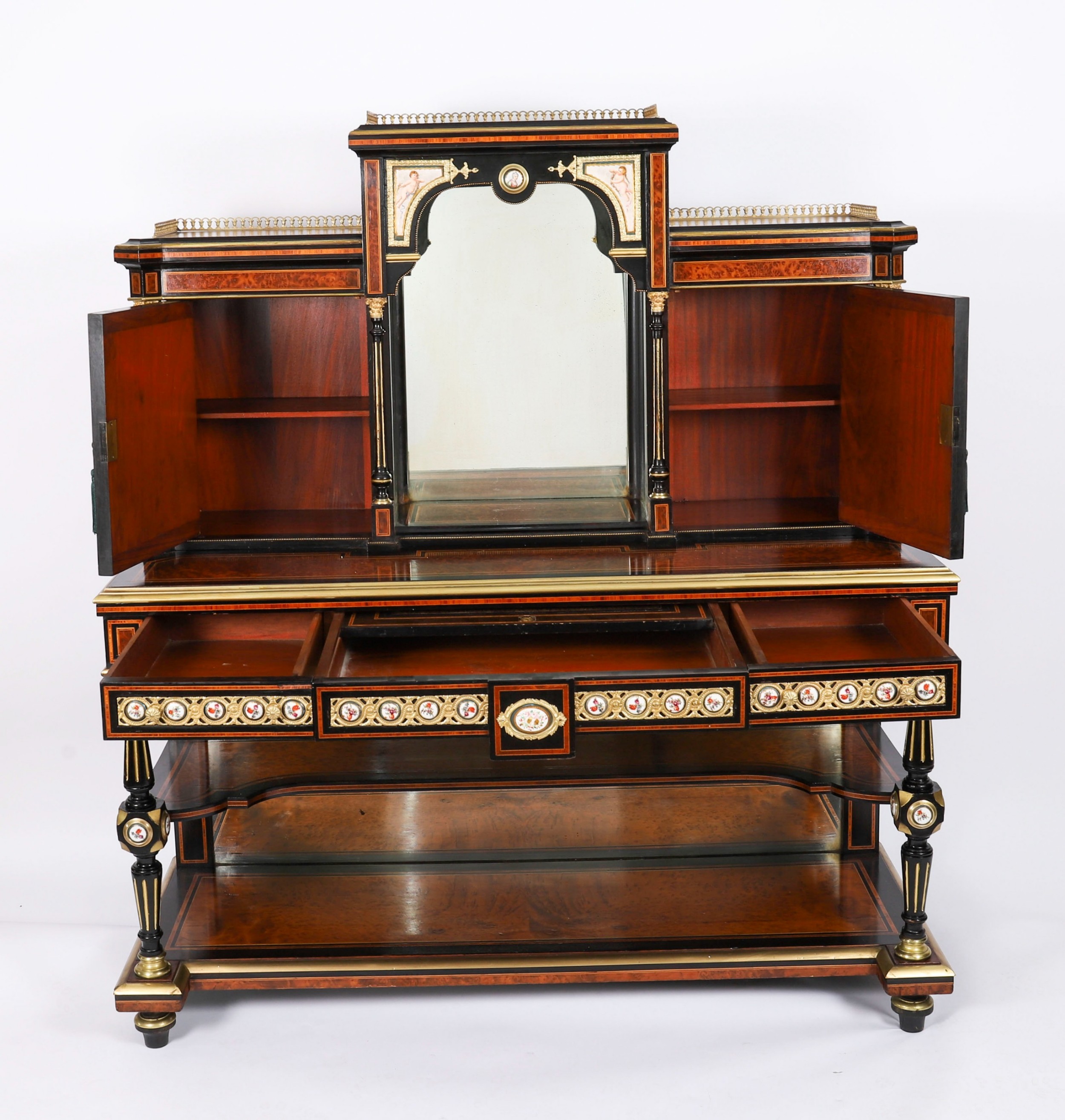
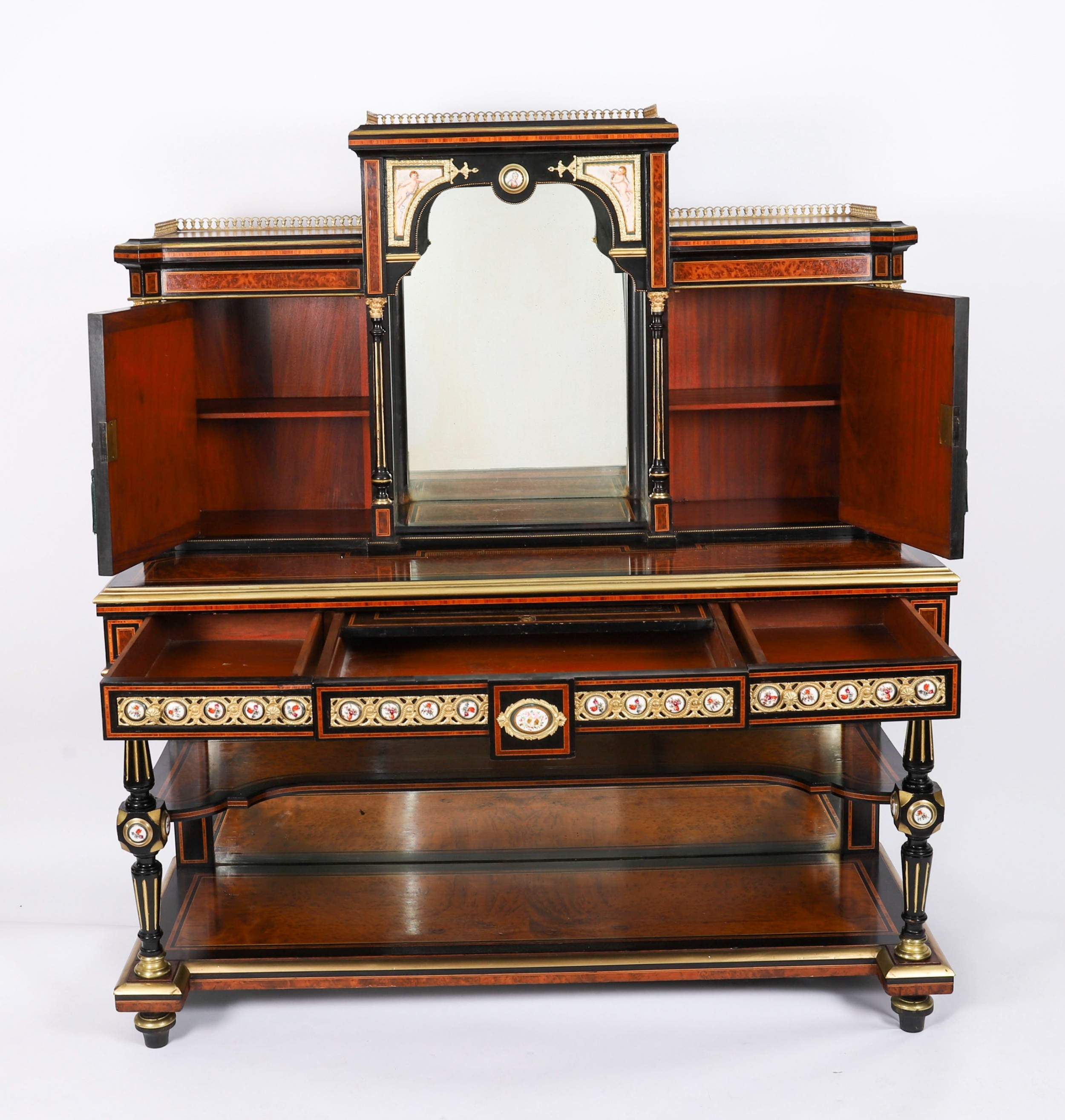
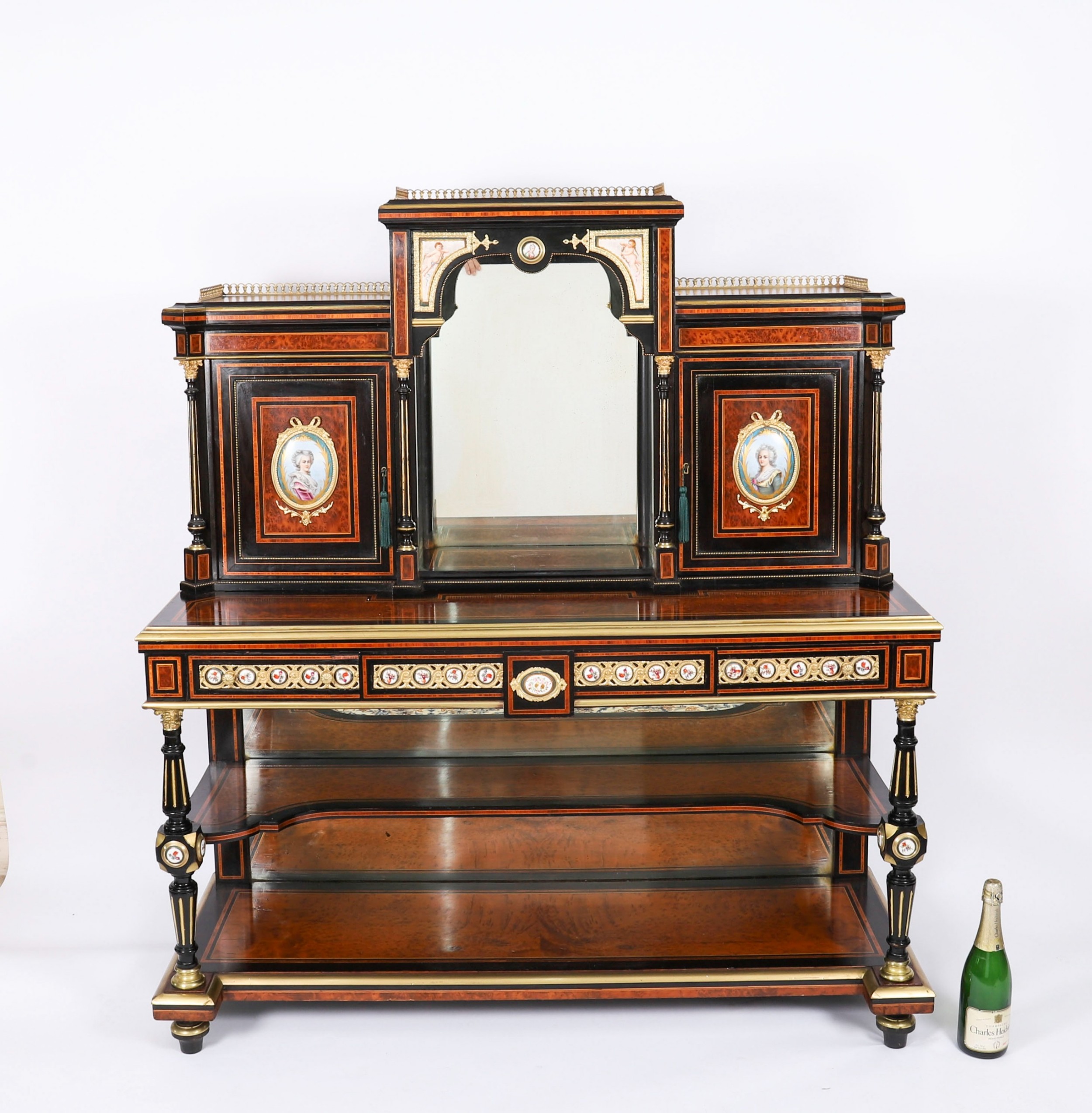
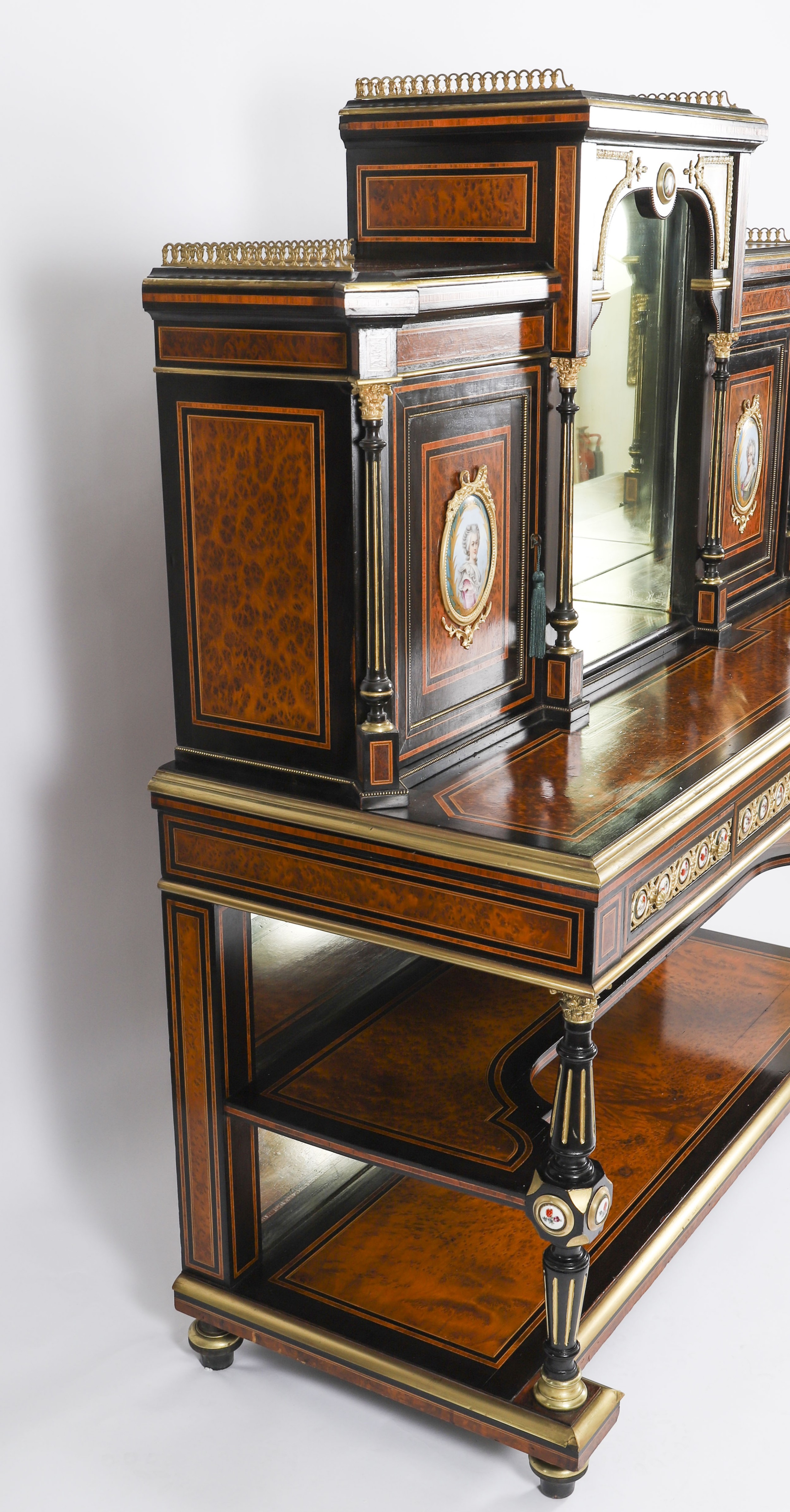
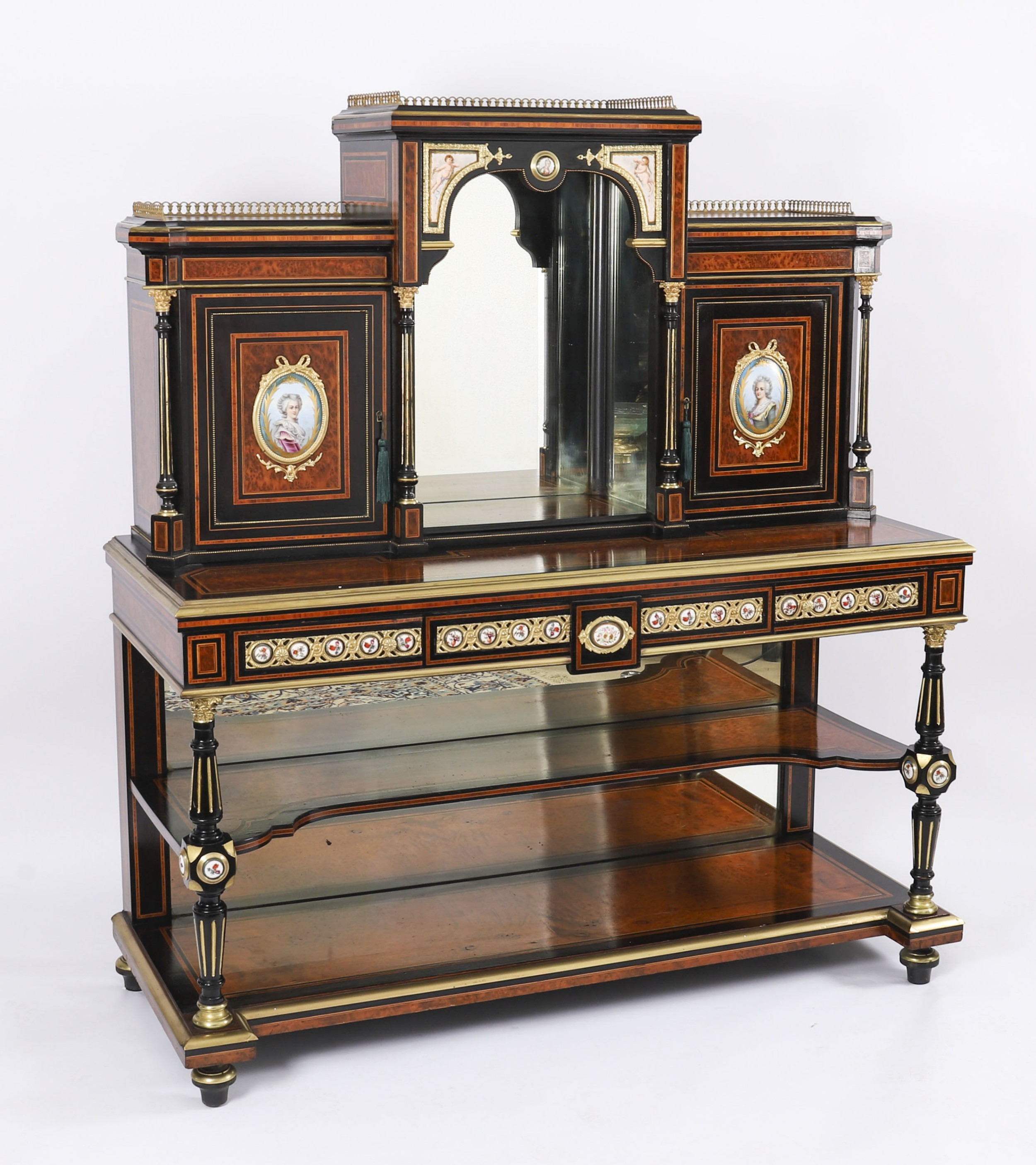
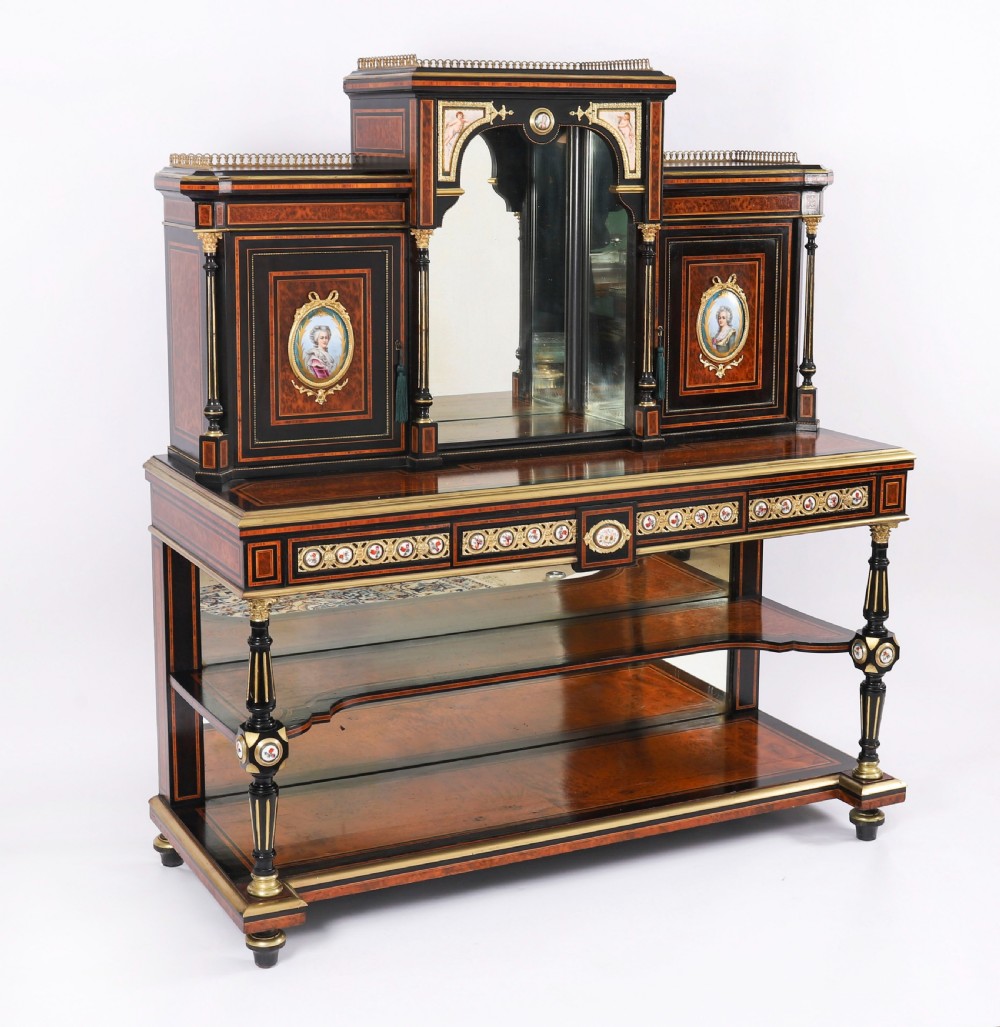
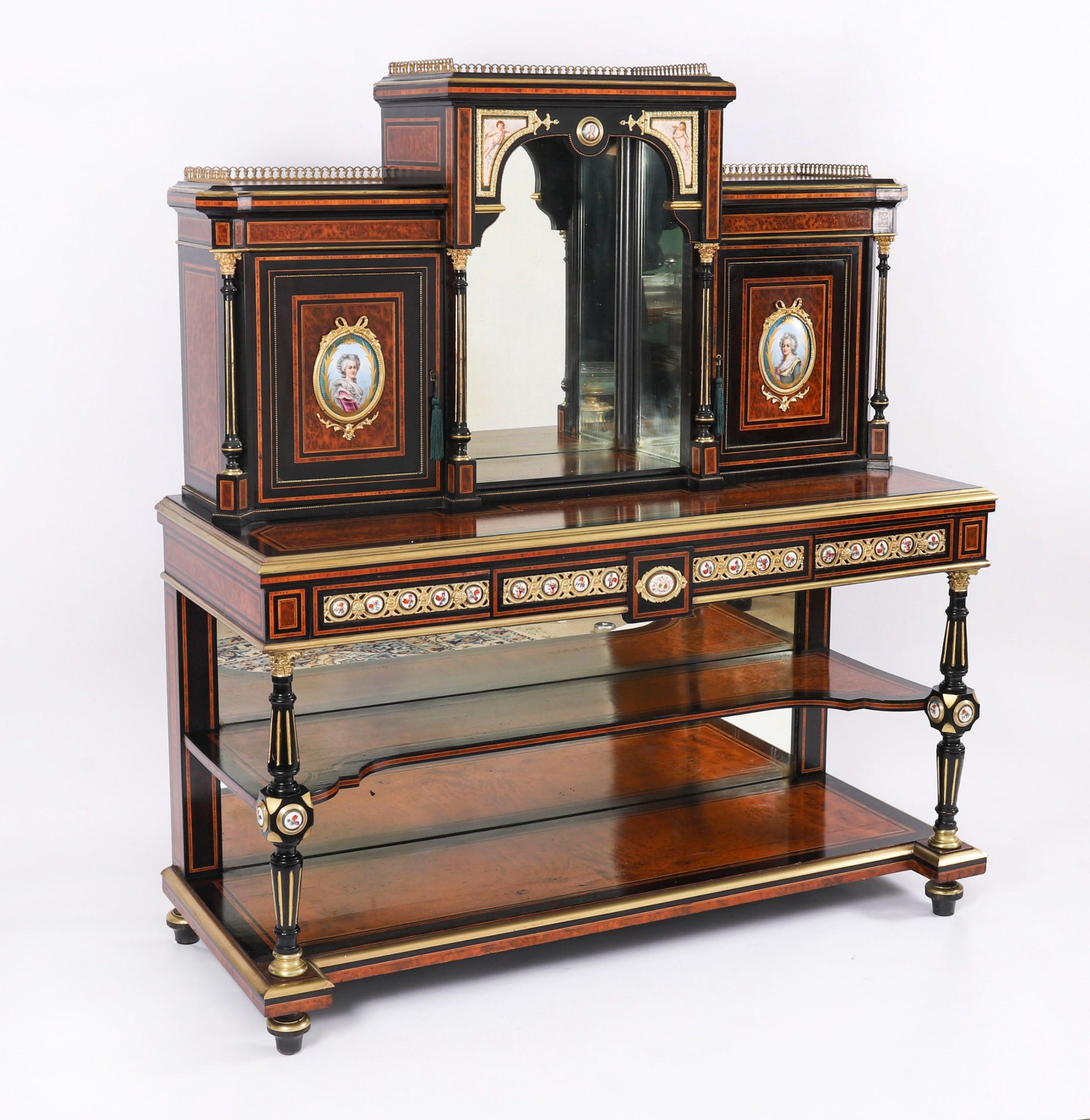
Regent Antiques has dated this Victorian Amboyna Bonheur Du Jour to the 1860s.
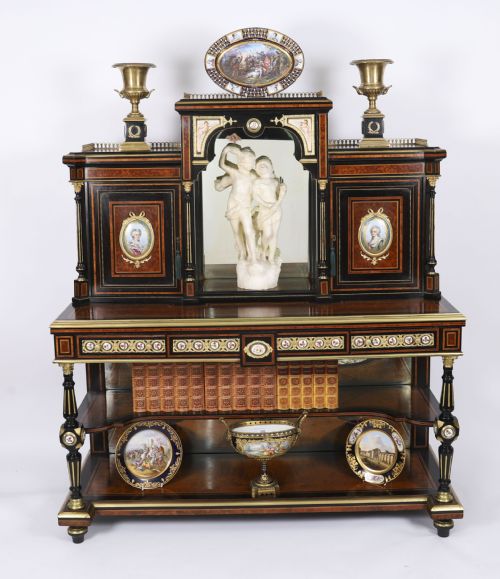
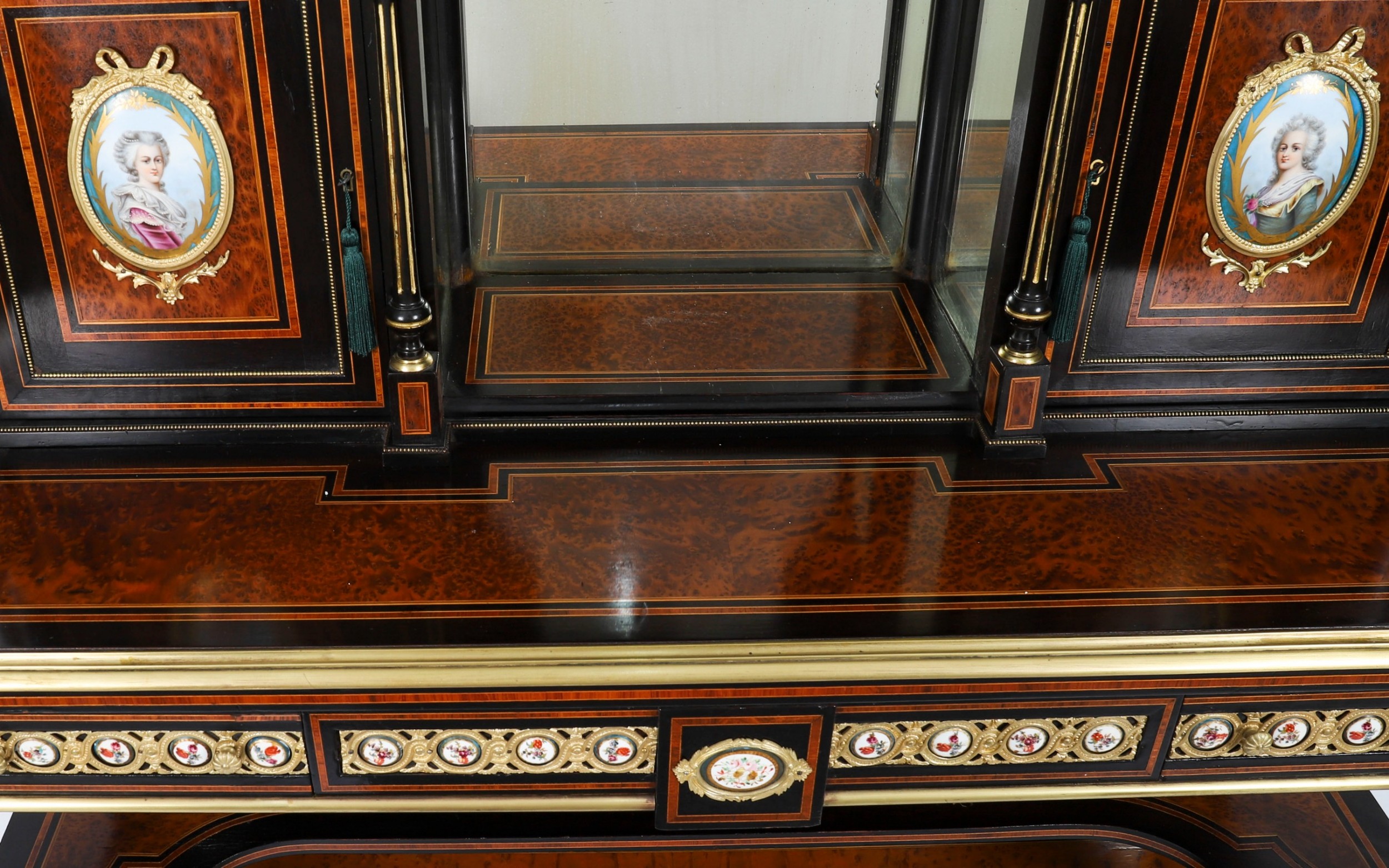
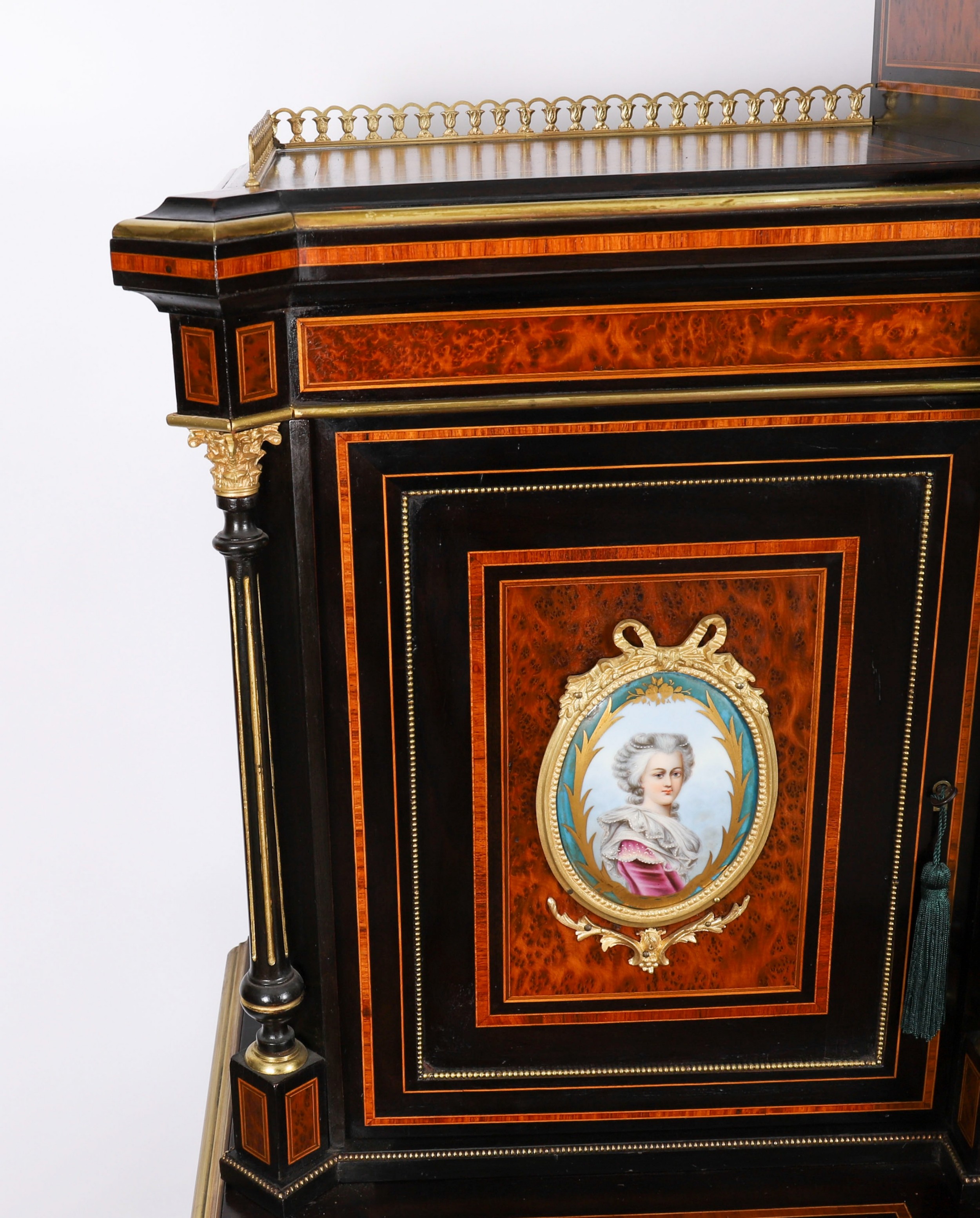
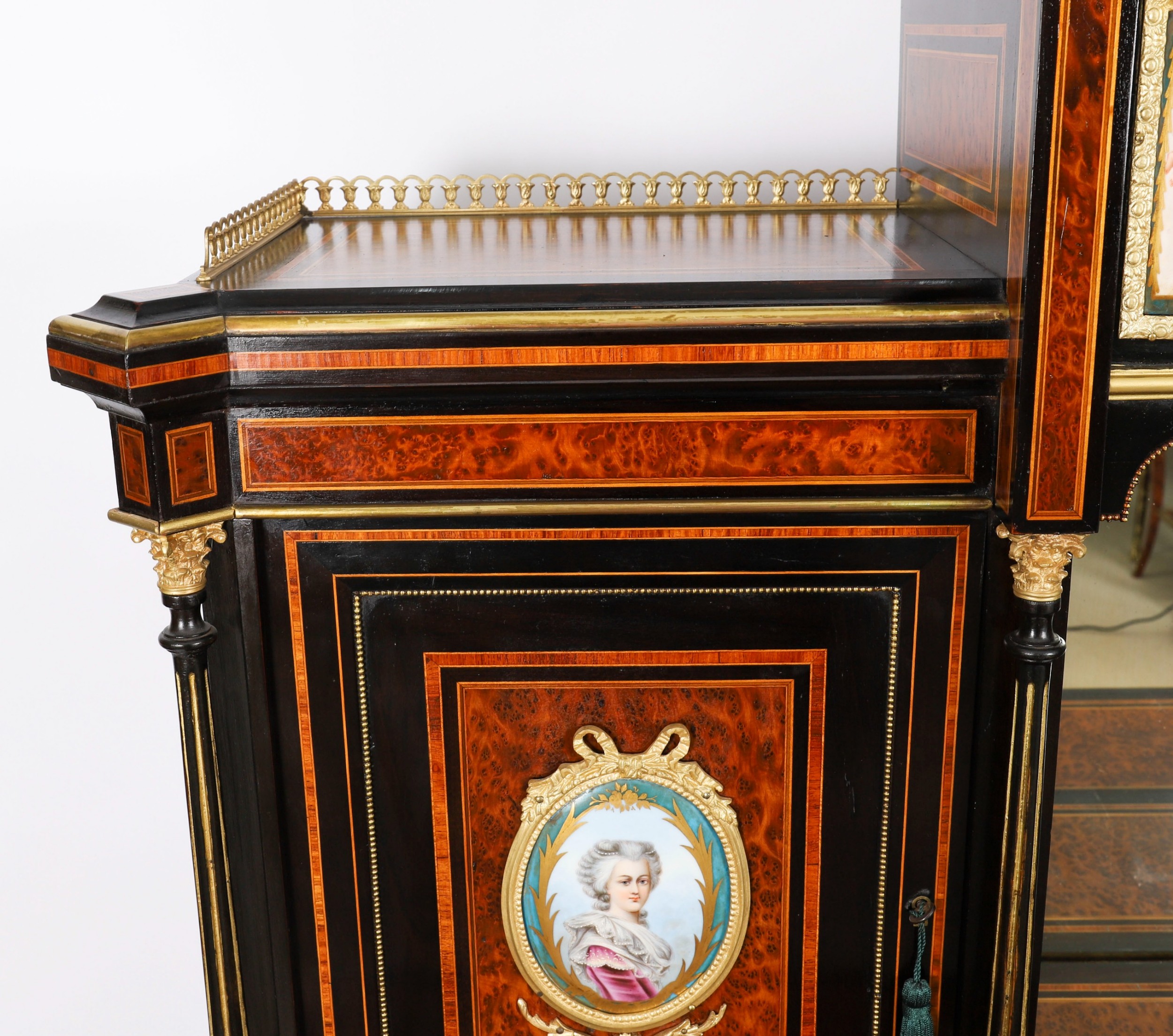
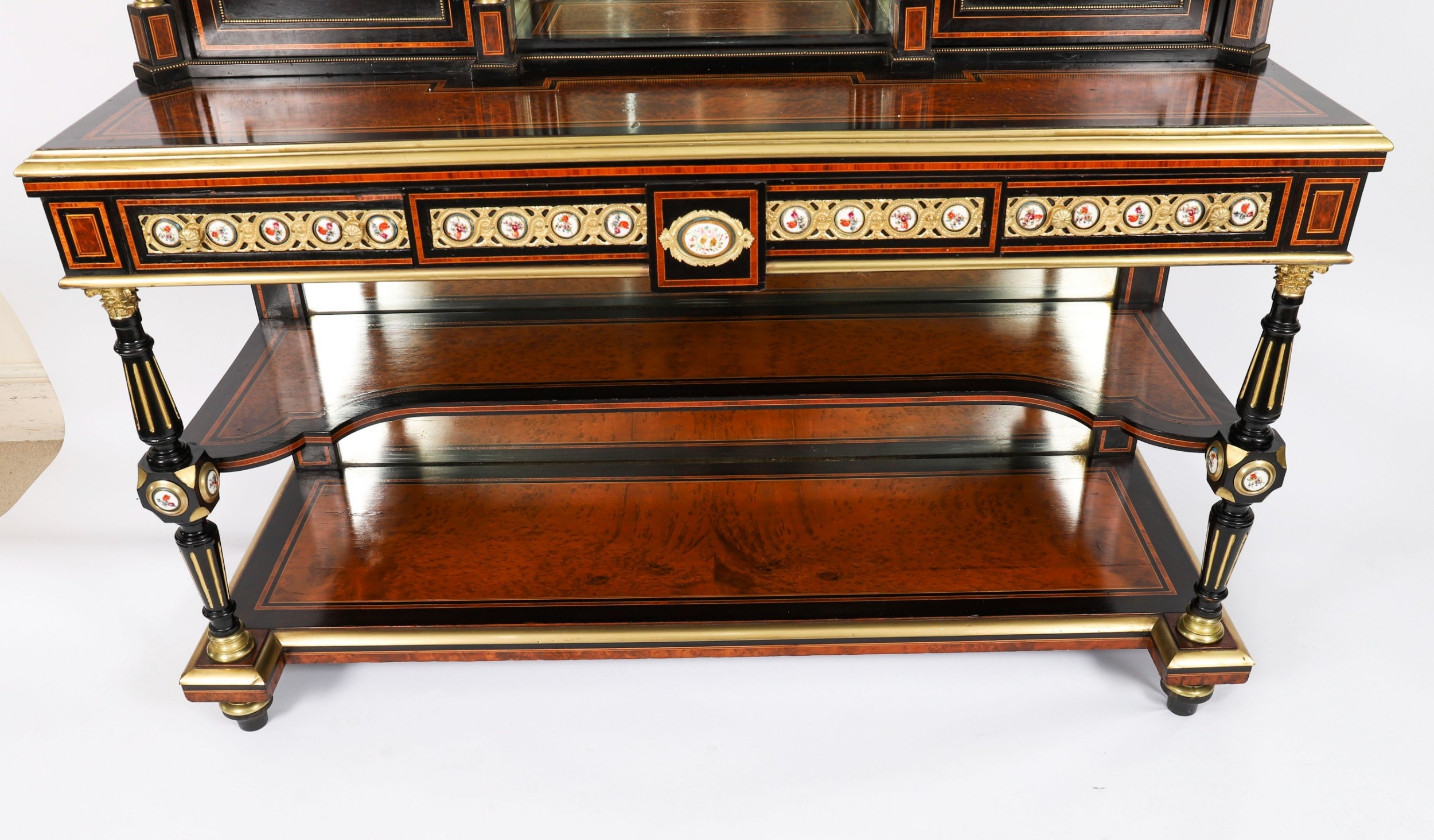
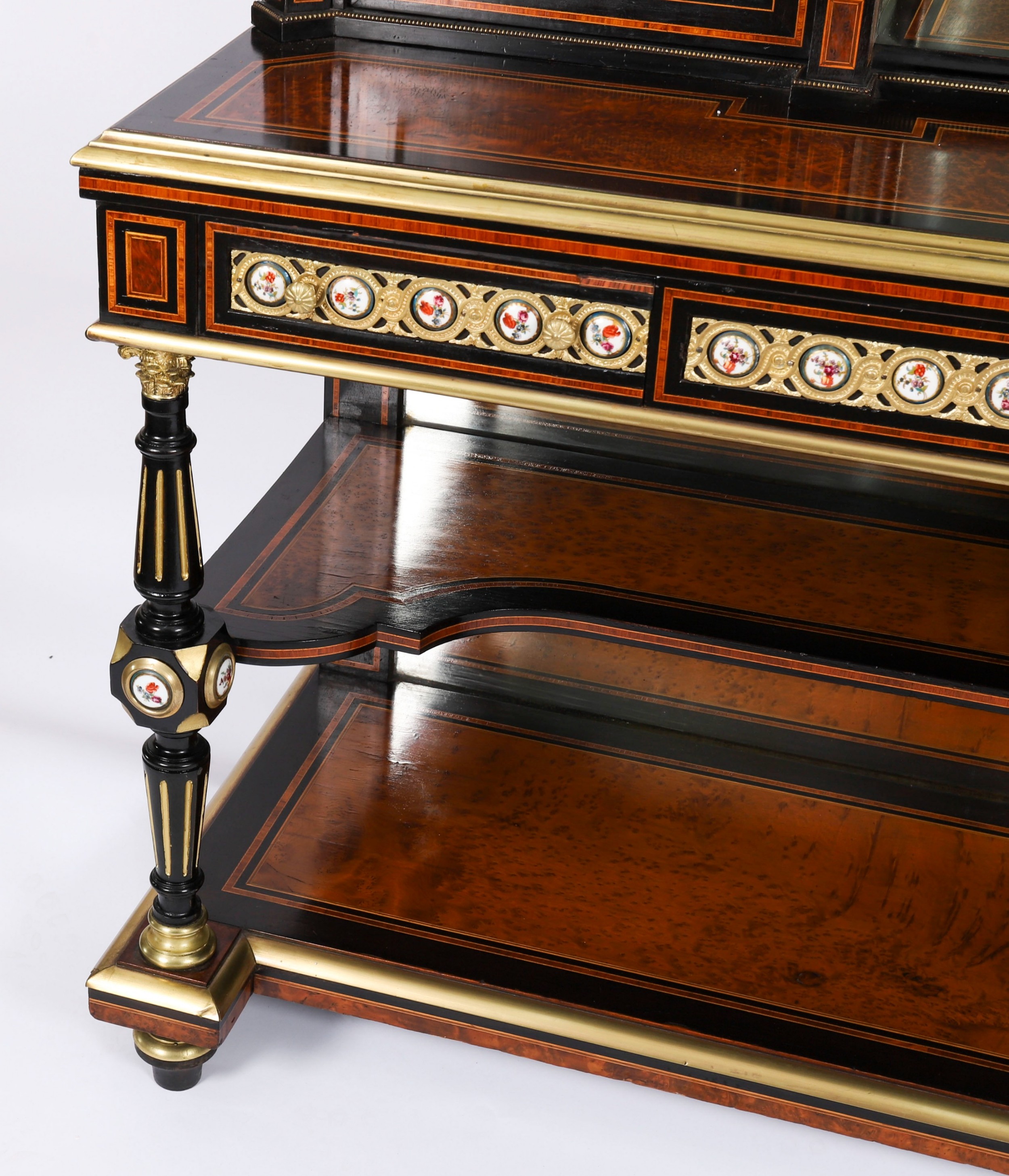
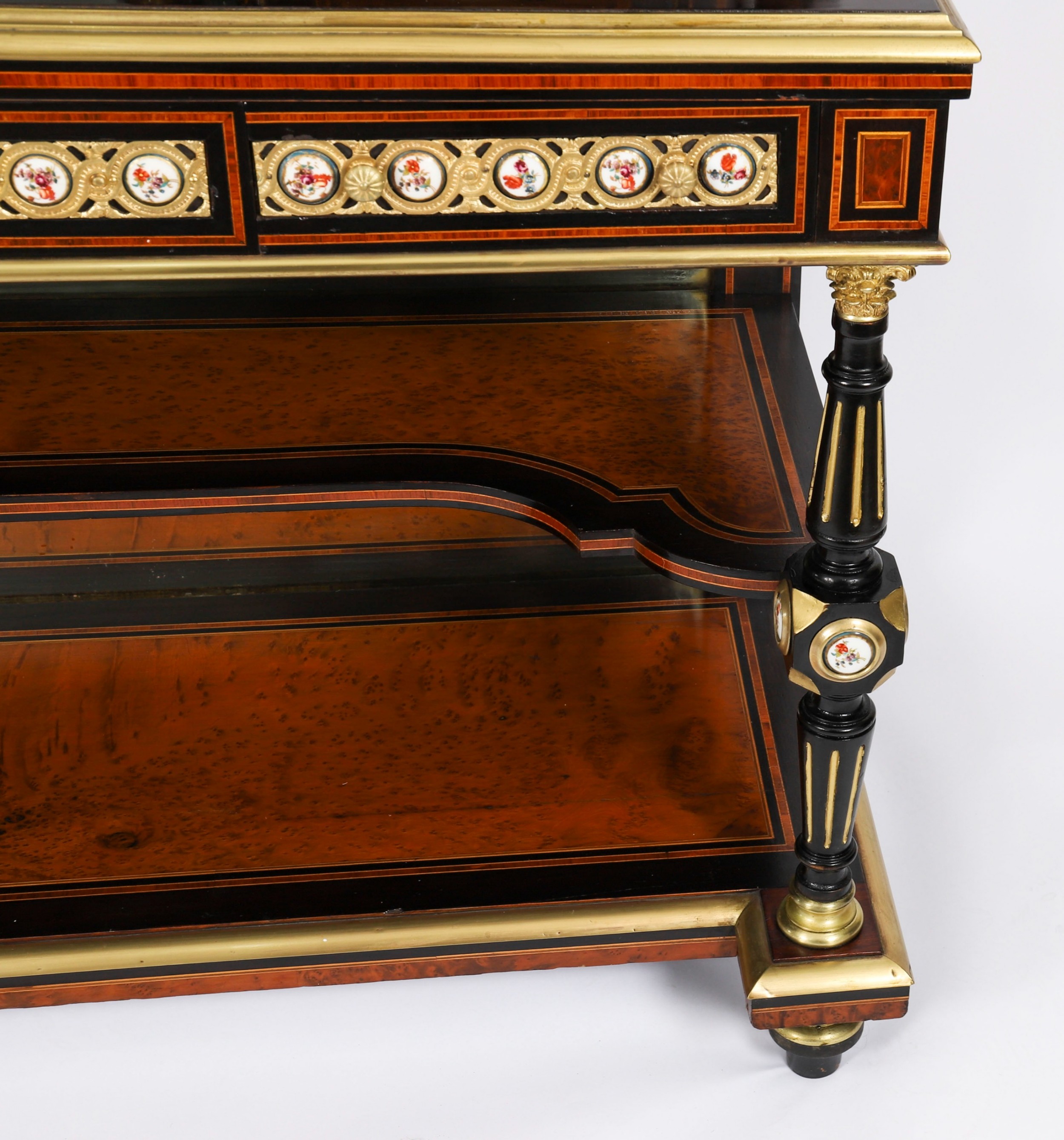
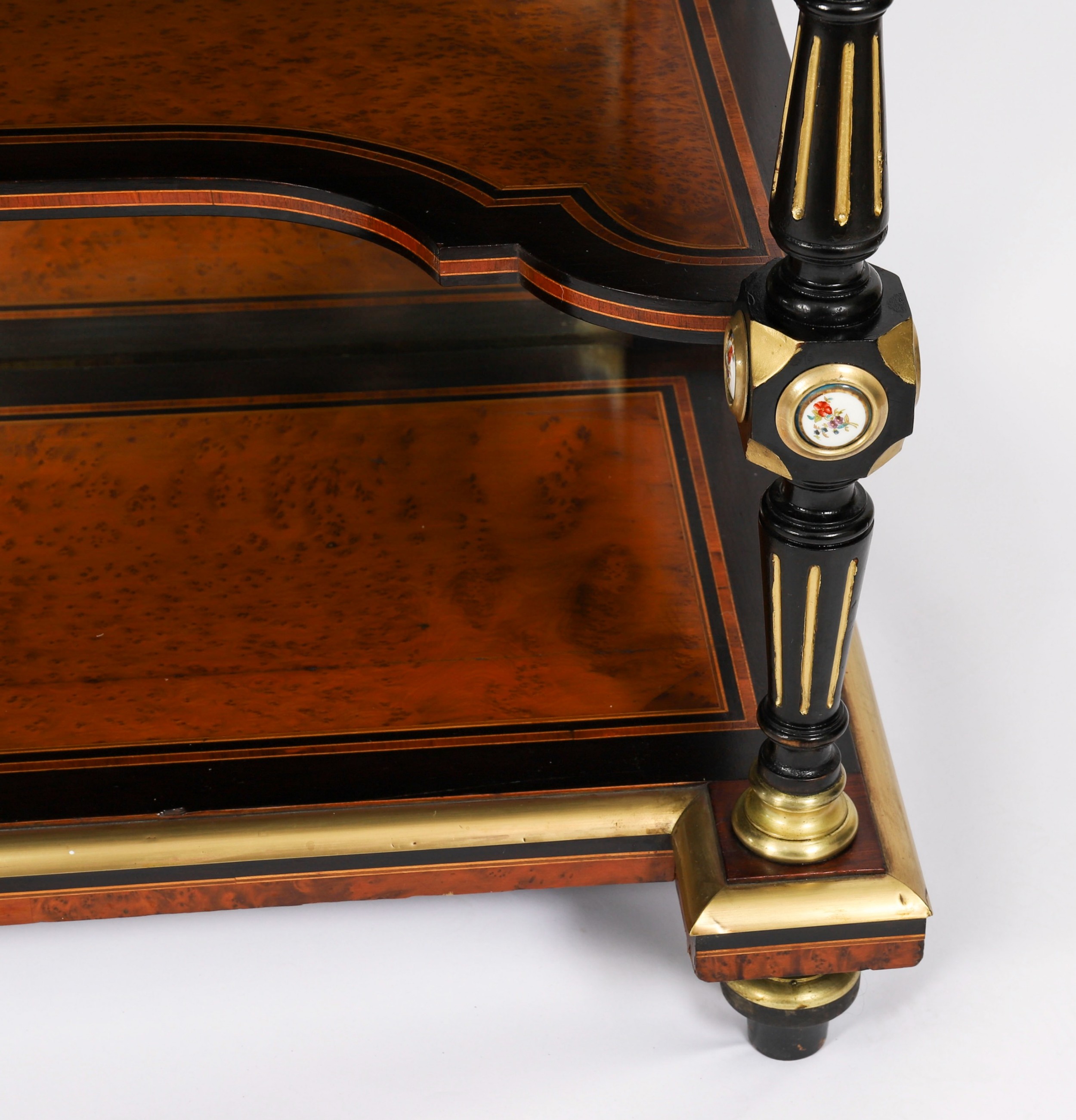
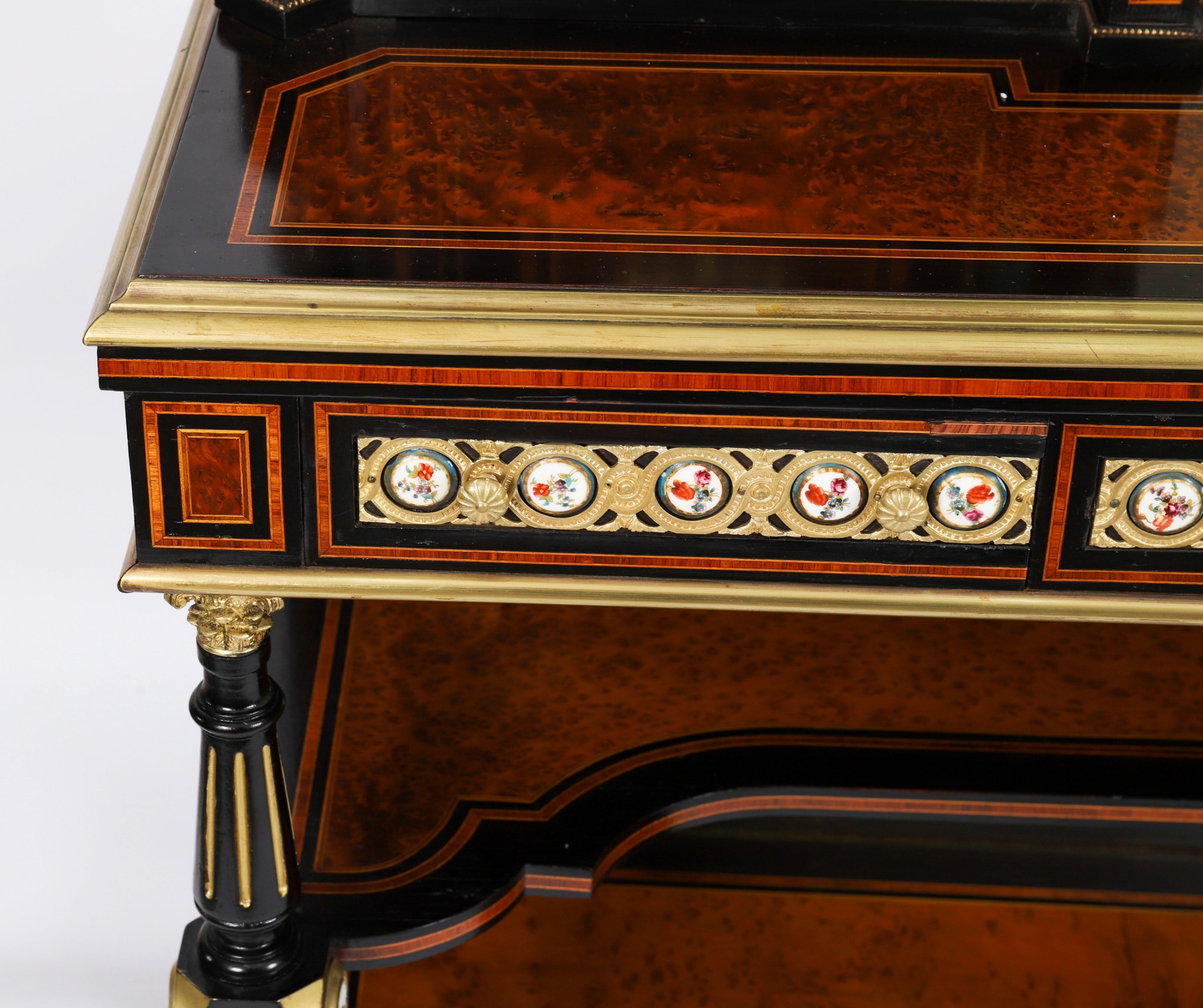
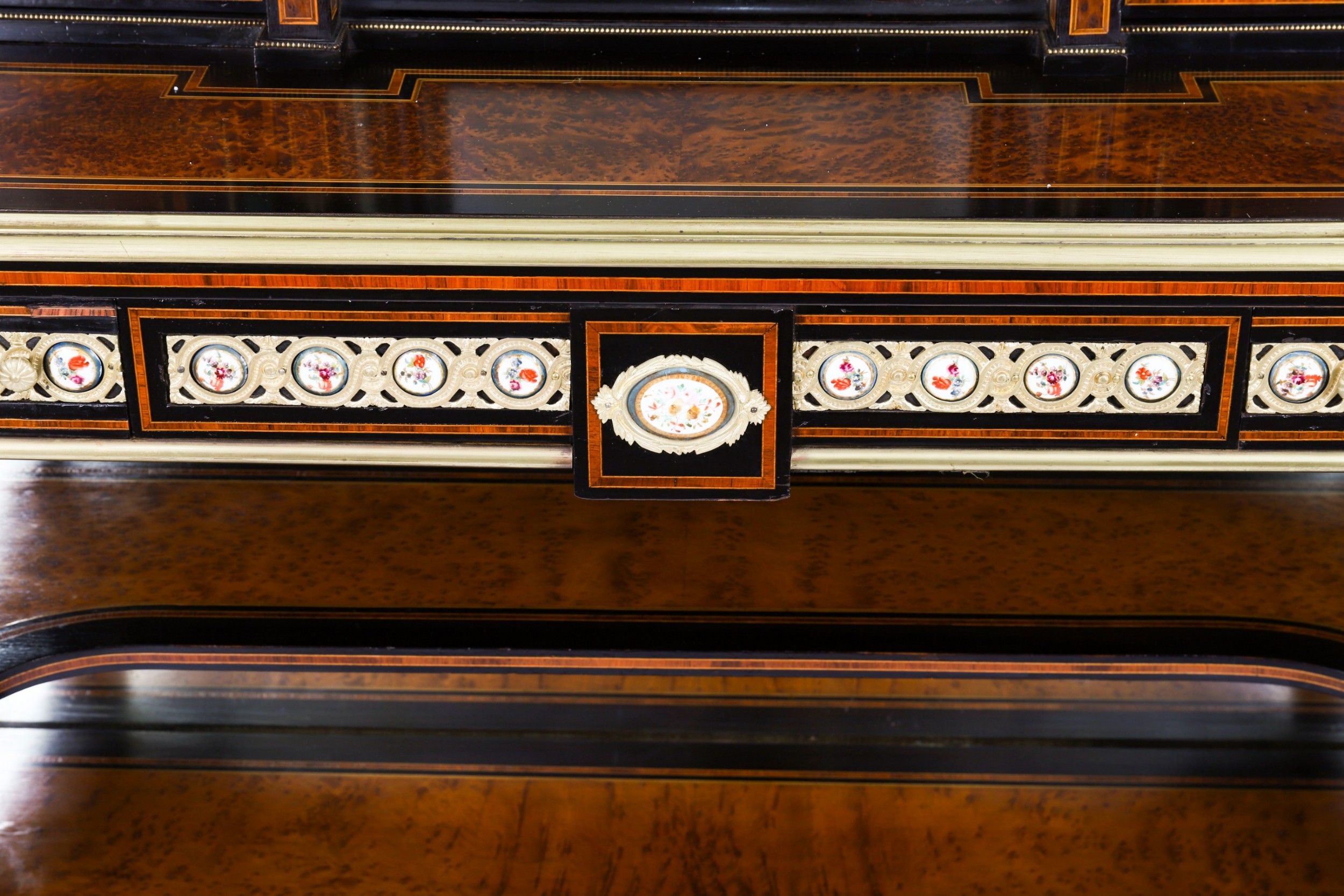
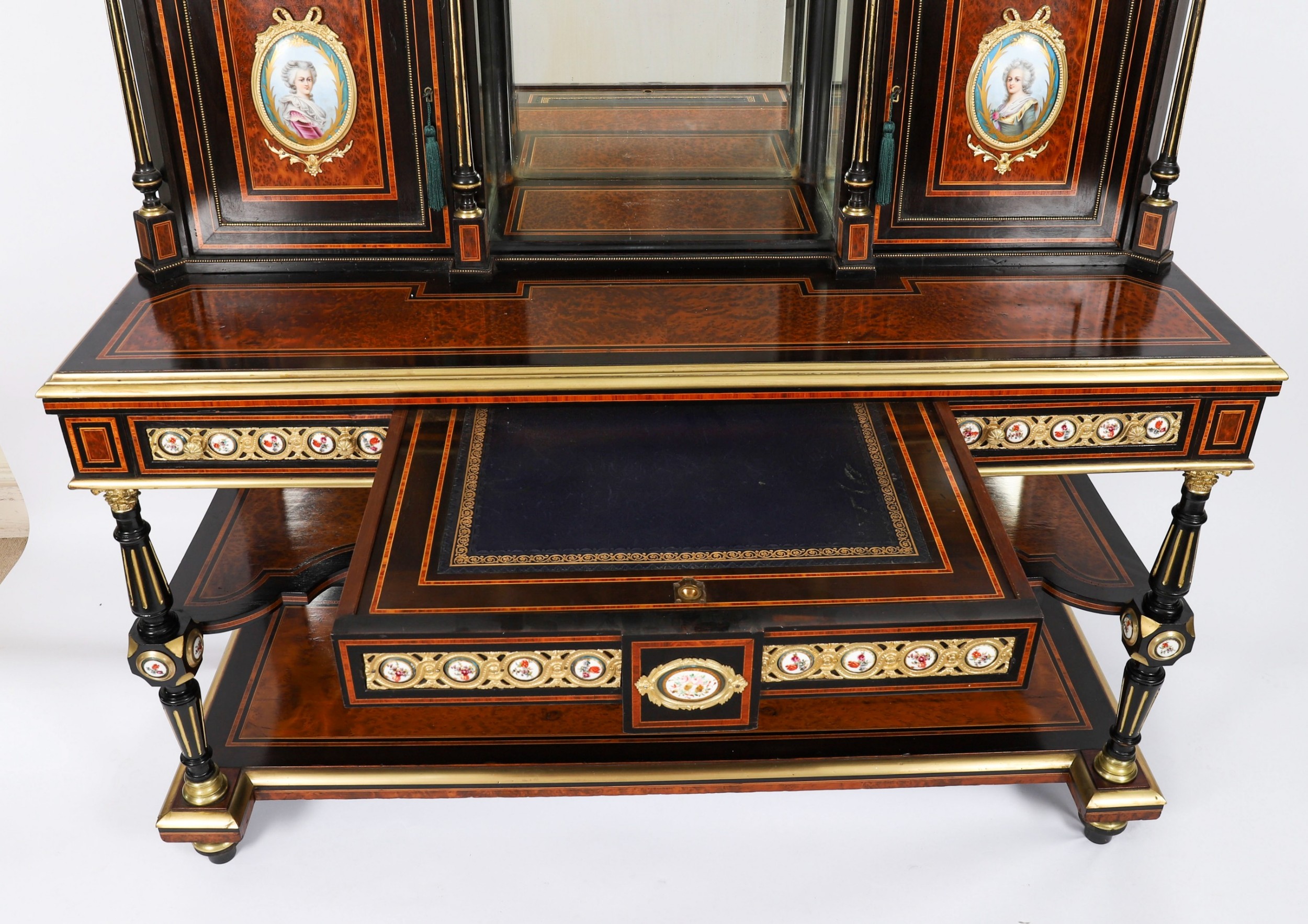
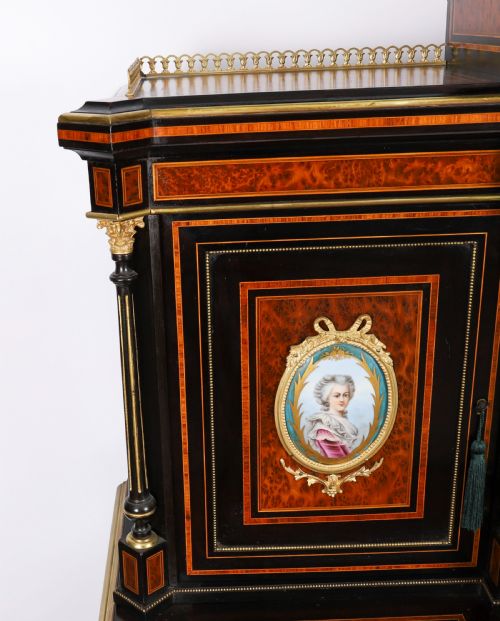
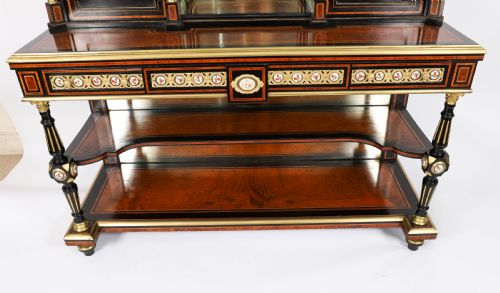
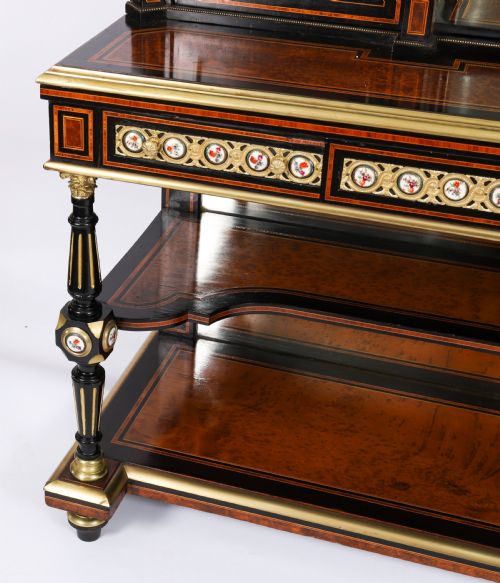
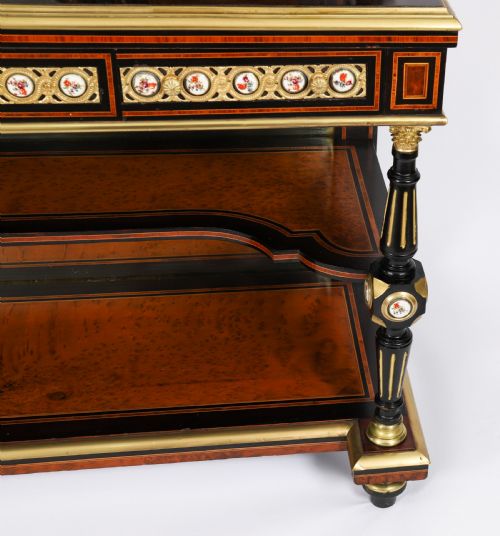
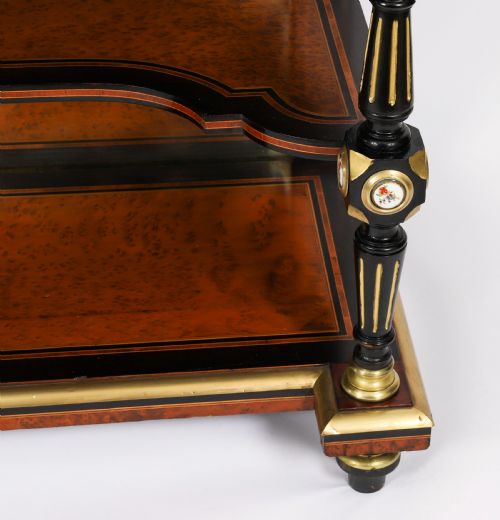
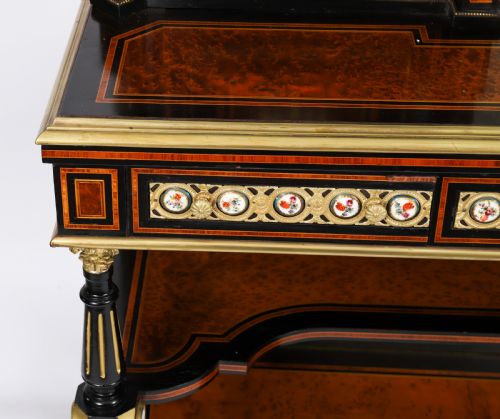
Surmounted by decorative pierced brass galleries, it is made from amboyna and rare thuya wood, the whole decorated throughout with hand painted Sevres porcelain plaques depicting Madam Dubarry and Madam De Montesson, and floral sprays, with exquisite ormolu mounts and king wood crossbanding , it is an example of superb quality and design.
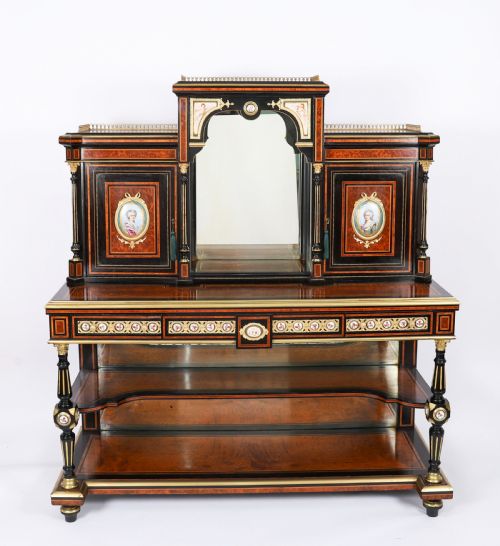
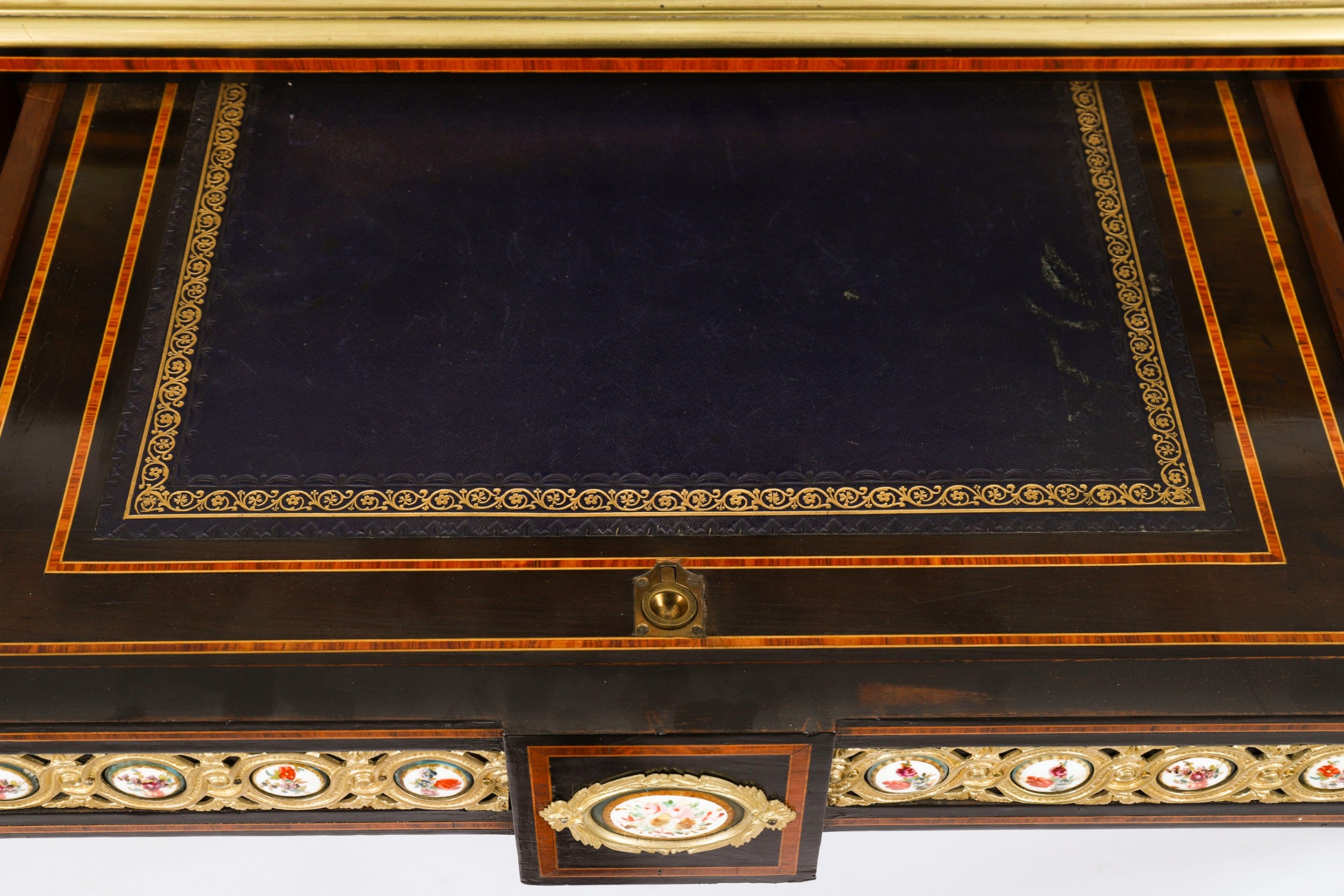
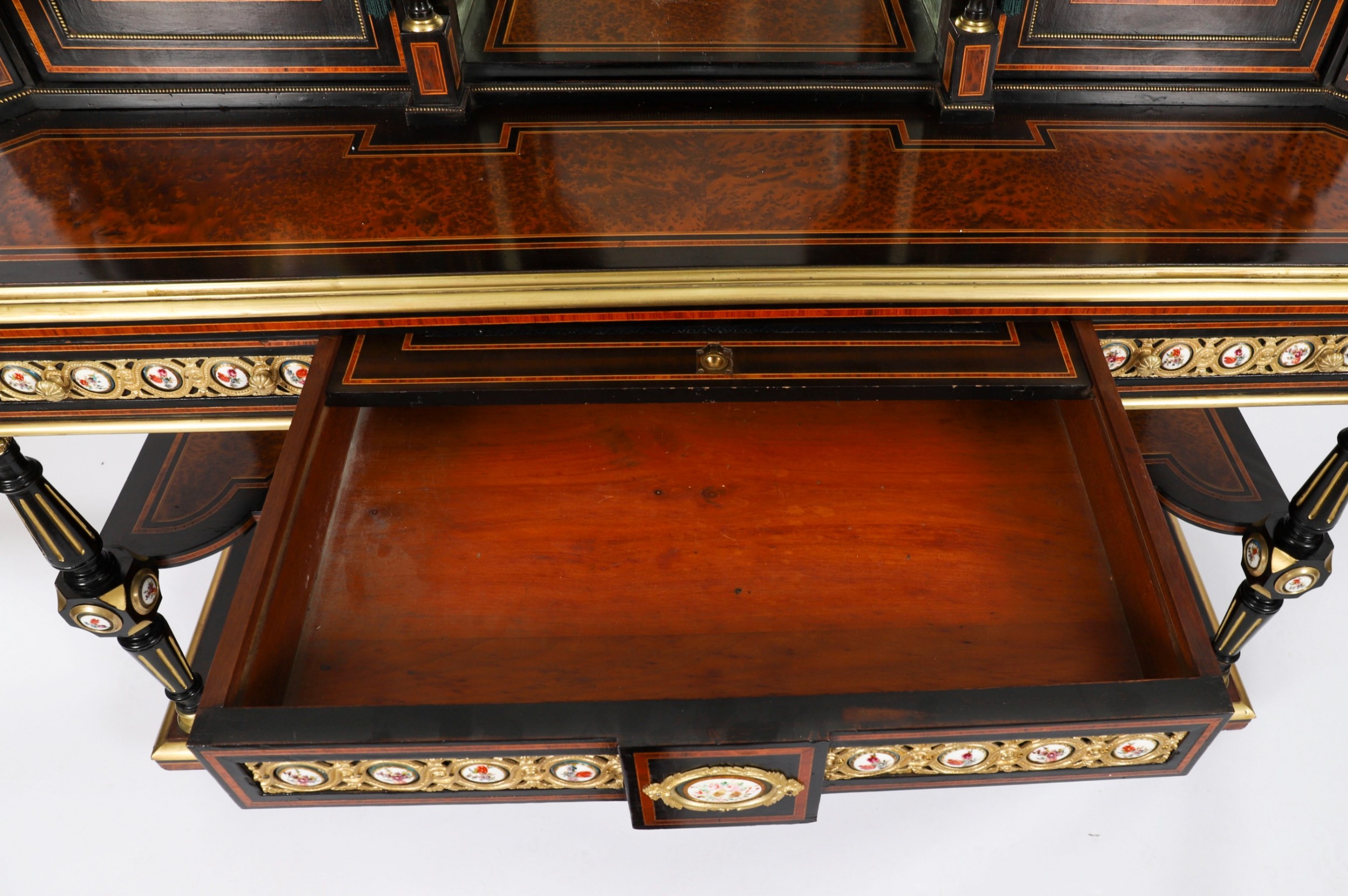
This desk has a large central drawer which is also has a pull out slide that is fitted with an inset gold tooled burgundy leather writing surface. It is flanked by two further drawers, over a mirror backed two shelf undertier and raised on elegant turned feet.
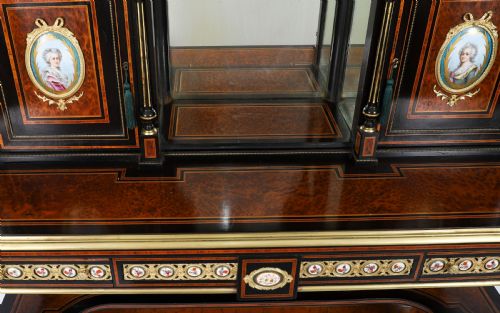
The gorgeous grain and colour of the amboyna and the thuya, the multitude of hand painted Sevres porcelain plaques ensures that this cabinet will get noticed wherever it is placed.
The interior of the central drawer bears an enamel plaque inscribed
“Manufactured by Druce & Co, 68,69 & 58 Baker Street, Portman Square"
Druce & Co were a London-based cabinet makers and sellers of high-quality furniture in Baker Street. They were established in the 1840s and in the Marylebone Trade Directory of 1853 listed themselves as ‘Furnishers, Upholsterers and Upholders for clients of discernment.’
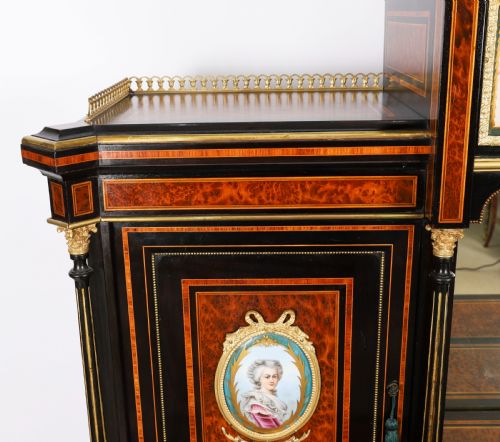
An almost identical piece is illustrated in 19th Century European Furniture by Christopher Payne, page 313
Condition:
In really excellent condition having been beautifully cleaned, polished and waxed in our workshops, please see photos for confirmation.
Dimensions in cm:
Height 145 cm x Width 132 cm x Depth 53 cm
Height 64 cm - Kneehole
Dimensions in inches:
Height 4 foot, 9 inches x Width 4 foot, 4 inches x Depth 1 foot, 9 inches
Height 2 feet, 1 inch - Kneehole
The Grand Tour was the traditional trip of Europe undertaken by mainly upper-class European young men of means. The custom flourished from about 1660 until the advent of large-scale rail transit in the 1840s, and was associated with a standard itinerary.
It served as an educational rite of passage. Though primarily associated with the British nobility and wealthy landed gentry, similar trips were made by wealthy young men of Protestant Northern European nations on the Continent, and from the second half of the 18th century, some South American, U.S., and other overseas youth joined in. The tradition was extended to include more of the middle class after rail and steamship travel made the journey less of a burden.
The primary value of the Grand Tour, it was believed, lay in the exposure both to the cultural legacy of classical antiquity and the Renaissance, and to the aristocratic and fashionably polite society of the European continent. In addition, it provided the only opportunity to view specific works of art, and possibly the only chance to hear certain music. A grand tour could last from several months to several years. It was commonly undertaken in the company of a knowledgeable guide or tutor.
The Grand Tour not only provided a liberal education but also allowed those who could afford it the opportunity to buy things otherwise unavailable at home, and it thus increased participants' prestige and standing. Grand Tourists would return with crates of art, books, pictures, sculpture, and items of culture, which would be displayed in libraries, cabinets, gardens, and drawing rooms, as well as the galleries built purposely for their display. The Grand Tour became a symbol of wealth and freedom.
A bonheur du jour (in French, bonheur-du-jour, meaning "daytime delight") is a type of lady's writing desk. It was in
Regent Antiques has dated this Victorian Amboyna Bonheur Du Jour to the 1860s.
We specialise in english and continental furniture, silver, porcelain and decorative items.
You can view the stock and full dealer information on the Regent Antiques Profile Page
Regent Antiques is a registered member of LAPADA CINOA
Antique Victorian Amboyna Inlaid Bonheur Du Jour C1860 19th C