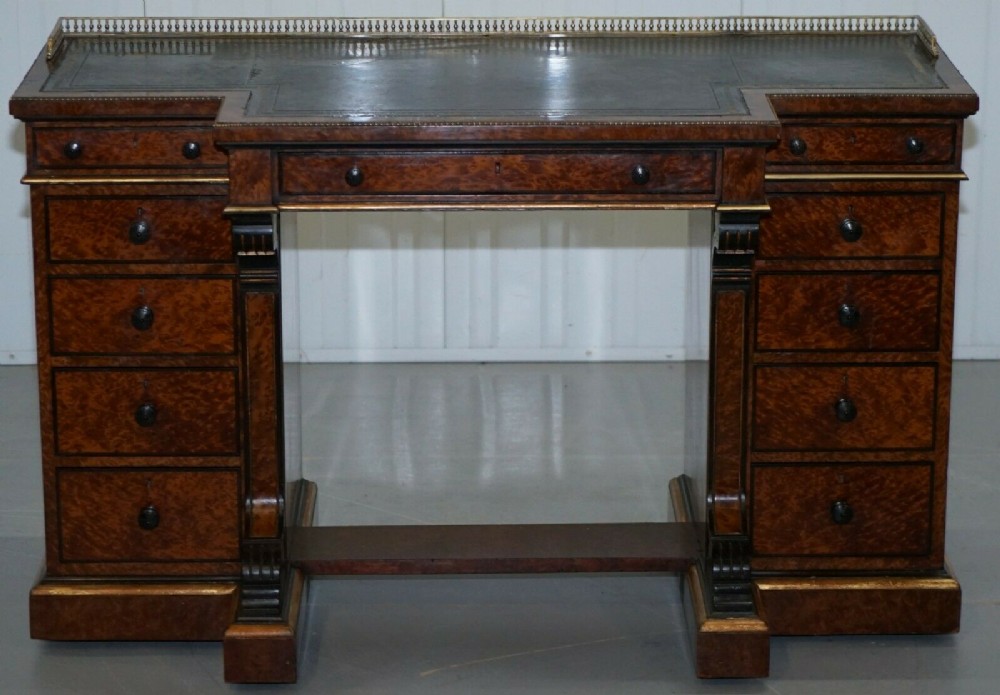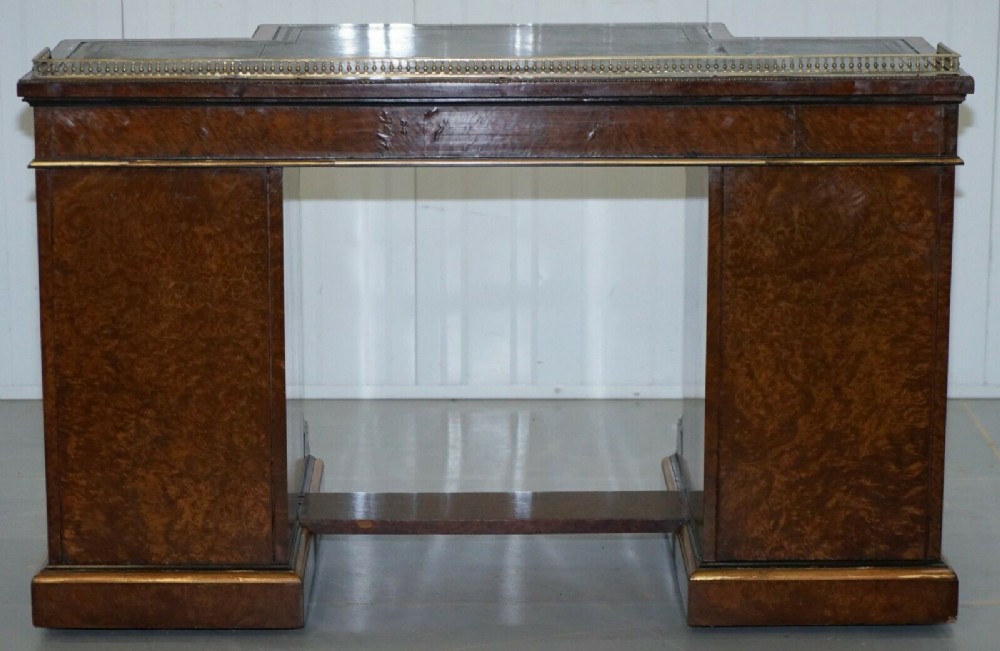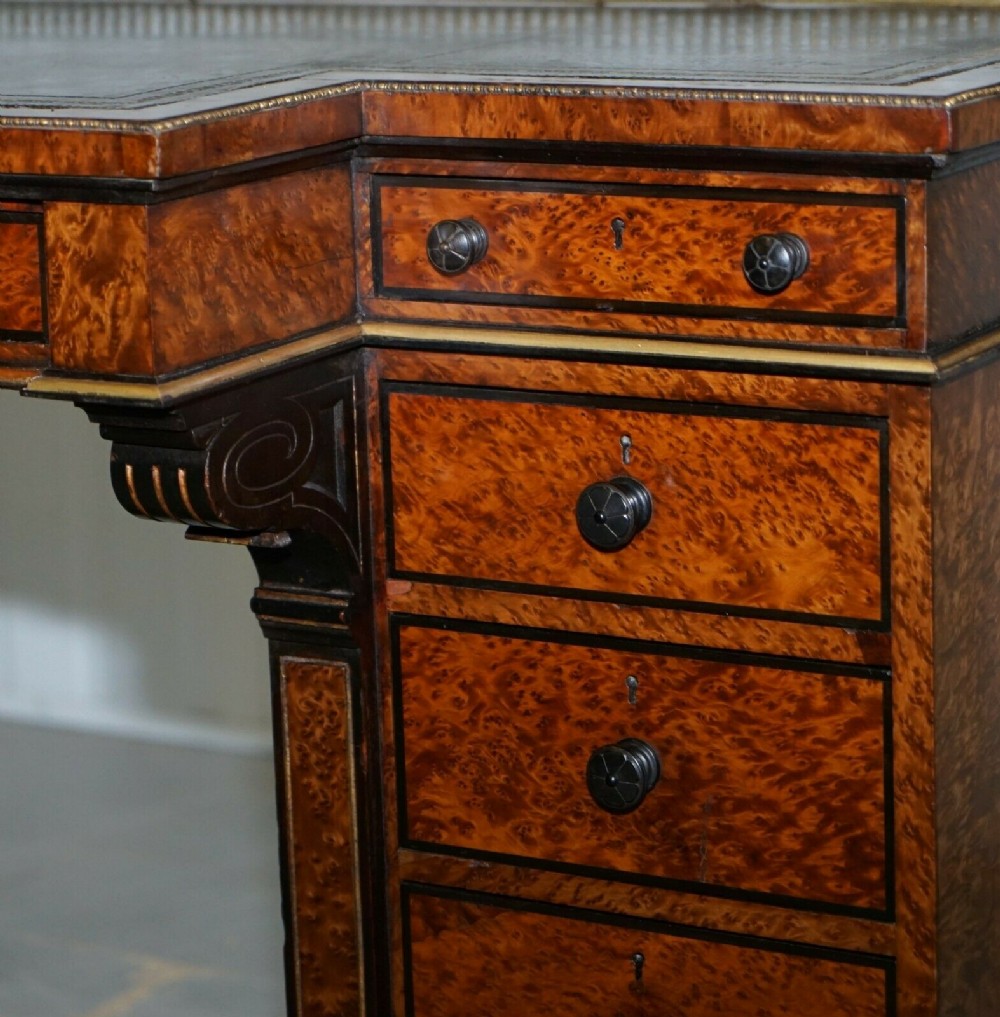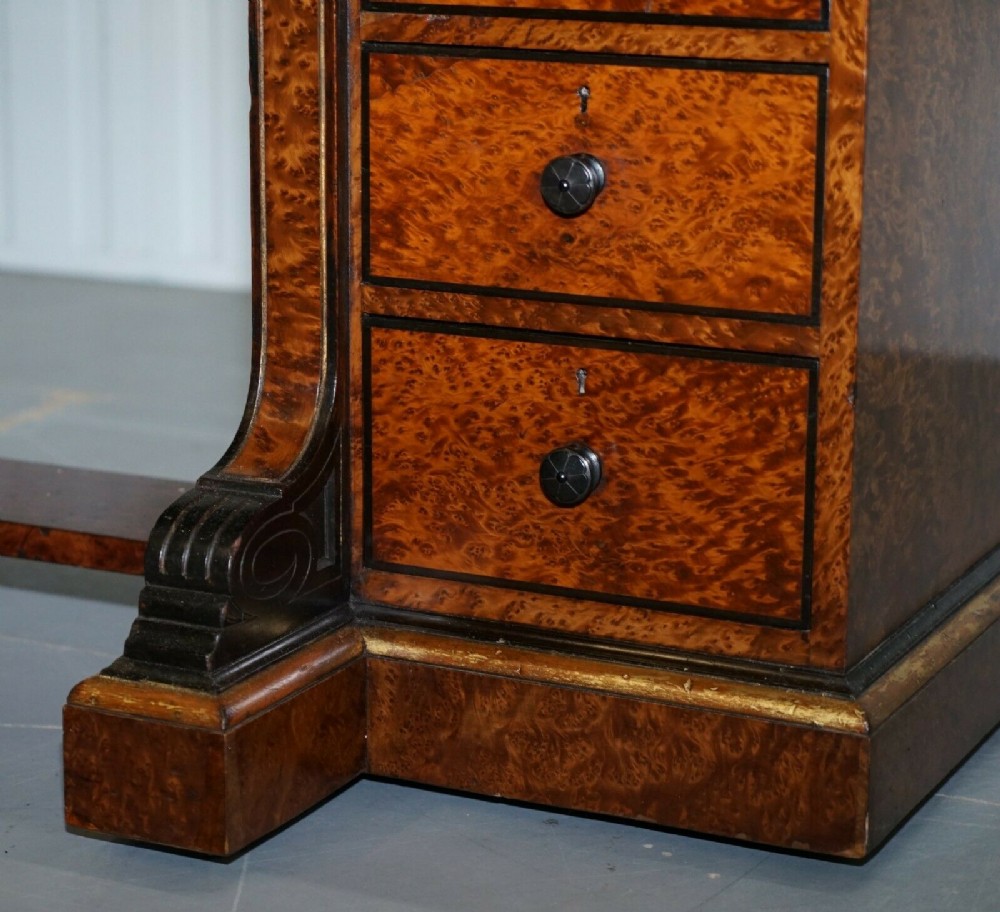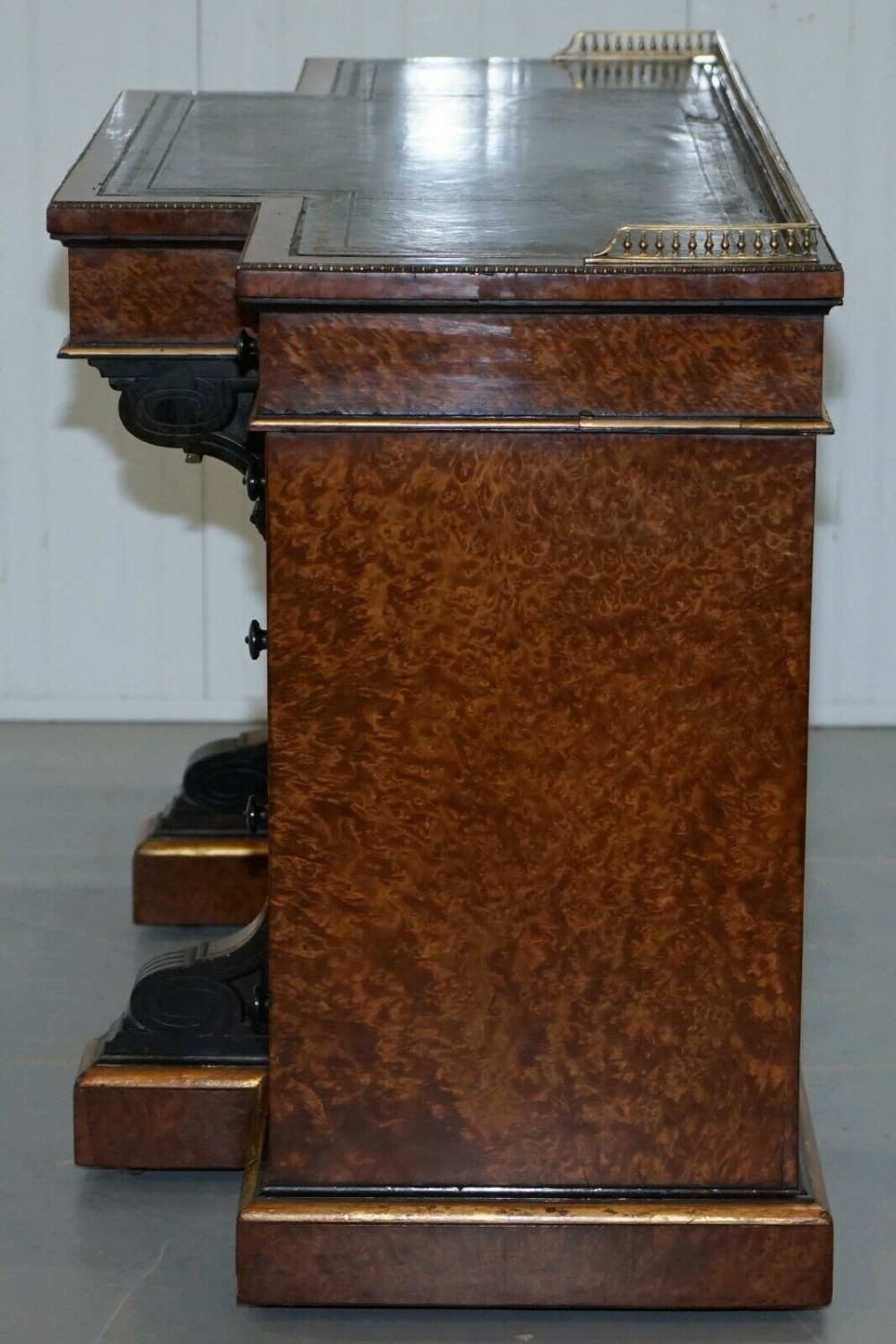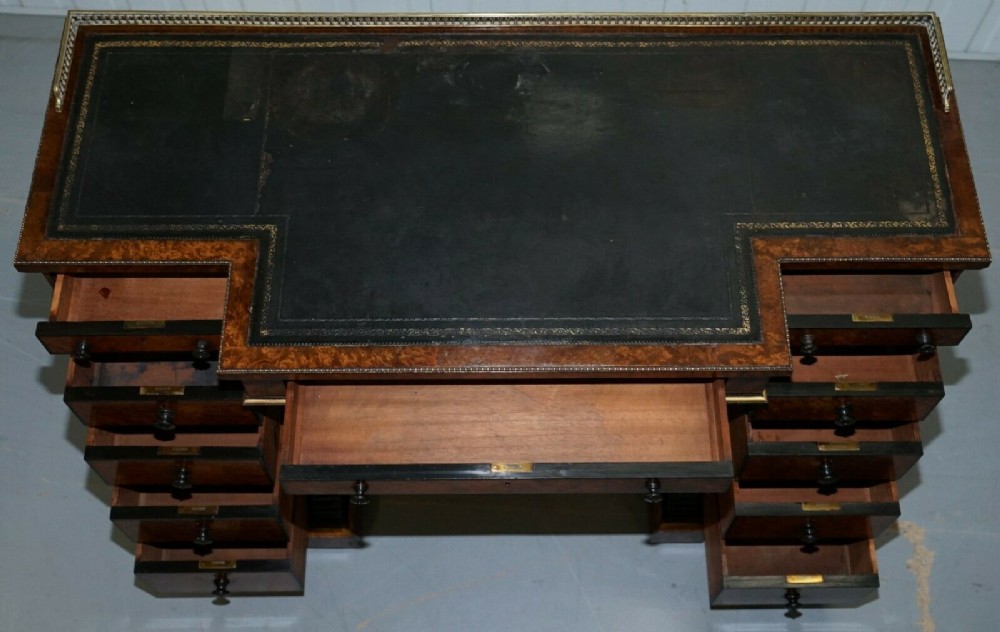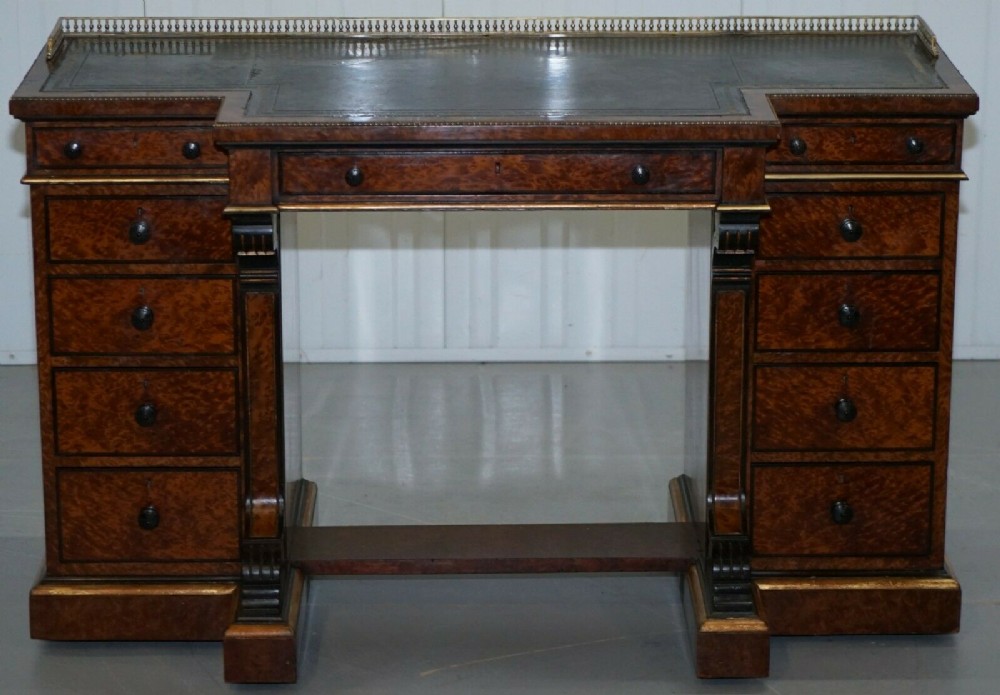
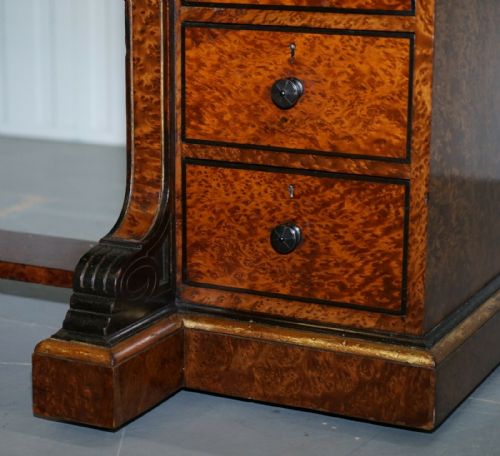
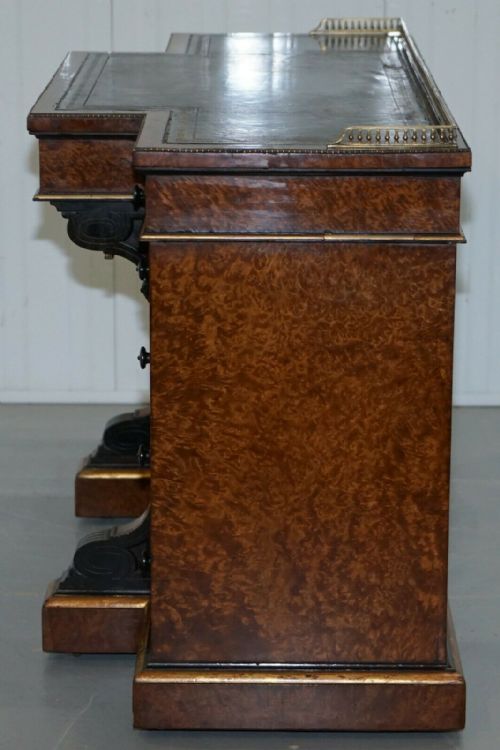
Royal House Antiques has dated this Burr Amboyna Pedestal Desk to the Victorian era.
Please note the delivery fee listed is just a guide, it covers within the M25 only for the UK and local Europe only for international, if you would like an accurate quote please send me your postcode and I’ll provide you with the exact price.
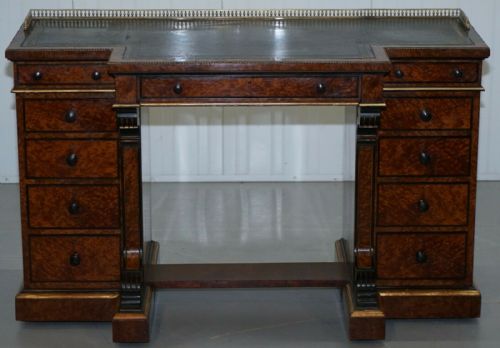
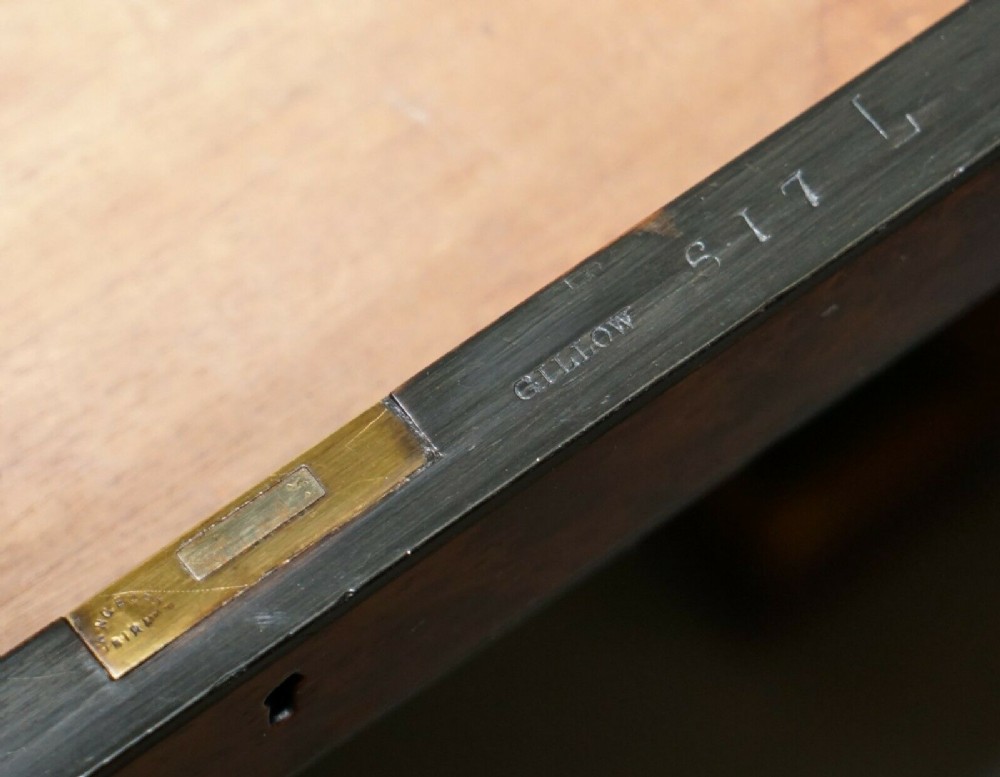
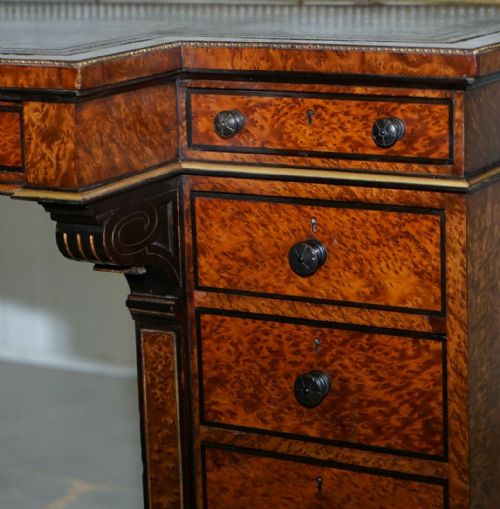
I’ll include a short biography below on Gillows for those who aren’t fine furniture connoisseurs. The desk is fully stamped in the middle drawer Gillow with a serial number 617 L, looking through Volume I, Gillows Lancaster and London 1730-1840 we see on page 95 plate 55 this particular stamp dates to 1852-1857.
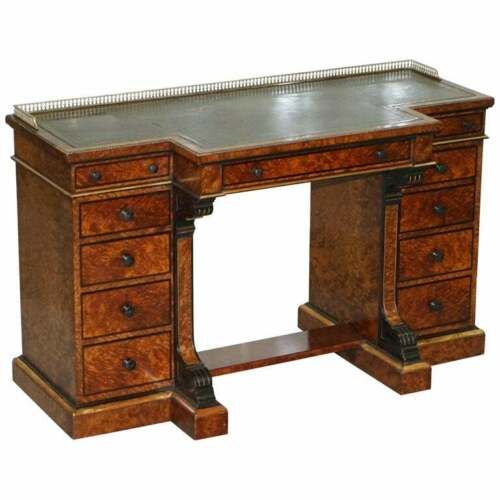
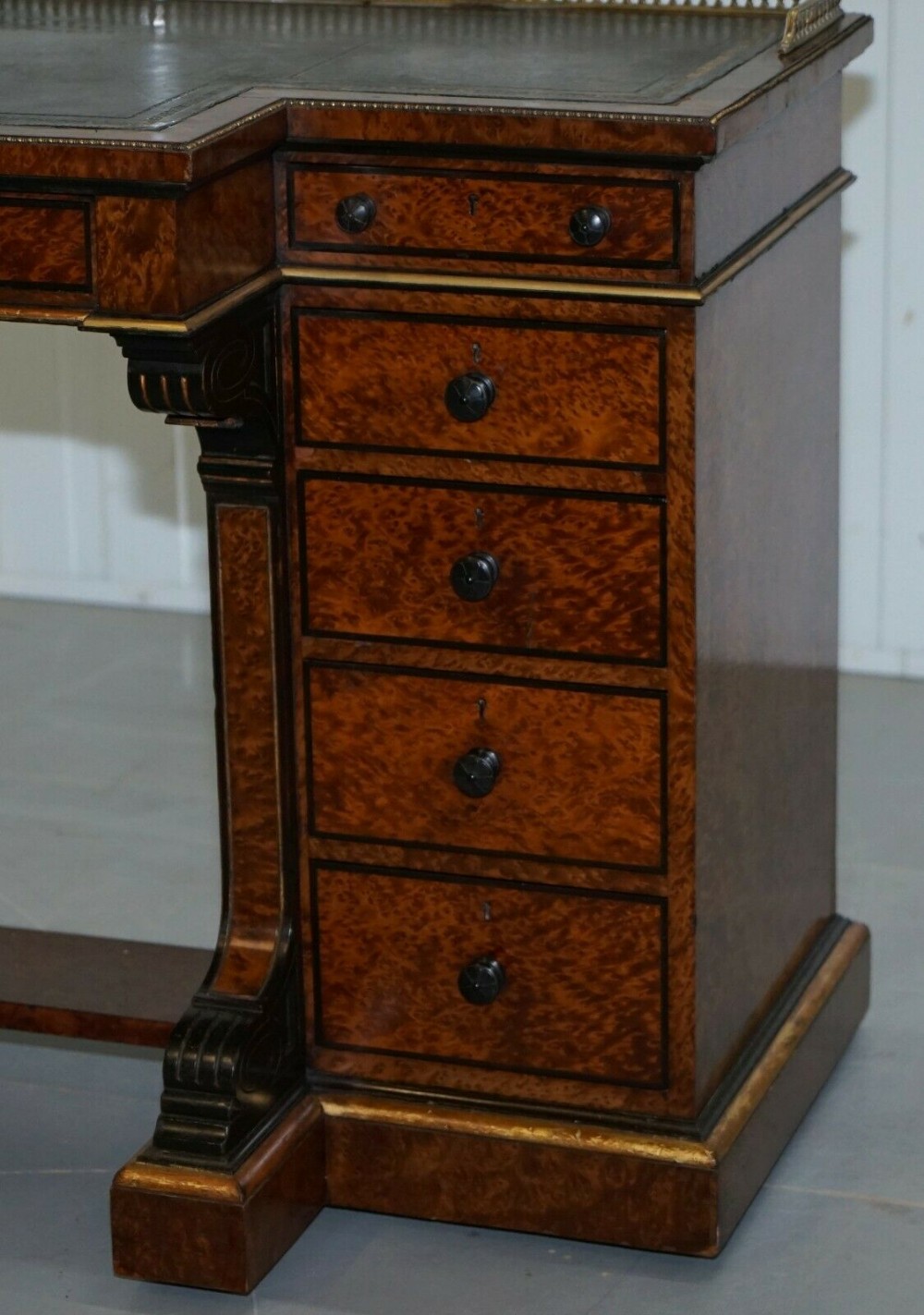
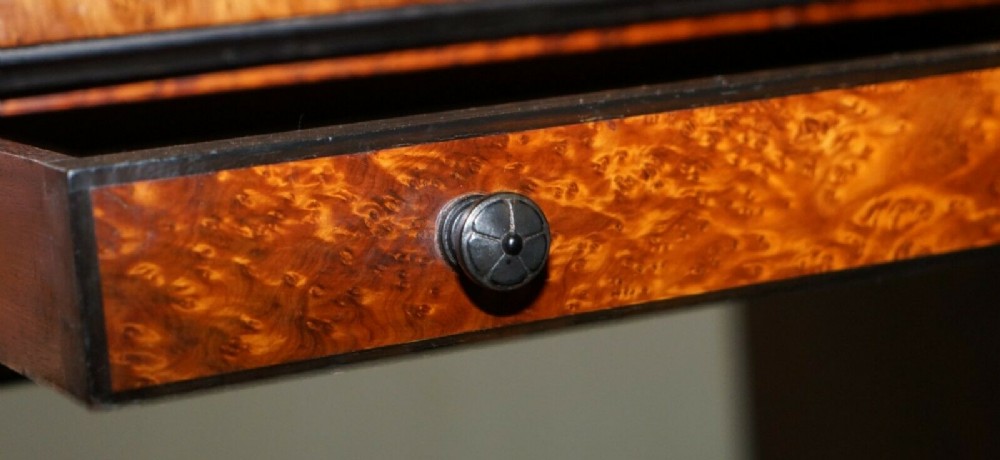
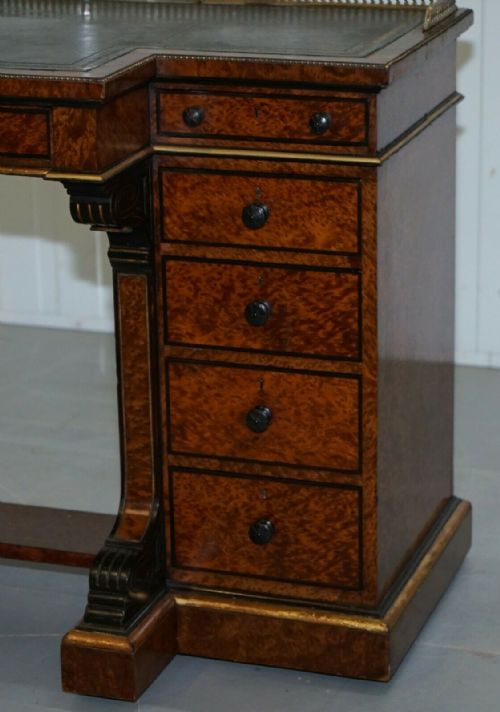
The desk is made from Burr Amboyna timber which we find detailed in Volume II of the same directory as follows “Amboyna or Ambonia, the finely coloured knotty wood of Pterocarpus indicus, a papilionaceous tree, is no. 29 on the workbox.” This refers to a lovely sample workbox they have.
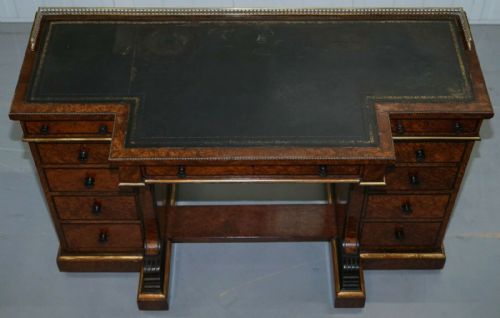
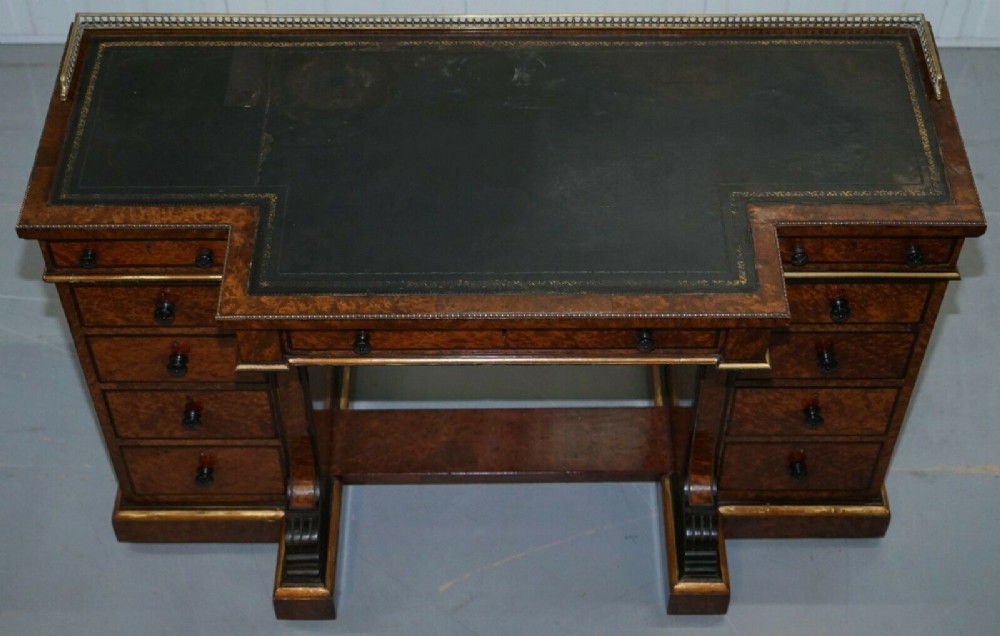
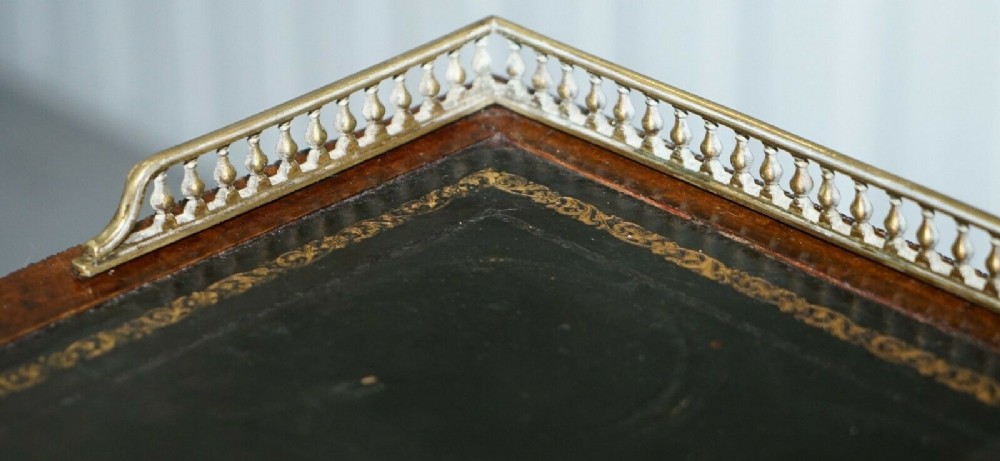
The timber is glorious to look at from every angle, the better the light source the more it glows, the leather top is the original Regency Green with tooled edge and is nicely aged with a good patina. We have lightly cleaned waxed and polished the piece from top to bottom, the new owner should expect a piece that is in excellent condition however it will have genuine age-related signs of use
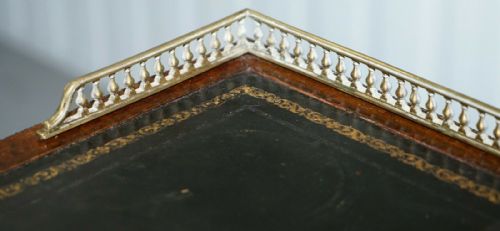
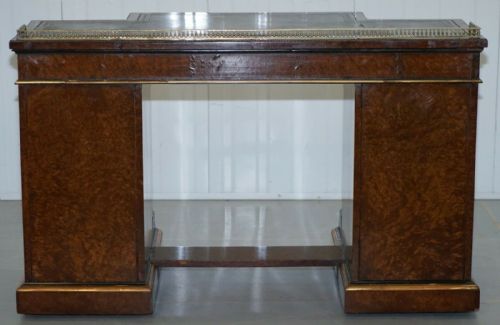
Dimensions
Height:- 78cm
Width:- 123cm
Depth:- 56cm
Leg room
Height:- 64cm
Width:- 55cm
Please note all measurements are taken at the widest point, if you would like any additional or specific measurements, please ask
Gillows of Lancaster and London, also known as Gillow & Co, was an English furniture making firm based in Lancaster, Lancashire, and in London. It was founded around in Lancaster in about 1730 by Robert Gillow (1704–1772 Gillows was owned by the family until 1814 when it was taken over by Redmayne, Whiteside, and Ferguson; they continued to use the Gillow name.
Gillows furniture was a byword for quality, and other designers used Gillows to manufacture their furniture. Gillows furniture is referred to by Jane Austen, Thackeray and the first Lord Lytton, and in one of Gilbert and Sullivan's comic operas.
In 1903 Gillows merged with Warings of Liverpool to become Waring and Gillow and although the furniture remained of a high quality it was not as prestigious.
Gillow family (1728–1814)
In 1728 Robert Gillow began trading in Lancaster as a joiner, builder, house carpenter, furniture maker and overseas merchant. By the summer of 1731 he had entered into a partnership with a fellow catholic, George Haresnape, which had ended by 1735. By 1734 six other names appeared on their staff list. Gillows notably made heavy use of mahogany wood, which is indigenous to the Americas, from the early 1730s. In the early 1740s, Gillow owned a twelfth share of the ship Briget, which he partially used to import mahogany from the West Indies.
The success of the firm was partly due to his ability to directly import mahogany; by 1742 Gillow was exporting finished mahogany furniture back to the West Indies. On 1 January 1757 Robert entered into an equal partnership with his son Richard Gillow (1733–1811), and the firm was known as Robert Gillow & Son. Richard was also the architect for several buildings in Lancaster. He financed the building of the Catholic church in Dalton Square, Lancaster in 1798.
The family's Catholic history was important in building up a customer base within Lancashire's gentry, and their subsequent purchase of Leighton Hall, Lancashire from a cousin in 1822. On 31 December 1768 Robert Gillow I ret
Royal House Antiques has dated this Burr Amboyna Pedestal Desk to the Victorian era.
Royal house antiques is a privately-owned family ran company founded in wimbledon in 2012 by husband and wife james and iris thorpe
You can view the stock and full dealer information on the Royal House Antiques Profile Page

Very Rare Gillow 1852-57 Breakfront Library Desk Brass Gallery Burr Amboyna Wood