
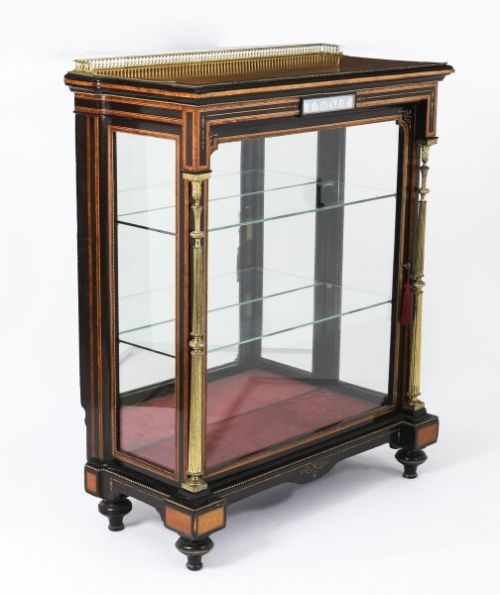


Victorian Amboyna Furniture
Victorian amboyna furniture brings rich, speckled burr surfaces and ebonised contrasts into a room, offering nineteenth-century craftsmanship at its most tactile.
Victorian Amboyna Furniture
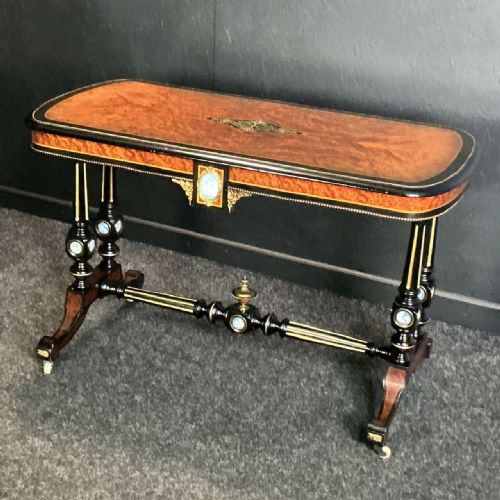
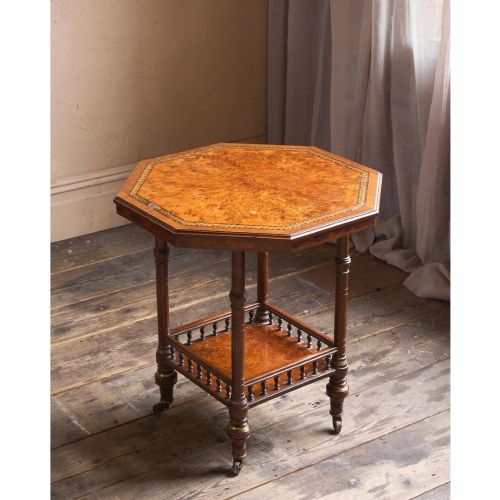
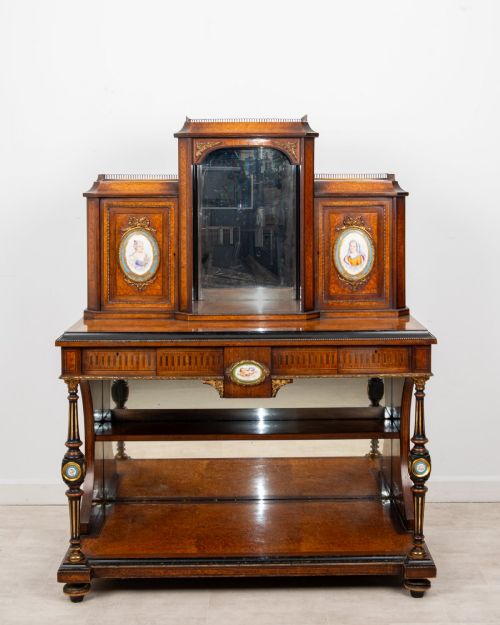
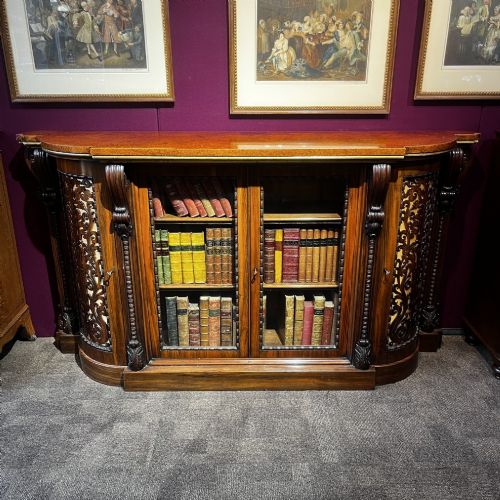
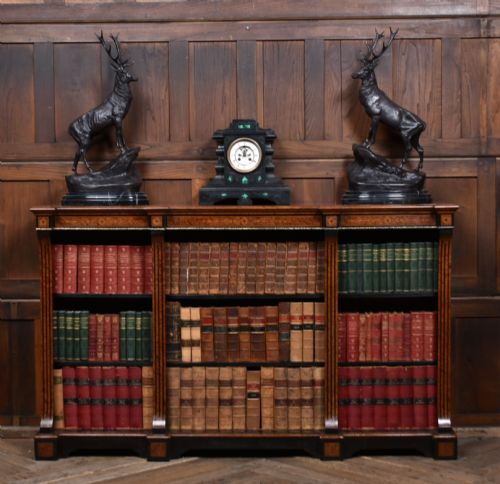
Victorian amboyna furniture encompasses display cabinets, writing desks, centre tables, and bookcases produced across the nineteenth century. These pieces rely on the warm, mottled grain of amboyna wood, often contrasted with ebonised timber and gilt mounts.
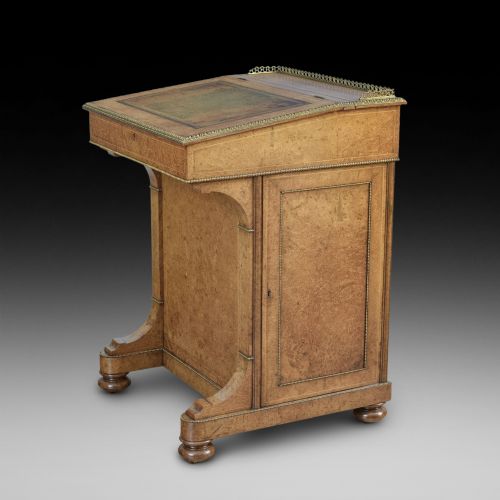
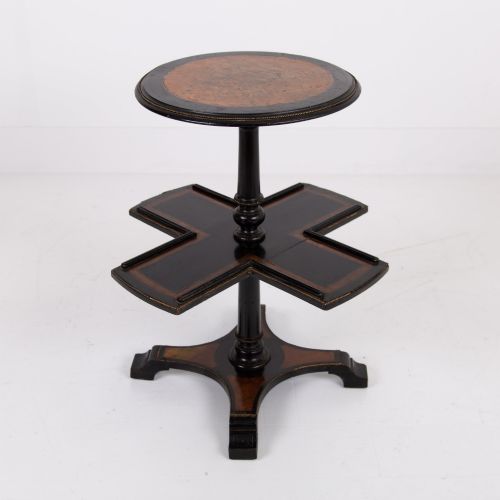
The version most commonly met on this page is the compact writing desk or tabletop display piece, alongside larger side cabinets and centre tables dating from the middle decades of the Victorian era. Makers deployed this exotic timber selectively to catch the eye in principal rooms.
Makers shaped these forms within broader Victorian stylistic revivals, drawing on French taste, Rococo curves, and the linear geometry of the Aesthetic Movement. The timber itself remains the unifying element across desks, credenzas, and étagères.
Materials and construction methods
Craftsmen applied amboyna as a fine veneer over secondary woods, cutting the burr sections to display the characteristic swirling knots and golden-brown tones. This veneer work required steady hands and hot animal glue to secure the fragile burr across expansive tabletops and cabinet doors.
Workshops combined the figured amboyna with ebonised wood to create stark tonal contrasts, frequently augmenting the timber with cast brass mounts, ormolu, and inset porcelain plaques. Interiors often incorporated leather writing surfaces and glazed compartments protected by brass framing.
Victorian Amboyna Furniture Retail Price Guide 2026
Typical asking prices for victorian amboyna furniture among the pieces listed under this phrase on Sellingantiques today, from the lower quarter to the upper quarter. They describe what is for sale here now, not the wider market.
Amboyna veneer appears frequently alongside ebonised wood, glass panels, and leather writing surfaces across the Victorian period.
Distinguishing quality in the pieces
Quality rests on the selection and matching of the amboyna veneer itself, where superior examples exhibit dense, unbroken figuring across entire cabinet doors or table surfaces without clumsy patches. The framing timbers and internal construction reveal whether a workshop prioritised speed or meticulous joinery.
The integration of secondary decorative elements separates high-end production from standard commercial output. Finely chased ormolu, crisp parcel gilding, and the inclusion of hand-painted porcelain plaques indicate the work of premier cabinet-making establishments.
Edward and Roberts·Gillows·Lamb of Manchester·Gregory and Co
The Victorian Amboyna Furniture Glossary
- Amboyna
- A fragrant Southeast Asian timber known for its intricate burr growth, highly prized for nineteenth-century veneering. It yields a rich, golden-brown speckled surface.
- Ebonised
- Wood treated with a dark stain or finish to imitate ebony. Cabinet-makers used this technique to frame and contrast lighter amboyna panels.
- Davenport
- A compact pedestal desk featuring a sloping, leather-inset writing surface and drawers opening to the side. Victorian versions often incorporate amboyna veneers and brass galleries.
- Credenza
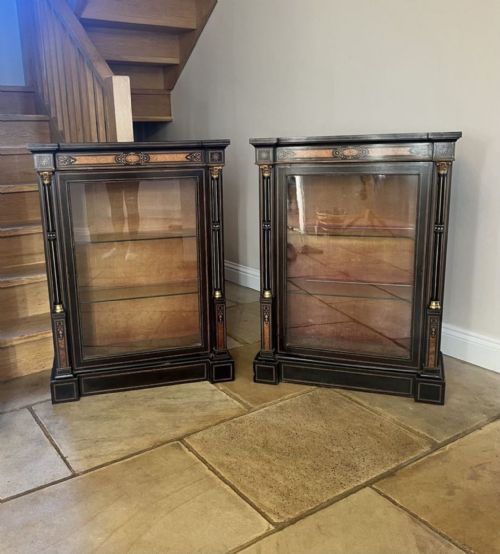
- A low cabinet designed for storage and display, frequently fitted with glass doors and central shelving. Examples from this period often combine burr woods with gilt highlights.
- Ormolu
- Gilded bronze mounts applied to furniture corners, feet, and friezes. These cast metal details added architectural definition to nineteenth-century cabinet work.
Victorian Amboyna Furniture: Frequently Asked Questions
What is amboyna wood?
Amboyna is an exotic Southeast Asian timber celebrated for its dense, knotty burr growth and warm golden-brown coloration. Nineteenth-century makers sliced it into thin veneers to cover prominent surfaces on desks and cabinets.
Because the burr formation occurs irregularly in the tree, large sheets of matching amboyna were difficult to produce, making the timber exceptionally costly. It appears primarily on the principal facades of high-status Victorian furniture.
How do I care for amboyna veneer?
Keep amboyna furniture away from direct sunlight and steady heat sources to prevent the thin nineteenth-century veneer from drying out or lifting. Dust gently with a dry, soft cloth and avoid chemical polishes.
Maintain a stable room humidity to protect both the timber and the underlying animal glue. Wax can be applied sparingly to nourish the polished surface without building up residue.
How can I date Victorian amboyna pieces?
Dating relies on stylistic clues, construction methods, and secondary materials such as porcelain plaques or ebonised framing. Pieces showing heavy French Revival or Rococo influence typically date to the middle decades of the nineteenth century.
Later Victorian items often reflect the linear aesthetics of the 1880s, utilising simpler architectural lines alongside the characteristic burr timber. Maker stamps or labels, when present, provide a more precise point of origin.
Were these pieces used in specific rooms?
Centre tables, display cabinets, and credenzas stood in formal reception spaces like drawing rooms and libraries to showcase the owner's taste and wealth. Smaller desks and Davenport tables served private writing functions in parlours and boudoirs.
Cabinets with glass doors protected delicate ceramics and books from dust while offering immediate visual access. Hall stands occupied entrance spaces to greet visitors with polished timber and brass fittings.