

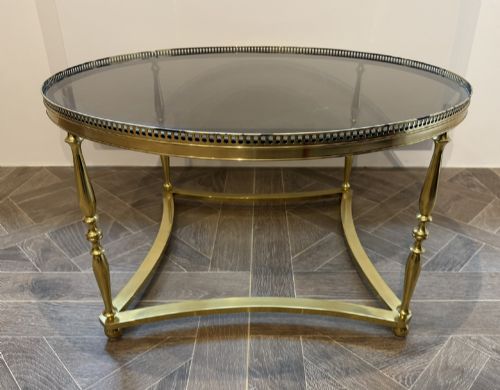
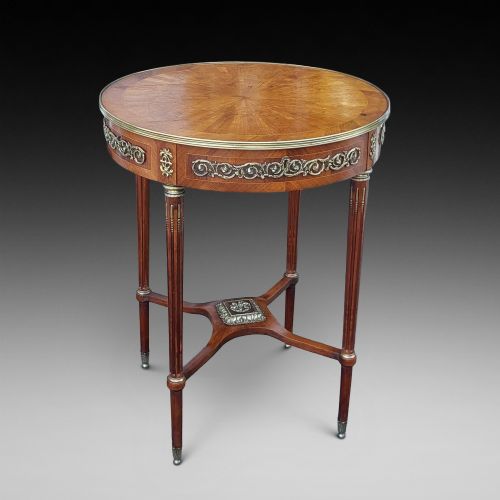
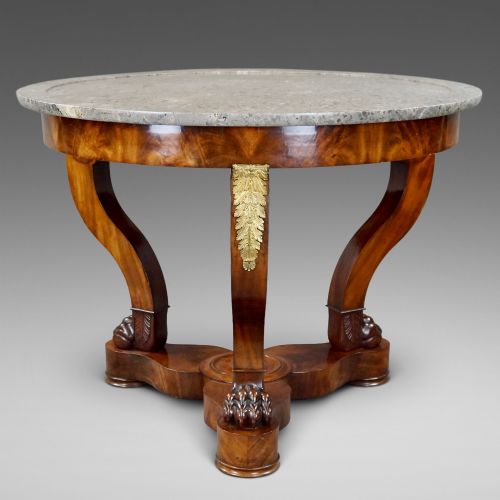
French Style Centre Table
A french style centre table brings continental display to a room, offering surface space and period craft in walnut, mahogany, or giltwood.

Understanding French style centre table
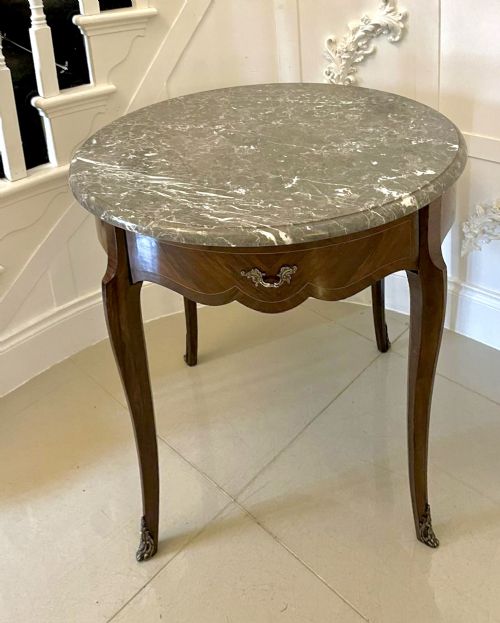
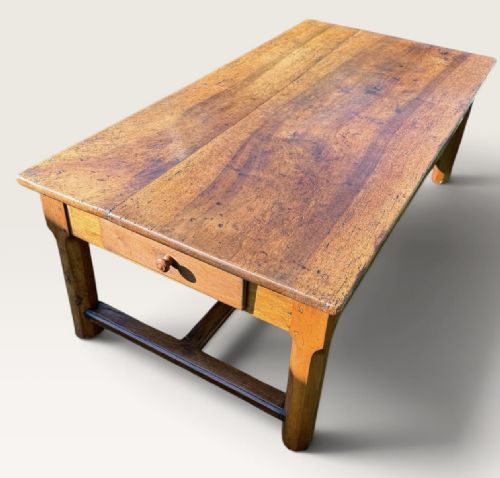
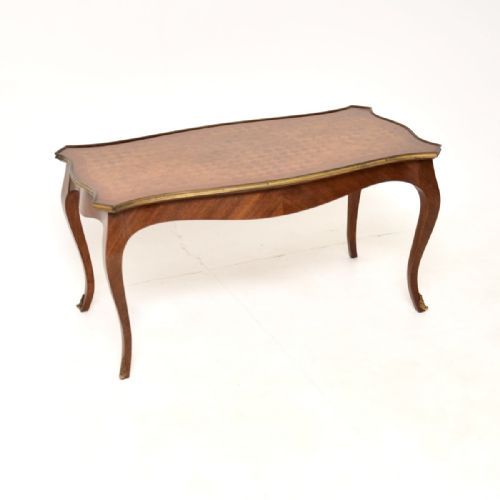
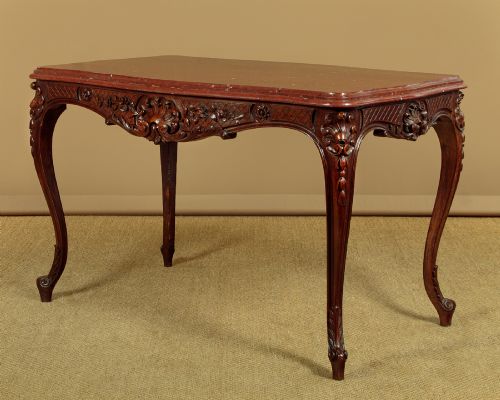
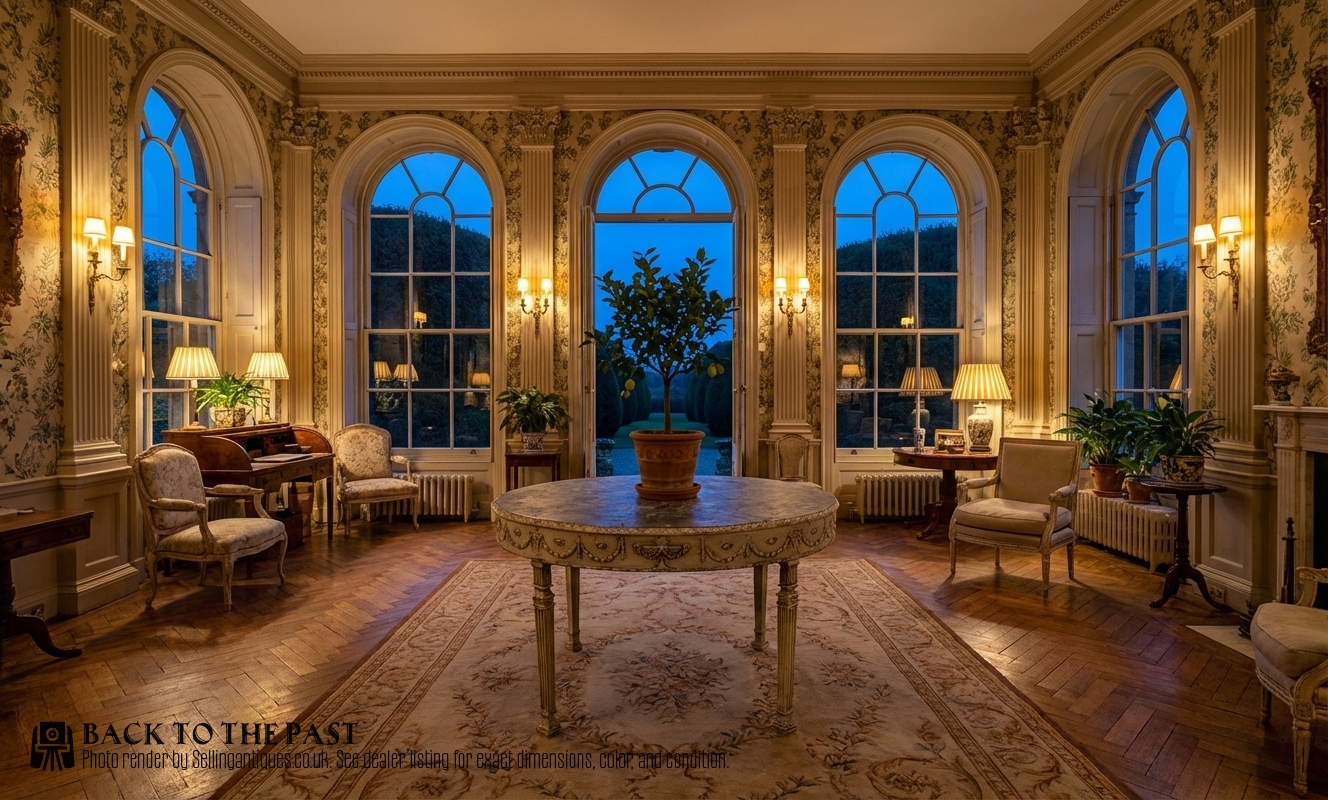
A french style centre table acts as a focal point in a reception room, designed to stand free in a space rather than against a wall. The pieces appearing here span the Victorian and Edwardian eras, with revival designs drawing heavily on Rococo, Louis XVI, and Empire aesthetics.
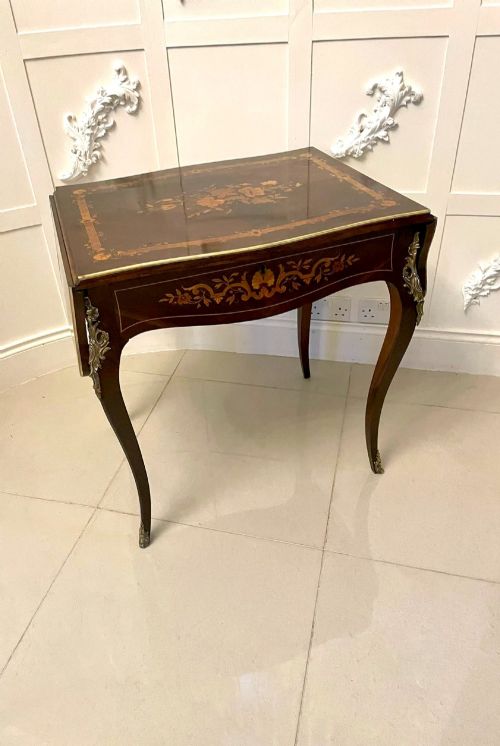
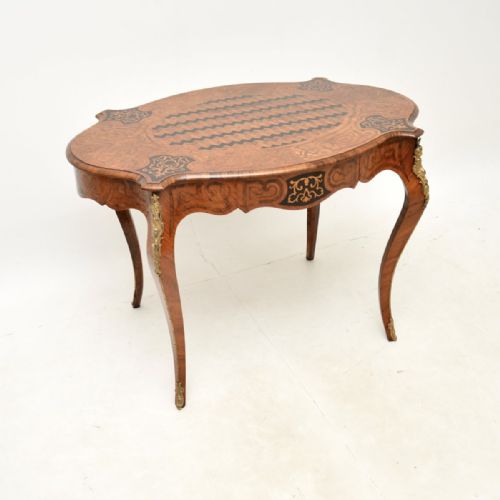
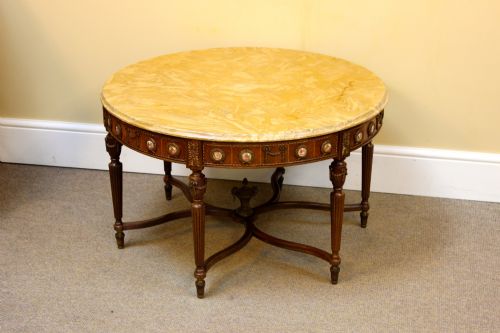
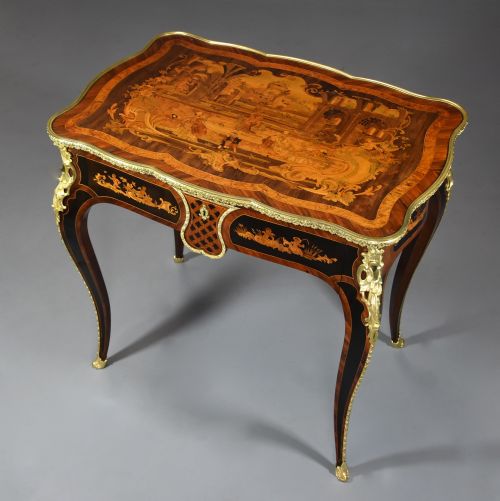
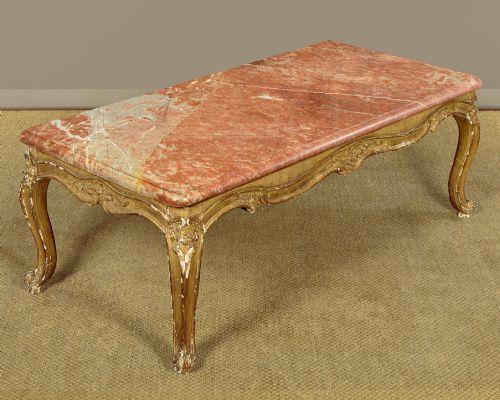
The most common formats on this page are centre tables and occasional tables, often topped with marble or featuring inlaid marquetry. Materials range from burr walnut and amboyna to painted finishes and giltwood frames.
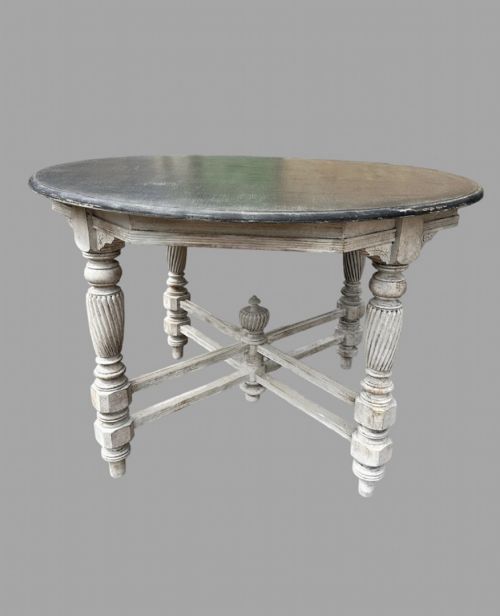
Origins represented in the evidence include Victorian and Edwardian interpretations of continental forms, alongside pieces that cross English cabinet-making with French design vocabulary. Buyers encounter everything from serpentine marble tops to oval painted surfaces resting on pillar or cabriole supports.
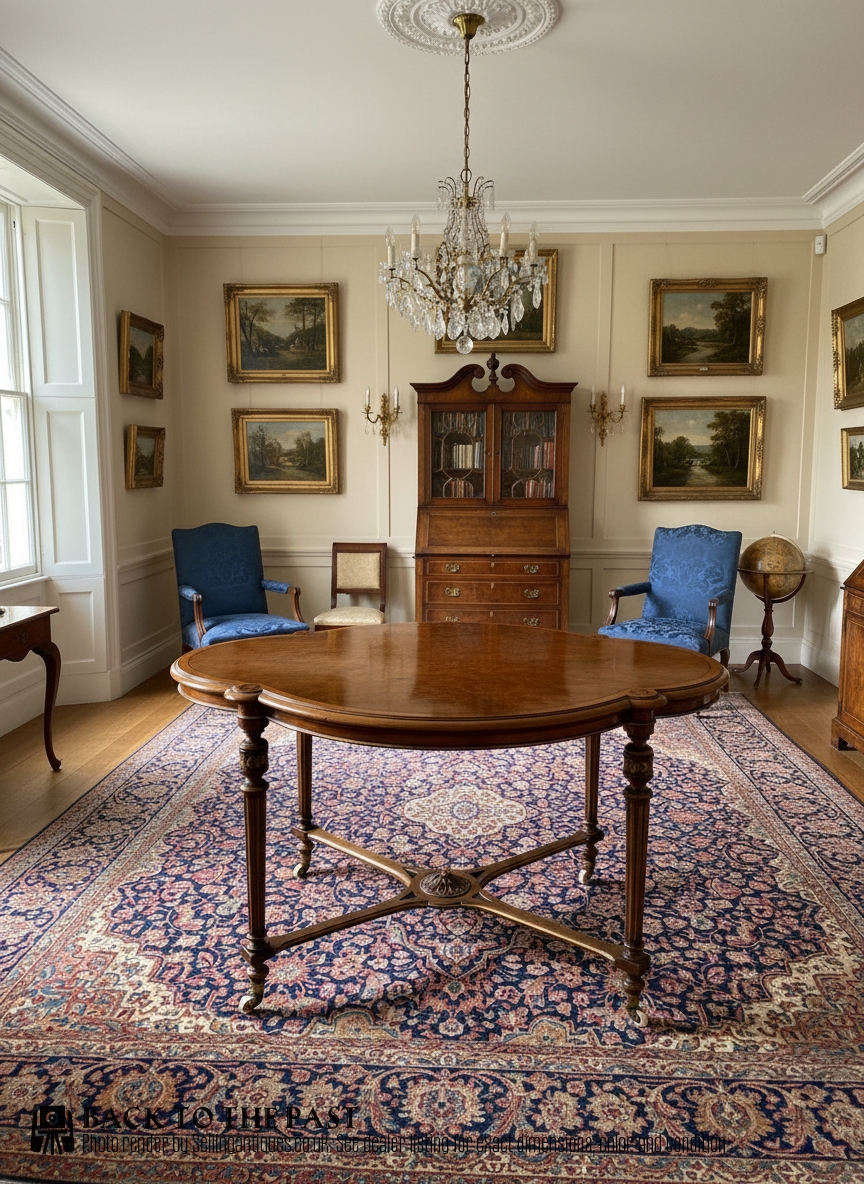
Construction and Materials
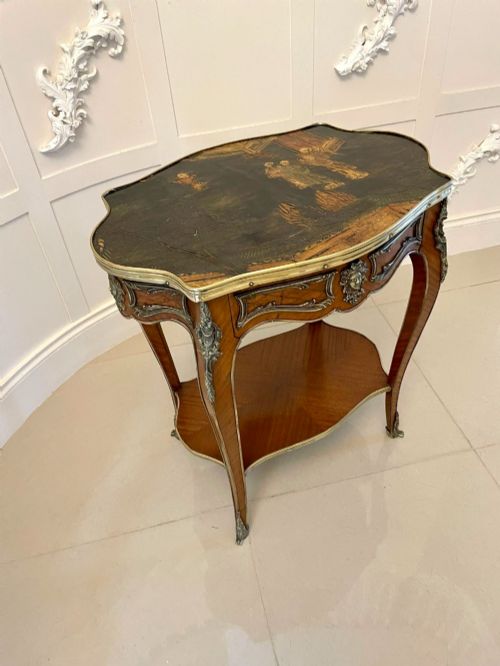
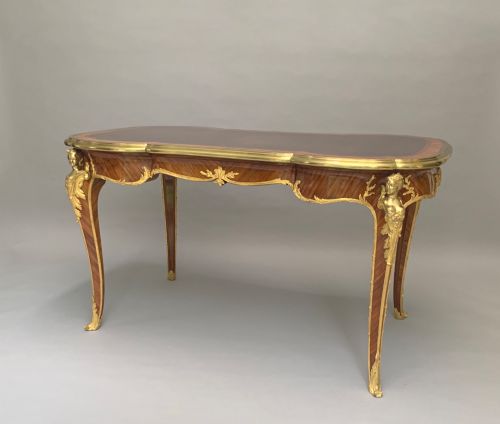
Makers utilised dense timbers such as walnut, mahogany, and amboyna, frequently selecting burr veneers and marquetry to create patterned tabletops. Giltwood and ormolu mounts add structural highlights and decorative relief to the wooden frames.
Insets of white or rouge marble provide heavy, cool surfaces that contrast with the warm tones of the surrounding timber. Painted and parcel silvered finishes appear alongside brass details, showing a mix of surface treatments across the nineteenth-century and Edwardian examples.
Retail Price Guide 2026
Typical UK retail prices for french style centre table, calculated from the Sellingantiques database of over a million retail prices indexed since 2003. This retail price guide relies exclusively on Sellingantiques data; no external sources or auction records are used, so the figures do not describe the wider market.
The listings here include pieces from the Victorian and Edwardian eras, featuring walnut, mahogany, marble, and giltwood.
Judging Quality
The distinction between ordinary and exceptional pieces lies in the crispness of the carving and the depth of the timber grain. Finer examples display meticulous marquetry work, substantial marble slabs with clean edges, and secure, well-fitted ormolu mounts.
Construction methods also set pieces apart, visible in the precision of the joinery and the weight of the giltwood or bronze elements. Simpler painted or occasional tables rely on proportion and decorative paint application rather than intricate carving or costly veneers.
The French Style Centre Table Glossary
- Marquetry
- Decorative veneer work arranged in geometric or pictorial patterns across a wooden surface. It requires patience and skill to cut and fit the thin slices of contrasting wood.
- Ormolu
- Gilded bronze mounts applied to furniture for decorative effect. The technique involves treating metal with gold amalgam to achieve a rich metallic finish.
- Giltwood
- Wood that has been coated with gold leaf or gold paint. This finish catches the light and highlights carved details on Victorian and revival frames.
- Rococo Revival
- A nineteenth-century design movement inspired by the French Rococo style. It favours asymmetrical curves, scrolling foliage, and naturalistic motifs.
Frequently Asked Questions
Where should I place a centre table?
These tables are designed to stand in the middle of a room, allowing access from all sides. They work well in large reception rooms or entrance halls where a freestanding piece anchors the furniture arrangement.
Ensure there is enough walking space around the edges so the table functions as both a visual centrepiece and a practical surface.
Are marble tops original to these tables?
Many nineteenth-century tables were built specifically to carry heavy marble slabs, which provide a durable and heat-resistant surface. Rouge and white marble are commonly found on pieces from this period.
When inspecting a table, look at how the stone rests within the wooden frame to understand its integration with the original design.
How do I care for timber and veneer?
Protect wooden surfaces from direct sunlight and excessive moisture to prevent the veneer from lifting or fading. Regular dusting with a soft, dry cloth maintains the polish without building up residue.
Avoid placing hot cups or wet items directly onto polished wood or unsealed marble to preserve the finish.
What defines the French style in these tables?
The French style borrows heavily from Louis XVI, Empire, and Rococo aesthetics, characterised by cabriole legs, gilt mounts, and curved aprons. British makers adopted these continental motifs during the Victorian and Edwardian periods.
This cross-channel influence resulted in pieces that combine British cabinet-making solidity with French decorative flair.
How can I tell the difference between periods?
Victorian pieces often lean towards heavier proportions and elaborate marquetry, while Edwardian examples can appear lighter and more refined. Revival styles help narrow down the design inspiration, pointing back to eighteenth-century French courts.
Examining the secondary woods and construction techniques underneath the table also helps date the piece accurately.