


Rococo Revival Side Table
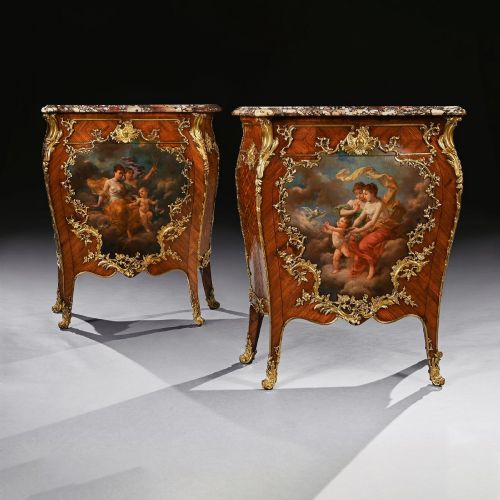
A rococo revival side table brings extravagant nineteenth-century flourish and fluid serpentine lines into a room, combining rich timber with polished stone and metal.
Rococo Revival Side Table
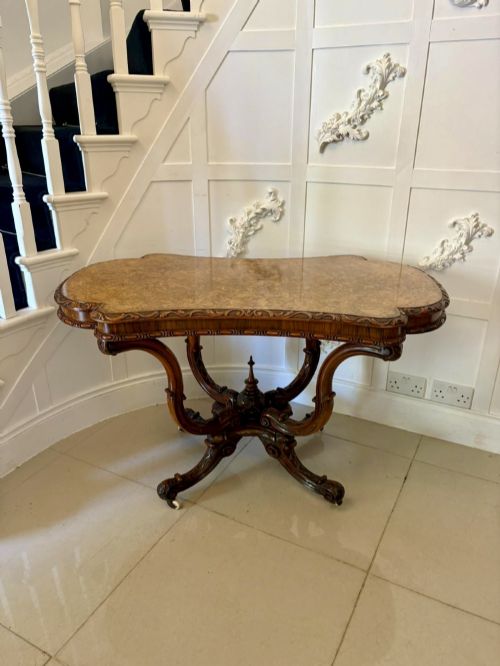
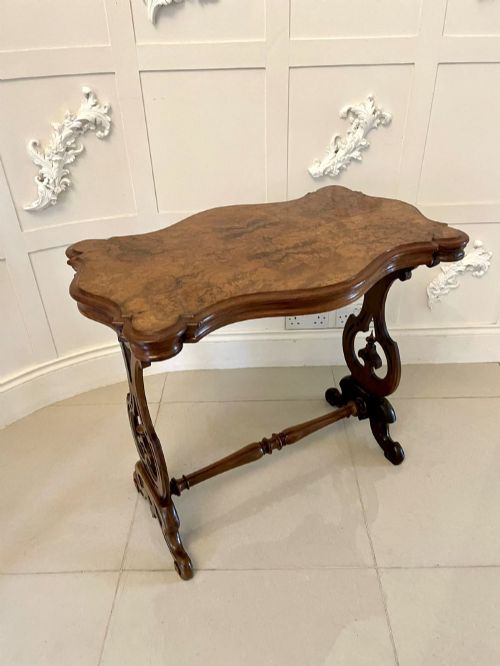
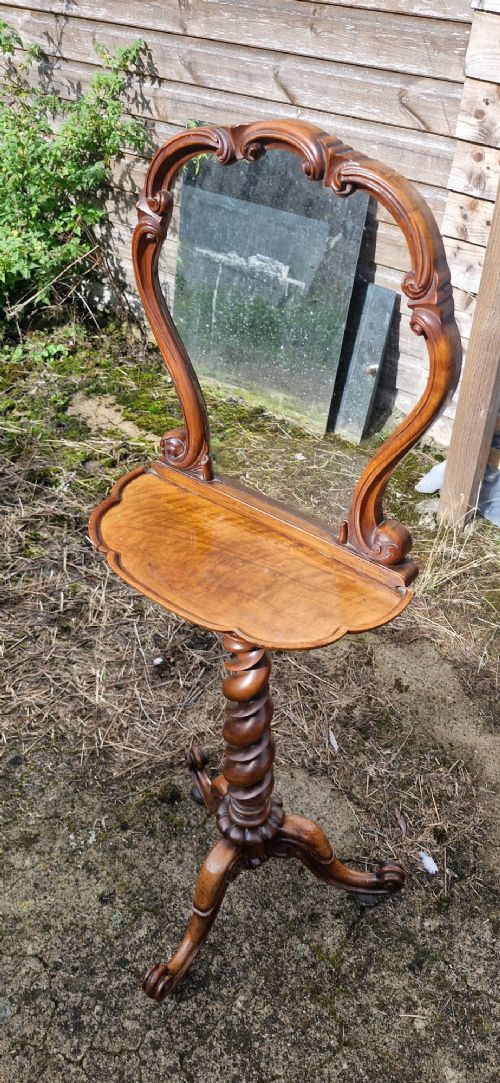
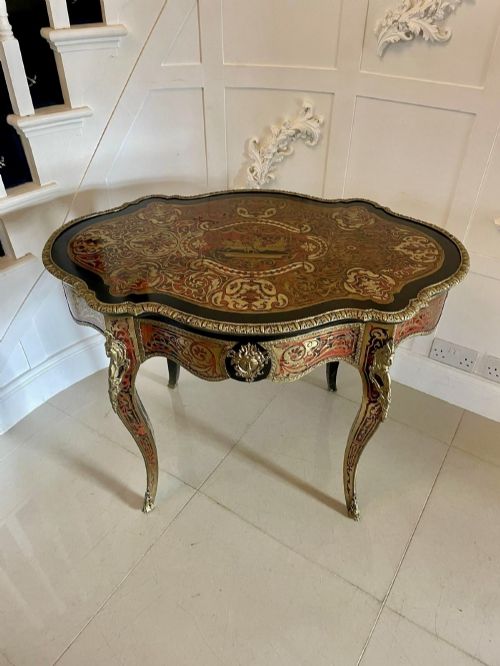
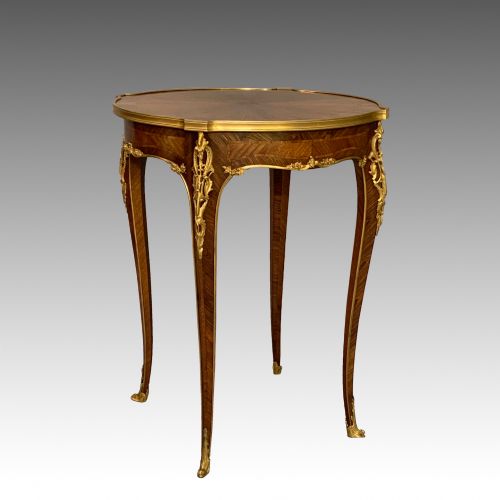
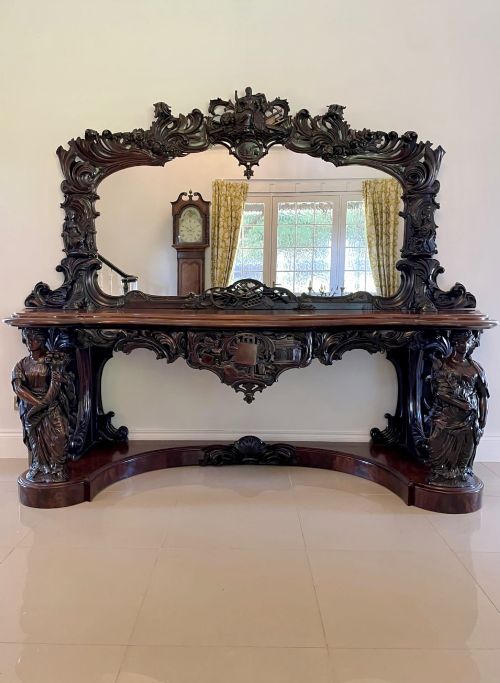
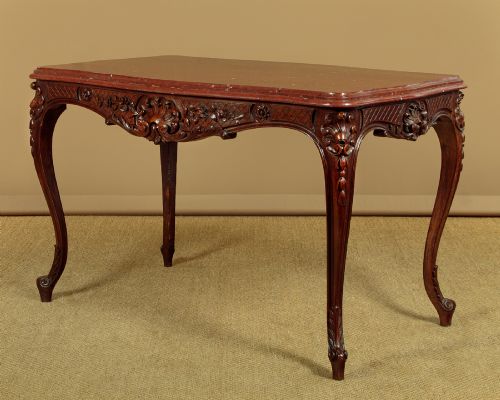
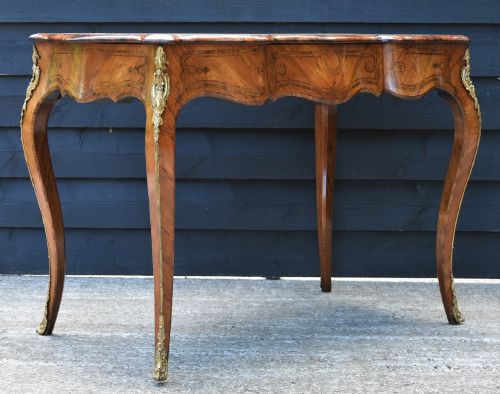
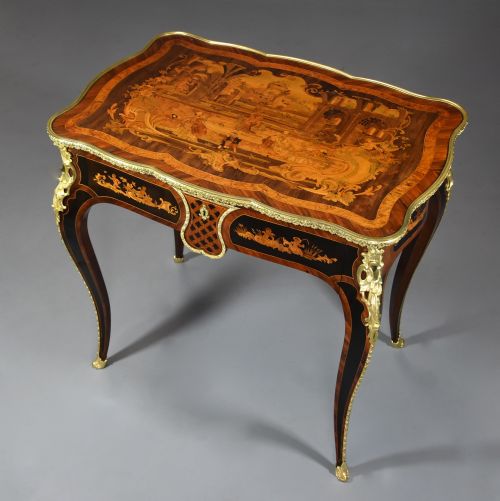
A rococo revival side table takes many forms across this selection, appearing as console tables, centre tables, occasional tables, and writing desks produced primarily during the nineteenth century. These pieces draw upon Louis XV and French design influences, often featuring serpentine shapes and intricate marquetry.
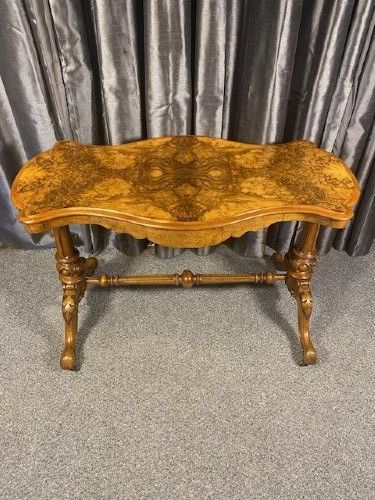
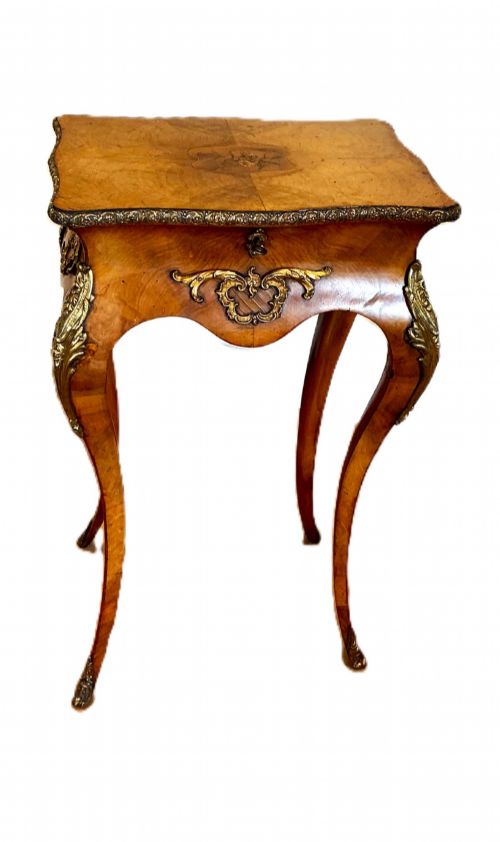
The versions most commonly met on this page date from the Victorian era and the mid-nineteenth century, constructed in walnut, kingwood, and mahogany. They range from compact lamp tables to large marble-topped console tables designed to anchor a formal interior.
How they were made
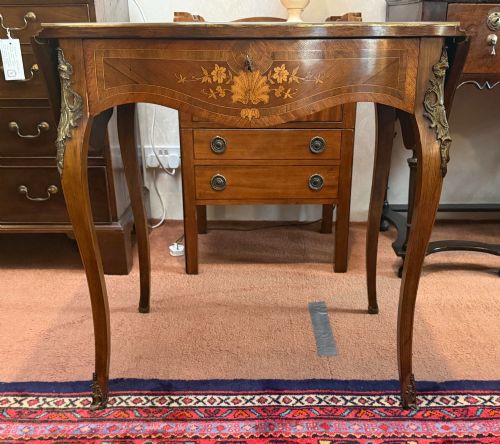
Cabinetmakers utilised figured timbers such as burr walnut, satinwood, and kingwood, laying veneers over sturdy base woods to create striking geometric parquetry and floral marquetry patterns. Tops of rouge or white marble provide a heavy, cool surface contrasting with the warm grain of the wood.
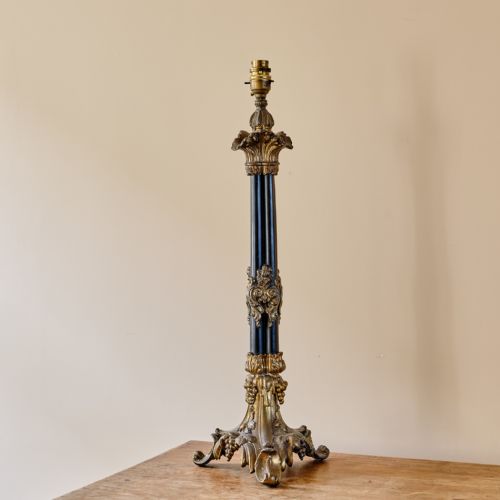
Mounts and ornamentation in ormolu, gilt bronze, and brass cast intricate scrollwork and asymmetrical motifs, fixed securely to the corners and legs. Carved walnut and mahogany components give structural form to the pedestals, friezes, and cabriole legs characteristic of the style.
Rococo Revival Side Table Retail Price Guide 2026
Typical asking prices for rococo revival side table among the pieces listed under this phrase on Sellingantiques today, from the lower quarter to the upper quarter. They describe what is for sale here now, not the wider market.
Listings feature walnut, mahogany, and kingwood alongside ormolu and marble.
What varies in quality
The standard of a rococo revival side table rests upon the crispness of its bronze casting and the depth of figure within its timber veneers. Finely chased ormolu mounts fit flush against the wood, while superior marquetry displays meticulous precision in cutting and contrasting different coloured woods.
Construction methods distinguish fine cabinet work from standard production, seen in the selection of thick burr walnut, substantial marble slabs, and smoothly operating drawers with polished interiors. Maker signatures or stamps add historical weight to exceptionally finished examples.
Joseph-Emmanuel Zwiener·François Linke·Maple and Co
The Rococo Revival Side Table Glossary
- Ormolu
- Gilt bronze ornamentation applied to furniture mounts and decorative objects. This technique involves gilding a mercury and bronze amalgam to create a bright golden finish.
- Marquetry
- Decorative veneer patterns inlaid into the wooden surface of a table top or frieze. Craftsmen use thin slices of various exotic and native woods to picture floral or geometric designs.
- Serpentine
- A furniture front or table edge curving inward centrally and outward at the ends. This flowing contour defines much of the mid-nineteenth-century French revival aesthetic.
- Parquetry
- Geometric wood inlay forming repetitive patterns such as cubes or chequers across a tabletop. It demonstrates the precision of the nineteenth-century cabinetmaker.
- Console table
- A table designed to stand against a wall, frequently supported by ornate brackets or two front legs. These pieces often carry heavy marble slabs on their upper surfaces.
Rococo Revival Side Table: Frequently Asked Questions
Where should I place a console table?
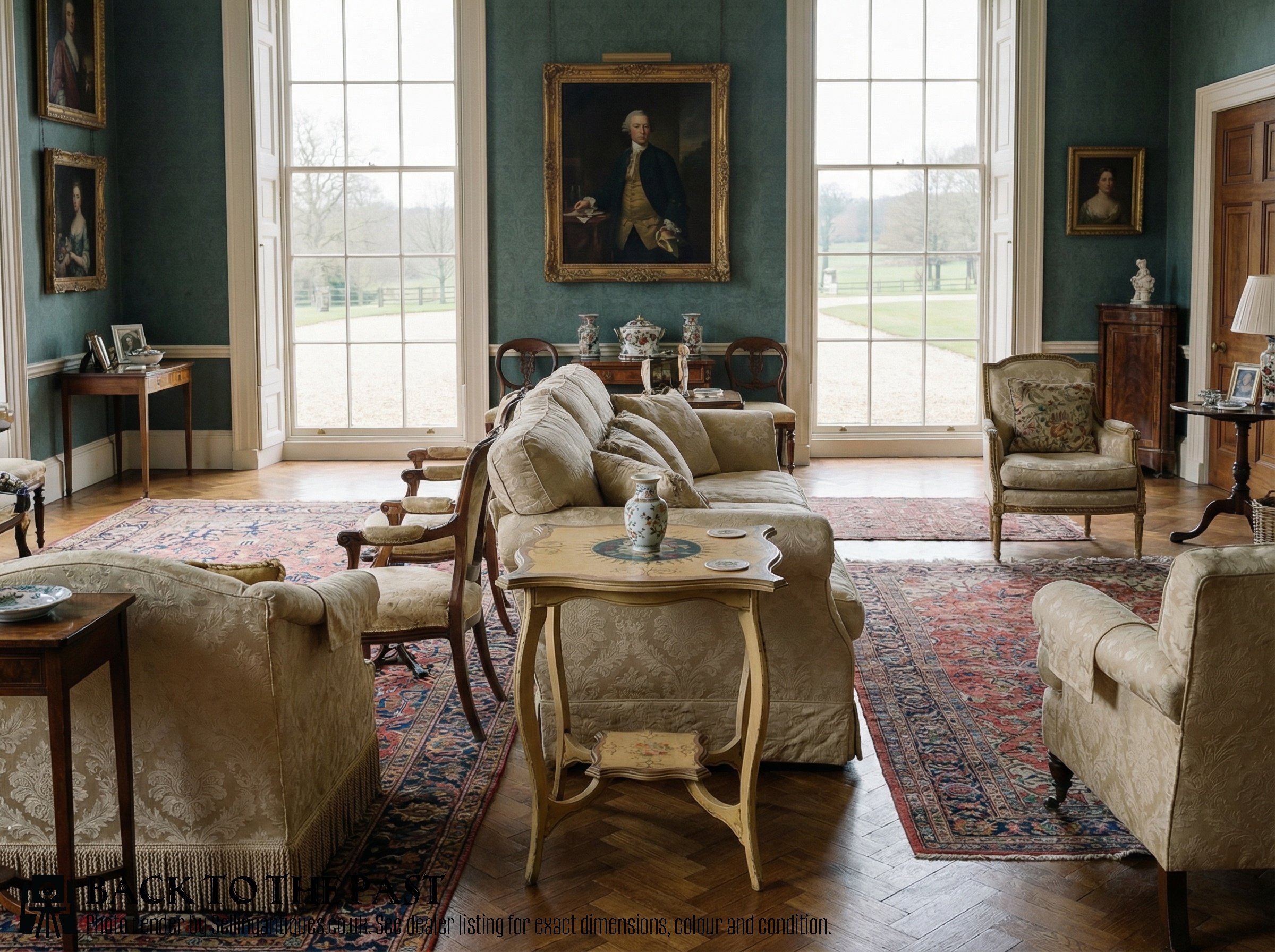
These pieces suit entrance halls, living rooms, or dining spaces where they sit flat against a wall beneath a mirror or painting. Their decorative backs and finished surfaces allow them to anchor a room visually without taking up excessive floor space.
Because many examples feature delicate marquetry or heavy marble tops, positioning them away from direct heat sources and high-traffic pathways preserves the timber and polished stone.
How do I care for marble tops?
Marble surfaces require gentle cleaning with a damp cloth and mild, neutral soap to avoid dulling the polished finish. Acidic liquids such as wine or citrus juice can etch the stone if left unattended.
Applying a specialist stone wax periodically helps protect the surface from staining while maintaining its subtle sheen over decades of daily use.
Are these tables sturdy enough for daily use?
Nineteenth-century tables constructed from solid walnut and mahogany provide robust everyday utility, particularly heavier console and centre designs. Lighter occasional tables require more care when placed where they might be bumped.
Checking that joints remain tight and legs are stable ensures the piece safely supports lamps, books, or decorative objects.
How can I tell French from English revival pieces?
French-market pieces often incorporate extensive ormolu mounts, boulle work, and intricate kingwood parquetry inspired directly by Louis XV models. English interpretations tend to focus heavily on figured burr walnut and robust structural carving.
Construction details inside drawers and the choice of secondary timbers also offer clues regarding whether a workshop operated in London or Paris.