

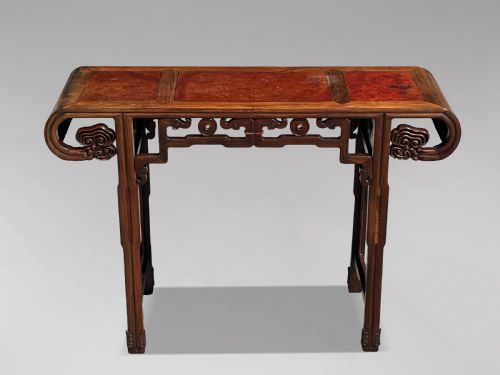


Amboyna Wood Table
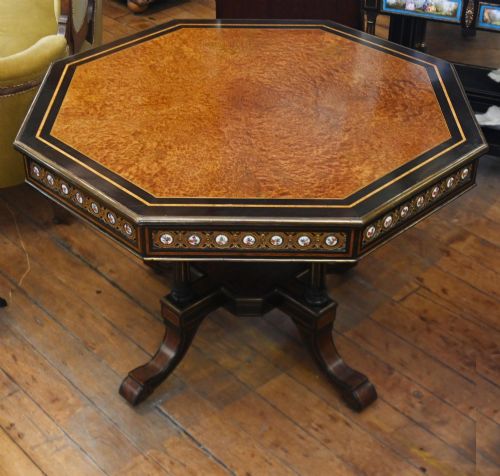
An amboyna wood table brings rich mottled grain and deep honey warmth to a room, drawing the eye through its distinct figured patterns.
Amboyna Wood Table
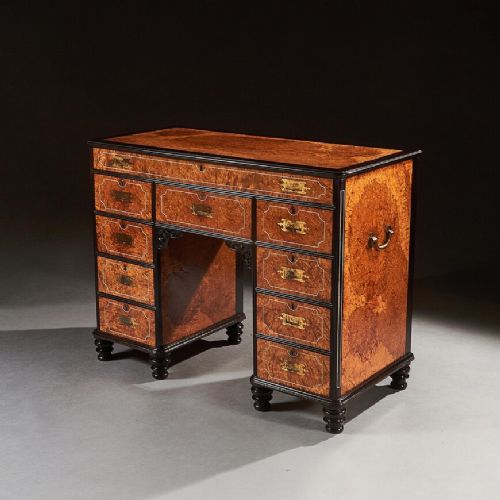
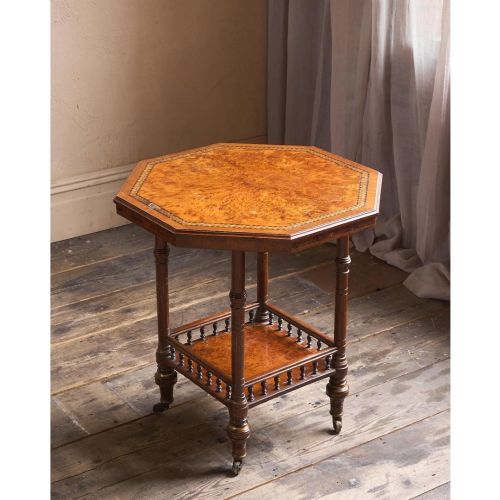
An amboyna wood table encompasses a variety of forms designed for display, writing, and small-scale daily use within the home. The selection relies heavily on nineteenth-century examples, spanning periods from the Regency era through to the late Victorian years.
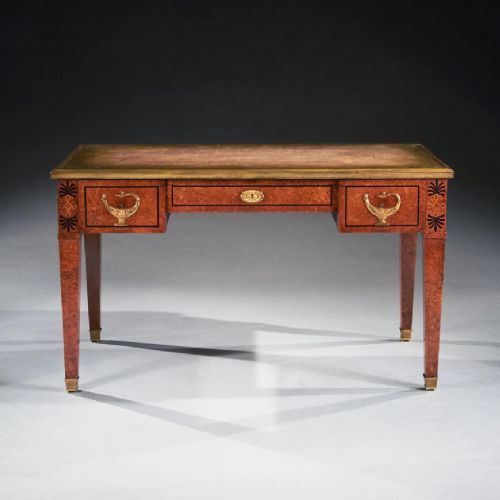
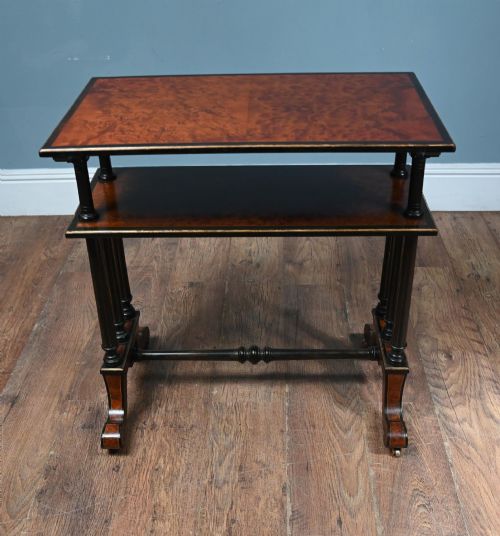
Buyers will most frequently encounter occasional tables and compact side tables, alongside larger library desks, writing tables, and occasional nests. These pieces originate from English workshops, French ateliers, and Chinese export traditions, reflecting diverse cultural aesthetics applied to the same prized timber.
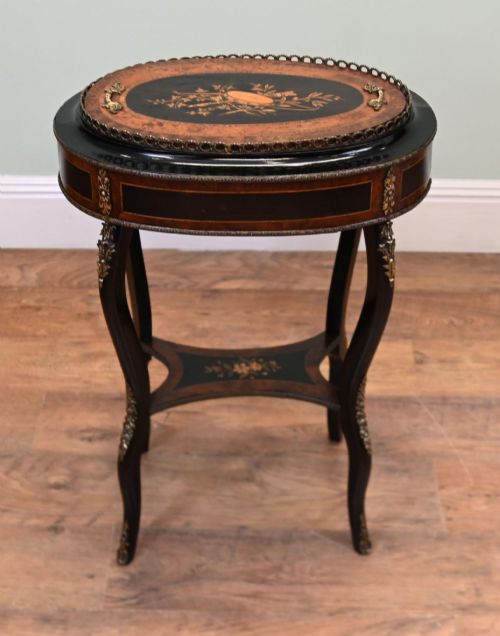
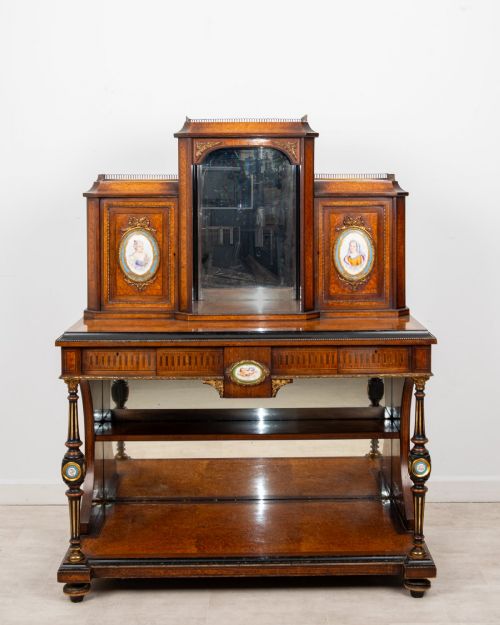
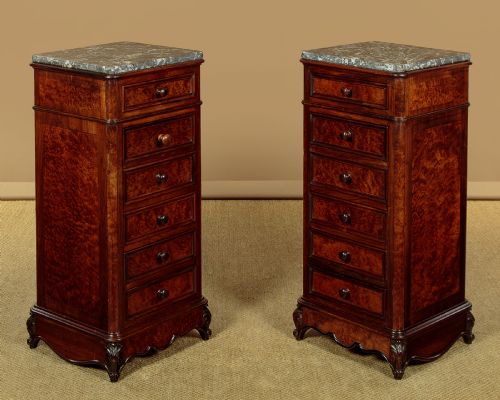
The assortment includes specialised forms such as French bonheur du jour desks, bedside cabinets, and altar tables. Each object utilises the distinct timber either as a primary solid material or, more commonly, as a decorative veneer over a secondary wood.
How they were made
Cabinet makers utilised amboyna primarily in veneer form, slicing the highly figured burr timber into thin sheets to display the complex, swirling grain patterns across tabletops and drawer fronts. This veneer was laid over sound secondary timbers such as mahogany, walnut, or oak to provide structural stability.
Construction frequently incorporated contrasting materials to frame the warm reddish-brown timber, including ebonised wood, ebony, and brass mounts. Certain French and English pieces integrated porcelain plaques, parcel gilt details, or delicate inlay work using rosewood and satinwood.
Joinery methods varied by region and period, from traditional English cabinet construction seen in Gillows pieces to Chinese joinery traditions found on altar tables. Surfaces received hand-applied polish to accentuate the natural lustre and depth of the burr figure.
Amboyna Wood Table Retail Price Guide 2026
Typical asking prices for amboyna wood table among the pieces listed under this phrase on Sellingantiques today, from the lower quarter to the upper quarter. They describe what is for sale here now, not the wider market.
Listings feature nineteenth-century pieces spanning the Regency, Victorian, and Edwardian periods, utilising amboyna alongside brass, ebonised wood, and porcelain.
What varies in quality
The quality of an amboyna wood table rests largely on the density and visual impact of the burr figure across the primary surfaces. Top-tier pieces display an unbroken, highly active grain pattern that covers the expanse of the tabletop with minimal interruption.
Craftsmanship in the application of veneers and secondary detailing sets the finest examples apart from standard production. Precision in brass mounts, hand-carved parcel gilt, and the integration of porcelain plaques indicate higher standards of period workshop output.
Structural integrity and the preservation of the original surface finish dictate the enduring standing of a piece. Retaining the authentic depth of colour in the timber without heavy modern restoration preserves the character prized by collectors.
Gillows
The Amboyna Wood Table Glossary
- Amboyna
- A tropical timber known for its rich burr growth, yielding a highly decorative mottled grain with warm brown and golden tones. It is frequently utilised in veneer work for high-end nineteenth-century furniture.
- Ebonised
- Wood treated with a dark stain or finish to imitate ebony. This technique provided sharp contrast against lighter timbers like amboyna.
- Bonheur du jour
- A small, light lady's writing desk featuring a tiered superstructure with drawers, shelves, or a cabinet above the writing surface. These desks often incorporated fine veneers and porcelain plaques.
- Campaign desk
- A portable desk designed for military officers on active service, featuring recessed brass handles and sectional construction. Examples in amboyna represent more luxurious, civilian adaptations of this functional form.
- Parcel gilt
- Wood or metal ornamentation partially covered in gold leaf. This technique highlighted carved details and mouldings on nineteenth-century tables.
Amboyna Wood Table: Frequently Asked Questions
How do I care for amboyna furniture?
Caring for an amboyna wood table requires protecting the delicate veneer and historical polish from direct sunlight and excessive moisture fluctuations. Dusting with a soft, dry cloth is sufficient for routine maintenance.
Avoid using silicone-based polishes or harsh chemical sprays, which can degrade the antique finish over time. Maintaining a stable room temperature prevents the timber and underlying veneer from shrinking or cracking.
Where were these tables made?
The pieces available originate mainly from English, French, and Chinese export workshops operating during the nineteenth century. English makers like Gillows produced refined library and side tables, while French cabinet makers favoured decorative writing desks and cabinets.
Chinese workshops contributed distinct forms such as altar tables using traditional joinery and local interpretations of the timber. Each region applied its own decorative vocabulary, combining the wood with brass, porcelain, or ebonised details.
How can I date an antique amboyna table?
Dating relies on examining the construction methods, secondary woods, and stylistic clues inherent to the piece. Furniture from the Regency period exhibits neoclassical restraint, while Victorian examples often feature bolder proportions and elaborate mounts.
Secondary woods visible inside drawers or underneath the top can also indicate the era of manufacture. Consulting period design references helps align the specific form and decorative motifs with known production decades.