



Gold Gilded Centre Table
A gold gilded centre table makes a striking focal point in a principal room, bringing warmth and reflective light.
Gold Gilded Centre Table
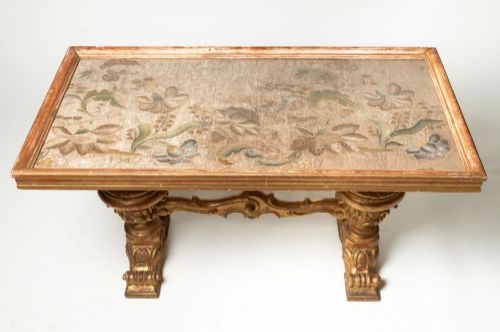
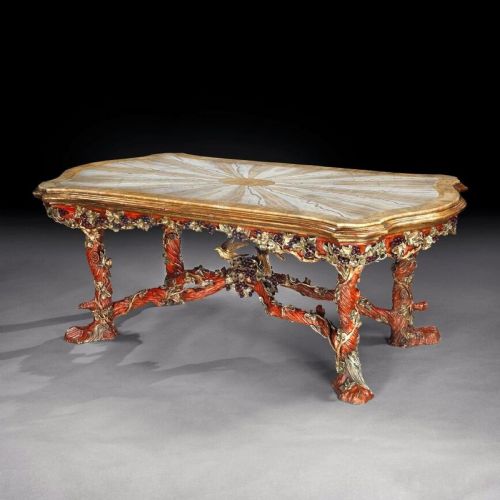
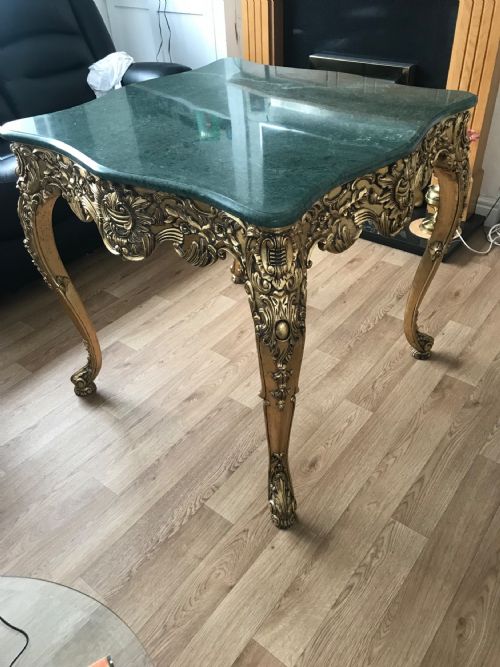
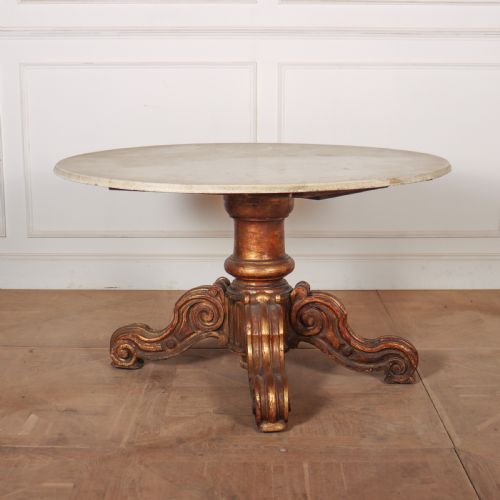
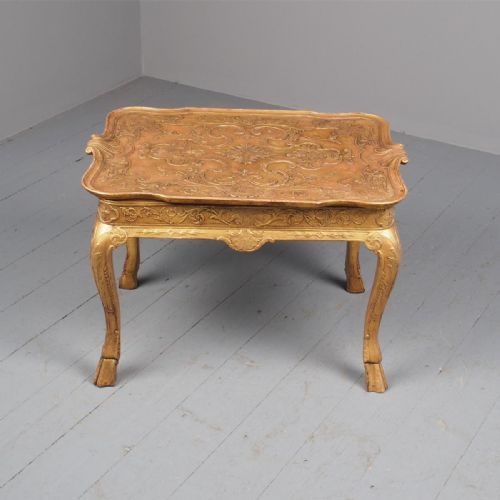
A gold gilded centre table sits in the middle of a room rather than against a wall, designed to be viewed from all sides. These pieces often feature elaborate carving and decorative surface work suited to grand reception rooms.
The selection here includes items spanning the Regency period through to the twentieth century, with French and Italian influences predominating. Alongside traditional centre tables, the group encompasses coffee tables, occasional tables, console tables, and breakfast tables.
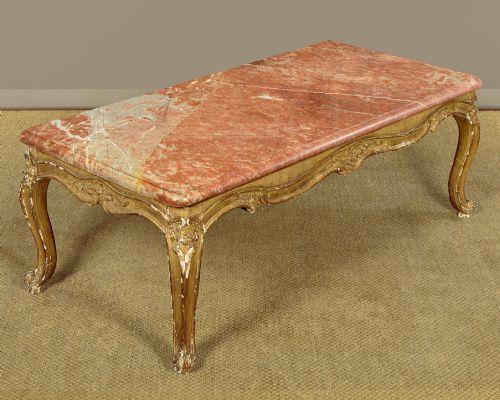
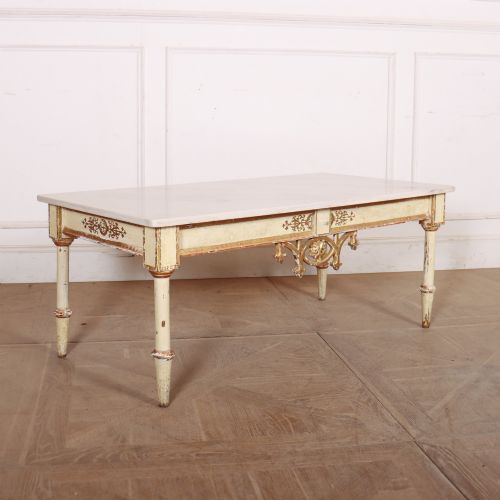
Makers and designers drew upon historical idioms such as Louis XV Revival, Louis XVI style, Italian Baroque, and Italian Rococo Revival. Marble, onyx, and polished stone frequently form the upper surfaces, supported by gilded frames.
Materials and construction
Craftsmen shaped the foundational framework from timber such as wood, amboyna, or ebonised wood, applying gesso to prepare surfaces for gilding. Gold leaf or gilt finish was then carefully laid over the prepared base to achieve a brilliant metallic sheen.
Heavy stone tops including marble and onyx were cut and polished to provide durable and decorative surfaces. Brass and textile details occasionally supplement the primary wood and stone construction.
Carvers executed intricate scrollwork, figurative motifs, and structural swans by hand, ensuring each frame supported the substantial weight of the stone tops.
Listings feature items from the Regency period through to the 1960s, predominantly showcasing French and Italian design influences.
Judging the quality
Quality rests upon the crispness of the hand-carving and the depth of the gilding applied over the gesso ground. Finer examples display meticulous detail in motifs such as foliage, scrolls, and carved swans without the softening of edges.
The choice and thickness of the upper surface heavily dictate the grade of the piece, with solid marbles and polished onyx commanding greater distinction than painted or lighter alternatives. Structural integrity under the weight of these stone slabs also marks superior workshop execution.
Amleto Bertoni
The Gold Gilded Centre Table Glossary
- Giltwood
- Wood that has been coated with gold leaf or a gold-coloured finish. This technique creates a luminous surface that catches the light in formal reception rooms.
- Gesso
- A plaster-like mixture applied to wood surfaces as a smooth base for gilding. It allows carvers to achieve sharp relief details before the gold leaf is applied.
- Console table
- A table designed to stand against a wall, though some historical variants function interchangeably as centre tables. They frequently feature decorative legs and marble tops.
- Rococo Revival
- A nineteenth-century style drawing inspiration from the asymmetrical curves and natural motifs of the French Rococo period. It is characterised by exuberant carving and fluid lines.
Gold Gilded Centre Table: Frequently Asked Questions
Where should a centre table go?
A centre table stands freely in the middle of a room rather than pushed against a wall, allowing access from all sides.
Position one beneath a central ceiling rose or chandelier to let the gilded surfaces catch the ambient light.
How do I clean a marble top?
Marble surfaces require gentle cleaning with a damp cloth and mild, pH-neutral soap to protect the polished stone.
Avoid acidic cleaners or abrasive pads that can etch or dull the natural finish.
Can these tables hold heavy items?
These tables were built with sturdy timber frames designed to support thick stone slabs like marble and onyx.
They comfortably bear lamps, books, and decorative objects while remaining stable in daily use.
How do I identify a revival style?
Revival styles borrow decorative vocabulary from earlier periods, such as the sweeping curves of Louis XV or the geometric restraint of Louis XVI.
Examining the carving depth and gilding technique helps reveal whether a piece is an earlier period original or a later nineteenth- or twentieth-century interpretation.