


Amboyna Writing Table
An amboyna writing table brings distinctive, highly figured timber and refined 19th-century cabinet-making directly to your study or parlour.
Amboyna Writing Table
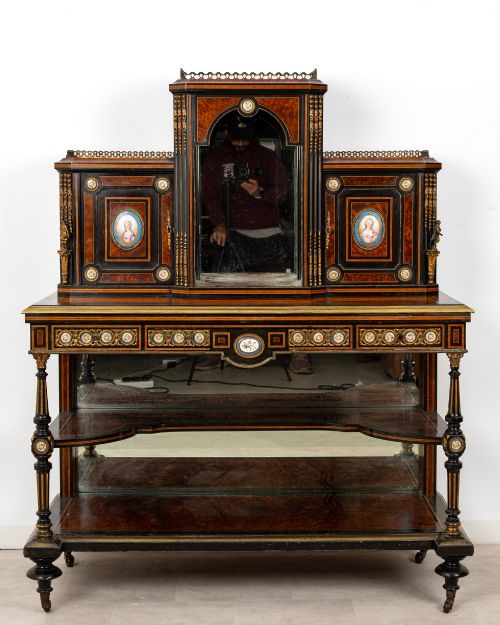
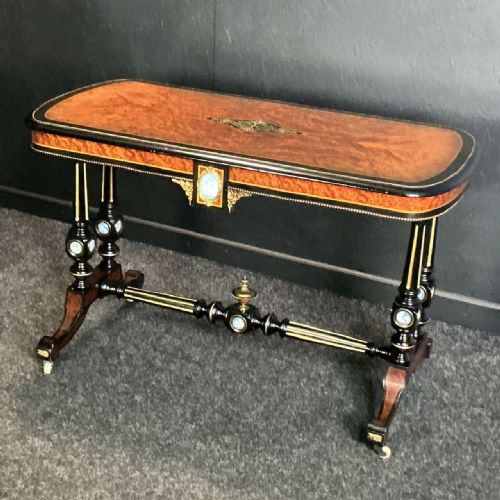
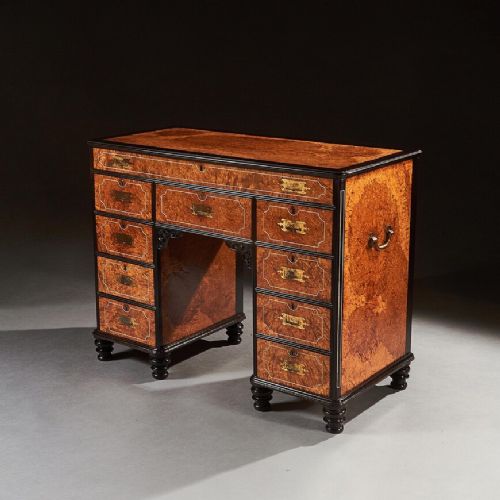
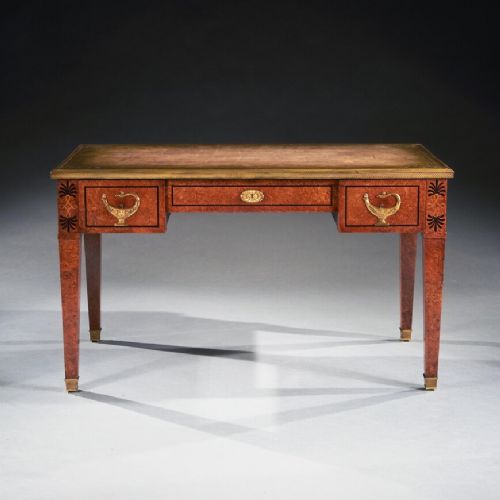
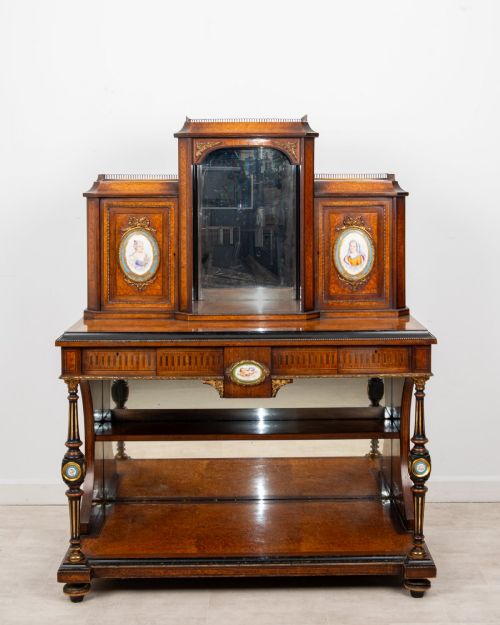
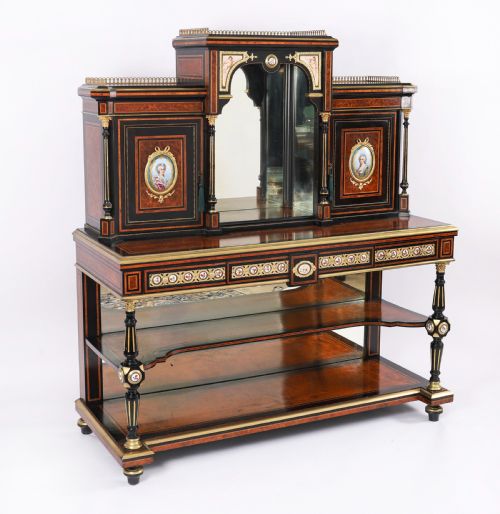
An amboyna writing table is a sophisticated piece of 19th-century furniture designed for correspondence and light desk work, with the majority of examples on this page hailing from the Victorian era and French workshops. You will frequently encounter the refined bonheur du jour form, alongside library tables and centre tables finished in this exotic wood.
The materials and styles span English Regency and Victorian revivals as well as French Neoclassical and Napoleon III designs. Many of these desks incorporate contrasting ebonised wood, porcelain plaques, or gilt bronze mounts to enhance their decorative appeal.
How they were made
Cabinet-makers constructed these pieces using amboyna veneer or burr amboyna over secondary timbers, often pairing the richly mottled wood with ebonised wood, ebony, walnut, or rosewood. Surfaces were frequently inlaid or crossbanded to highlight the striking natural grain patterns of the timber.
Metal and ceramic elements play a significant role in the construction, with ormolu, gilt bronze mounts, brass gallery details, and Sevres porcelain plaques integrated into the framework. Skilled artisans combined these opulent materials with traditional joinery to produce substantial desks and smaller writing tables.
Listings feature 19th-century pieces spanning the Victorian era, Regency period, and Napoleon III style, constructed from amboyna, ebonised wood, and porcelain.
What varies in quality
The overall quality of an amboyna writing table depends heavily on the choice and execution of the veneer, with densely figured burr timber commanding greater visual depth and craftsmanship. The precision of the marquetry, inlay, and the integration of secondary woods like ebonised wood or rosewood separate standard production from superior pieces.
Hardware and decorative mounts also dictate the tier of the object, distinguishing basic tables from those adorned with fine ormolu, gilt bronze, or genuine porcelain plaques. Pieces bearing attribution to notable makers or documented workshops reflect a higher standard of design and cabinet-making execution.
Paul Sormani·Gillows
The Amboyna Writing Table Glossary
- Bonheur du Jour
- A small, light lady's writing desk featuring a tiered superstructure with drawers, cupboards, or pigeonholes above the main writing surface. This French form gained immense popularity during the Victorian era.
- Ormolu
- Gilded bronze ornamentation applied to furniture and decorative objects. It provides a bright metallic contrast against dark woods and amboyna veneer.
- Ebonised Wood
- Timber treated with a dark finish to imitate expensive ebony. It frequently appears alongside amboyna to create striking two-tone colour schemes on Victorian and French revival pieces.
- Marquetry
- The art of applying decorative veneer pieces to a structure to form intricate patterns or pictures. Master craftsmen used this technique to embellish the tops and drawers of writing tables.
Amboyna Writing Table: Frequently Asked Questions
How do I identify a bonheur du jour?
A bonheur du jour is a distinct type of writing desk characterised by a small working surface and an upper tier fitted with small drawers, shelves, or a cabinet.
Many examples on this page pair this form with amboyna veneer, ebonised wood, and porcelain plaques for a refined appearance.
Where were these tables made?
These tables were produced primarily in English and French workshops during the 19th century, incorporating regional cabinet-making traditions.
French pieces frequently display Napoleon III or Neoclassical influences, while English examples often reflect Regency or Victorian Gillows designs.
How should I care for amboyna veneer?
Amboyna veneer requires gentle maintenance, avoiding direct sunlight and excessive temperature changes to prevent the timber from drying or cracking.
Regular dusting with a soft, dry cloth preserves the polished finish and natural figure of the wood without damaging historical surfaces.