

French Cabinet Desk
When you search for a french cabinet desk, you are looking at sophisticated writing furniture that combines concealed workspace with architectural elegance.
French Cabinet Desk
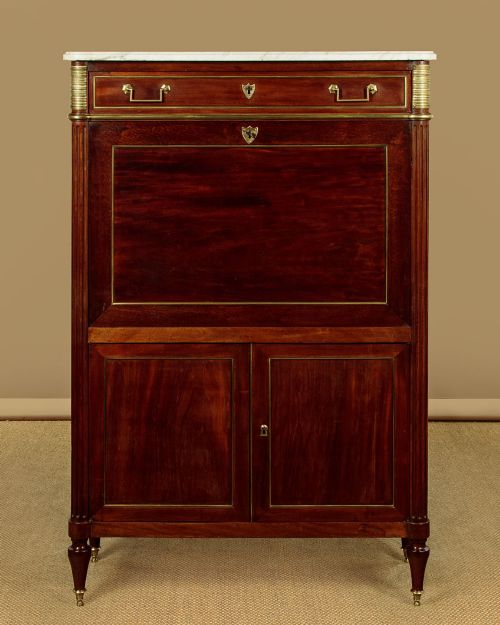
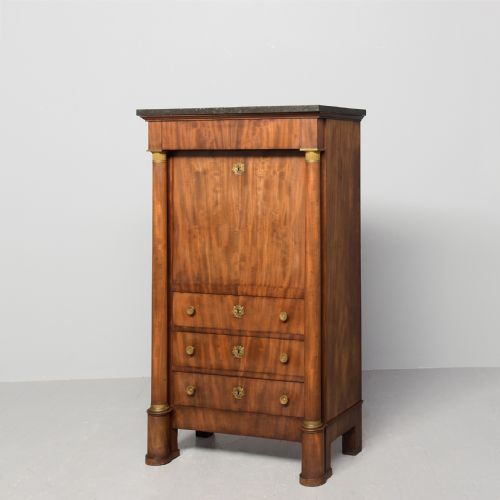
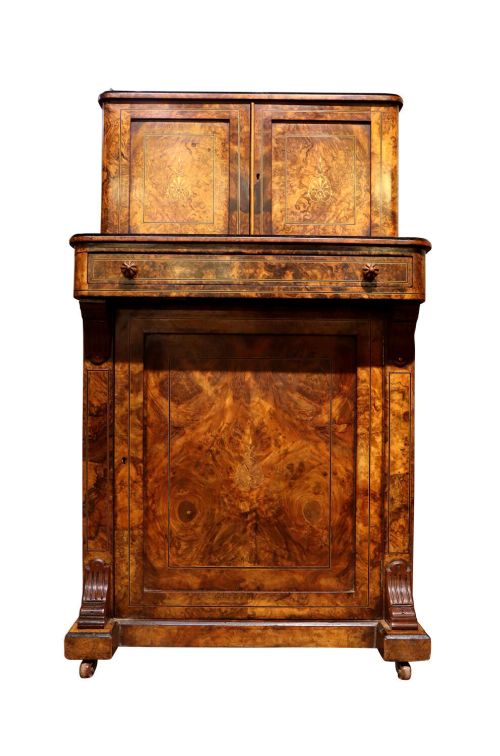
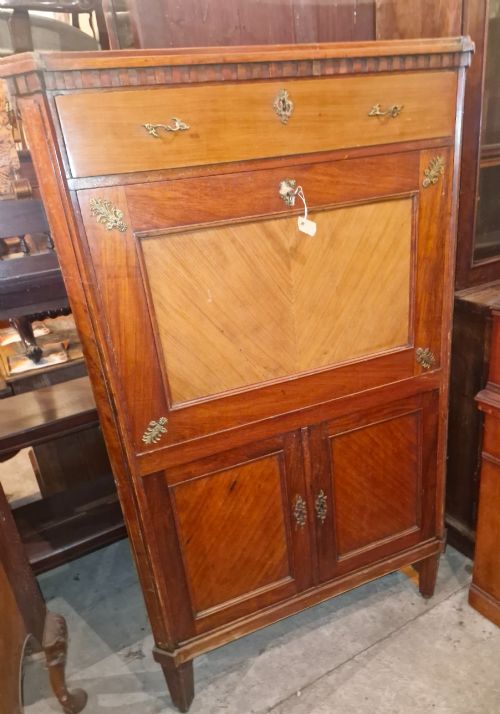
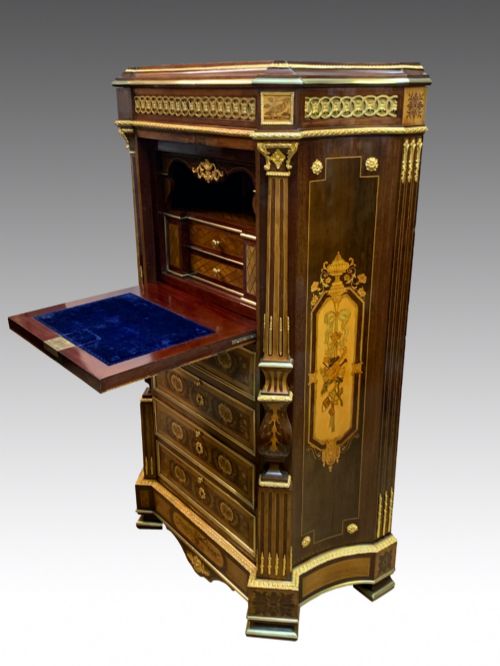
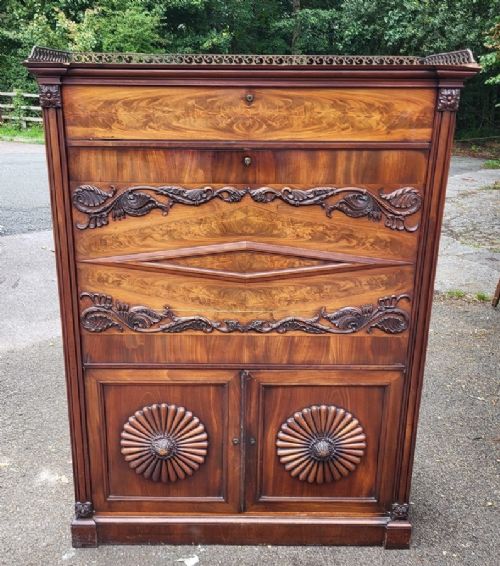
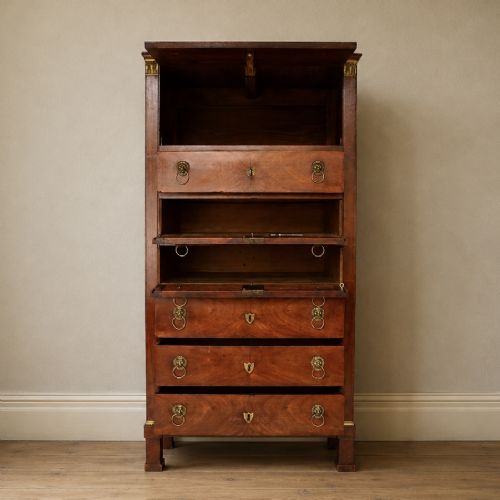
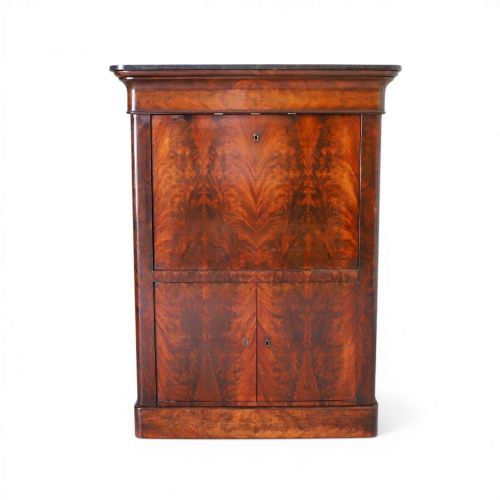
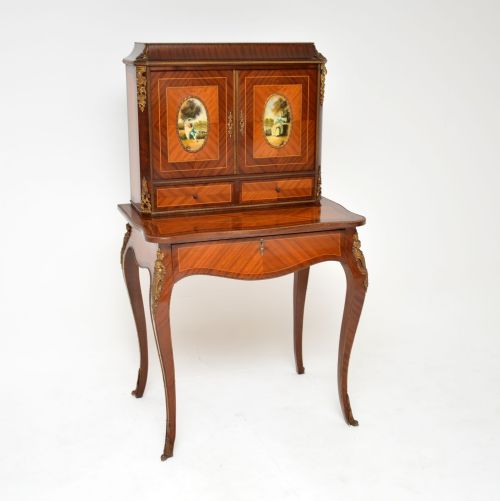
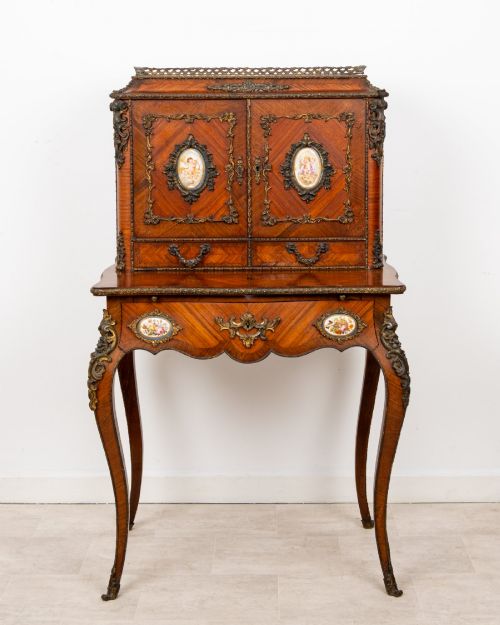
A french cabinet desk unites the closed dignity of a cabinet with the practical surface of a writing table, most frequently appearing as a tall secretaire a abattant or a diminutive bonheur du jour.
The form developed to conceal correspondence and ledgers behind a drop front or within fitted pigeonholes, keeping domestic paperwork out of sight when not in use.
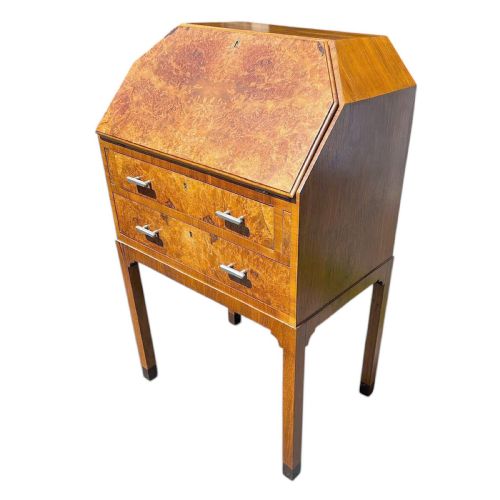
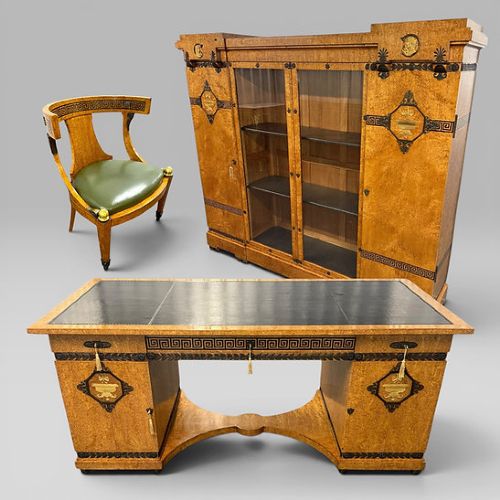
Pieces originating from the nineteenth century dominate this selection, ranging from Louis XV and XVI revival models to substantial Empire designs and later Art Deco interpretations.
How they were made
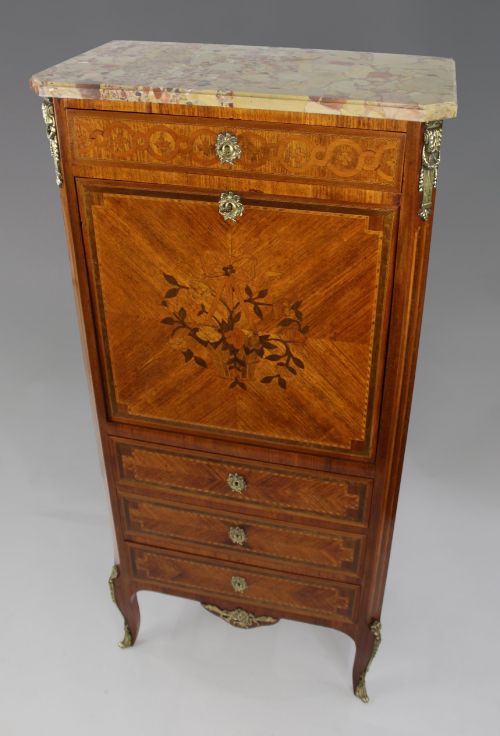
Cabinetmakers constructed these pieces using dense carcases of mahogany, walnut, kingwood or rosewood, frequently applying intricate marquetry and parquetry patterns in contrasting timbers.
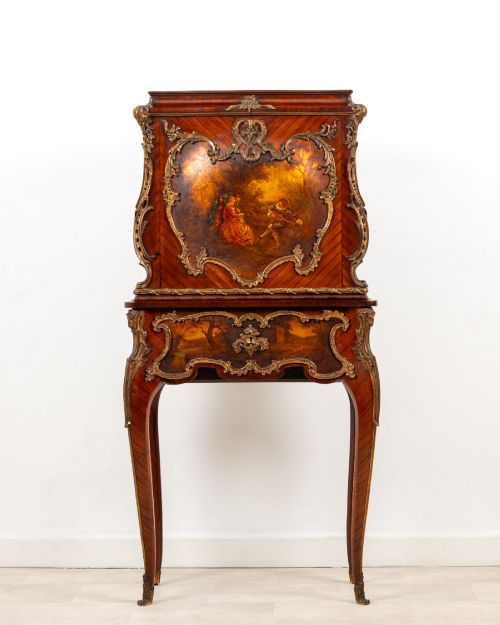
Gilded bronze or ormolu mounts frame corners, panels and friezes, whilst inset marble slabs cap the tops of many cabinet desks for a durable and decorative finish.
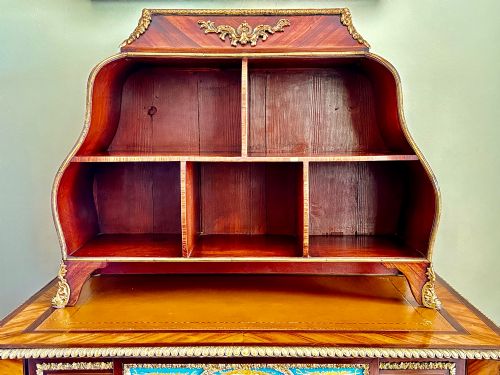
Interiors often conceal secret drawers, mirrored compartments and small pigeonholes accessed behind the main writing surface.
Several pieces conceal hidden drawers operated by secret catches, proving that nineteenth-century correspondents enjoyed playing at being spies.
What varies in quality
The refinement of the cast ormolu mounts and the precision of the hand-chiselling separate standard production from exceptional examples.
Timber selection dictates overall visual weight, with matched flame mahogany veneers, vibrant kingwood or delicate parquetry demonstrating greater workshop skill.
The integrity of internal mechanisms, such as secret drawer latches and smooth drop-front hinges, marks the distinction between ordinary furniture and masterwork pieces.
Maison Krieger·Mercier Freres·Blake London·Edwards and Roberts
The French Cabinet Desk Glossary
- Secretaire a abattant
- A tall vertical cabinet featuring a drop-down writing flap that conceals an interior arrangement of small drawers and pigeonholes.
- Bonheur du jour
- A light ladies writing desk fitted with a small cabinet or set of shelves upon the upper surface.
- Ormolu
- Gilded bronze used extensively for decorative mounts, handles and feet on nineteenth-century furniture.
- Marquetry
- Decorative patterns formed by inserting thin pieces of coloured wood, ivory or metal into a veneered surface.
- Vernis Martin
- A type of fine European lacquer work imitating Japanese styles, applied to cabinet panels in imitation of the famous eighteenth-century brothers.
French Cabinet Desk: Frequently Asked Questions
What is a secretaire a abattant?
A secretaire a abattant is a tall, upright cabinet with a hinged front panel that folds down to serve as a writing surface. Inside, the piece contains fitted compartments and small drawers for letters.
This form allowed owners to store writing materials upright against walls while taking up minimal floor space in domestic rooms.
How do I identify a bonheur du jour?
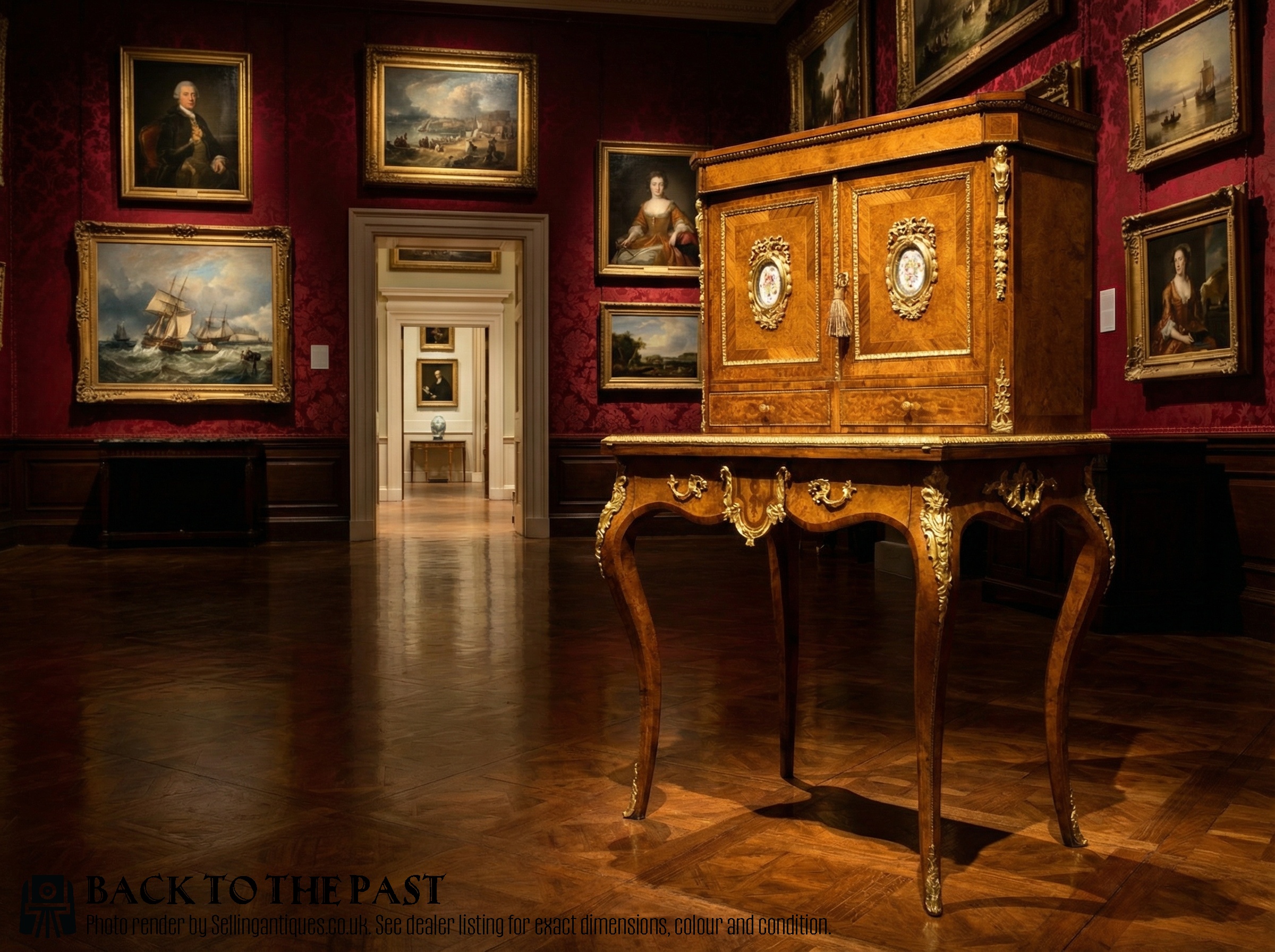
A bonheur du jour is recognised as a smaller, lighter desk featuring a tier of shelving or a small cupboard built onto the rear of the writing surface. These dainty tables were designed primarily for boudoirs and drawing rooms.
They frequently display delicate wood veneers, porcelain plaques and ormolu mounts rather than the heavy construction found in office furniture.
What are ormolu mounts?
Ormolu consists of cast bronze that has been gilded with gold leaf or mercury gilt and finished by hand-chiselling. It appears on corners, feet and drawer fronts to accent the timber.
Finer pieces exhibit crisp detail and deep relief in the metalwork, whereas simpler examples feature softer, cast finishes.
Why do some cabinet desks have marble tops?
Marble slabs were fitted to the tops of cabinets to provide a durable, cool surface that resisted ink stains and liquid spills. The stone also added significant weight and structural stability to the tall carcase.
These tops are typically edged with moulded brass or bronze frames to secure the stone in place.