

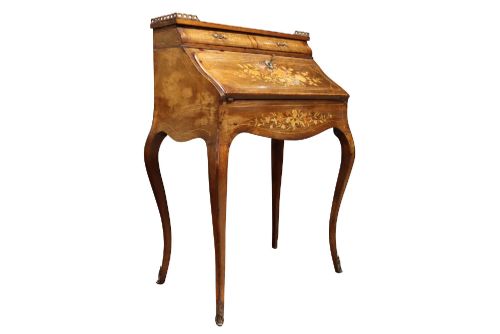
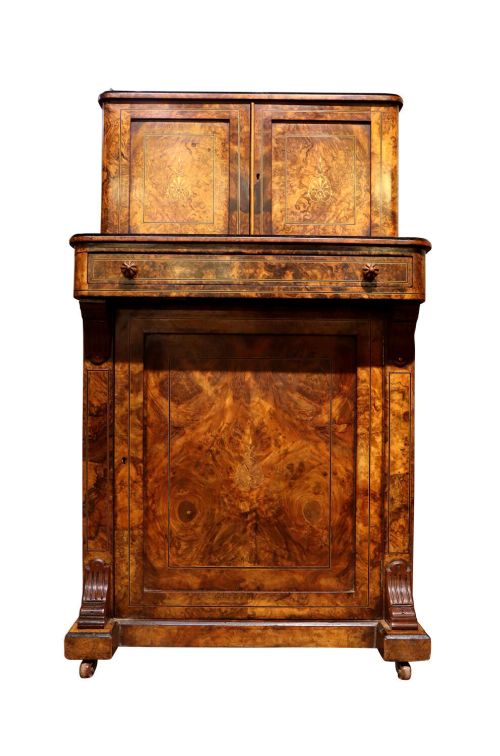
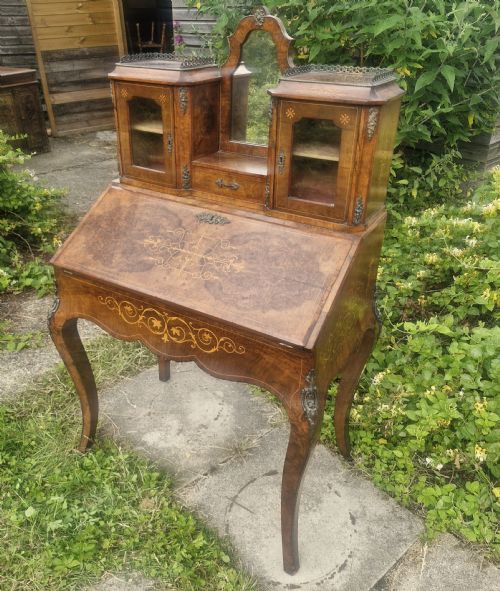


Walnut Bonheur Du Jour
A walnut bonheur du jour is a refined ladies writing desk that combines a compact writing surface with an upper cabinet or superstructure.
Walnut Bonheur Du Jour
A walnut bonheur du jour is a small, versatile ladies writing desk designed for correspondence and light paperwork, featuring a distinctive upper tier of shelves, drawers, or a small cupboard. These refined pieces emerged during the nineteenth century in both English workshops and French ateliers, adopting various revival styles.
On this page, a buyer will primarily encounter nineteenth-century Victorian and French examples, spanning decades from the 1850s through to the Edwardian period. Forms range from straightforward rectangular writing tables with superstructures to kidney-shaped desks and elaborate bureau de dame designs.
Makers working within this category utilised rich timbers to create functional furniture for the parlour or boudoir. The survival of both English and continental pieces demonstrates the widespread popularity of this particular desk form among Victorian and French households.
What Varies in Quality
The degree of refinement in the burr walnut veneer selection and the precision of the marquetry inlay distinguish standard production from exhibition pieces. Superior examples exhibit continuous grain matching across drawers and flaps, alongside meticulous hand-cut stringing and floral motifs.
Hardware and mounts also separate tiers of quality, with heavy, finely chased ormolu and substantial brass fittings indicating superior workshops compared to simpler stamped brass elements. The inclusion of secondary details, such as gilt-tooled leather writing surfaces and porcelain plaques, marks the upper end of the range.
Walnut Bonheur Du Jour Retail Price Guide 2026
Typical asking prices for walnut bonheur du jour among the pieces listed under this phrase on Sellingantiques today, from the lower quarter to the upper quarter. They describe what is for sale here now, not the wider market.
Many a nineteenth-century lady penned her deepest secrets inside these tiny cabinets, safely tucked away behind miniature locking doors.
Edwards & Roberts·Gillows·Paul Sormani·Adriano Brambilla
The Walnut Bonheur Du Jour Glossary
- Bonheur du jour
- A small ladies writing desk featuring an upper cabinet or tiered superstructure. The name translates from French as day's delight.
- Bureau de dame
- A lady's writing desk, often taking a French form with a sloping lid or fitted interior compartments. These pieces were popular in elite nineteenth-century boudoirs.
- Burr walnut
- A prized timber harvested from walnut tree growths, producing swirling, highly decorative grain patterns. Cabinet makers frequently utilised veneers of this wood for table tops and drawer fronts.
- Ormolu
- Gilded bronze used for decorative mounts, handles, and gallery rails on nineteenth-century furniture. The technique was particularly favoured in French revival pieces.
- Marquetry
- The art of applying small pieces of wood veneer to a structure to form decorative patterns or pictorial scenes. It appears frequently on the surfaces of French and Victorian revival desks.
Walnut Bonheur Du Jour: Frequently Asked Questions
What is a bonheur du jour?
A bonheur du jour is a small ladies writing desk featuring an upper tier with shelves or miniature cupboards. It was designed primarily for correspondence and light reading in private rooms.
First appearing in France, the form was later adopted by English cabinet makers during the nineteenth century. These desks combine a compact writing surface with decorative upper cabinetry.
How do I date a walnut desk?
Dating relies on examining construction methods, timber choices, and stylistic revival influences. Mid-nineteenth-century examples often display rich burr walnut veneers and heavy ormolu mounts.
Later Victorian and Edwardian pieces may show simpler satin walnut construction or different inlay patterns. Comparing the hardware and secondary timbers helps narrow down the decade of production.
Were these desks made in England or France?
Both English and French workshops produced these writing desks throughout the nineteenth century. English examples often highlight figured burr walnut and understated proportions.
French pieces frequently incorporate elaborate marquetry, porcelain plaques, and gilt ormolu mounts in the Louis XV revival style. Many maker-attributed pieces reflect this cross-channel exchange of design.
How do I care for burr walnut?
Burr walnut veneer requires stable humidity and protection from direct sunlight to prevent fading and splitting. Regular dusting with a soft, dry cloth maintains the polished surface.
Occasional application of appropriate wax polish helps preserve the timber's natural lustre. Avoid placing hot or wet items directly on the vintage writing surface.