



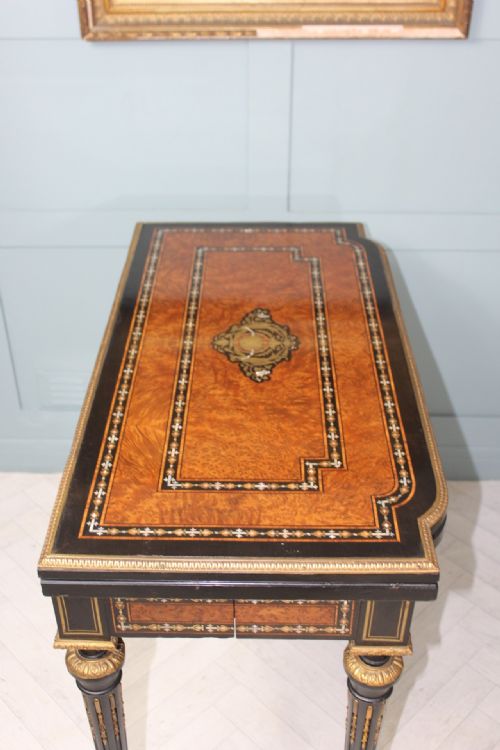
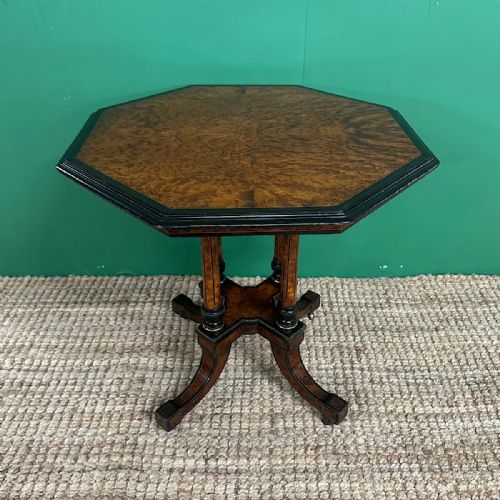


Ebonised Amboyna Table
An ebonised amboyna table combines dark finished timber with rich exotic grain, offering a striking contrast favoured in nineteenth-century salons.
Ebonised Amboyna Table
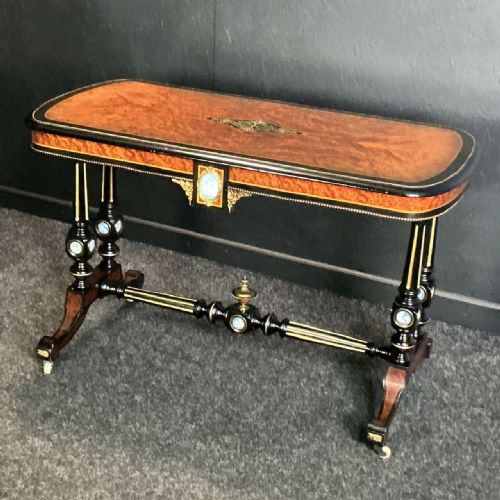
An ebonised amboyna table brings together deep black wood and intricately figured golden-brown exotic veneer, appearing frequently in Victorian and French Napoleon III forms. These pieces range from substantial centre tables and library writing desks to smaller occasional, card, and games tables designed for specific drawing room uses.
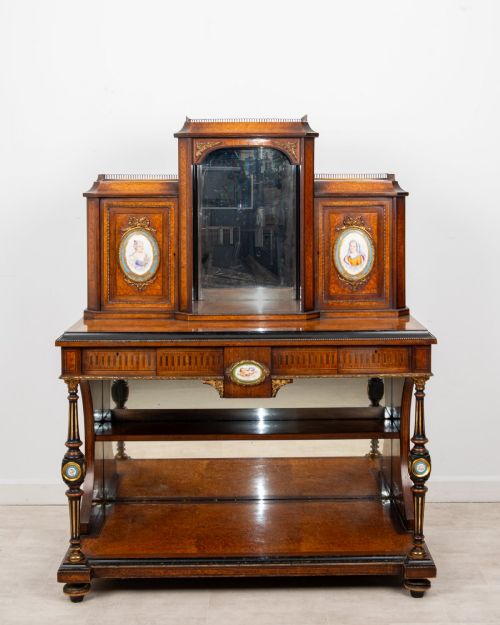
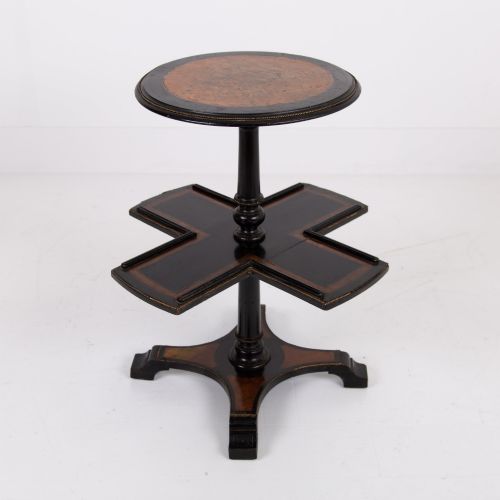
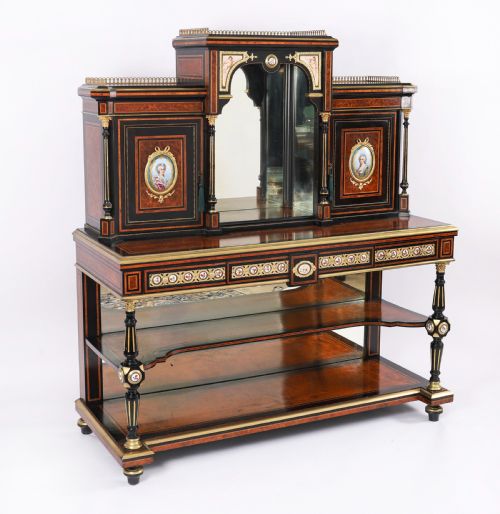
Makers and workshops across England and France utilised this striking timber combination during the nineteenth century, producing items with marquetry, brass stringing, and porcelain plaques. Buyers encounter various configurations, including folding card tables, tiered etageres, and compact writing desks intended for domestic display and daily correspondence.
How They Were Made
Craftsmen built these pieces using solid hardwoods finished with dark ebonisation alongside decorative amboyna veneer applied to tabletops and panels. Workshops incorporated brass inlay, ormolu mounts, parcel gilt details, and porcelain plaques to enrich the surfaces.
Structural elements often involved secondary timbers like mahogany or walnut beneath the veneer, shaped into serpentine forms or supported on turned and fluted legs. Joinery methods of the nineteenth century ensured stability for folding card tops and multi-tiered occasional tables.
Ebonised Amboyna Table Retail Price Guide 2026
Typical asking prices for ebonised amboyna table among the pieces listed under this phrase on Sellingantiques today, from the lower quarter to the upper quarter. They describe what is for sale here now, not the wider market.
Materials recorded on this page include amboyna veneer, ebonised wood, ormolu, brass, porcelain, and glass.
What Varies in Quality
The standard of an ebonised amboyna table depends largely on the depth of the amboyna figure and the precision of the brass or marquetry inlay. Superior examples display crisp joinery, well-preserved surface finishes, and high-grade mounts such as ormolu or hand-painted porcelain plaques.
Execution of the ebonisation and the integration of secondary materials dictate the overall refinement of the piece. Workshops known for documented cabinet-making demonstrate greater attention to proportion and detail than anonymous production pieces.
Edward and Roberts·Lamb of Manchester·Paul Sormani·Gillows·Holland and Son
The Ebonised Amboyna Table Glossary
- Ebonised
- Wood finished to resemble ebony through staining or painting. This technique creates a dense black surface popular in nineteenth-century aesthetic and revival furniture.
- Ormolu
- Gilded bronze mounts applied to furniture for decoration. French and English cabinet makers used these cast metal elements to accentuate corners and legs.
- Marquetry
- Inlaid wood pieces arranged to form decorative patterns or pictures on a surface. Craftsmen used contrasting timbers to create floral or geometric designs.
- Bonheur du jour
- A small light-weight writing desk featuring a set of drawers and shelves above the writing surface. These desks emerged in France and became popular in Victorian drawing rooms.
Ebonised Amboyna Table: Frequently Asked Questions
Where were these tables placed?
These tables stood in drawing rooms, libraries, and boudoirs as centrepieces or side furniture. Card and games versions emerged for evening entertainment.
Smaller occasional and lamp tables occupied corners or sat beside seating arrangements for convenience.
How do I clean the surface?
Dust the timber regularly with a soft, dry cloth to protect the delicate ebonised finish and amboyna veneer. Avoid using modern chemical sprays or excessive water.
Apply a traditional wax polish sparingly to maintain the lustre of the wood grain and protect the polished surface.
How do I identify French pieces?
French pieces often incorporate ormolu mounts, porcelain plaques, and serpentine shaping associated with Napoleon III and revival styles. The marquetry work frequently displays floral motifs.
English variants from makers like Gillows tend to lean towards structural walnut integration and specific brass detailing.