


Fruitwood Console Table
A fruitwood console table brings warm timber tones and provincial charm to a hallway or reception room.
Fruitwood Console Table
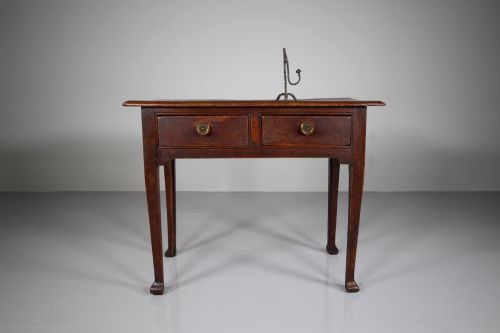
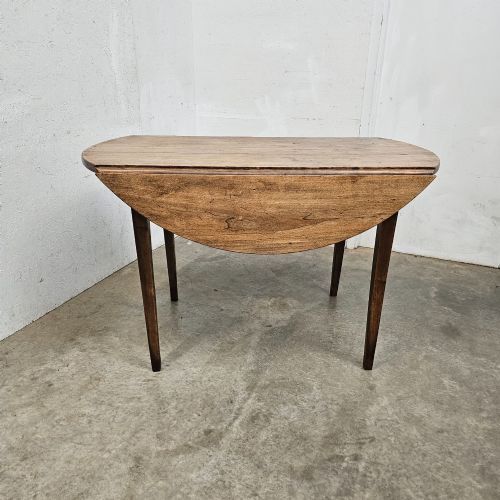
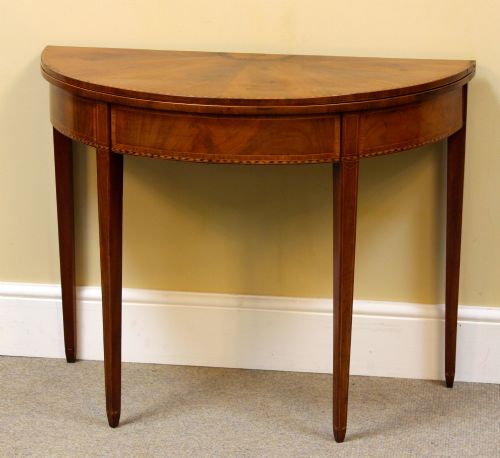
A fruitwood console table is a slim surface designed to stand against a wall, frequently found in English and French provincial forms. The pieces available combine functional serving tables, card tables, and lowboys with distinct wall-mounted or freestanding side furniture.
The selection on this page leans heavily towards 18th century, Georgian, and 19th century examples, often rendered in regional timbers. Buyers encounter side tables, serving tables, and demi lune configurations that reflect both English craftsmanship and French country cabinet-making.
Makers and regional workshops produced these items for domestic use in hallways, dining rooms, and parlours. The survival of such items shows a preference for sturdy domestic woods fashioned into elegant, space-saving furniture.
What varies in quality
Quality depends upon the selection of timber and the crispness of the secondary wood framing underneath. Superior examples display balanced proportions, fine drawer linings, and minimal structural alterations over time.
The handling of legs and aprons distinguishes fine workshop production from simpler vernacular pieces. Carved cabriole legs, inlaid details, and original brass hardware elevate the status of a given table.
Listings incorporate 18th century, Georgian, and 19th century periods, utilising fruitwood alongside oak, elm, cherrywood, and alder.
The Fruitwood Console Table Glossary
- Fruitwood
- Timber derived from fruit-bearing trees such as pear, apple, cherry, or plum. It yields a dense, warm-toned surface favoured by regional cabinet-makers.
- Demi lune
- A half-moon shape used for console and card tables designed to sit flush against a wall. This format saves floor space in narrow hallways.
- Lowboy
- A small table with one or more drawers, standing on relatively tall legs. They originated in the late seventeenth century and served various domestic functions.
- Provincial
- Describing furniture made in the regions rather than capital cities. These pieces often exhibit charming local variations in style and materials.
- Servant table
- A long, narrow surface utilised for holding dishes or serving food in dining spaces. They complement the proportions of a standard console table.
Fruitwood Console Table: Frequently Asked Questions
Where should I place a console table?
These narrow tables suit hallways, living rooms, and dining areas where floor space is at a premium. They provide a practical surface for lamps and decorative objects without blocking movement.
Positioning one against a wall creates a focal point beneath a mirror or painting. Their shallow depth allows them to sit comfortably in transitional spaces.
How do I care for fruitwood furniture?
Maintain the timber by applying a natural beeswax polish periodically to nourish the grain. Avoid placing the table in direct sunlight or near heat sources to prevent warping.
Use coasters and felt pads beneath objects placed on the surface to protect the vintage finish. Gentle dusting with a soft cloth keeps the wood clean.
What distinguishes Georgian from provincial styles?
Georgian pieces generally adhere to formal design canons with refined proportions and classical details. They often incorporate mahogany, oak, or fruitwood in structured symmetrical layouts.
Provincial styles embrace regional quirks and simpler construction methods suited to country homes. They prioritise utility and local timber availability over strict classical adherence.
Can these tables be used for writing?
Certain variations, such as card tables, serving tables, and specific console desks, offer suitable surface areas for writing. Their height aligns with standard seating, though knee clearance depends on drawer placement.
Check the internal dimensions of any apron drawers to ensure adequate legroom. Most console tables are primarily intended for display rather than extended desk work.