


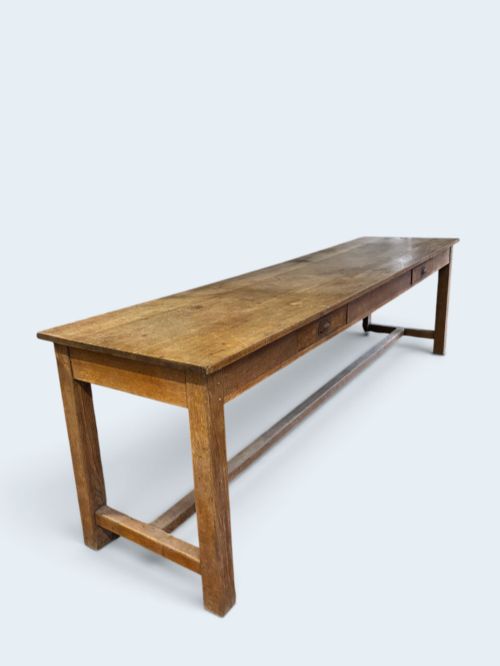
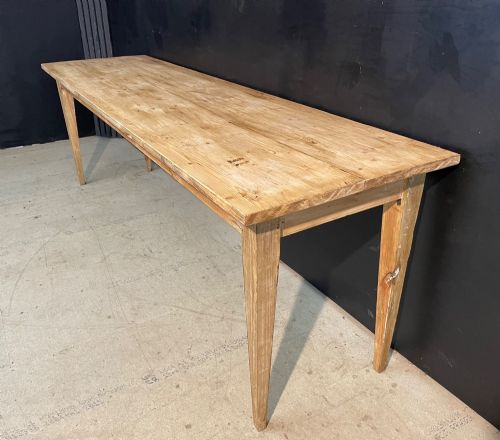
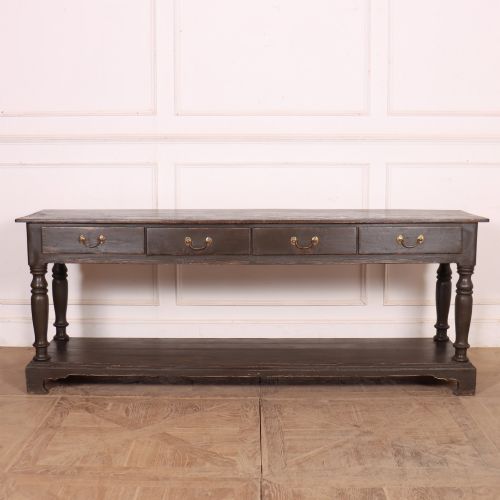
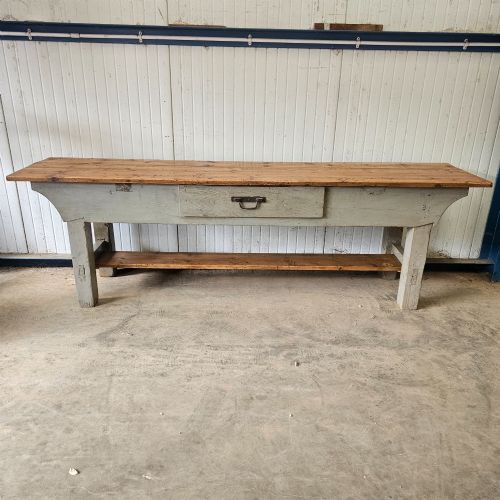



Long Wooden Console Table
A long wooden console table provides a substantial surface for hallways and living spaces, drawing on centuries of utilitarian design.

Long Wooden Console Table
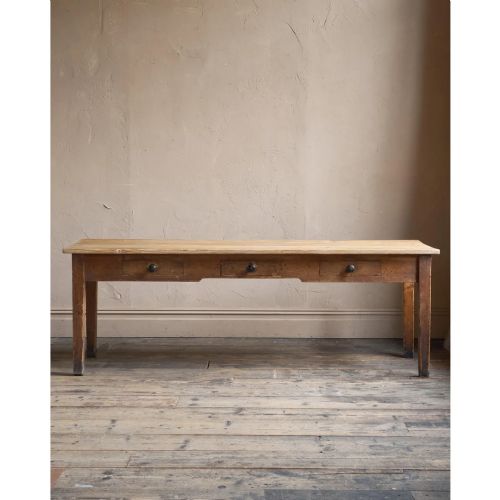
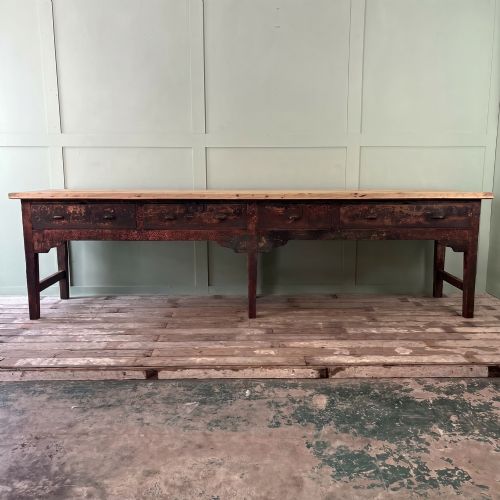
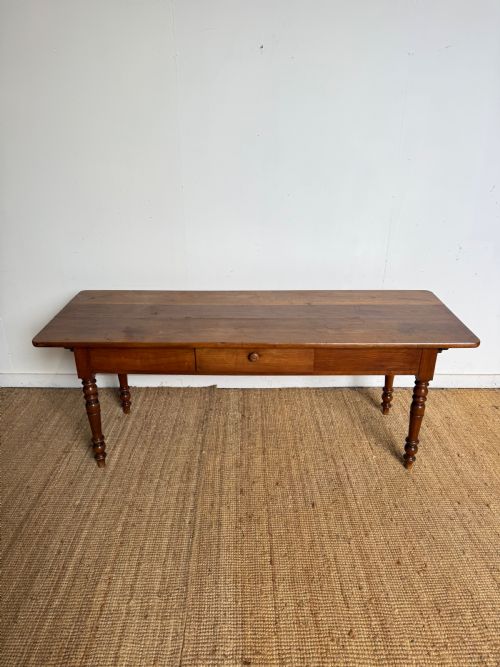
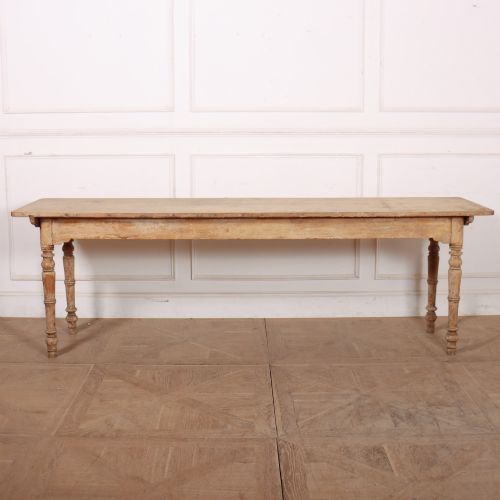
A long wooden console table spans multiple periods and regional styles, drawing heavily on functional forms like drapers tables, serving tables, and workbenches. These pieces originate from various European countries, China, and England, reflecting practical domestic and commercial use.
The selection on this page relies predominantly on nineteenth-century examples alongside eighteenth-century and early twentieth-century pieces. Common regional variations include French painted pine items, English oak serving surfaces, and Italian country tables.
Materials and construction
Construction relies upon solid timber resources such as pine, oak, cherrywood, walnut, poplar, and metal components like brass and iron. Wood surfaces appear in scrubbed finishes, historical paint layers, and bleached treatments.
Carpentry techniques support heavy-duty daily tasks, utilising sturdy trestle supports, thick tops, and joined drawers. Structural hardware incorporates iron and brass fixings to reinforce long spans of timber.
Long Wooden Console Table Retail Price Guide 2026
Typical asking prices for long wooden console table among the pieces listed under this phrase on Sellingantiques today, from the lower quarter to the upper quarter. They describe what is for sale here now, not the wider market.
Periods represented span from the eighteenth century through the Edwardian era and the early twentieth century.
Judging quality and character
Quality rests in the integrity of the timber and the honesty of the surface finish, whether original paint or scrubbed grain. Heavier construction and period-appropriate joinery elevate certain examples above standard utility pieces.
The distinction between superior items and simpler ones lies in the depth of patina and the preservation of original structural elements such as potboards, drawers, and turned supports.
The Long Wooden Console Table Glossary
- Console table
- A table designed to stand against a wall, frequently long and narrow in proportion. These pieces serve hallways, living areas, and dining rooms.
- Drapers table
- A long, utilitarian table traditionally utilised in fabric shops for measuring and displaying cloth. They often incorporate multiple drawers and lower shelves.
- Potboard
- A lower shelf fitted beneath a serving table or dresser base designed to hold pots, pans, and heavy kitchen utensils. This structural addition provides stability to long wooden frames.
- Trestle table
- A table consisting of two or more vertical supports connected by a horizontal beam or stretcher. This format allows maximum legroom along the length of the top.
- Scrubbed finish
- A wooden surface washed repeatedly with soap and water over generations, removing varnish to leave a pale, clean grain. This treatment is typical of pine and poplar preparation tables.
Long Wooden Console Table: Frequently Asked Questions
How do I style a long wooden console table in a hallway?
Position the piece flat against a main wall to anchor the entryway while maintaining adequate clearance for foot traffic. Balance the expansive wooden surface with modest lighting or decorative objects.
Utilise any integrated drawers or lower shelves to store everyday items out of sight. This keeps the primary surface clear and emphasises the proportions of the timber.
Can I use a prep table as a sideboard?
Prep tables and drapers tables offer substantial length and height well-suited for serving food or displaying items in dining spaces. Their utilitarian origins provide deep surfaces and robust frames.
Consider the height and leg clearance of the specific table to ensure comfortable access. Many examples feature pot-shelves that duplicate the storage capacity of traditional sideboards.
What is the difference between oak and pine console tables?
Oak provides a dense, heavy structure with prominent grain patterns, frequently associated with English and regional European serving tables. It withstands heavy physical demands and ages to a deep hue.
Pine offers a lighter weight and softer texture, often selected for painted finishes or scrubbed kitchen and laundry tables. Both timbers provide distinct aesthetic qualities depending on the room.
How should I care for a historic wooden surface?
Maintain timber surfaces by dusting regularly with a dry cloth and avoiding excessive moisture. Scrubbed pine and oak tolerate gentle cleaning, while historic painted finishes require careful handling.
Protect the wood from direct heat sources and strong sunlight to prevent warping or fading over time. Applying appropriate wax preserves the existing patina without altering the finish.